 Ferndale Roofing
 Point Roberts Is a Different Kind of Job Site
Point Roberts sits at the very tip of a peninsula that hangs south of the Canadian border, cut off by land from the rest of Washington State. Getting crews and materials there means routing through international border crossings, which changes how a siding job has to be scheduled and staged compared to a house a few miles outside Ferndale. It also means the homes out there take a beating from three sides of open water instead of one. Salt-laden wind, driving rain off the Strait of Georgia, and a moss season that runs longer than most homeowners expect all work on a home's exterior year-round. Board and batten siding can handle that environment very well — but only if it's the right material, detailed correctly, and installed by people who understand what this specific stretch of Whatcom County throws at a wall.
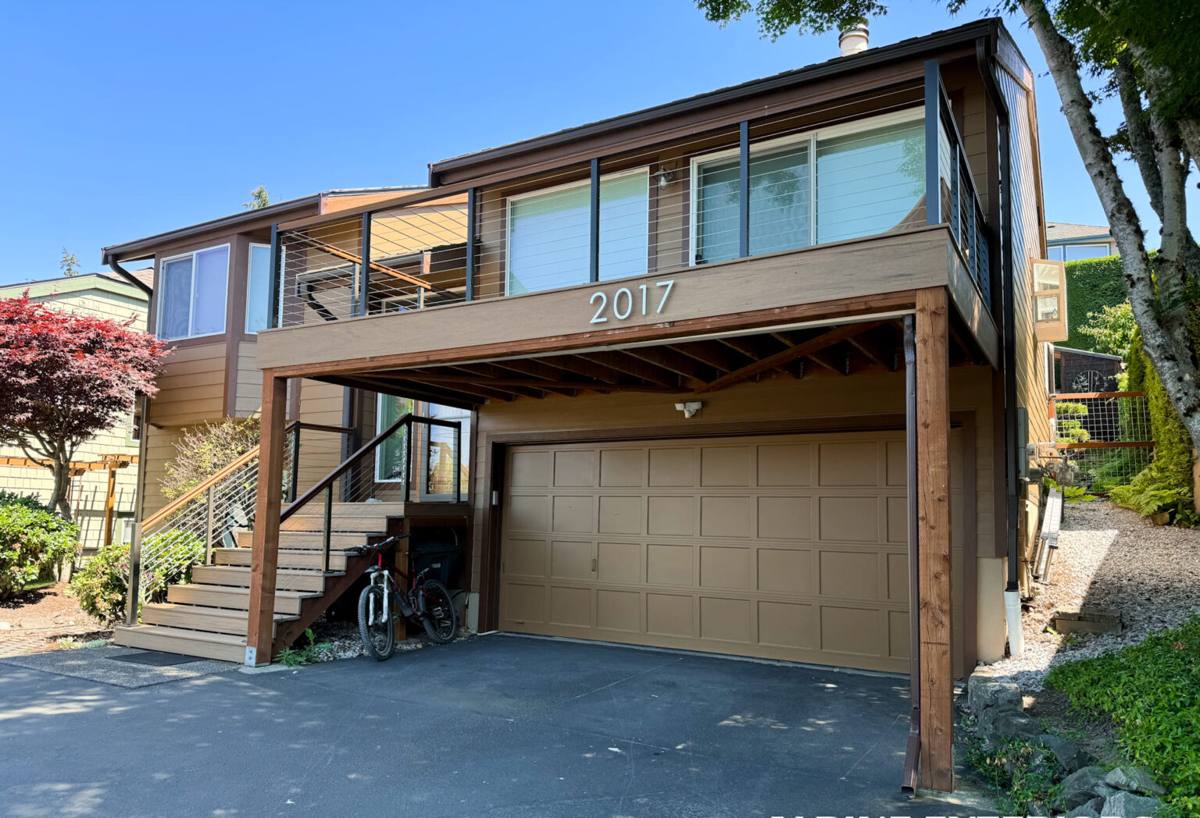
Why Board & Batten Works So Well on Whatcom County's Waterfront Homes
Board and batten is a vertical siding style — wide flat boards (or panels) with narrower strips, called battens, covering the seams between them. It reads as clean, tall, and a little more architectural than standard horizontal lap siding, which is part of why it shows up so often on coastal and rural homes around Point Roberts, Ferndale, and the surrounding county. But the look isn't the only reason it belongs here.
Vertical siding sheds water differently than horizontal lap. Rain runs straight down the face of the boards instead of catching on overlapping horizontal edges, which matters in a climate where wind-driven rain rarely falls straight down. Done correctly, with a proper drainage plane behind it, board and batten gives water fewer places to sit and fewer horizontal ledges for moss and grime to collect on. Done poorly — thin material, no rainscreen gap, inconsistent fastening — it becomes one of the more failure-prone siding styles in a wet climate, because every batten seam is a potential water path if it isn't detailed right.
What Local Homes Need From This Siding Specifically
- A material that won't swell, cup, or rot when the batten seams stay damp through a wet Pacific Northwest winter
- Corrosion-resistant fasteners and flashing, given the salt content in the air this close to open water
- A factory finish that resists mildew and moss staining without needing to be repainted every few years
- Installation detailing that accounts for wind-driven rain hitting the wall at an angle, not straight on
- A product rated for the freeze-thaw swings Whatcom County gets in winter, not just general moisture resistance
The Climate Load a Point Roberts Wall Actually Carries
Salt Air
Being surrounded by water on most sides means airborne salt is a constant, low-level presence, even without a direct ocean view. Salt accelerates corrosion on fasteners, flashing, and any hardware that isn't rated for it, and it can degrade cheaper coatings and finishes faster than a standard weather-resistance rating accounts for. Any siding system near Point Roberts needs to be specified with that in mind from the start — not patched later when a fastener starts bleeding rust through the paint.
Driving Rain
Storms coming off the water don't just fall on a house, they push against it. Wind-driven rain forces water into seams, laps, and penetrations that would stay dry in a calmer climate. That's exactly why the drainage plane, flashing, and batten spacing behind board and batten siding matter as much as the boards themselves — the visible surface is only half the system.
Moss Season
Whatcom County's moss season is long, and it's not limited to roofs. North-facing and shaded wall sections stay damp for extended stretches, and lower-quality siding materials — especially wood-based products — can take on moisture, swell, and become a growth surface for moss and mildew over time. A siding material's real test isn't how it looks the day it's installed, it's how it holds its finish and its shape after several wet winters in a row.
Why We Only Install James Hardie Fiber Cement
Ferndale Roofing Co installs James Hardie fiber cement siding exclusively. We don't install vinyl, LP SmartSide, Cemplank, Allura, primed spruce, or cedar board and batten — not because those products don't have a place in the market, but because after years of exterior work in this specific climate, we standardized on the one product line that consistently holds up to it without asking the homeowner to babysit it.
Wood-based and engineered-wood siding products can perform well in moderate conditions, but they depend on maintained paint or sealant to keep moisture out of the substrate, and a missed maintenance cycle in a wet climate can cost years of service life. Vinyl is low-maintenance but it's a combustible plastic product that can warp under heat and doesn't hold the crisp, flat board-and-batten profile as convincingly. Fiber cement without factory engineering behind it varies more in dimensional stability and finish durability than homeowners expect.
James Hardie fiber cement is non-combustible, dimensionally stable, and comes with a factory-applied ColorPlus finish that's baked on and warranted against fading and peeling — which matters directly in a place with a long moss and mildew season, because the finish is what keeps growth from getting a foothold in the first place. Hardie also engineers its siding by climate zone; the formulations sold in this part of Washington are built around the freeze-thaw and moisture cycle Whatcom County actually experiences, not a generic national spec. That's the product we stand behind, and it's the only one we put our name on.
What a Correct Board & Batten Installation Actually Involves
Board and batten fails when it's treated like a cosmetic upgrade instead of a water-management system. A correct installation gets the details right in this order:
Drainage Plane First
A weather-resistant barrier goes on the sheathing before anything else, and on most Point Roberts homes we install a rainscreen gap behind the vertical panels. That gap lets any water that gets past the siding drain and dry out instead of sitting against the sheathing — critical in a climate where the wall assembly rarely gets a long dry stretch to recover.
Fastening Pattern
Fastener spacing and placement follow James Hardie's published requirements for the specific exposure category of the home — waterfront and high-wind exposures call for tighter fastening than a sheltered inland lot. We use corrosion-resistant fasteners throughout, not standard galvanized, given the salt exposure this close to the water.
Flashing and Penetrations
Every window, door, vent, and utility penetration needs flashing detailed to shed water down and out, not into the wall. Batten seams themselves are backed properly rather than simply caulked over a gap, since caulk is a maintenance item, not a permanent seal.
Finish and Sealant
Factory ColorPlus finish is either installed as-is or field-touched only at cut edges, using Hardie-approved products, so the factory warranty stays intact. Sealants at joints and penetrations use products rated for the movement and moisture cycle Hardie specifies, not generic caulk.
Our Process, Start to Finish
- On-site evaluation — we walk the exterior, note exposure levels on each elevation (waterfront-facing walls get treated differently than sheltered ones), and check existing sheathing and moisture conditions.
- Product and detailing plan — we spec panel and batten dimensions, fastening schedule, and flashing details for your specific home, not a one-size template.
- Scheduling and logistics — because Point Roberts is reached by crossing the border, we plan crew and material delivery days in advance so the job isn't stalled mid-installation waiting on a load of siding.
- Tear-off and prep — old siding removed, sheathing inspected and repaired as needed, weather barrier and rainscreen installed.
- Installation — boards and battens installed to spec, flashed at every penetration, fastened per exposure rating.
- Final walkthrough — we review the finished work with you and flag anything worth watching over the first year.
Cost Factors to Understand Before You Get Quotes
| Factor | Why It Matters Here |
|---|---|
| Wall exposure category | Waterfront-facing walls need tighter fastening and heavier flashing detail than sheltered elevations, which affects labor time |
| Existing sheathing condition | Moisture-damaged sheathing found during tear-off adds repair scope before new siding can go on |
| Panel vs. site-built batten style | Factory-milled Hardie panel systems install faster and more consistently than field-built board and batten from separate boards |
| Delivery logistics | Material has to cross the border to reach Point Roberts, which factors into scheduling more than pricing but can affect timeline |
| Trim and finish detail | Corner treatments, window trim, and batten spacing choices affect both material quantity and finished appearance |
Why the Crew Matters as Much as the Product
Two crews can install the same James Hardie product and get very different results ten years later. The difference is almost always in the details that don't show up in a walk-by inspection: the rainscreen gap, the fastener spacing, the flashing behind the batten seams. A crew that already works Point Roberts regularly has already worked out the logistics of getting people and materials across the border on schedule, already knows which elevations on a given lot take the worst of the wind and salt, and already understands that Whatcom County permitting for this unincorporated area runs through the county rather than a local city office. That's not something a crew coming from outside the region picks up on the first job.
After Installation: What Keeps Board & Batten Performing
- Rinse salt residue and grime off the siding once or twice a year, especially on water-facing walls
- Keep gutters and downspouts clear so runoff isn't sheeting down the siding face
- Trim back vegetation and tree cover that keeps any wall section shaded and damp longer than necessary
- Check caulking at trim and penetrations every year or two and have it renewed before it fails, not after
- Have any impact damage or fastener issues addressed promptly rather than left through another wet season
If you're weighing siding options for a home in Point Roberts, we're happy to walk the property, look at what your specific exposure and existing conditions call for, and put together a straightforward, no-pressure estimate. There's a form below to get that started.