 Ferndale Roofing
 New Roof Installation Built for Marietta's Stretch of Whatcom County
Marietta sits low and close to the water on the north side of Bellingham Bay, in the shadow of Ferndale and just south of the Lummi Reservation. Homes here take a different kind of weather beating than roofs a few miles inland. The air carries salt off the bay, winter storms come in sideways off the water, and the tree cover that makes the area beautiful also means shade, damp ground, and moss that never really goes away. A new roof installed here has to be built for that specific combination, not just installed to a generic checklist.
We're a Ferndale-based crew, and Marietta is part of our regular service area — not a neighborhood we drive out to occasionally. That matters more than most homeowners realize when it comes to picking materials, planning flashing details, and setting a roof up to actually hold its warranty for the next 30 years.
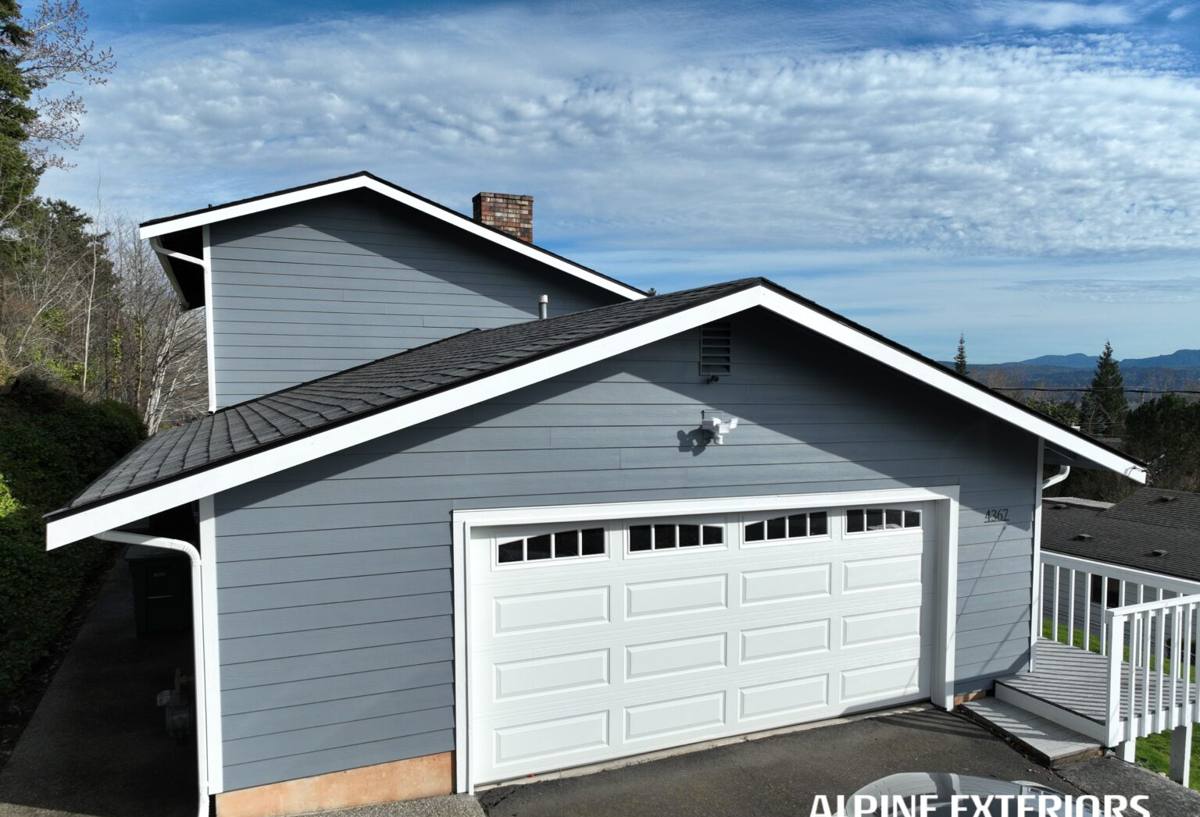
What Marietta's Climate Actually Does to a Roof
Salt Air
Proximity to Bellingham Bay means airborne salt settles on exposed metal — flashing, fasteners, vent caps, and gutter hardware. Over years, uncoated or lower-grade metal components corrode faster here than they would 10-15 miles inland. It's not dramatic or sudden; it's a slow degradation that shows up as rust streaks, pitted flashing, and eventually leaks at the exact points a roof is supposed to be sealed tightest — valleys, chimneys, and penetrations.
Driving Rain
Whatcom County gets a lot of rain, but the kind that does the most damage in Marietta is wind-driven rain coming off the water. Rain that hits a roof at an angle instead of falling straight down can work its way under shingle edges, up under ridge caps, and sideways into any flashing that was installed with margin for "normal" rain instead of wind-driven rain. This is a detail-and-technique issue more than a materials issue — it's about how flashing, underlayment laps, and shingle nailing patterns are executed.
Moss Season
Shaded lots, moisture, and mild temperatures make Whatcom County prime moss territory, and low-lying, tree-covered areas like Marietta see it worse than open, sun-exposed sites. Moss holds moisture against the roof surface, works into shingle edges, and over time lifts and separates roofing material from the deck. A roof that isn't designed with moss resistance and drainage in mind will need moss treatment or removal on a recurring basis for its entire life.
What a Correct New Roof Installation Actually Involves
"New roof" gets used loosely, but a correct installation is a specific sequence, and skipping or rushing any step is where most premature roof failures start.
- Full tear-off: Old roofing material and old underlayment removed down to the deck — not roofed over, no matter how tempting the shortcut looks.
- Deck inspection and repair: Every sheet of decking checked for soft spots, delamination, or rot, especially around old leak points and roof penetrations. Bad decking gets replaced before anything new goes down.
- Ice and water shield at vulnerable points: Eaves, valleys, and around chimneys and skylights get self-adhering waterproof membrane, not just standard underlayment.
- Synthetic underlayment across the field: A water-resistant barrier under the roofing material as a second line of defense if wind ever drives water past the surface layer.
- New flashing throughout: Step flashing, counter-flashing, valley flashing, and vent flashing all replaced — reused old flashing is one of the most common causes of "new roof" leaks.
- Correct fastening: Nail pattern and placement matched to the material manufacturer's high-wind specification, not the minimum spec.
- Ridge and intake ventilation: Balanced airflow from soffit to ridge so the attic can dry out and the roof deck doesn't stay damp from the inside.
- Final inspection and cleanup: Magnetic sweep for stray fasteners, full site cleanup, and a walkthrough before we consider the job done.
Choosing Roofing Material for a Marietta Home
There's no single "best" roofing material — the right choice depends on your home's exposure, budget, and how much long-term maintenance you're willing to take on. Here's how the common options actually perform under Marietta's specific conditions.
| Material | Salt Air Resistance | Moss Resistance | Typical Lifespan | Maintenance Load |
|---|---|---|---|---|
| Architectural asphalt shingle | Good, with corrosion-resistant flashing and fasteners | Good with algae-resistant granules; still benefits from periodic cleaning | 25-30 years | Low to moderate |
| Standing seam metal | Very good with coated/marine-grade metal and fasteners | Excellent — smooth surface sheds moss growth | 40-50+ years | Low |
| 3-tab asphalt shingle | Fair — thinner profile, faster wear at edges | Fair — more prone to moss anchoring in the tabs | 15-20 years | Moderate to high |
| Composite/synthetic shake | Good | Good, varies by product texture | 30-50 years | Low to moderate |
We don't push one product on every home. For a shaded, close-to-the-water lot in Marietta, we're usually steering homeowners toward architectural shingles with algae-resistant granules or standing seam metal, simply because both hold up better against the moss-and-salt combination with less upkeep. Basic 3-tab shingles can still be the right call on a budget, but we're honest that they'll need more attention over the years in this location.
Why We're Selective About Flashing and Fastener Metal
This is one place we don't cut corners regardless of which roofing material a homeowner picks. In a salt-air environment, mismatched or bargain-grade metal at flashing and fasteners is the first thing to fail — usually well before the shingles or panels themselves show wear. We spec corrosion-resistant flashing and fasteners as standard on Marietta jobs, not as an upsell.
Ventilation: The Part of the Roof You Never See
A roof isn't just what's visible from the street — what happens underneath the decking matters just as much, especially in a wet, shaded area. Poor attic ventilation traps moist air, which condenses on the underside of the deck and slowly rots it from the inside, completely independent of anything happening on the outer surface. It also shortens shingle life by trapping heat and moisture against the material.
A correct installation balances intake (soffit vents) with exhaust (ridge vents or equivalent), sized to the attic's square footage. On a lot with heavy tree cover and limited direct sun to dry things out, getting this balance right is one of the most important — and most overlooked — parts of a new roof.
Our Process for a Marietta Re-Roof
1. On-Site Inspection and Honest Assessment
We walk the roof, check the attic from inside where accessible, and look at drainage patterns around the home — including how close tree cover sits to the roofline, which drives moss growth and debris buildup. We tell you plainly what condition the roof and decking are in.
2. Written Estimate
A clear, itemized quote covering material, tear-off, deck repair allowance, flashing, ventilation work, and cleanup — no vague lump-sum guessing.
3. Scheduling Around Whatcom County Weather
We plan installs around realistic weather windows rather than promising a date and hoping. Roofing material and underlayment need dry conditions to install correctly, and we'd rather shift a start date than install over a wet deck.
4. Tear-Off and Deck Repair
Old material comes off, decking gets inspected and repaired as needed, and we address any signs of past moisture damage before covering anything back up.
5. Installation
Underlayment, ice and water shield, flashing, roofing material, and ventilation installed in sequence, per manufacturer spec and matched to wind and moisture conditions typical of this stretch of the county.
6. Cleanup and Walkthrough
Full site cleanup including a magnetic nail sweep, followed by a walkthrough so you can see the finished work and ask questions before we call it complete.
Why Hiring a Crew That Already Works Marietta Matters
Roofing crews that mostly work drier, more sheltered parts of the county don't always account for wind-driven rain off the bay or the moss load that comes with heavy tree cover this close to the water. We work this area regularly, which means:
- We're familiar with how drainage and moss patterns behave on shaded, low-lying lots near the bay.
- We know which flashing and fastener grades hold up against salt air exposure, and we don't downgrade them to save cost.
- We're close by for warranty follow-up, storm checks, or questions after the job is done — not a crew that has to drive in from another county.
- We understand Ferndale and Whatcom County permitting requirements for re-roofing, so paperwork doesn't stall your project.
Signs Your Marietta Roof May Need Replacement, Not Repair
- Granule loss showing up in gutters as more than light, occasional buildup
- Shingles curling, cupping, or cracking, especially on slopes that face prevailing wind and rain
- Moss established thickly enough that it's lifting shingle edges, not just growing on the surface
- Daylight visible through the roof deck from inside the attic
- Rust staining or visible corrosion at flashing, vents, or valleys
- Repeated leaks at the same spot despite prior patch repairs
- Roof age approaching or past the material's expected lifespan, particularly for original 3-tab shingle roofs
What Drives the Cost of a New Roof in Marietta
| Factor | Why It Matters |
|---|---|
| Roof pitch and complexity | Steep or multi-plane roofs take longer and require more safety setup and material waste allowance |
| Layers to remove | Roofs with multiple layers of old material cost more to tear off and dispose of |
| Decking condition | Rot or soft spots found during tear-off mean plywood replacement, which affects the final price |
| Material selection | Architectural shingle, metal, and synthetic products carry different material and labor costs |
| Access and site conditions | Tree cover, tight lot access, or steep grade near the water can affect equipment staging and cleanup time |
| Ventilation upgrades | Adding or correcting soffit and ridge ventilation adds labor but protects the investment long-term |
We walk through these factors on-site so the number in your estimate reflects your actual roof, not a generic average.
Protecting Your New Roof After Installation
A correctly installed roof still benefits from basic upkeep in a climate like this one. Keep gutters clear so water isn't backing up under the eaves, especially during heavy fall and winter rain. Have moss growth checked and treated before it establishes thickly rather than after. Trim back tree limbs that overhang the roofline where practical, since overhanging branches keep sections of roof shaded and damp longer than the rest. None of this is intensive work, but staying ahead of it is what gets you the full lifespan out of the materials you paid for.
If your Marietta home needs a new roof, or you're not sure yet whether repair or replacement makes sense, we're glad to take a look. Fill out the form below for a free, no-pressure estimate from a crew that already knows this part of Whatcom County.