 Ferndale Roofing
 Window Replacement in Lynden: Built for Nooksack Valley Weather
Lynden sits inland in the Nooksack River valley, in the northern reach of Whatcom County near the Canadian border. It isn't a waterfront community, and homes here don't take the direct spray a house on Birch Bay or Drayton Harbor deals with. But Lynden still sits inside the same marine-influenced weather system that governs exterior work across this whole corner of Washington. Moist air pushes in from the Sound and travels up the valley, rain arrives frequently and usually at an angle rather than straight down, and mild year-round temperatures give moss and mildew a long season to work on anything shaded or damp. Windows sit right at the seam between the inside of a house and all of that weather, which is exactly why so many moisture problems we find in older homes trace back to a window that wasn't installed or flashed correctly.
Ferndale Roofing Co handles roofing, siding, decks, and window replacement for homes throughout Whatcom County, and in Lynden that means building every window job around the valley's specific mix of driving rain, salt-tinged air, and a moss season that runs longer here than it does farther inland or east of the mountains. A window is never really a standalone product. It's one component of a wall assembly that has to work with the siding and flashing around it, or it becomes the weak point in an otherwise sound house.
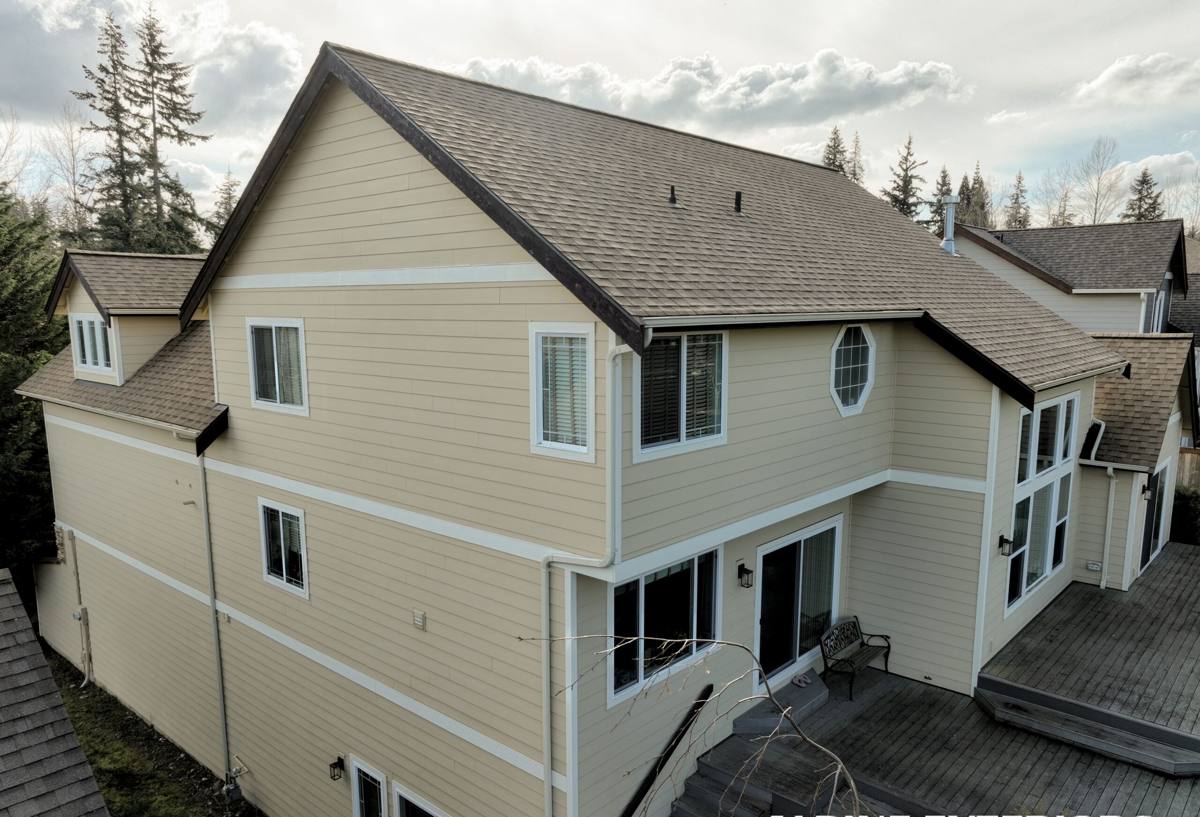
What Lynden's Climate Does to Windows
Wind-Driven Rain and Flashing
Rain moving up the Nooksack valley rarely falls straight down. Wind pushes it sideways into window head trim, jambs, and sills, and that sideways load tests the quality of the installation far more than it tests the window unit itself. A well-made window with poorly lapped flashing will leak eventually. A modest window installed with correct head flashing and a properly pitched sill pan usually won't. Most of the water damage we find around older windows traces back to how the window was set into the wall, not a defect in the window itself.
Salt-Tinged Air and Hardware Corrosion
Even well inland, Whatcom County gets a steady flow of marine air carried up the valley from the Sound, and that air carries enough salt to accelerate corrosion on window hardware, screen frames, and lower-grade fasteners over the years. It tends to show up first on windows facing prevailing weather: stiff or pitted hinges, corroded screen frames, locks that get harder to turn. Hardware and fastener grade matter more here than they would in a drier, inland climate.
Moss, Mildew, and Sill Rot
Shaded elevations and window sills that don't drain well stay damp longer here than they would in a drier climate, and that sustained moisture supports mildew growth and, on wood-framed windows, slow rot at the sill and lower corners. It's a gradual problem. Most homeowners don't notice it until paint starts failing or a sill feels soft underfoot.
Condensation and Temperature Swings
The gap between a heated interior and a cold, wet exterior creates real condensation pressure on glass and frames through Lynden's damp winters. Fogging between panes, water pooling on interior sills, or persistent condensation on older single-pane glass are usually signs a seal has failed or the window was never built for this much sustained moisture, not just a cosmetic nuisance.
Signs a Lynden Home Needs Window Replacement
Not every window problem calls for full replacement, but these are the signs worth having looked at before another wet season sets in:
- Fogging or visible moisture trapped between the panes of a double-pane window
- Drafts or cold spots near a window frame even when it's fully latched
- Wood trim, jambs, or sills that feel soft, look discolored, or show visible rot
- Windows that are difficult to open, close, or lock, or that no longer latch flush
- Visible daylight or gaps where the frame meets the siding or trim
- Paint or finish failing, bubbling, or chalking faster on window trim than on the rest of the wall
- A noticeable rise in heating costs with no other clear explanation
Choosing a Window Material for a Lynden Home
There's no single right answer for every house. Budget, sun exposure, and how long you plan to stay in the home all factor into the decision. What matters is understanding the real trade-offs for a climate with this much sustained moisture before you choose.
| Frame Material | Moisture & Corrosion Behavior | Typical Maintenance | Realistic Lifespan Here |
|---|---|---|---|
| Vinyl | Won't rot; performs well in a wet climate when seams and welds are installed correctly | Low; occasional track and weep-hole cleaning | 20-30 years |
| Fiberglass | Dimensionally stable across temperature swings; resists moisture and corrosion well | Low | 30-40+ years |
| Wood, painted or clad | Attractive but vulnerable at joints and sills without consistent upkeep | Higher; regular paint or finish maintenance | 15-30 years depending on upkeep |
| Aluminum | Conducts cold and can corrode over time in salt-tinged air unless well-finished | Moderate | 20-30 years |
We'll walk through which frame material fits your home's exposure and budget rather than defaulting to whichever is easiest to sell. A shaded, north-facing wall and a sun-exposed south wall on the same Lynden home don't always call for the same answer.
Full-Frame Replacement vs. Insert Replacement
One of the first decisions on any window project is whether to do a full-frame replacement, which removes the old window down to the rough opening and rebuilds the flashing from scratch, or an insert replacement, which fits a new window into the existing frame. Insert replacement is faster, less invasive to the surrounding siding, and usually less expensive, and it's a sound choice when the existing frame is structurally solid and was properly flashed to begin with. Full-frame replacement costs more and takes longer, but it's the honest call when there's already moisture damage at the sill or jambs, or when the original flashing was never done correctly. We'll tell you which situation you're actually in rather than defaulting to the cheaper option and sealing a moisture problem up behind a new window.
Installation Details We Don't Treat as Optional
Most window failures in this climate aren't failures of the window itself. They're shortcuts in flashing and sealing that don't show up until a wet season or two later. On every Lynden job, that means:
- A properly pitched sill pan that sheds water outward instead of letting it pool under the frame
- Head flashing integrated with the housewrap or building paper above the opening, lapped correctly
- Jamb flashing tied into the surrounding wall assembly rather than relying on caulk alone
- Weep holes and drainage paths left clear and functional, not sealed shut during installation
- Corrosion-resistant fasteners and hardware suited to salt-tinged, consistently damp air
- Insulation and air sealing around the frame that doesn't trap moisture against the framing
None of this is an upgrade we charge extra for. It's the baseline for a window installation that's supposed to hold up for decades in a climate like this one.
How We Approach a Window Replacement in Lynden
We start with an on-site look at the existing windows, checking frame condition, seal integrity, hardware function, and how the current flashing ties into the siding around each opening. From there, we give a straightforward read on which windows are reasonable repair candidates and which make more sense to replace, along with a written scope before any work begins. Because replacement windows are usually sized to the specific opening, we also give a realistic lead time on ordering so there are no surprises about scheduling once you've decided to move forward. Flashing and drainage detailing are standard practice on every job we do, not an optional add-on offered at extra cost.
Why a Local Crew Matters for This Work
A contractor who works Lynden and the surrounding Nooksack valley regularly already understands how wind-driven rain and marine-influenced air behave here, compared to a drier or more sheltered inland climate. That understanding shows up in the small decisions: how much lap a flashing detail gets, whether caulk alone is treated as adequate sealing, which hardware grade actually holds up. Those decisions are what determine whether a window installation holds up for one wet Whatcom County winter or several decades of them.
If you're dealing with drafty, foggy, or hard-to-operate windows on a Lynden property, or you're simply not sure whether repair or replacement is the right call, we're happy to take a look and give you an honest assessment. Reach out below for a free, no-pressure estimate.