 Ferndale Roofing
 Deck Replacement Built for Lummi Island's Marine Climate
Lummi Island sits out in the Salish Sea, and that location is exactly what makes deck ownership here different from a deck twenty miles inland in Ferndale or Bellingham. Salt-laden air moves across the island constantly, driving rain comes in sideways off the water for months at a stretch, and the shaded, damp conditions on many lots keep moss and algae established on decking almost year-round. A deck that would last two decades in a drier part of Whatcom County can show real structural wear in half that time out here if it wasn't built or maintained with the island's conditions in mind.
We work on Lummi Island regularly, which means we've seen how decks actually fail in this environment, not just how they're supposed to perform on a spec sheet. That experience shapes every replacement we do — from the fasteners we choose to how we detail the ledger board connection to the house.
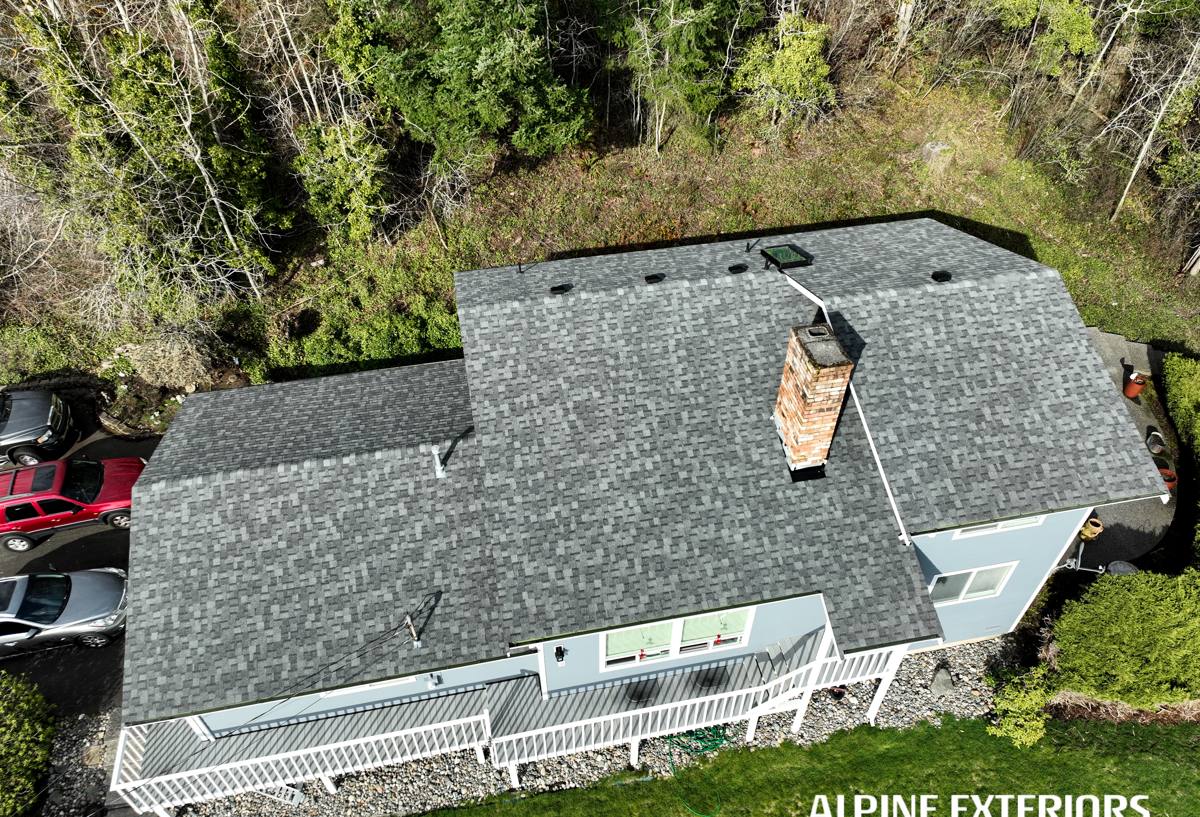
Why Salt Air, Rain, and Moss Wear Decks Down Faster Here
Three conditions do most of the damage on island decks, and they compound each other:
Salt Air and Corrosion
Airborne salt accelerates corrosion on any exposed metal — nails, screws, joist hangers, bolts, and railing hardware. Standard galvanized fasteners that hold up fine inland can start rusting within a few years this close to salt water. Once fastener heads corrode and weaken, the boards they hold start to work loose, and water gets into places it shouldn't.
Driving Rain and Trapped Moisture
Wind-driven rain doesn't just fall on a deck surface — it gets pushed sideways into gaps, under railings, and against the house where the deck ties in. If flashing at the ledger board is missing, undersized, or was never properly lapped, water tracks behind it and rots the rim joist and house framing from the inside, often long before the surface boards look bad.
Moss, Algae, and Surface Degradation
Shaded, tree-covered lots and the region's long wet season keep deck surfaces damp for extended stretches. Moss and algae hold moisture against the wood or composite surface, and on wood decking that moisture cycle (wet, dry, wet, dry) is what eventually splits boards and loosens grain. Left unaddressed, moss growth also makes decking surfaces slick and unsafe underfoot, particularly on stairs.
Signs Your Deck Has Reached Replacement, Not Repair
Not every aging deck needs a full replacement — sometimes board-level repairs or refastening buys real years. But certain signs point to structural issues that repair alone won't fix:
- Soft, spongy spots in the decking surface, especially near the house or around posts
- Visible rot or discoloration at the ledger board where the deck meets the structure
- Rust staining bleeding out from fastener heads or joist hangers
- Railings that flex or feel loose when leaned on
- Persistent moss or algae that returns within weeks of cleaning
- Gaps or separation where the deck attaches to the house
- Stairs that feel uneven, bouncy, or have visibly sagging stringers
- A deck original to a home built before current ledger-flashing and fastener standards were common practice
If you're seeing two or more of these, it's worth a professional evaluation before another wet season passes.
What a Correct Deck Replacement Actually Involves
A deck replacement that's built for this climate isn't just swapping old boards for new ones. The parts you don't see are what determine whether the new deck lasts.
Ledger Board and Flashing
Where the deck attaches to the house is the single most common failure point on any deck, and it's where driving rain does the most damage if it's not detailed correctly. A proper replacement includes new flashing, correctly lapped with the house's water-resistive barrier, so wind-driven rain can't track behind the ledger and into the framing.
Framing and Footings
We check footings, posts, and joists for rot and undersizing against current structural standards. Older island decks were sometimes built to whatever framing was on hand at the time, not to a load calculation — replacement is the point where that gets corrected.
Fasteners and Hardware
Given the salt exposure, we use corrosion-resistant fasteners and connectors rated for coastal or treated-lumber contact, not standard galvanized hardware that will show rust within a few seasons here.
Decking Surface
The visible boards are the last decision, made after the structure underneath is solid. Material choice matters more on Lummi Island than in a drier inland yard, which is why we walk every homeowner through the trade-offs before ordering material.
Choosing a Decking Material for Salt Air and Shade
There's no single "best" decking material — it depends on how much upkeep you want to do and how the deck sits relative to shade, moisture, and salt exposure. Here's how the common options compare for island conditions specifically:
| Material | Salt Air Performance | Moss/Algae Resistance | Maintenance |
|---|---|---|---|
| Pressure-treated wood | Good if fasteners are corrosion-resistant | Needs regular cleaning and re-sealing | Highest — annual cleaning, periodic sealing |
| Cedar | Naturally decay-resistant, holds up well | Still needs cleaning in shaded areas | Moderate to high — sealing recommended |
| Composite decking | Excellent — doesn't corrode or absorb salt | Better than wood but can still stain in deep shade | Low — occasional washing |
| PVC/capped composite | Excellent — fully sealed surface | Best resistance of the group | Lowest — mostly rinsing |
For homeowners who want to minimize the maintenance cycle on a shaded, salt-exposed lot, composite or capped-composite decking is usually the more honest long-term choice — the higher upfront material cost is offset by not having to sand, re-sand, and re-seal every couple of years. That said, wood and cedar remain solid choices for owners who prefer the natural look and are comfortable keeping up with maintenance. We'll walk you through the real cost and upkeep trade-offs for your specific lot rather than push one product line.
Our Deck Replacement Process
We keep the process straightforward and communicate clearly at each step, especially given the added coordination that island access requires:
- On-site evaluation — we inspect the existing deck's framing, ledger connection, footings, and hardware to determine what's driving the wear and whether replacement or repair makes sense.
- Material walkthrough — we go over decking, railing, and hardware options based on your lot's sun exposure, salt exposure, and how much upkeep you want to take on.
- Written estimate — a clear scope of work and cost breakdown before any demolition starts.
- Scheduling around logistics — for island jobs, we plan material delivery and crew scheduling around ferry timing so the job runs efficiently once it starts.
- Demolition and disposal — full removal of the old deck surface and any compromised framing.
- Structural rebuild — new or reinforced footings, framing, and properly flashed ledger connection.
- Decking, railing, and finish work — installation of your chosen material with corrosion-resistant fasteners throughout.
- Final walkthrough — we review the finished deck with you before considering the job complete.
Working on Lummi Island: Ferry Logistics and Scheduling
Any contractor working on Lummi Island has to plan around the ferry, and it affects a project more than most homeowners expect. Crew time, material deliveries, and even small return trips for forgotten items all have to be built into the schedule, or a straightforward job stretches out over unnecessary extra days. We plan deck replacements on the island with that reality built in from the estimate stage — batching material orders, sequencing crew days, and avoiding the kind of back-and-forth that adds cost and delay for both us and the homeowner. Contractors who don't regularly work the island sometimes underestimate this, and it shows up later as missed schedules or trips billed piecemeal.
What Affects the Cost of a Deck Replacement
Every deck is different, but the same handful of factors drive most of the cost variation we see on island projects:
| Cost Factor | Why It Matters |
|---|---|
| Deck size and shape | Multi-level decks, wraparounds, and irregular shapes require more framing and cutting than a simple rectangle |
| Decking material chosen | Pressure-treated lumber costs less upfront; composite and PVC cost more but reduce future maintenance |
| Existing structural condition | Rotted footings or framing that need full replacement add labor beyond surface-level work |
| Railing and stair complexity | Custom railing systems and multiple stair runs add both material and install time |
| Site access and logistics | Ferry scheduling and material delivery timing factor into island labor and delivery costs |
| Permitting requirements | Structural replacements typically require permitting through the county, which affects both timeline and process |
We give a straightforward, itemized estimate so you can see exactly where the cost is going rather than a single lump number.
Why It Matters to Hire a Crew That Already Works on Lummi Island
A deck built without accounting for salt air, driving rain, and moss will show problems faster here than the same deck would inland — it's not a matter of if, but when. Hiring a crew that already understands those conditions, and that has the logistics of island work figured out, means fewer surprises during the project and a deck that's actually built for where it sits, not for a generic checklist. We've built our process around Whatcom County's coastal conditions, including Lummi Island specifically, so the flashing details, fastener choices, and material recommendations we give you reflect what actually holds up here rather than what's standard everywhere else.
If your deck is showing wear, or you're just planning ahead before the next wet season, we're happy to come take a look and give you an honest read on repair versus replacement. Reach out for a free, no-pressure estimate using the form below.