 Ferndale Roofing
 Roofing an Island Home Is a Different Job Than Roofing One in Town
Lummi Island sits just off the Whatcom County mainland, reached by ferry from Gooseberry Point, and that short crossing changes what a roof has to deal with every day. A shingle roof on the island isn't just fighting the same rain every other roof in Ferndale sees — it's doing that while sitting in near-constant salt-laden air coming off the water, with less tree cover in some spots to break the wind and more of it in others to hold moisture against the roof deck. We've worked enough island jobs to know the difference matters, and we plan around it instead of installing the same roof we'd put on a house three miles inland and hoping it holds up the same way.
This page is specifically about asphalt shingle roofing for Lummi Island homes — what the local climate does to a shingle roof over time, what a correctly built system looks like out there, and how we handle the logistics of working on an island as a Ferndale-based crew.
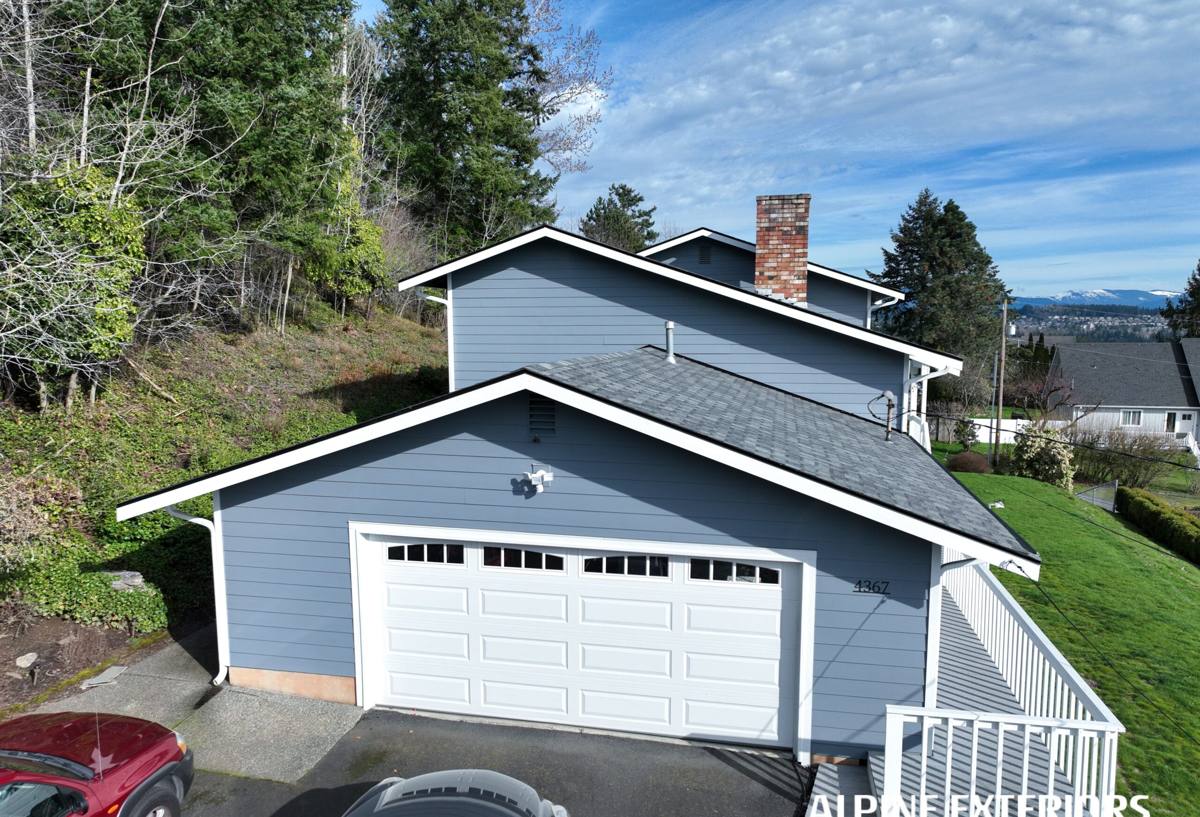
What Salt Air, Driving Rain, and Moss Actually Do to a Shingle Roof
Whatcom County's marine climate is hard on every roof, but Lummi Island gets a concentrated version of it. Understanding the mechanism helps explain why we make the material and installation choices we do.
Salt Air and Metal Components
Airborne salt accelerates corrosion on anything metal — flashing, drip edge, fasteners, roof vents, and any exposed valley metal. A fastener or flashing spec that's perfectly fine forty miles inland can start showing rust streaks or early pitting on an island roof within a few years if it's not rated for coastal exposure. This is one of the biggest differences between a standard shingle install and one built for a place like Lummi Island — the metal has to be chosen for the environment, not just for cost.
Driving Rain and Wind-Driven Water
Storms coming off the water tend to push rain sideways rather than straight down, which means water gets forced up under shingle tabs, into laps, and against flashing edges in ways that vertical rain doesn't. A roof system built for a calmer inland site doesn't always account for that lateral pressure. Underlayment coverage, shingle sealant strips, and flashing laps all matter more here than they would on a more sheltered lot.
Moss and Algae in a Long, Damp Season
Western Washington's moss season runs long, and shaded, north-facing, or tree-covered sections of an island roof can stay damp for weeks at a stretch. Moss doesn't just look bad — it holds moisture against the shingle surface, lifts tabs as it grows under them, and shortens the life of the roof underneath it. Algae staining is mostly cosmetic, but heavy moss growth is a real maintenance issue, not just an aesthetic one.
Choosing an Asphalt Shingle System Built for This Environment
Not every asphalt shingle product is a good fit for island exposure, and we don't treat "asphalt shingle roof" as a single generic product. The differences that matter most for Lummi Island homes are wind rating, algae-resistant granules, and how the shingle handles repeated wet-dry cycling.
| Shingle Type | Typical Wind Rating | Algae Resistance | Best Fit For |
|---|---|---|---|
| Standard 3-tab | Lower | Standard granules only | Sheltered, low-exposure sections; budget-driven jobs |
| Architectural / laminate | Higher, rated for gusts common on exposed sites | Usually available with algae-resistant (AR) granules | Most Lummi Island homes, especially open or water-facing exposures |
| Impact-rated architectural | High | Algae-resistant granules standard on most lines | Homes wanting maximum durability against wind-driven debris and hail |
For most Lummi Island homes we recommend architectural shingles with algae-resistant granules as the baseline, not the upgrade. The higher wind rating matters on a site with less consistent wind-breaking than a tightly built-up neighborhood, and the copper- or zinc-infused AR granules slow algae growth in a climate that gives it plenty of time to take hold. We'll still install a standard 3-tab system if that's what a homeowner wants and the site is sheltered, but we'll say plainly when we think it's the wrong call for that particular roof's exposure.
What a Correctly Built Shingle Roof Includes — Not Just the Shingles
The shingles themselves get most of the attention, but on an island roof, the components underneath and around them do most of the work of keeping water out. A correct install includes:
- Ice-and-water shield at eaves, valleys, and around every penetration — not just where code requires the minimum, but wherever wind-driven rain is likely to push water uphill under the shingle
- Synthetic underlayment across the full deck, lapped and fastened to shed water even if a shingle tab lifts in a wind event
- Corrosion-resistant flashing and fasteners — stainless or heavy-gauge coated metal at valleys, chimneys, skylights, and wall intersections instead of standard-grade metal that corrodes faster in salt air
- Proper nailing pattern matched to the shingle manufacturer's high-wind installation instructions, not just the standard pattern
- Balanced intake and exhaust ventilation so the attic isn't trapping moisture against the underside of the deck
- Sealed and flashed penetrations for every vent, pipe boot, and fixture, checked individually rather than assumed
Skipping any one of these doesn't usually cause an immediate failure — it shows up two, five, or eight years later as a leak that traces back to a flashing detail or a ventilation gap that should have been handled at install.
How We Approach a Lummi Island Roofing Project
Working on the island adds logistics that a mainland Ferndale job doesn't have, and we plan for them up front rather than figuring it out on the day of the job.
Inspection and Estimate
We start with an on-roof or close-visual inspection to assess the current shingle condition, deck condition where accessible, flashing points, ventilation setup, and any moss or algae buildup. We look specifically at how exposed the roof is to wind and salt air based on its orientation and surrounding tree cover, since that shapes our material recommendation.
Materials and Ferry Scheduling
Because everything — crew, tear-off equipment, shingles, underlayment, flashing stock, and dump trailer — has to move by ferry, we plan material staging and crew days around the ferry schedule so the job runs efficiently once we're on-island. This isn't a minor detail; a crew that hasn't planned for ferry timing can lose real productivity on a job, and that inefficiency tends to get passed on to the homeowner one way or another.
Tear-Off and Deck Check
We remove the old roofing down to the deck, inspect for soft spots, rot, or prior water damage, and replace any compromised sheathing before anything new goes down. This step is where hidden problems from years of moisture exposure usually show up, and it's not something that can be judged accurately from the ground or from photos.
Installation
Underlayment, ice-and-water shield, flashing, and shingles go down in that order, following the manufacturer's high-wind fastening spec. We pay particular attention to valleys, wall step-flashing, and any low-slope transitions, since those are the spots most likely to leak on a wind-driven-rain site.
Cleanup and Walkthrough
We do a full magnetic sweep for nails and debris, clean up the site, and walk the finished roof with the homeowner so they know what was done and what to watch for going forward — moss-prone areas, gutter maintenance needs, and anything specific to that roof's exposure.
Living With a Shingle Roof on Lummi Island: Maintenance That Actually Matters
A well-installed shingle roof still needs some ongoing attention in this climate. Most of it is simple, but skipping it shortens the roof's life. A basic seasonal checklist for island homeowners:
- Clear moss and debris from shaded or north-facing roof sections before it builds up thick enough to lift shingle tabs
- Keep gutters and downspouts clear so wind-driven rain has somewhere to go instead of backing up under the eaves
- Trim back overhanging branches to reduce shade, debris buildup, and abrasion against the shingle surface
- Check flashing around chimneys, skylights, and vents visually once or twice a year for lifted edges or corrosion
- Have the roof looked at after any major windstorm, especially one with gusts strong enough to move loose debris
None of this requires climbing on the roof yourself — most of it can be checked from the ground with binoculars or handled by a crew during a routine maintenance visit. The point is catching small issues, like a lifted shingle tab or a clogged valley, before they turn into a deck-level leak.
Ventilation and Moisture: The Part of the Roof System You Don't See
A shingle roof's lifespan depends as much on what's happening in the attic as what's happening on the surface. In a damp coastal climate, an attic without balanced intake and exhaust ventilation traps warm, moist air against the underside of the roof deck. Over time that moisture can degrade the sheathing from below, encourage mold growth, and even accelerate shingle aging from the underside — problems a homeowner won't see until they show up as a stain on a ceiling or a soft spot underfoot in the attic. When we replace a roof, we check the existing ventilation setup and correct it if intake or exhaust is undersized or blocked, rather than just reinstalling shingles over an attic that isn't breathing correctly.
Why Hiring a Crew That Already Works Lummi Island Matters
A roofing crew that's never worked the island will usually treat it like any other job site — same materials, same schedule assumptions, same generic flashing spec. That approach isn't dishonest, it's just not tuned to the conditions. A crew that regularly works Lummi Island has already worked through the ferry logistics, already knows to spec corrosion-resistant metal and fasteners as standard rather than an upsell, and already understands which orientations on the island tend to hold moss and which take the worst of the wind-driven rain. That familiarity shows up in fewer surprises during the job and a roof system that's actually matched to where it's going, not a mainland-standard roof installed in an island location.
It also matters for follow-up. If a flashing detail needs a look after a bad storm, or a homeowner wants a moss treatment a few years down the road, working with a crew based nearby in Ferndale — not a company that has to plan a special trip out — makes that kind of ongoing care realistic instead of a hassle.
What Affects the Cost of a Lummi Island Shingle Roof
Every roof is different, but a few factors consistently move the price on island jobs more than they would on a comparable mainland roof:
| Cost Factor | Why It Matters on Lummi Island |
|---|---|
| Roof size and pitch | Standard factor everywhere — more surface area and steeper pitches take more material and labor time |
| Shingle grade selected | Architectural and impact-rated shingles cost more per square than 3-tab, but hold up better to wind and salt exposure |
| Deck condition found at tear-off | Rot or soft sheathing from prior moisture exposure requires replacement before re-roofing, which isn't always visible before tear-off |
| Flashing and fastener spec | Corrosion-resistant metal and fasteners cost more than standard-grade but are the right call for salt-air exposure |
| Logistics and ferry scheduling | Material transport and crew scheduling around ferry availability affects job planning, though an experienced crew minimizes the added cost |
| Ventilation corrections | Adding or fixing intake/exhaust ventilation adds some cost but protects the investment in the new roof |
We give a straightforward, written estimate after inspecting the actual roof rather than quoting off square footage alone, since deck condition and exposure level can change the scope once we're up there.
Get a Straightforward Look at Your Lummi Island Roof
If you're weighing a repair against a full replacement, or just want an honest read on how much life is left in your current shingle roof, we're glad to take a look. We'll give you a clear, no-pressure estimate based on what we actually find on your roof — use the form below to get in touch.