 Ferndale Roofing
 Lummi Island's Marine Climate Doesn't Forgive Weak Siding
Lummi Island sits out in the salt water of Whatcom County, which means every home on it takes weather that mainland Ferndale homes get in a lighter dose. Wind off the water carries salt spray onto exterior walls, especially on the water-facing and west sides of a house. That salt settles into paint film, caulk joints, and any exposed wood fiber, and over years it accelerates the breakdown of anything that isn't built to shrug it off. Add in driving rain that comes sideways during winter storms, and you have a siding assemblage that has to manage bulk water, not just shed a light drizzle.
Then there's the shade and moss problem. A lot of island lots carry heavy tree cover, and homes tucked into that cover stay damp longer after every rain. Moss and algae don't just look bad — they hold moisture against a wall surface for extended stretches, and that constant dampness is what causes paint to fail early and wood-based products to soften. A siding product that can't handle that combination of salt exposure, wind-driven rain, and prolonged damp shade is going to show problems well before its expected lifespan is up.
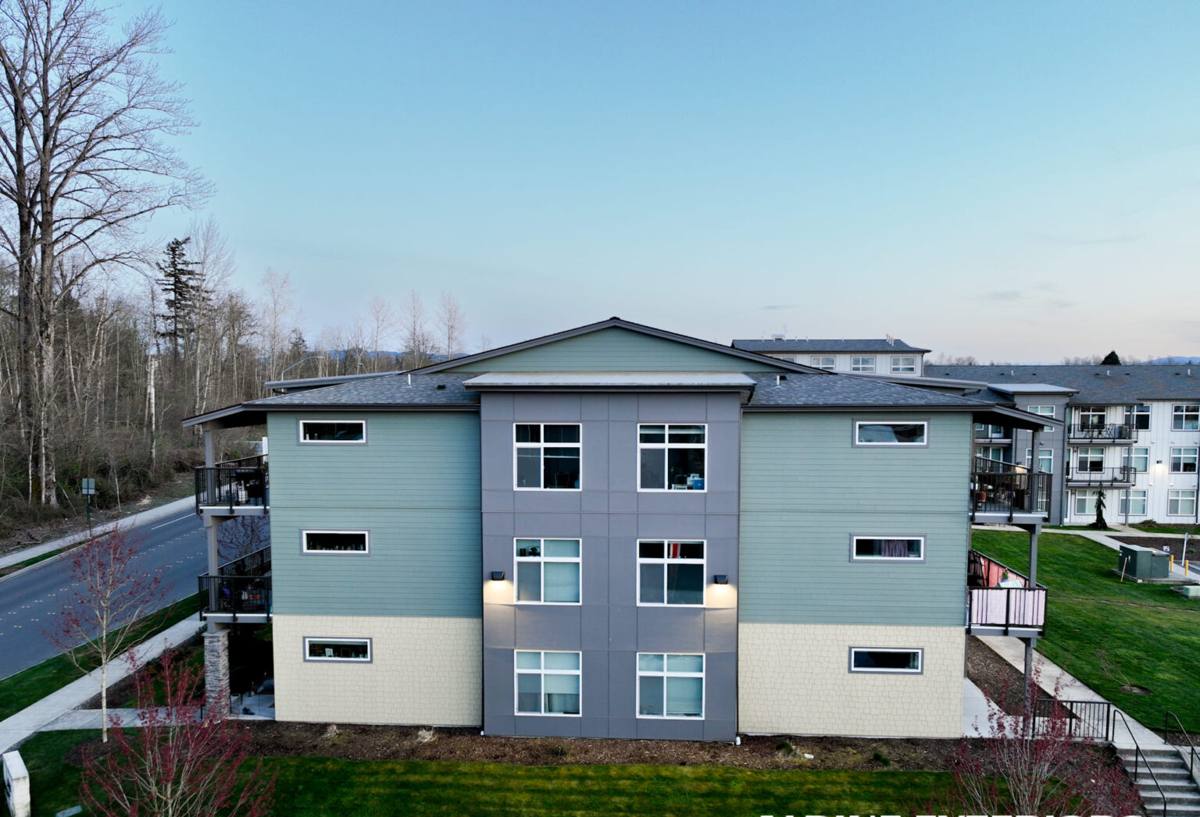
Why James Hardie Fiber Cement Fits This Environment
James Hardie fiber cement siding is made from cement, sand, and cellulose fiber pressed and cured into a dense, stable board. It doesn't absorb water the way wood-based sidings do, it won't rot, and it's non-combustible. For a marine-exposed, moss-prone location like Lummi Island, those properties matter more than they would in a drier inland setting.
ColorPlus Factory Finish vs. Field-Applied Paint
James Hardie's ColorPlus finish is baked on at the factory under controlled conditions, which produces a more even, more durable coat than paint applied on site after installation. On a salt-exposed island wall, a factory finish that resists fading and chalking longer means fewer repaint cycles and less chance of moisture finding its way in through hairline paint cracks. It's not a magic shield against every environmental factor, but it's a meaningfully better starting point than field-applied paint on a porous substrate.
HZ10 Engineered for Wet, Cool Climates
James Hardie engineers its HardieZone products in two versions — HZ5 for hotter, drier climates and HZ10 for wetter, more humid ones. Western Washington, including the marine-exposed parts of Whatcom County, generally calls for the HZ10 formulation, which is built with the region's rainfall and humidity in mind. Using the correct HZ designation for the actual site conditions is a detail that's easy to overlook but directly affects long-term performance.
What a Correct Installation Actually Involves
Fiber cement siding is only as good as the assembly it's installed into. A rushed or by-the-numbers install can leave a house with the same moisture problems people install Hardie to avoid. On Lummi Island specifically, we pay close attention to a handful of details that matter more here than on a typical inland job:
- A drainage gap (rainscreen) behind the siding so any water that gets past the surface can drain and the wall can dry, rather than staying trapped against the sheathing
- Correct flashing at every window, door, and penetration, lapped so water is directed out and away rather than behind the siding
- Fastener placement and spacing per James Hardie's published installation guidelines — under-fastening or over-driving nails is one of the most common causes of early failure
- Proper clearance between the bottom of the siding and the ground, decks, or roof lines, since standing water and splash-back are common failure points
- Caulking only where James Hardie's guidelines call for it, with a quality sealant rated for the exposure — not caulking every joint indiscriminately, which can trap moisture instead of releasing it
None of these steps are unique to Lummi Island, but the consequences of skipping them show up faster in a location with this much wind-driven moisture and shade. A gap in the flashing that might take a decade to cause visible damage on a sheltered inland wall can cause a problem in a few wet seasons on an exposed island elevation.
Reading the Signs Your Current Siding Is Losing the Fight
Homeowners on Lummi Island often call us after noticing one or two of the following, not realizing how far along the underlying damage already is:
Surface Signs
Persistent moss or green-black staining that comes back within weeks of cleaning, paint that's chalking, peeling, or bubbling in patches, and visible cupping or warping in older wood or engineered wood panels are all early warnings. On older cedar or untreated wood siding, softness when you press a screwdriver tip into the surface is a clear sign that moisture has gotten into the fiber.
Signs the Problem Has Moved Inward
Discoloration or a musty smell along interior walls near exterior corners, trim that's separating from the wall, and soft spots around window and door casings usually mean water has been getting behind the siding for a while, not just sitting on top of it. These are the cases where a straightforward re-side often needs to include some sheathing or framing repair once the old siding comes off.
Our Process, Start to Finish
We keep the process the same whether the home is a short drive from our Ferndale shop or out on Lummi Island — the difference is in how we plan the logistics, which we cover below.
- On-site inspection — we look at the existing siding, trim, flashing, and any visible moisture damage, and check how exposed each elevation is to wind and rain
- Scope and estimate — a written breakdown of what's being replaced, which James Hardie products and colors are recommended for the exposure, and what (if anything) needs repair underneath before new siding goes on
- Tear-off and inspection of sheathing — once old siding is off, we check the wall assembly for hidden rot or moisture damage before closing it back up
- Water management install — house wrap, flashing, and rainscreen gap installed correctly before a single piece of siding goes up
- James Hardie installation — HZ10 product installed to manufacturer spec, with attention to fastening, clearances, and joint treatment
- Final walkthrough — we go over the finished work with the homeowner and register the manufacturer warranty
Working on an Island Changes How a Job Has to Be Planned
Getting a crew and materials to Lummi Island isn't the same as pulling up to a mainland Ferndale driveway. Ferry schedules mean the day is structured around specific crossing windows, not an open-ended arrival time. Material deliveries have to be planned in full truckloads rather than piecemeal runs, because a forgotten box of trim or a miscounted bundle of siding means a lost crossing and a lost day, not a quick trip back to the shop.
A crew that already works the island plans for this instead of discovering it mid-project. That means ordering a little more contingency material up front, sequencing the tear-off and install stages so the crew isn't stranded waiting on a delivery, and building the schedule around ferry timing rather than treating it as an afterthought. Homeowners feel this in fewer delays and fewer surprise add-on trips — not in anything dramatic, just in a job that runs closer to the timeline they were given.
What Drives Cost on a Lummi Island Siding Project
Every project is different, but a few factors consistently move the price on island jobs more than they would on a comparable mainland home.
| Cost Factor | Why It Matters Here |
|---|---|
| Home size and wall complexity | More square footage and more corners, dormers, and trim details mean more material and labor regardless of location |
| Condition of existing sheathing | Hidden rot found during tear-off adds repair work before new siding can go on — more likely on homes with long-term moss or moisture exposure |
| Ferry logistics and trip planning | Material and crew transport is planned around crossing schedules, which affects how efficiently a job can be sequenced |
| Exposure level of the site | Waterfront-facing walls with heavy wind and salt exposure may call for more careful flashing and trim detailing than sheltered, tree-covered walls |
| Siding profile and trim selection | Lap siding, panel siding, and custom trim widths all carry different material and labor costs |
Living With Hardie Siding in a Moss-Prone Marine Climate
Correctly installed James Hardie siding doesn't need much upkeep, but a little seasonal attention goes a long way on Lummi Island specifically. Keeping tree limbs and brush trimmed back from walls reduces the shade and dampness that feed moss growth. Rinsing off accumulated grime and salt residue once or twice a year, especially on water-facing elevations, keeps the ColorPlus finish looking good and prevents buildup from working into caulk joints. Clean gutters and downspouts that actually direct water away from the foundation matter just as much as the siding itself — a lot of "siding problems" we're called out for turn out to start with water that never should have hit the wall in the first place.
Why the Installer You Choose Matters as Much as the Product
James Hardie backs its products with a strong transferable warranty, but that warranty covers material defects — it doesn't cover a poorly executed installation. A crew that already works Lummi Island regularly has already worked through the access logistics, has seen how the salt air and shade patterns on the island affect different elevations, and knows which details in the manufacturer's installation guide matter most in this specific setting. That familiarity shows up in fewer callbacks and a finished product that actually performs the way James Hardie's engineering intends it to.
If you're weighing a siding replacement on Lummi Island, we're happy to come take a look, walk the exterior with you, and put together a straightforward, no-pressure estimate — just fill out the form below.