 Ferndale Roofing
 Siding in Fairhaven Has to Work Harder Than Siding Ten Miles Inland
Homes closer to the water in Whatcom County deal with a different set of conditions than homes set back in the valleys around Ferndale. The Fairhaven area sits close enough to the water that salt-laden air, wind-driven rain, and long stretches of shade-fed dampness are part of daily life for the siding on a house — not occasional weather events. Over a few decades, that combination is what separates siding that still looks tight and clean from siding that's cupping, staining, or rotting at the corners.
This page is about one job in one area: installing siding correctly on a home in or near Fairhaven, in a climate that punishes shortcuts. We install James Hardie fiber cement siding exclusively, and we'll explain why that matters here specifically, not just in general.
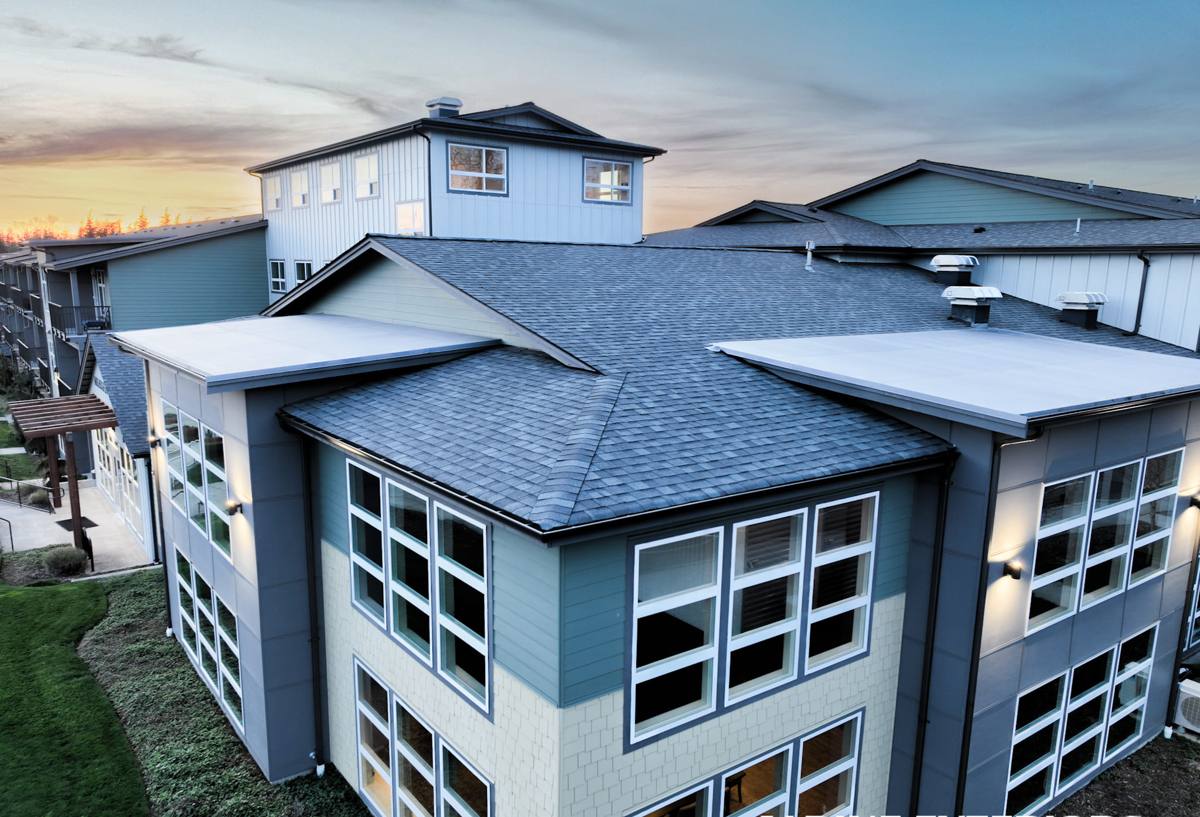
What Salt Air, Driving Rain, and Moss Actually Do to Siding
Salt Air
Airborne salt doesn't just sit on a wall — it works its way into any exposed fastener, seam, or scratch in a finish. Over time it accelerates corrosion on fasteners and metal trim, and it can degrade paint films that weren't formulated to handle it. Homes closer to open water see this faster than homes a few miles inland, which is exactly the situation many Fairhaven-area properties are in.
Driving Rain
Whatcom County storms don't just fall straight down — wind pushes rain sideways into wall assemblies, especially on the water-facing sides of a home. If flashing, laps, and joints aren't installed with that in mind, water finds its way behind the siding instead of shedding off the surface. Once moisture gets behind the cladding, the sheathing and framing underneath pay the price long before anyone notices a problem from the outside.
Moss and Prolonged Dampness
Shaded, moisture-holding conditions along the coast and under tree cover extend the moss and algae season well beyond what drier parts of the state see. Moss holds water against a surface, and on materials that aren't dimensionally stable or moisture-resistant, that constant dampness is what triggers swelling, delamination, or rot years before it should happen.
None of these three things are dramatic on their own. Together, and over years, they're the reason siding choice and installation quality matter more here than in a lot of other places.
Why We Install Only James Hardie Fiber Cement
We made a deliberate decision to standardize on one siding system rather than offer vinyl, engineered wood, or other fiber cement brands. That's not a marketing position — it's a practical one. When a crew installs one product to one spec, day in and day out, the installation quality goes up and the guesswork goes down. For a climate like this one, that consistency matters as much as the product itself.
James Hardie fiber cement is non-combustible, dimensionally stable when properly acclimated and installed, and factory-finished with its ColorPlus baked-on finish rather than site-applied paint. That finish is formulated to hold up under UV and moisture exposure better than field-applied coatings, which matters directly for salt-air durability. Hardie also engineers specific product lines for different climate zones — the HZ5 line used throughout the Pacific Northwest is built around the wet, cool conditions this region actually sees, rather than being a one-size-fits-all product.
We're not going to tell you every other product on the market is unusable — vinyl, engineered wood, and other fiber cement brands all have a place, and each has legitimate strengths. What we'll say plainly is that after years of doing this work in Whatcom County's climate, we stopped installing the alternatives because we were not comfortable standing behind the long-term results in conditions like Fairhaven's. Hardie, installed correctly, is what we're willing to warranty and put our name on.
How Coastal Materials Compare on the Traits That Matter Here
| Trait | Vinyl Siding | Engineered Wood | James Hardie Fiber Cement |
|---|---|---|---|
| Salt air / corrosion resistance | Panel itself resists salt, but fasteners and trim are still exposed | Depends heavily on sealed edges and maintained coatings | Fiber cement body is inert to salt; ColorPlus finish engineered for UV/moisture exposure |
| Moisture and moss tolerance | Won't rot, but can trap moisture behind it if not vented properly | Vulnerable at cut edges and joints if moisture gets in | Resists moisture absorption and doesn't feed rot the way wood-based products can |
| Fire performance | Can soften or deform under heat | Combustible | Non-combustible material |
| Finish durability | Can fade or become brittle over decades | Relies on maintained paint/coating | Factory-baked finish, longer color life before repainting is needed |
| Long-term maintenance | Low, but repairs can be visually mismatched | Higher — coating upkeep is not optional | Low when installed and caulked to spec |
The point of this comparison isn't to declare a winner in every category everywhere in the country. It's to show why, specifically in a climate with heavy salt exposure and a long moss season, we landed on fiber cement as our standard.
What a Correct Siding Installation Actually Involves
The material is only part of the equation. Most siding failures we get called out to inspect trace back to installation details, not the product itself. A correct James Hardie installation in this climate includes:
- Proper clearance between the bottom of the siding and grade, decks, or roof lines, so water doesn't wick up into the material
- Weather-resistive barrier and flashing details at every window, door, and penetration, installed to shed water outward and downward
- Correct fastener type, spacing, and embedment depth per Hardie's published specifications, since under- or over-driven fasteners are one of the most common causes of premature siding failure
- Proper joint treatment and caulking at butt joints and trim, using products compatible with fiber cement and the coastal environment
- Acclimation and handling practices that keep the material dry and properly supported before and during installation
- Ventilation behind the cladding where the assembly calls for it, so incidental moisture can escape rather than sit against the sheathing
Skipping or rushing any one of these doesn't show up on day one. It shows up in year five or ten, usually as staining, soft spots, or paint failure at exactly the joints and penetrations that were cut corners.
Our Process for Fairhaven-Area Siding Jobs
1. On-Site Assessment
We start by walking the exterior with you, looking at the current siding's condition, how the home is oriented to wind and rain, and where moisture or moss problems have already shown up. Water-facing walls and shaded sides get extra attention.
2. Tear-Off and What's Underneath
Removing the old siding is also when we find out what condition the sheathing and framing are actually in. In homes near the water, this is where hidden moisture damage from years of small leaks tends to surface. We'll show you what we find before covering it back up, and repair compromised sheathing before any new siding goes on — new siding over damaged sheathing just hides the problem for another few years.
3. Weather Barrier and Flashing
This step is where most long-term siding performance is actually decided. We install house wrap or an equivalent weather-resistive barrier and flashing at every penetration, with extra attention to water-facing elevations that take the brunt of driving rain.
4. Installation to Manufacturer Spec
Hardie panels, planks, and trim go on following the manufacturer's fastening, clearance, and joint-treatment requirements — not a generalized approach carried over from other products. This is also what keeps the manufacturer's warranty intact.
5. Final Walkthrough
We walk the finished exterior with you, cover basic care going forward, and answer any questions about how the assembly is put together before we call the job done.
Why a Crew That Already Works This Area Matters
Siding installation isn't identical everywhere in Whatcom County, and a crew that mostly works drier, inland jobs can miss things that are second nature to a crew that regularly works closer to the water. Knowing which elevations typically take the worst wind-driven rain, where moss tends to establish first on a given lot, and how quickly fasteners and trim corrode in salt air isn't something you learn from a manual — it's something you learn from doing the work here repeatedly.
Ferndale Roofing Co is based in Ferndale and works throughout Whatcom County, including coastal areas like Fairhaven. That local pattern recognition shapes decisions on every job — where to add extra flashing attention, which details deserve a second look, and what maintenance schedule actually makes sense for a given home's exposure.
What Drives the Cost of a Siding Installation Here
| Factor | Why It Matters |
|---|---|
| Home size and wall complexity | More corners, dormers, and trim detail mean more cutting, flashing, and labor time |
| Tear-off scope | Full removal of old siding and disposal adds time compared to installing over prepared surfaces (when appropriate) |
| Sheathing condition | Moisture damage found during tear-off may require repair before new siding can go on |
| Siding profile and accessories | Lap width, panel style, and trim choices affect material and labor cost |
| Access and site conditions | Slopes, tight lot lines, and second-story work affect scaffolding and staging needs |
We won't quote a number without seeing the home, because these factors genuinely change the scope. What we can tell you is that a proper tear-off-and-replace job with sheathing inspection is generally a multi-week project, not a multi-day one — and that's by design, not a delay.
Simple Maintenance That Extends the Life of Coastal Siding
- Rinse salt residue and grime off exterior walls once or twice a year, especially on water-facing sides
- Keep gutters clear so overflow doesn't run down and pool against siding at corners
- Trim back vegetation and tree cover that keeps a wall shaded and damp longer than it needs to be
- Check caulking at trim and joints periodically and have gaps resealed before they become water paths
- Address any soft spots, staining, or bubbling paint promptly rather than waiting for it to spread
None of this replaces a correct installation — it just protects the investment once the installation is done right.
Talk to a Local Crew Before You Decide
If you're weighing a siding project on a home in or near Fairhaven, we're happy to walk the property with you, look at what your current siding is telling us, and explain exactly what a correct James Hardie installation would involve for your specific home. There's no pressure and no cost to get an estimate — just a straight answer about what your home needs.