 Ferndale Roofing
 Windows in Fairhaven Take a Different Beating Than Windows Inland
Fairhaven sits close enough to the water that its homes deal with a combination most inland Whatcom County houses don't: salt-laden air, driving wind-driven rain off the Strait, and long stretches of gray, damp weather where wood trim and window seals never really get a chance to dry out. Add in the moss and algae season that runs a good chunk of the year here, and you've got conditions that will find every weak point in a window installation — usually the flashing and the seal, not the glass itself.
Ferndale Roofing Co works on homes throughout this corridor, and window replacement in Fairhaven gets treated differently than the same job twenty minutes inland. The frame material, the flashing detail, and the sealant choice all get picked with salt air and wind-driven moisture in mind, not just whatever's standard in a catalog.
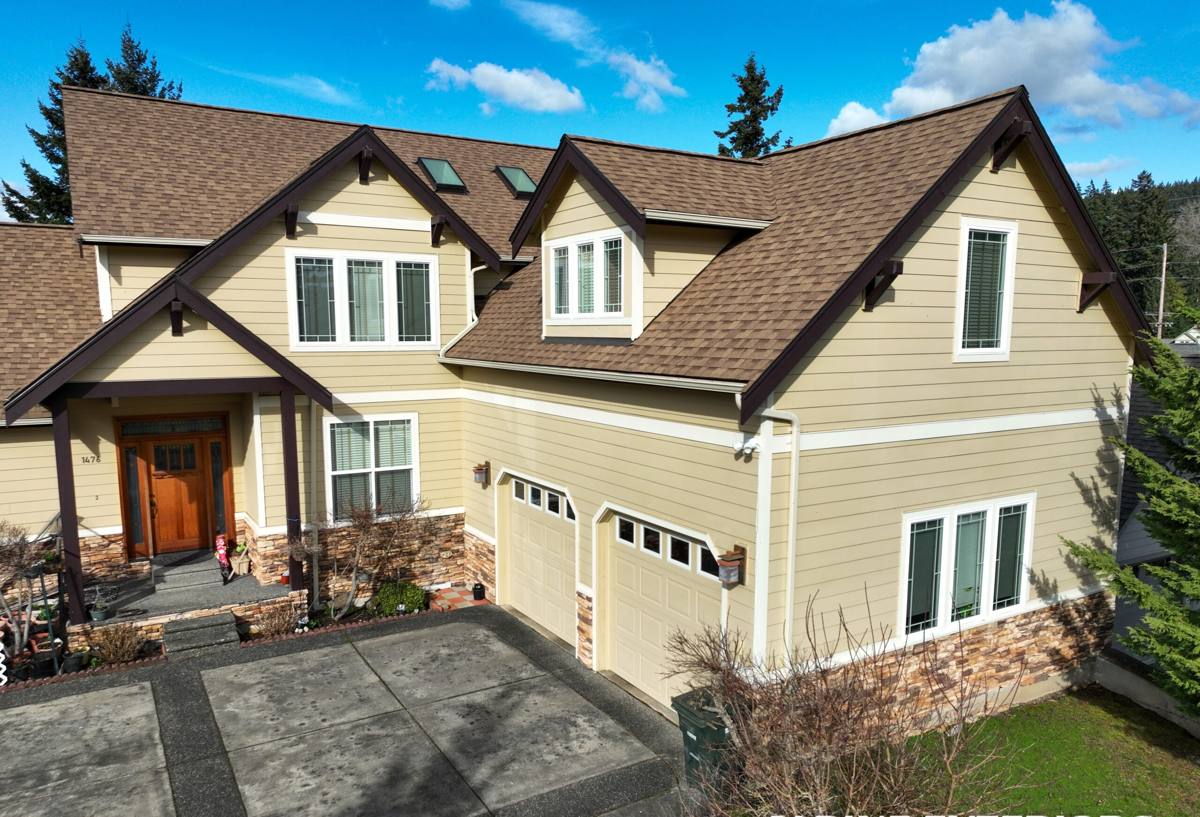
What Salt Air and Driving Rain Actually Do to a Window
It helps to understand the failure pattern before talking about the fix. Coastal exposure doesn't usually break glass or crack frames outright — it works on the connections and finishes:
- Wind-driven rain pushes water sideways and upward against the window, which means a flat, gravity-only flashing detail that would be fine inland can fail here.
- Salt air accelerates corrosion on unprotected fasteners, hinges, and cheaper aluminum components, and it degrades some sealants and finishes faster than the manufacturer's inland-tested lifespan suggests.
- Persistent moisture and moss growth on surrounding siding and trim traps water against the window opening if the surrounding surfaces aren't shedding water properly, so a window is only as good as the assembly around it.
- Temperature swings between damp mornings and afternoon sun cause repeated expansion and contraction, which is hard on caulk lines and weak seals over the years.
None of this means Fairhaven homes need exotic materials. It means the installation details — flashing, sealant selection, fastener choice, and how the window ties into the surrounding wall assembly — matter more here than they would in a drier, more sheltered part of the county.
Where We See the Most Failures on Older Fairhaven Homes
On replacement jobs we're called out for in this area, the pattern is consistent: it's rarely the glass unit itself that's failed. It's usually rotted framing behind an old window that was never properly flashed, sealant that was never rated for this kind of exposure, or a sill that's been slowly absorbing water for years because it wasn't sloped to drain. A window replacement that only swaps the sash and ignores what's happening behind the trim is a window replacement that will need to happen again sooner than it should.
What a Correct Window Replacement Involves Here
A proper job in Fairhaven isn't just "old window out, new window in." The sequence matters:
- Remove the old unit and inspect the rough opening. This is where we find out if there's hidden water damage, soft framing, or a flashing job that was never done right the first time.
- Repair or rebuild the opening as needed. Any rot or soft wood gets addressed before a new window goes in — installing a new window over a compromised opening just hides the problem for a while.
- Install flashing designed for wind-driven rain, lapped correctly so water is always directed outward and down, never into the wall cavity.
- Set the window plumb, level, and properly shimmed, with fasteners and hardware suited to a salt-air environment.
- Seal with a sealant rated for the exposure, not just whatever's fastest to apply — some caulks break down noticeably faster in coastal air.
- Tie the window back into the surrounding siding and trim so water sheds away from the opening, not toward it.
Skip any one of these steps and you can end up with a window that looks fine for a season or two but is already letting moisture into the wall behind it.
Choosing Frame Material for This Exposure
There's no single "best" window material — there's a best fit for the exposure and the home. Here's how the common options hold up under Fairhaven's conditions, as a starting point for a conversation, not a final answer:
| Frame Material | How It Handles Salt Air & Moisture | Maintenance Burden |
|---|---|---|
| Vinyl | Doesn't corrode; performs well in coastal air; quality varies significantly by manufacturer | Low — occasional cleaning |
| Fiberglass | Very stable in temperature swings and moisture; strong long-term option for exposed sites | Low |
| Aluminum | Can corrode over time near salt air unless properly coated/anodized; also conducts cold | Moderate — coating needs monitoring |
| Wood (unclad) | Attractive but needs consistent upkeep in a damp, mossy climate; most vulnerable of the group here | High — regular repainting/sealing |
| Wood-clad (vinyl or aluminum exterior) | Interior wood look with a weather-resistant exterior shell; good middle ground if the cladding is done well | Low to moderate |
For most Fairhaven homes we work on, vinyl or fiberglass frames end up being the practical choice for anything on the weather-facing side of the house, simply because they hold up to salt air and driving rain with the least ongoing maintenance. That said, plenty of homes have architectural reasons — historic character, HOA guidelines, matching existing trim — to go a different direction, and we'll walk through the trade-offs honestly rather than push one product line.
Glass and Weatherproofing Details Worth Understanding
A few specifics that matter more here than they might elsewhere:
- Double or triple-pane glass helps with both energy efficiency and condensation control — condensation between panes is often the first visible sign a seal has failed, and it shows up faster in humid coastal climates.
- Low-E coatings help manage heat loss through the long gray stretches of the year without changing how the window looks from the street.
- Weep holes (the small drainage openings on many window sills) need to stay clear of debris, moss, and paint overspray — this is a simple maintenance item that's easy to overlook and directly affects how well a window sheds wind-driven rain.
- Sill pans under the window unit add an extra layer of protection by capturing and draining any moisture that gets past the primary seal, which is cheap insurance in a wind-driven rain environment.
Why a Local Crew Matters for This Job
Window replacement is one of those jobs where the visible part — the new window — is the easy part to get right. The part that determines whether it lasts is the part nobody sees: the flashing detail, the sealant choice, the way the opening was prepped. A crew that regularly works Fairhaven and the surrounding Ferndale and Whatcom County coastline has already seen how standard installation practices hold up — or don't — against this specific combination of salt air, wind-driven rain, and moss season. That's not something a crew based somewhere dry and inland picks up on their first job out here.
We also know what to look for when we open up an old window: the framing damage patterns common to this area, the spots where flashing typically gets skipped on older construction, and which sealants have actually held up over years of coastal exposure versus which ones looked fine on the shelf.
Signs Your Fairhaven Home's Windows May Need Replacing
- Condensation or fogging between the panes of a double-pane window (a failed seal, not a cleaning problem)
- Drafts or a noticeable temperature difference near the window even when it's closed
- Soft, discolored, or spongy trim and sill wood around the frame
- Difficulty opening, closing, or locking the window smoothly
- Visible gaps, peeling caulk, or daylight around the frame edges
- Persistent moss or dark staining on the sill or trim below the window
- Paint that's bubbling or peeling specifically around the window opening, which often points to trapped moisture
Any one of these on its own isn't necessarily an emergency, but a few of them together usually mean the window and the opening around it need a real look, not just a fresh bead of caulk.
What to Expect From Our Process
We start with an on-site look at the window or windows in question — not just measuring for a replacement unit, but checking the condition of the opening, the surrounding trim, and the siding tie-in. From there we'll give you a straight assessment: what's actually wrong, what your realistic material options are for this exposure, and a written estimate before any work starts. If we find hidden damage once we open things up, we'll show you what we found and talk through the options before proceeding — no surprise change orders sprung on you at the end.
Costs vary by window size, frame material, number of openings, and what condition the surrounding framing is in, so we don't quote sight-unseen. What we can tell you is that fixing an opening properly the first time — flashing, framing, and all — almost always costs less over the life of the window than a fast install that has to be redone in a few years because water got behind it.
Get a Free, No-Pressure Estimate
If your windows in Fairhaven are showing their age, drafting, fogging, or just due for an honest look, we're glad to come take a look and tell you where things stand. Use the form below to request a free estimate — no pressure, no obligation, just a straight assessment from a crew that already knows this stretch of coastline.