 Ferndale Roofing
 Fairhaven Sits Right at the Edge of Coastal Washington's Toughest Conditions
Fairhaven's location near the water puts it in one of the more demanding micro-climates we work in around Whatcom County. Homes here deal with salt-laden air coming off the bay, wind-driven rain that hits siding sideways instead of straight down, and a wet season that can keep exterior surfaces damp for weeks at a stretch. That combination is harder on a home's exterior than the conditions found just a few miles inland in Ferndale proper, and it's a big part of why we don't treat every siding job in this area the same way.
None of this means Fairhaven is a bad place to own a home — it means the siding you choose, and the way it's installed, matters more here than it would somewhere drier and further from the water. This page is about what that actually looks like in practice: what the climate does to different siding materials over time, what a correctly installed job needs to include, and why we've standardized on one product system rather than offering several.
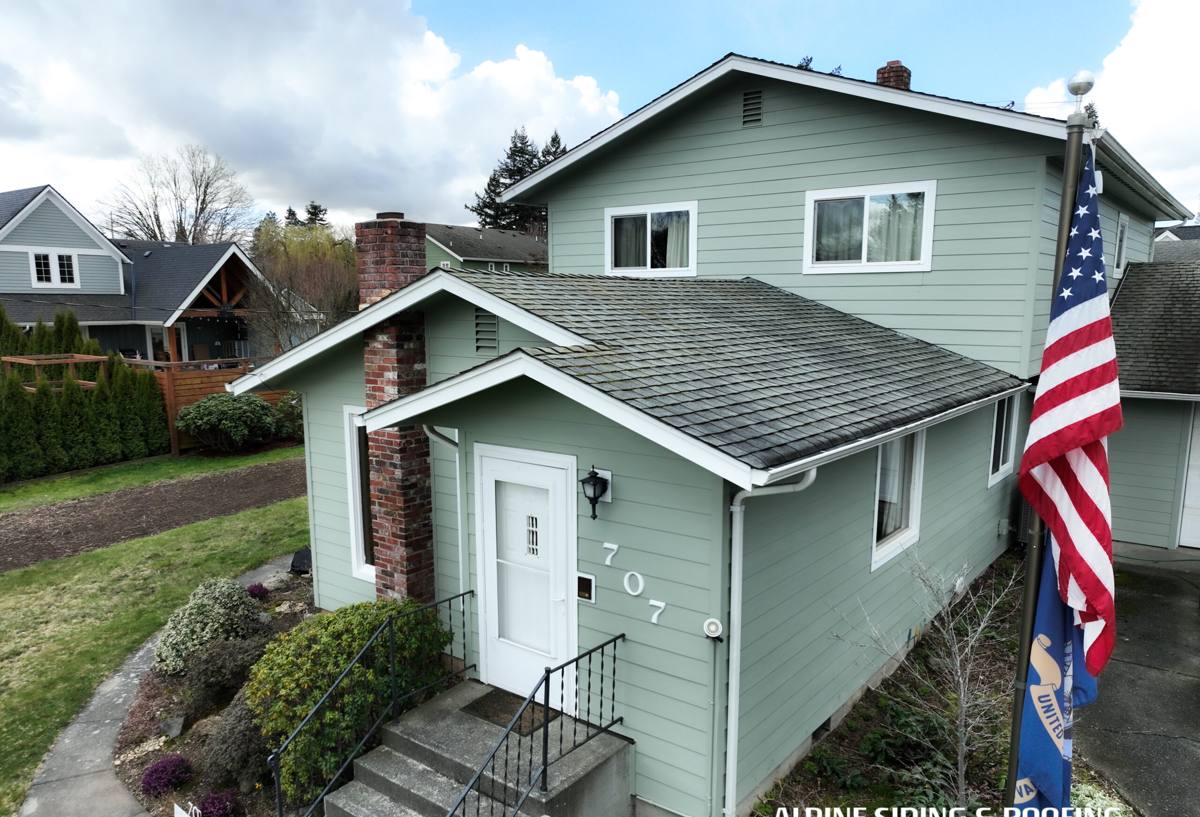
Three Climate Stresses That Wear Down the Wrong Siding Fast
Salt Air and Corrosion
Airborne salt doesn't just affect boats and dock hardware. It settles on exterior surfaces, works into seams and fastener heads, and accelerates corrosion on anything metal that isn't rated for coastal exposure. Over years, that can mean streaking, pitting on fasteners, and premature failure of trim and flashing that was installed with the wrong hardware for the environment.
Driving, Wind-Driven Rain
Rain that comes in at an angle behaves differently than rain falling straight down. It gets pushed up under laps, into gaps around trim, and behind loosely sealed joints. A siding system that relies on caulk alone to keep water out, rather than proper lapping, flashing, and drainage behind the cladding, will eventually let moisture in — and once moisture gets behind siding, the sheathing and framing underneath pay the price long before the siding itself looks bad.
A Long Moss and Mildew Season
Shade, moisture, and moderate temperatures are exactly what moss and mildew need, and this part of Washington offers all three for most of the year. Surfaces that stay damp longer — north-facing walls, areas under overhangs, spots close to landscaping — grow moss and mildew faster than they would in a drier climate. Siding that absorbs moisture gives that growth something to hold onto; siding that doesn't absorb water gives it far less to work with.
Why We Only Install James Hardie Fiber Cement Siding
We made a deliberate decision years ago to install one siding system — James Hardie fiber cement — rather than offering vinyl, engineered wood, or untreated cedar alongside it. In a climate like Fairhaven's, that decision comes down to how each material actually behaves once it's on a wall for a decade or two, not just how it looks on day one.
James Hardie fiber cement is manufactured from cement, sand, and cellulose fiber, which makes it dimensionally stable and non-combustible. It doesn't swell, rot, or delaminate the way wood-based products can when they take on moisture repeatedly. Hardie also builds its lap and panel products with a factory-applied ColorPlus finish, which is baked on under controlled conditions rather than field-applied — that matters in a climate where paint has to survive salt exposure and long wet stretches, not just sunshine. And Hardie engineers its formulations by climate zone, with a version built for the moisture and temperature patterns of the Pacific Northwest rather than a single generic mix sold everywhere.
We're not going to tell you every other product on the market is worthless — vinyl and engineered wood siding both have a place, and homeowners choose them for reasons that make sense in the right context. But for a coastal-influenced climate like Fairhaven's, the maintenance burden, moisture behavior, and long-term warranty structure of fiber cement made it the only product we're willing to stand behind with our own installation crews.
What a Correctly Installed Fiber Cement Job Actually Involves
Water-Resistive Barrier and Flashing
Fiber cement siding is only as good as what's behind it. Every correct installation starts with a continuous water-resistive barrier, properly lapped and taped at seams, with flashing integrated at every window, door, and horizontal transition. In a wind-driven rain environment, flashing details at the top of windows and at butt joints are where water intrusion actually starts if they're rushed or skipped.
Fastening and Clearances
Fiber cement has specific fastener spacing, penetration depth, and clearance requirements from James Hardie — including ground clearance and gaps at roof lines, decks, and other siding-to-surface transitions. Those clearances exist to keep water from wicking up into the bottom edge of the siding, which is exactly the kind of detail that gets ignored on a rushed job and shows up as damage years later.
Caulking and Joint Details
Caulk is a backup, not a primary defense. Correct fiber cement installation relies on proper lapping and flashing to shed water, with sealant used at specific joints per manufacturer specs rather than as a substitute for building the assembly correctly. Using the wrong sealant, or over-relying on it at butt joints, is one of the more common shortcuts we see on prior installations we're asked to repair or replace.
Our Process for a Fairhaven Siding Project
- On-site assessment — we look at existing siding, sheathing condition, and any signs of past moisture intrusion before quoting anything.
- Product and color selection — matching the right Hardie product line and ColorPlus finish to the home and its exposure.
- Removal and sheathing check — old siding comes off and sheathing is inspected and repaired before anything new goes up.
- Water-resistive barrier and flashing installation — the part of the job that determines whether the siding actually performs.
- Siding installation to manufacturer spec — fastener pattern, clearances, and joint treatment done to James Hardie's requirements, not shortcuts.
- Final inspection and cleanup — a walkthrough before we consider the job finished.
How Fiber Cement Compares to Other Siding Options in This Climate
The table below reflects how these materials generally hold up under the salt air, driving rain, and extended damp season that Fairhaven homes deal with.
| Factor | Vinyl Siding | Engineered Wood Siding | Cedar / Untreated Wood | James Hardie Fiber Cement |
|---|---|---|---|---|
| Moisture and salt air resistance | Doesn't absorb water, but can warp or crack with temperature swings | Vulnerable if edges or cuts aren't sealed and maintained | Absorbs moisture; needs consistent maintenance to resist rot | Doesn't rot; formulated for regional moisture exposure |
| Moss and mildew tendency | Low absorption, but growth can sit on the surface | Moderate — depends on coating maintenance | Higher, especially in shaded, damp areas | Low — dense, non-absorbent surface |
| Maintenance | Low, but limited repair options if damaged | Regular inspection and resealing of cut edges | Ongoing staining or painting required | Periodic cleaning and caulk checks |
| Fire resistance | Can soften or melt under heat exposure | Combustible | Combustible | Non-combustible |
| Typical warranty structure | Varies widely by manufacturer | Often prorated after initial period | No manufacturer warranty on the material itself | Strong, transferable manufacturer warranty |
What Affects the Cost of a Fiber Cement Siding Project
Every Fairhaven home is different, so we won't quote a number without seeing the house — but these are the factors that most often move the price up or down.
| Cost Factor | Why It Matters |
|---|---|
| Home size and number of stories | More square footage and taller walls mean more material, labor, and staging |
| Condition of existing sheathing | Hidden moisture damage found during tear-off adds repair scope before new siding goes on |
| Trim, corner, and detail work | Homes with more architectural detail take more time to flash and finish correctly |
| Product line and finish selection | Different Hardie lines and custom ColorPlus colors carry different material costs |
| Site access | Tight lots, landscaping, or proximity to neighboring structures affect staging and labor time |
Maintenance Checklist for Fairhaven Homeowners
Fiber cement is low-maintenance compared to wood, but "low" isn't "none" — especially this close to the water. A few habits go a long way:
- Rinse siding periodically to clear salt residue and organic buildup, especially on north-facing and shaded walls
- Check caulked joints once a year for cracking or separation, particularly around windows and doors
- Keep landscaping trimmed back from siding to reduce shade, moisture retention, and moss growth
- Look at ground-level clearances after major storms to make sure nothing is trapping water against the bottom edge
- Touch up any exposed cut edges or scuffs promptly rather than letting them sit through a wet season
Why Hiring a Crew That Already Works in Fairhaven Matters
Siding installation isn't one-size-fits-all, and a crew that mostly works drier, inland areas won't always account for the details that matter on a coastal-influenced job — clearance heights, flashing sequencing, and material choices that hold up to salt exposure. A crew that regularly works in and around Fairhaven and the rest of Ferndale already accounts for those conditions by default, because we've seen what happens when they're ignored.
Local, ongoing presence also means straightforward accountability. If a detail needs a second look after a heavy storm season, you're not chasing down a company that was only in town for one job.
If you're considering fiber cement siding for a home in Fairhaven, we're happy to take a look and give you a straightforward, no-pressure estimate — no obligation, just an honest read on what your home needs.