 Ferndale Roofing
 Deck Building in Fairhaven's Marine Climate
A deck in Fairhaven lives a harder life than the same deck built fifty miles inland. Sitting close to the water means more salt-laden air moving through the wood and metal, more driving rain hitting horizontal surfaces at an angle, and a longer stretch of damp, low-sun months where moss and algae get a foothold and never really let go. None of that means you can't have a deck that lasts decades here — it means the deck has to be built with those specific conditions in mind from the footings up, not treated like a generic backyard project.
We build and repair decks throughout Fairhaven and the surrounding Whatcom County area, and most of the problems we get called out to fix trace back to the same root cause: a deck that was built to a general-purpose spec instead of a coastal, wet-climate spec. This page covers what that actually means in practice.
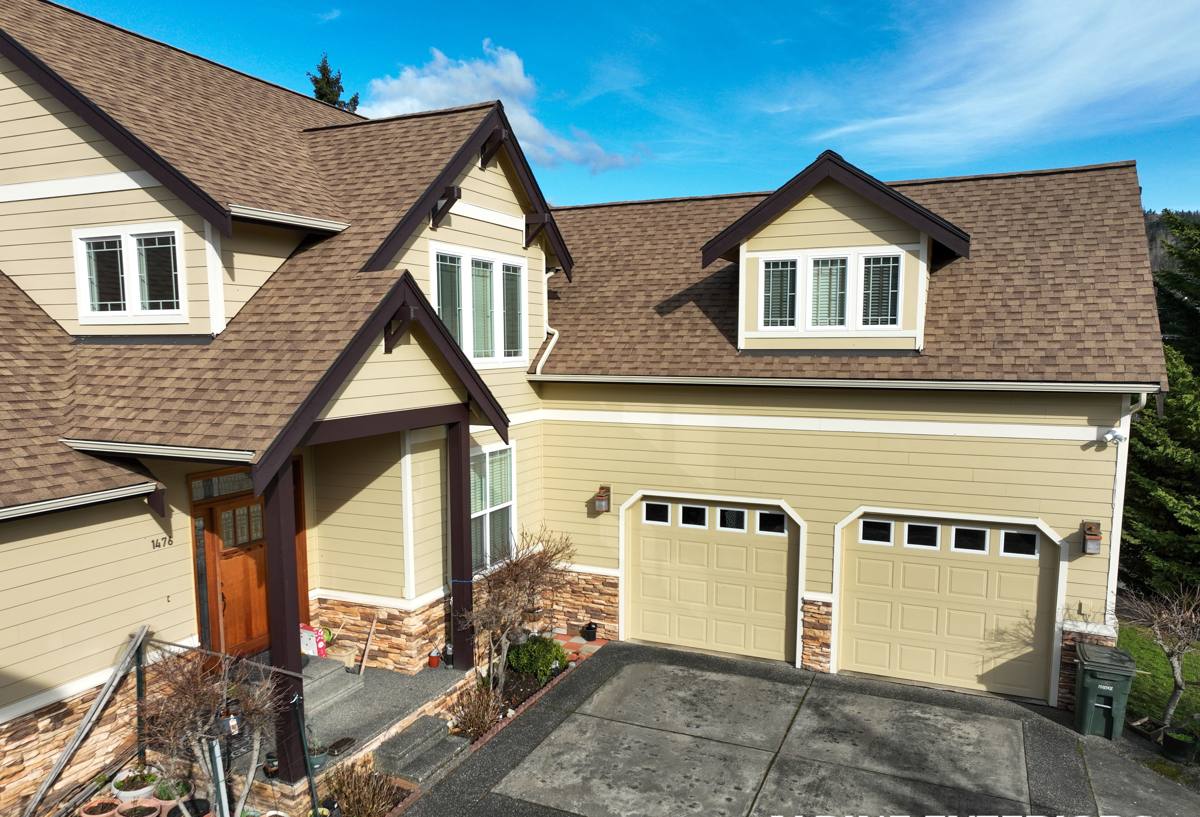
What Salt Air and Moss Season Do to a Deck
Three things wear on decks here more than almost anywhere else in the state, and they compound each other.
Salt Air and Corrosion
Airborne salt from the bay accelerates corrosion on anything metal — fasteners, joist hangers, railing hardware, post bases. Standard electro-galvanized screws and hangers that might hold up fine inland can start rusting within a few seasons this close to salt water. Once a fastener corrodes, it loses holding strength long before it looks obviously bad, which is part of why hardware failure is one of the most common hidden problems we find on older decks in this area.
Driving Rain
Rain here rarely falls straight down. Wind off the water pushes it sideways, which means it gets driven under railings, behind ledger boards, and into any gap in the flashing that a calmer climate might get away with. A deck built without proper ledger flashing or with insufficient slope for drainage will hold water in exactly the spots where rot starts — where the deck meets the house, and where boards butt against posts or trim.
Moss and Algae
Long damp, shaded stretches of fall through spring give moss and algae plenty of time to establish on horizontal wood and composite surfaces. Beyond looking bad, a moss layer holds moisture against the decking material, and on wood decking it turns walking surfaces slick and dangerous long before it becomes a structural issue. Board spacing, gap width, and surface texture all affect how fast this happens and how easy it is to manage.
Choosing the Right Decking Material for This Climate
There's no single "best" decking material — there's a best material for your budget, your maintenance appetite, and how exposed the deck is to weather. Here's how the common options compare for a Fairhaven-area build.
| Material | Upfront Cost | Moisture Behavior | Maintenance | Typical Lifespan |
|---|---|---|---|---|
| Pressure-treated fir/hem-fir | Lowest | Absorbs water; needs sealing to resist swelling and checking | Annual cleaning, re-sealing every 1-2 years | 15-20 years with upkeep |
| Cedar | Moderate | Naturally rot- and insect-resistant, but still needs finish to hold color and shed water | Cleaning and re-staining every 1-3 years | 15-25 years with upkeep |
| Capped composite | Higher | Doesn't absorb water or swell; shrugs off salt air well | Occasional washing, no sealing or staining | 25-30+ years |
| Uncapped composite | Moderate-high | More moisture- and mold-resistant than wood, but can absorb some surface moisture over time | Periodic cleaning to prevent staining | 20-25 years |
In a straight salt-air, high-rain environment, capped composite tends to hold up the most predictably because it isn't feeding moisture into a wood substrate. That said, plenty of homeowners still prefer the look and feel of real wood, and a well-built, well-maintained cedar deck can look great for decades — it just asks more of the owner in upkeep. We'll walk through the honest trade-offs for your specific deck rather than pushing one material for every job.
Structural Basics That Matter More Here Than Elsewhere
The parts of a deck nobody sees are the parts that determine whether it's still standing in twenty years. In this climate, a few of them deserve extra attention.
Footings and Frost Depth
Footings need to be sized and set to the correct frost depth for the area, with concrete piers that keep post bases off wet ground. A footing that's too shallow or undersized can shift over time as the soil freezes, thaws, and gets saturated through our wet winters.
Ledger Attachment and Flashing
Where the deck attaches to the house is the single most common failure point we see, and it's almost always a flashing problem, not a fastener problem. Correct ledger flashing directs water away from the house band board instead of letting it collect behind the ledger — that hidden rot can go unnoticed for years because it's covered by the decking above.
Fasteners and Hardware
Given the salt-air exposure here, we don't cut corners on hardware. Stainless steel or heavy-duty coated fasteners and connectors cost more upfront than standard hardware, but the difference in corrosion resistance is significant, and hardware is one of the worst places to save money on a deck — it's expensive to inspect and replace once decking is installed over it.
Drainage and Airflow Underneath
Proper joist spacing, board gapping, and ventilation underneath the deck keep moisture from pooling against structural wood. A deck built tight to the ground with no airflow traps humidity underneath it year-round, which is exactly the environment rot and mold need.
Railings, Stairs, and Code Requirements
Any deck built to code in Washington needs to meet baseline safety requirements for guardrails and stairs, and these aren't optional extras — they're there because deck collapses and falls are a real and preventable risk.
- Guardrails required on any deck surface more than 30 inches above grade, generally at a minimum 36-inch height for residential decks
- Baluster spacing that prevents a 4-inch sphere from passing through
- Stair stringers sized and supported correctly for the run, with consistent rise and run on every step
- Handrails on stairs with the required number of risers, graspable and properly terminated
- Proper attachment of guardrail posts to the deck framing, not just to the decking surface
We pull the appropriate permits and build to current code as a matter of course, not as an upsell. A deck that skips permitting or inspection might save a little time upfront, but it can create real problems at resale, with insurance, or if something ever goes wrong structurally.
Our Deck Building Process
Every deck starts with an honest look at what the site actually needs, not a one-size-fits-all package.
- On-site assessment. We look at grade, drainage, sun and wind exposure, and how the deck will attach to the house before talking materials.
- Design and material selection. We walk through the material comparison above in the context of your budget and maintenance preferences, and settle on a layout that works with the site rather than against it.
- Permitting. We handle the permit application and coordinate any required inspections so the finished deck is fully compliant.
- Footings and framing. Correct footing depth, ledger flashing, joist layout, and corrosion-resistant hardware go in first — this is the stage that determines the deck's lifespan.
- Decking, railings, and stairs. Surface material, guardrails, and stairs are installed to code, with attention to board spacing and drainage.
- Final walkthrough. We go over the finished deck with you, including what maintenance it will and won't need going forward.
Maintenance Checklist for Fairhaven Homeowners
Whatever material you choose, a little seasonal attention goes a long way in this climate. Here's what we recommend keeping an eye on:
- Rinse or sweep moss and debris off the deck surface before it has a chance to establish, especially in shaded areas
- Check railing posts and stair connections yearly for looseness or corrosion at the hardware
- Inspect the ledger area where the deck meets the house for any signs of staining or soft wood
- Clear leaves and debris from between boards and from under the deck to keep airflow and drainage working
- Re-seal or re-stain wood decking on the schedule appropriate to the product — don't wait until it's visibly gray or cracking
- Look underneath the deck once a year for standing water, sagging joists, or fastener corrosion
Why Hire a Crew That Already Works Fairhaven
A deck built to a generic spec sheet can look fine on the day it's finished and still fail early in a marine climate — the problems it's set up for don't show themselves for a few years. Building decks in and around Fairhaven regularly means we're not guessing at what this environment does to fasteners, flashing, and wood over time; we're building to account for it from the start. That includes knowing which hardware grades hold up near the water, how to detail flashing for wind-driven rain, and how to lay out decking so moss and standing water don't get a foothold.
It also means we're a known, reachable local contractor if anything ever needs attention down the road, rather than an out-of-area crew that's hard to track down for a warranty question a few years later.
Get a Free, No-Pressure Estimate
If you're planning a new deck or replacing one that's showing its age, we're happy to take a look and give you a straightforward assessment of what it needs — no pressure, no upsell. Use the form below to request a free estimate for deck building in Fairhaven.