 Ferndale Roofing
 Deck Building on Lummi Island
Lummi Island sits out in the salt water of Whatcom County, reached by a short ferry crossing from the mainland near Ferndale and Bellingham. That setting is part of what makes the island beautiful, and it's also exactly why decks out here take a different kind of beating than a deck built ten miles inland. Salt-laden air, near-constant marine moisture, and a long moss season that can run from fall through spring all work on wood, fasteners, and finishes in ways that a generic decking guide won't tell you about. We build and repair decks on the island as part of our regular Ferndale-area service area, and this page is about what actually holds up out there.
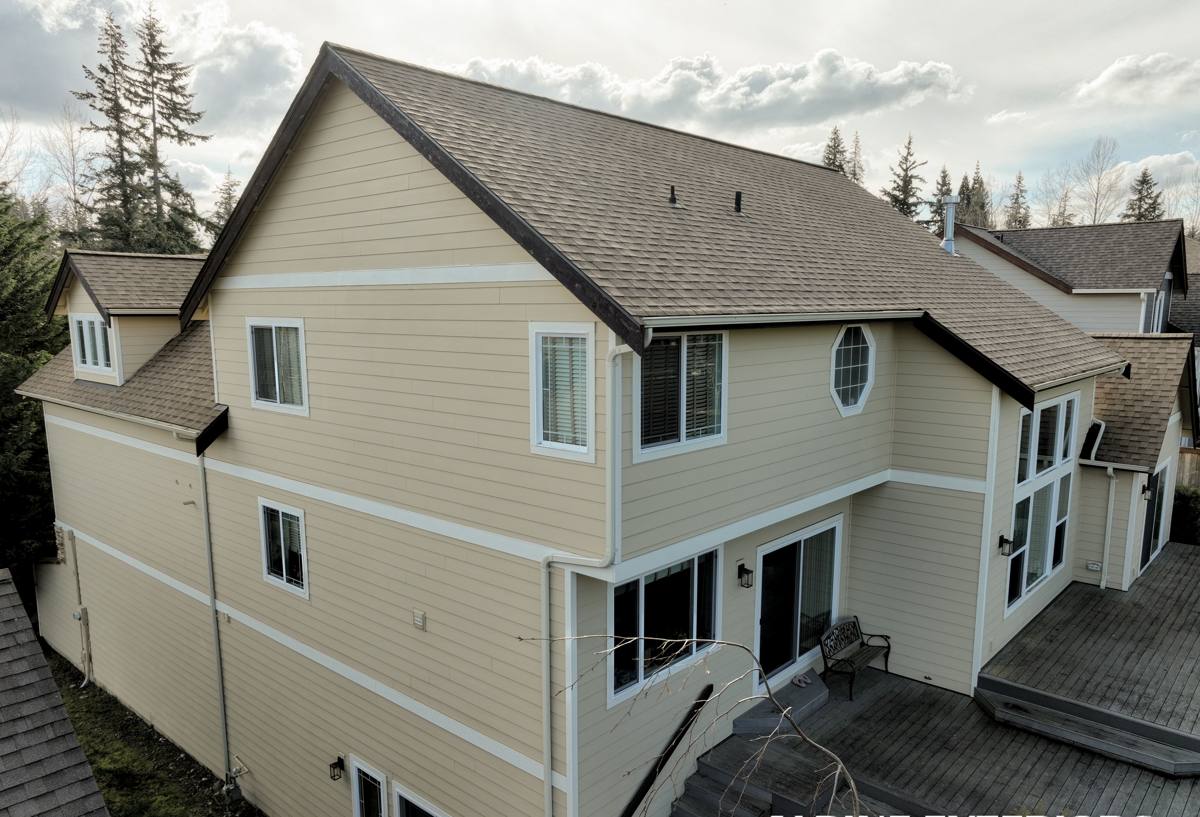
What the Island Climate Does to a Deck
Every deck in Whatcom County deals with rain. Lummi Island decks deal with rain plus salt spray plus wind exposure that varies wildly from one side of a lot to the other. A few things we see consistently on island decks that don't come up as often on mainland jobs:
Salt Air and Metal Hardware
Ordinary galvanized fasteners and brackets corrode faster this close to salt water. Once a fastener starts rusting, it weakens the connection it's holding and can streak or stain the decking around it. This is one of the biggest differences between building here and building a few miles inland — the hardware spec matters more than most homeowners expect.
Driving Rain and Water Intrusion
Wind-driven rain off the water doesn't just fall straight down — it gets pushed sideways into ledger connections, stair stringers, and any spot where the deck meets the house. Flashing details that would be adequate in a sheltered yard can fail here if they're not built for wind-driven exposure.
Moss and Prolonged Dampness
Shaded decks, north-facing decks, and anything under tree cover can stay damp for weeks at a stretch during the wet months. Moss and algae take hold on decking boards, railings, and especially on stair treads, where the buildup becomes a real slipping hazard, not just a cosmetic issue. Ventilation and board spacing have a lot to do with how bad this gets.
Choosing Decking Material for This Climate
There's no single "best" decking material for every island lot — it depends on sun exposure, budget, and how much upkeep you actually want to do. Here's how the common options compare for Lummi Island's conditions specifically.
| Material | How It Handles Salt Air & Moisture | Moss/Algae Resistance | Maintenance |
|---|---|---|---|
| Pressure-treated fir/hem-fir | Holds up if fasteners and flashing are correct; wood itself can absorb moisture at cut ends | Needs regular cleaning; moss takes hold quickly in shade | Annual cleaning, periodic sealing |
| Cedar | Naturally rot-resistant, ages well in marine air with some silvering | Still needs cleaning but resists rot longer than fir | Cleaning plus optional staining every few years |
| Composite (capped) | Doesn't absorb moisture or salt the way wood does; won't rot | Can still grow surface algae in constant shade, but cleans off easily | Occasional washing, no sealing or staining |
| PVC decking | Fully synthetic, essentially immune to salt and moisture damage | Same surface-cleaning need as composite | Lowest upkeep of the group |
We're honest with island homeowners that composite and PVC cost more up front but save real time and money over the life of the deck out here, simply because salt air and dampness are harder on painted or stained wood surfaces than they are inland. That said, cedar remains a solid, attractive choice for owners who want a natural look and are willing to keep up with cleaning and refinishing on a normal schedule.
Framing and Substructure — The Part You Don't See
The decking surface gets all the attention, but the framing underneath is what actually determines how long a deck lasts in this environment. On island jobs we pay particular attention to:
- Corrosion-resistant structural hardware (joist hangers, post bases, and structural screws rated for coastal/marine exposure) rather than standard-grade galvanized fasteners
- Proper ledger flashing where the deck attaches to the house, sized for wind-driven rain, not just vertical drainage
- Post bases set to keep wood posts off standing water and away from direct soil contact
- Joist spacing and blocking that meets current code for the loads the deck will actually carry
- Adequate airflow underneath the deck so damp ground conditions don't sit trapped against the framing
A deck can look perfect on the surface and still be failing underneath if these details were skipped. This is where most of the corner-cutting happens on cheap deck jobs, and it's also where most of the expensive repairs originate a few years down the road.
Railings and Hardware Choices
Railing systems take direct salt spray and sun exposure, often more than the deck surface itself. Wood railings need the same attention to fasteners and finish as the decking. Metal cable or panel railing systems need a coating or alloy rated for coastal exposure — standard mild steel components will show rust streaks on light-colored decking within a season or two out here. Composite and vinyl railing components generally hold up well with minimal upkeep, which is worth factoring in if you're already leaning toward low-maintenance decking.
Getting Materials and Crews to the Island
Building on Lummi Island means every load of lumber, hardware, and equipment has to be planned around the ferry schedule. That's a real logistical factor that catches contractors off guard if they don't work the island regularly — a missed ferry slot can turn a one-day framing task into a two-day job, and a crew unfamiliar with the routine will burn time and your money figuring it out. Working the island as part of our regular Ferndale-area route means we plan material deliveries and crew scheduling around the crossing instead of learning it on your job.
Our Deck Building Process
Whether it's a full rebuild or new construction, our process is the same on every island job:
- On-site assessment. We look at sun/shade exposure, wind direction relative to the water, existing framing condition (on rebuilds), and how the deck ties into the house.
- Material and design discussion. We walk through decking, railing, and hardware options honestly — including trade-offs in cost, maintenance, and appearance — so you're picking based on real information, not a sales pitch.
- Permitting. Deck projects above certain heights or attached to the home typically require a permit through Whatcom County. We handle that process as part of the job.
- Framing built for the exposure. Corrosion-resistant hardware, proper flashing, and code-correct structural spacing, not the minimum that will pass inspection.
- Decking and railing installation. Installed per manufacturer spacing and fastening specs, which matters even more here since improper gapping traps moisture and accelerates moss growth.
- Final walkthrough. We go over basic care specific to your deck's material and sun exposure before we call the job done.
Maintenance Checklist for Island Decks
Whatever material your deck is built from, a few habits go a long way toward fighting the moss and salt exposure that's part of living out here:
- Sweep or rinse the deck surface regularly during wet months to keep organic debris from building up in board gaps
- Clean stair treads and any shaded sections more often — these are where moss takes hold first and where slips are most likely
- Inspect visible fasteners and railing hardware yearly for early rust staining
- Keep gutters and downspouts near the deck clear so runoff isn't draining directly onto the deck surface or framing
- Trim back vegetation that's shading the deck or blocking airflow underneath it, where practical
- Re-seal or re-stain wood decking on the schedule recommended for the product, not just when it looks faded
Why a Local Crew Matters for This Job
Deck building isn't exotic work, but building one correctly on Lummi Island means accounting for salt exposure, wind-driven rain, moss season, and ferry logistics all at once — factors that a crew coming from outside the area may not weigh correctly, if they factor them in at all. As a Ferndale-based crew that already works this stretch of Whatcom County, we're not learning the island's conditions on your project. That local familiarity shows up in the hardware we choose, the flashing details we build in, and the honest material recommendations we give you up front.
If you're planning a new deck, a rebuild, or just want an honest read on whether your current deck's framing is holding up out there, we're glad to take a look. Fill out the form below for a free, no-pressure estimate.