 Ferndale Roofing
 Birch Bay Roofs Work Harder Than Most
Birch Bay sits right on the water, and that changes what a roof has to deal with day in and day out. Homes a mile inland in Ferndale get some of this, but Birch Bay properties take it more directly: salt-laden air off the bay, wind that isn't blocked by much of anything, driving rain that hits at an angle instead of falling straight down, and a moss season that can run most of the year in the shaded, damp spots. None of that means a roof can't last decades here. It means the installation has to account for these conditions from the start, rather than using a generic approach and hoping for the best.
We install new roofs throughout Whatcom County, and Birch Bay is one of the areas where we see the clearest difference between a roof that's put on "by the book" and one that's put on with the local exposure in mind. The materials, the fastening, the flashing details, and the ventilation all get adjusted based on how close a home sits to the water and how exposed it is to wind and salt spray.
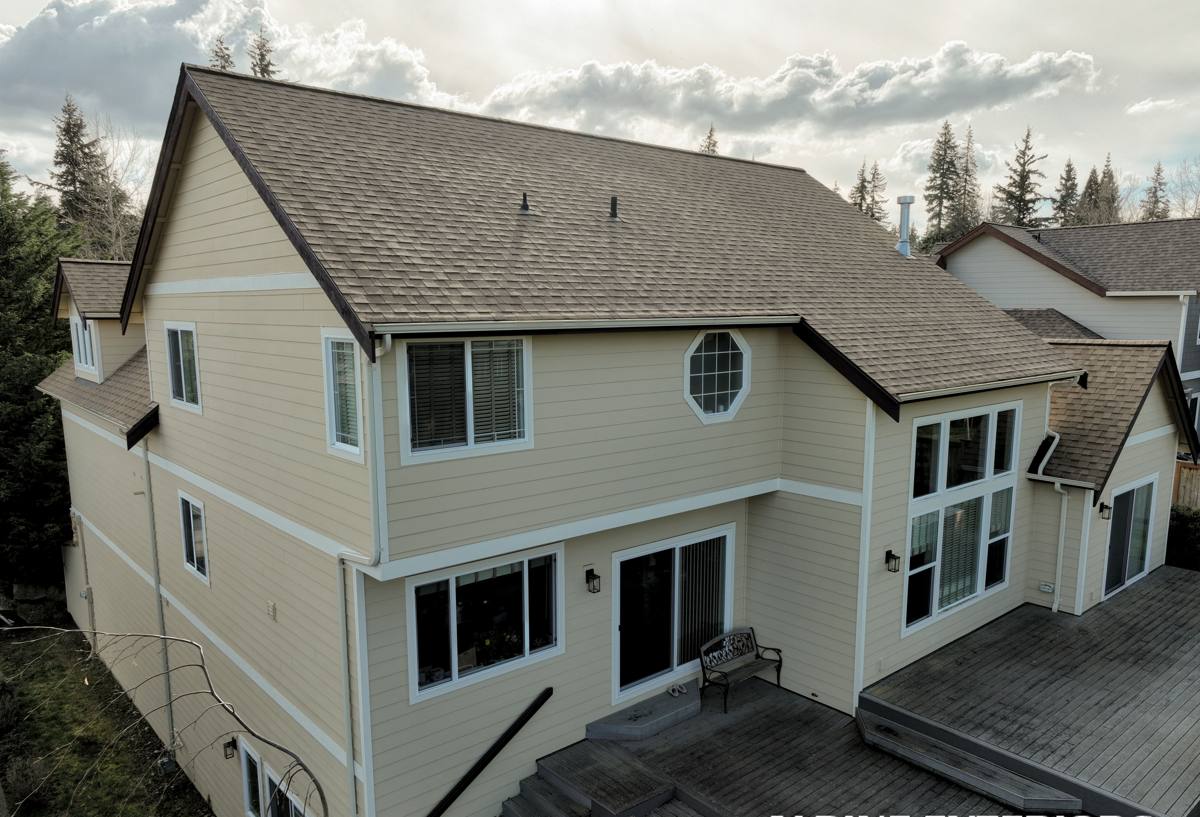
What Salt Air Does to a Roof Over Time
Salt air is corrosive, and it doesn't take a direct ocean-front lot to feel its effects — even homes set back from the immediate shoreline in Birch Bay get regular exposure carried in on the wind. The parts of a roof most affected are the metal components: flashing, fasteners, vent caps, drip edge, and any exposed hardware. Standard fasteners can corrode faster in this environment than they would a few miles inland, and corroded fasteners are one of the more common causes of loosened shingles and slow leaks that show up years after installation.
What We Do Differently
On homes with real salt exposure, we favor corrosion-resistant fastener coatings and flashing metals suited to coastal-type conditions, rather than the cheapest option that meets minimum code. It costs a little more upfront and saves the homeowner from replacing fasteners or patching corroded flashing a decade before it should be necessary.
Wind Exposure Near the Water
Open water means fewer trees and structures to break up the wind, and Birch Bay homes — especially those on higher ground or with a clear line to the bay — see stronger, more sustained gusts than a similar home tucked into a wooded Ferndale neighborhood. Wind is what pries shingles up at the edges and corners first, which is exactly where uplift failures usually start.
Fastening and Edge Detail
We pay close attention to nailing pattern and fastener count in field areas versus edges, rakes, and ridges, since manufacturers typically call for tighter spacing in those higher-stress zones. We also make sure starter strip and drip edge are installed correctly along the eaves and rakes — skipping or shortcutting these details is a common reason shingle roofs fail at the edges first in windy areas, regardless of shingle quality.
Moss: The Slow, Quiet Damage
Whatcom County's damp climate is friendly to moss almost everywhere, but Birch Bay's combination of moisture, mild temperatures, and shaded roof sections (from trees or simply north-facing slopes) can make moss establish faster than in drier, more open areas. Moss holds moisture against the roofing material, works its way under shingle edges as it grows, and can lift tabs enough to let wind-driven rain get underneath.
Reducing Moss Risk at Installation
We can't stop moss spores from landing on a roof, but we can reduce how well they take hold. That includes proper slope-appropriate shingle selection, keeping roof valleys and low-slope sections clear and well-drained, and, where a homeowner wants it, zinc or copper strip installation near the ridge — rain running over these metals releases trace amounts that inhibit moss growth on the surface below.
Choosing the Right Roofing Material
There's no single "best" roofing material for Birch Bay — the right choice depends on the home's exposure, roof pitch, budget, and how the homeowner wants to handle long-term maintenance. Here's how the common options compare for this specific environment:
| Material | Salt/Wind Performance | Moss Resistance | Typical Lifespan | Maintenance Level |
|---|---|---|---|---|
| Architectural asphalt shingle | Good, with proper fastening and wind-rated products | Moderate — benefits from zinc/copper strips | 25-30 years | Low to moderate |
| Standing seam metal | Excellent when properly coated and fastened | High — sheds debris and dries quickly | 40-60 years | Low |
| Synthetic/composite shingle | Good, resists cracking in wind-driven debris impacts | Moderate to high | 30-50 years | Low |
| Wood shake | Poor to fair in salt/damp conditions without diligent upkeep | Low — prone to moss and rot without treatment | 20-30 years with upkeep | High |
For most Birch Bay homes, we steer homeowners toward a quality architectural shingle with upgraded fastening and flashing, or standing seam metal for those wanting the longest service life with the least ongoing attention. We generally advise against wood shake in the more exposed, damp parts of Birch Bay — not because the material is bad everywhere, but because the maintenance burden to keep it performing well in this specific climate is significant, and the moisture retention makes moss and rot harder to stay ahead of.
Our New Roof Installation Process
A new roof is only as good as what's underneath the shingles and the details most people never see once the job is done. Here's how we approach it:
1. Tear-Off and Deck Inspection
We remove the existing roofing down to the deck rather than layering over old material, which lets us actually see the condition of the sheathing. Any soft, delaminated, or water-damaged decking gets replaced before anything new goes down — this is especially important on older Birch Bay homes where past moss or moisture issues may have gone unaddressed under the old roof.
2. Underlayment System
Given the driving rain this area gets, we don't treat underlayment as an afterthought. We use a synthetic or ice-and-water shield underlayment system appropriate to the roof's slope and exposure, with extra protection at eaves, valleys, and any low-slope transitions where wind-driven rain is most likely to work its way backward under shingles.
3. Flashing and Penetrations
Chimneys, vents, skylights, and wall-to-roof transitions are where most leaks actually originate — not the open field of shingles. We install new flashing at every penetration rather than reusing old flashing, and we detail valleys and step flashing to shed water fully rather than relying on sealant to make up for a shortcut in the metalwork.
4. Ventilation
Proper intake and exhaust ventilation keeps the attic space dry and temperature-balanced, which matters for shingle lifespan and helps reduce the moisture buildup that supports moss and mildew. We check existing ventilation against the home's attic size and current code guidance, and correct it as part of the installation when it's undersized.
5. Final Inspection
Before we consider the job finished, we walk the roof to check fastening, flashing, ridge and hip caps, and clean-up, and we go over the completed work with the homeowner.
Why Local Experience in Birch Bay Matters
A roofing crew that mostly works inland jobs won't necessarily think to upgrade fasteners for salt exposure or double-check wind-zone nailing patterns unless something prompts them to. Crews that regularly work Birch Bay and the surrounding Whatcom County shoreline see these conditions often enough that the adjustments become standard practice rather than an afterthought.
There are also practical, on-the-ground factors: navigating narrower waterfront lots and driveways for material delivery and staging, being mindful of neighboring properties on tighter lots, and understanding the permitting process through Whatcom County for the work. None of this is complicated, but it's the kind of local familiarity that keeps a project moving smoothly instead of running into avoidable delays.
Maintaining Your New Roof in Birch Bay
A well-installed roof still benefits from some basic upkeep, especially in this climate. A few habits go a long way toward getting the full service life out of the investment:
- Have moss treated or physically removed (not power-washed) at the first sign of growth, rather than letting it spread
- Clean gutters and downspouts at least twice a year so wind-driven rain has somewhere to go besides under the shingles
- Trim back tree limbs that shade the roof or drop debris into valleys, since shaded areas hold moisture longest
- Have flashing and roof penetrations visually checked after major windstorms, not just after visible leaks appear
- Schedule a roof inspection every couple of years even with no known issues, since small problems are far cheaper to fix early
Signs It's Time for a New Roof, Not Another Repair
Not every roofing problem in Birch Bay means a full replacement, but there are signs that repair is no longer the cost-effective option: widespread granule loss on asphalt shingles, multiple past repairs in different areas of the roof, soft or spongy decking discovered during any repair work, persistent moss coverage across large sections despite treatment, or a roof already at or past its expected service life for its material. When a roof is showing several of these at once, a new installation is usually the more sensible long-term investment compared to continuing to patch an aging system.
Getting Started
If you're weighing a new roof for a Birch Bay home, we're happy to take a look, walk the roof, and give you a straightforward assessment of what it needs and what your material options look like for your home's specific exposure. There's no pressure and no obligation — just a clear picture of the work involved. Fill out the form below and we'll get in touch to schedule a free estimate.