 Ferndale Roofing
 Why Point Roberts Is a Different Kind of Asphalt Shingle Job
Point Roberts sits out on its own — a small peninsula of Whatcom County surrounded on three sides by water, reachable by land only through Canada. That location is part of what makes it a special place to live, and it's also exactly why roofs out there wear differently than roofs a few miles inland. Homes here take a steadier dose of salt-laden marine air off the Strait of Georgia and Boundary Bay, more wind-driven rain off the water, and a longer moss and algae season than you'd expect for how far north this is. An asphalt shingle roof that's installed the same way you'd install one in a dry inland subdivision usually doesn't last as long here — not because the shingles are bad, but because the details that matter (ventilation, flashing, fastening, and shingle selection) have to be matched to what the site actually throws at the roof.
This page is about that one job — asphalt shingle roofing, done right, for Point Roberts homes — not a general overview of every roofing product we offer.
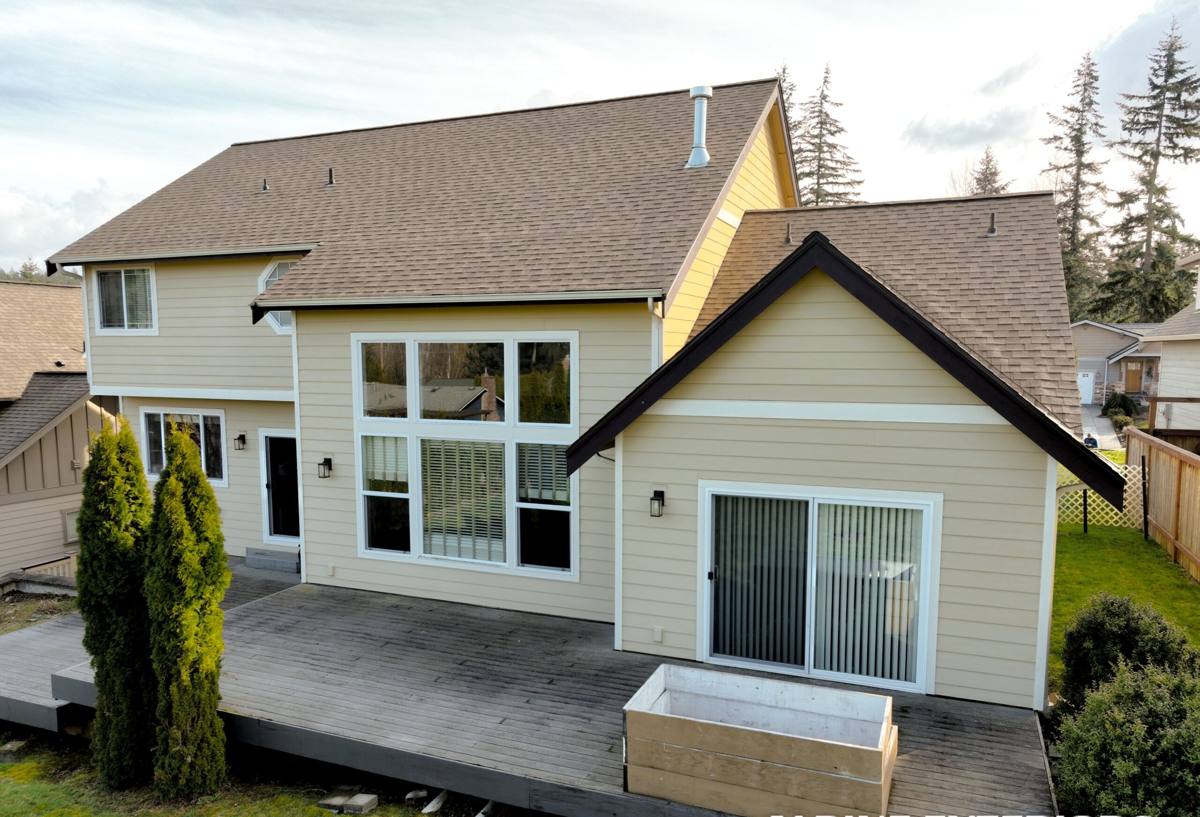
What the Local Climate Actually Does to a Shingle Roof
Salt Air and Metal Fatigue
Salt in the air accelerates corrosion on anything metal on the roof — flashing, drip edge, nail heads, and vent stacks. Once a flashing detail starts to corrode, water finds its way underneath the shingles at that point long before the shingles themselves are worn out. On a home this close to the water, we treat metal component selection and flashing quality as at least as important as the shingle brand.
Driving Rain
Wind off open water doesn't just drop rain straight down — it pushes it sideways and up under laps, edges, and penetrations that would stay dry in a calmer setting. That means underlayment coverage, starter strip placement, and step flashing at walls and chimneys all need to be done to a higher standard than the shingle manufacturer's bare minimum.
Moss and Algae
Whatcom County's damp shoulder seasons already favor moss growth on north-facing and shaded slopes. Add the extra humidity that comes with a marine location, and moss and algae staining can establish itself faster and spread further than it would on a drier lot. Left unaddressed, moss lifts shingle edges, holds moisture against the roof deck, and shortens the life of the whole system — not just the spots where it's visibly growing.
What a Correct Asphalt Shingle Job Includes
A roof that's built to hold up here isn't a mystery — it's a matter of not skipping steps. On every asphalt shingle project we do, that means:
- Full tear-off to the deck (never shingling over an old roof) so we can inspect and repair the sheathing underneath
- Ice-and-water shield or equivalent self-adhered membrane at eaves, valleys, and around all penetrations — the places wind-driven rain and moss-related backups target first
- Synthetic underlayment across the full field for a consistent secondary water barrier
- Corrosion-resistant metal flashing at all walls, chimneys, and roof-to-wall transitions, step-flashed rather than caulked-and-hoped
- Proper starter strip at eaves and rakes to seal the first course against wind lift
- Manufacturer-specified nailing pattern and fastener count, adjusted up for wind exposure where the site calls for it
- Balanced intake and exhaust ventilation so the attic isn't trapping moisture against the underside of the deck
None of these are upsells. They're the difference between a roof that reaches its expected lifespan and one that starts leaking at year eight.
Choosing a Shingle for a Marine Exposure Site
Not every asphalt shingle product is built the same way, and for a site like this, the differences matter more than the color chart. We generally steer homeowners toward algae-resistant shingles (granules treated to resist the blue-green algae that causes dark streaking) and a wind rating that fits an exposed, coastal-adjacent lot rather than the base-grade rating.
| Shingle Type | Typical Lifespan | Wind Rating Range | Fit for Point Roberts |
|---|---|---|---|
| 3-tab asphalt | 15–20 years | Lower, entry-level | Budget option; less margin against driving rain and wind |
| Architectural (laminated) asphalt | 25–30 years | Mid to high | Our standard recommendation here — better wind performance and profile |
| Impact-resistant architectural | 25–30+ years | High | Worth considering on fully exposed roof planes facing open water |
We don't push a specific brand as "the only option" — reputable manufacturers all make a competent product. What we do insist on is matching the shingle's rated wind exposure and algae resistance to the actual site conditions, and installing it to the manufacturer's coastal or high-wind specification when one exists, since installing outside spec can affect warranty coverage down the line.
Our Process on a Point Roberts Roof
1. On-Site Inspection
We walk the roof (or use a drone where pitch or access makes that safer) and check the deck condition, flashing points, ventilation setup, and any moss or algae staining already present. We also look at the exposure — which slopes face open water and take the most weather.
2. Written Scope and Estimate
You get a clear, itemized scope: tear-off, deck repair allowance if needed, underlayment and ice-and-water coverage, flashing work, shingle selection, and ventilation changes if the attic needs them. No vague "roofing package" line item.
3. Tear-Off and Deck Repair
Old roofing comes off down to the sheathing. Any soft, delaminated, or moisture-damaged decking gets replaced before anything new goes down — this is the step that gets skipped by crews trying to move fast, and it's the one that causes the most trouble later.
4. Install to Spec
Underlayment, flashing, starter strip, shingles, and ventilation components go in following both the manufacturer's installation instructions and our own coastal-exposure standards for fastening and flashing.
5. Cleanup and Walkthrough
Magnetic sweep for stray fasteners, full debris cleanup, and a walkthrough so you know what was done and what to watch for going forward.
Ventilation: The Step That Gets Skipped Most Often
A shingle roof doesn't fail from the outside alone. If an attic can't breathe — pulling cooler, drier air in low and pushing warm, moist air out high — condensation builds up on the underside of the deck. In a damp coastal climate, that trapped moisture accelerates deck rot and can promote mold, and it will shorten shingle life from underneath even if the shingles themselves look fine from the yard. On every reroof, we check the balance between intake (soffit) and exhaust (ridge or roof vents) and correct it if the existing setup is undersized or blocked.
Keeping a New Roof Ahead of Moss
You can't fully stop moss spores from landing on a roof in this climate, but you can control how much they take hold. A few habits go a long way between our visits:
- Keep overhanging branches trimmed back so shaded, damp roof areas get more light and airflow
- Clear gutters and valleys each fall so water isn't sitting against the shingle edge over winter
- Have visible moss or algae growth treated early rather than waiting until it's established and lifting shingle tabs
- Schedule a roof check after any major windstorm to catch lifted shingles or flashing damage before the next rain event
Cost Factors for a Point Roberts Reroof
Every roof is different, so we don't quote a number until we've seen yours, but the main things that move the price are consistent:
| Factor | Why It Matters Here |
|---|---|
| Roof size and pitch | More area and steeper pitches mean more material and labor time |
| Deck condition | Rot or delamination found under old shingles adds repair scope |
| Shingle grade chosen | 3-tab vs. architectural vs. impact-resistant changes material cost and expected lifespan |
| Flashing and penetration count | Chimneys, skylights, and multiple roof-wall transitions add detail work |
| Existing ventilation | Adding or upgrading intake/exhaust vents is a smaller add-on during a reroof than a standalone project |
| Access and logistics | Point Roberts' location can affect material delivery scheduling and crew logistics compared to a mainland job |
Why Local Experience with This Location Matters
Point Roberts' geography isn't a minor detail — it changes how a roofing project actually gets scheduled and supplied. Material deliveries, crew travel, and permitting all need to be planned around the fact that this is a border-adjacent exclave, not just another neighborhood down the road. A crew that's done roofs here before knows to plan material orders and scheduling with that in mind, rather than finding out mid-project that a standard mainland timeline doesn't apply. That local familiarity, combined with installation practices matched to salt air and driving rain, is what separates a roof that's simply "installed" from one that's built to actually hold up on this stretch of Whatcom County coastline.
If you're weighing a new roof, a reroof, or just want an honest read on how much life is left in your current shingles, we're happy to come take a look. Request a free, no-pressure estimate using the form below and we'll walk the roof with you and tell you straight what it needs.