 Ferndale Roofing
 Why Birch Bay's Coastline Is Harder on Windows Than Most Neighborhoods
Birch Bay sits right on the Salish Sea, and that location changes what a window has to survive. Homes a few miles inland in Ferndale deal with plenty of rain, but they don't get the salt-laden air that rolls off the water day after day. Salt air is corrosive to metal hardware, aluminum components, and unsealed fasteners. Over years, it works into hinges, cranks, and screws that would otherwise last decades, and it accelerates the breakdown of caulking and weatherstripping around the frame.
Add in the driving rain that comes with coastal wind — rain that hits windows sideways instead of straight down — and you've got water pressure testing every seam, corner, and sill on the house. Then there's Whatcom County's long moss season, which runs most of the year in a marine climate like this. Moss and algae hold moisture against wood trim and frame edges, keeping them damp far longer than they'd stay in a drier climate. None of this means Birch Bay homes need exotic materials. It means the installation details — flashing, sealing, drainage — matter more here than they would forty miles east.
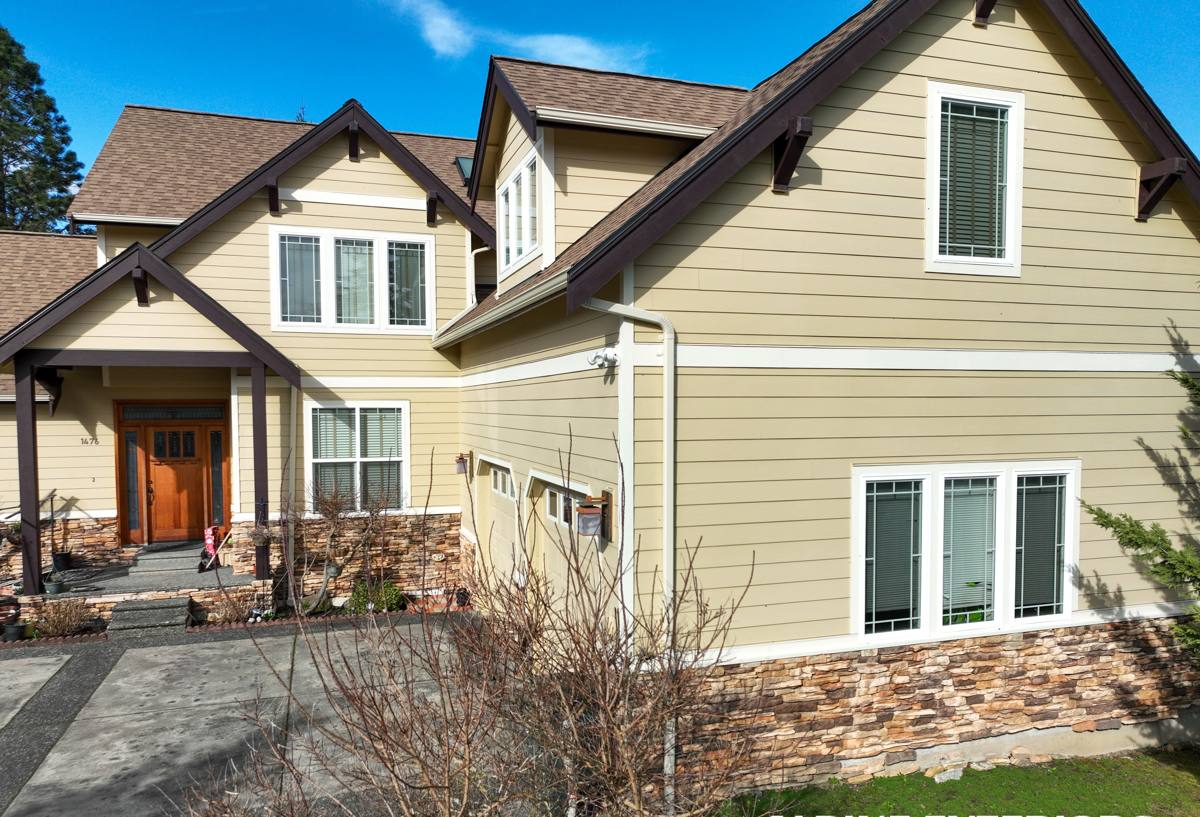
Signs Your Windows Are Losing That Battle
Coastal wear doesn't always show up as an obvious leak. It's usually slower and easier to miss until it's already caused damage. Homeowners in Birch Bay should watch for:
- Wood or composite sills that feel soft, spongy, or discolored when pressed
- Hardware — cranks, locks, hinges — that's stiff, corroded, or coated in white or greenish residue
- Condensation forming between the panes of a double-pane window, which means the seal has failed
- A persistent draft or cold spot near the frame even with the window latched
- Paint or finish that's bubbling, peeling, or chalky on the exterior face of the frame
- Moss or dark staining building up in the corners of the frame or on the sill faster than on other parts of the house
- Difficulty opening, closing, or fully latching a window that used to operate smoothly
Any one of these on its own might just mean a repair. Several at once, especially on windows facing the water or prevailing wind, usually means the unit is past the point where sealing or hardware fixes make sense.
What a Correct Window Replacement Actually Involves
Swapping in a new window is the easy part to picture. The part that determines whether it lasts is everything around the window — the parts you don't see once the trim goes back on.
Removing the Old Unit Without Hiding Problems
Once the old window comes out, the rough opening gets inspected. In a coastal climate, this is where hidden rot or corrosion often shows up — moisture that's been getting past a failing seal for years, sitting in the wall cavity where nobody could see it. A rushed job skips this step and reinstalls over a problem instead of fixing it. We don't cover up bad framing; we address it before anything new goes in.
Flashing and Drainage
This is the single most important part of the job for a home exposed to driving rain. Flashing tape and drainage planes need to direct any water that gets past the exterior cladding back out, not into the wall. A window can be expensive and well-built and still leak within a few years if the flashing detail underneath it is wrong. This is also the step that's easiest for an inexperienced crew to rush, because it's invisible once the window and trim are in place.
Sealing and Insulation
The gap between the window frame and the rough opening gets insulated and sealed with materials rated for exterior use — not just caulked over on the surface. A proper seal here also affects how much cold air and moisture find their way in during winter storms.
Setting, Leveling, and Fastening
The window has to be plumb, level, and square, fastened per the manufacturer's specifications. An out-of-square window puts stress on the sash and hardware from day one, which shortens its working life regardless of how good the product itself is.
Exterior Trim and Finish
The trim work that finishes the job is also what sheds water away from the frame going forward. Poorly finished trim creates a spot for water to pool or wick into wood, which in a marine climate turns into moss and rot faster than homeowners expect.
Choosing a Frame Material for Salt Air and Driving Rain
There's no single "best" window material for every home — it depends on your home's exposure, your maintenance preferences, and your budget. Here's how the common options hold up specifically against Birch Bay's salt air and rain:
| Frame Material | Salt Air / Coastal Performance | Maintenance |
|---|---|---|
| Vinyl | Doesn't corrode; handles salt air well. Quality varies a lot between manufacturers. | Low — no painting, occasional cleaning |
| Fiberglass | Very stable in temperature swings and moisture; strong long-term coastal performer. | Low — durable finish, minimal upkeep |
| Wood | Classic look but most vulnerable to moisture and rot without diligent upkeep in a wet marine climate. | High — needs regular painting/sealing |
| Wood-clad (wood interior, metal or composite exterior) | Exterior cladding shields wood from direct weather, but the cladding-to-wood seal is critical near salt air. | Moderate — interior finish upkeep only |
| Aluminum | Prone to corrosion and pitting from salt exposure over time unless specifically coated for marine use. | Low, but corrosion risk is the tradeoff |
For most Birch Bay homes, we steer people toward vinyl or fiberglass for their resistance to both moisture and salt corrosion, without the upkeep burden wood carries in this climate. That's not a knock on wood windows as a product — it's a matter of matching the material to the environment it has to survive, and being honest about the maintenance commitment that comes with the tradeoff.
Our Process, Start to Finish
- On-site assessment. We look at your current windows, exposure to wind and rain, any signs of existing water damage, and what's realistic for your home and budget.
- Written estimate. You get a clear breakdown of scope, materials, and cost before any work starts — no surprise add-ons mid-project.
- Scheduling around weather. Window replacement means your wall is briefly open to the elements. We plan install days around the forecast so openings aren't left exposed during a storm.
- Removal and inspection. Old units come out, and we check the rough opening for hidden moisture or rot before anything new goes in.
- Installation. Flashing, insulation, sealing, and setting the new window to manufacturer spec, in that order — no shortcuts on the steps nobody sees later.
- Trim and cleanup. Interior and exterior trim finished, site cleaned, and old windows hauled away.
- Walkthrough. We go over the finished work with you and make sure every window operates the way it should before we call the job done.
Cost Factors Worth Understanding Before You Get Quotes
Window replacement costs vary widely based on a handful of factors, and it's worth understanding them so you can compare quotes accurately rather than just comparing bottom-line numbers.
- Number and size of windows — larger openings and specialty shapes cost more per unit than standard sizes
- Frame material — vinyl is typically the most budget-friendly, fiberglass and wood-clad options cost more upfront
- Full-frame vs. pocket replacement — full-frame replacement (tearing out to the rough opening) costs more than a pocket install but is often the right call when there's existing rot or when flashing needs correcting
- Glass package — double vs. triple pane, and low-E coatings, affect both price and energy performance
- Access and exposure — second-story or hard-to-reach windows, and homes with heavier weather exposure requiring extra flashing detail, add labor time
- Existing damage — if the removal reveals rotted framing or sheathing, that repair is additional scope, disclosed and priced before we proceed
Be cautious of quotes that are dramatically lower than others for the same scope of work — it usually means something is being skipped, whether that's the flashing detail, the material quality, or the disposal of old units.
Why a Crew That Already Works Birch Bay Matters
Window installation technique doesn't fundamentally change from one town to the next, but the judgment calls do. A crew that regularly works Birch Bay and the rest of coastal Whatcom County has already seen what salt air does to hardware over ten years, which sills tend to fail first on a bay-facing wall, and how much flashing detail is actually needed for wind-driven rain versus a calmer inland setting. That's the kind of judgment that only comes from doing the work in this specific environment repeatedly, not from a general install checklist.
There's also a practical side: being based in Ferndale means we're a short drive away for a walkthrough, a follow-up question, or a warranty call — not routing you through a call center for a company that installed your windows once and moved on to the next county.
Living With New Windows in a Coastal Climate
New windows reduce your maintenance burden, but they don't eliminate it — especially this close to the water. A little routine care goes a long way toward getting the full lifespan out of the investment:
- Rinse salt residue off exterior frames and hardware periodically, especially after storms with onshore wind
- Keep weep holes (the small drainage openings along the bottom of the frame) clear of debris and moss so water can drain out as designed
- Lubricate moving hardware — cranks, hinges, locks — on the manufacturer's recommended schedule
- Check exterior caulking annually for cracking or gaps, particularly on south- and west-facing walls that take the brunt of the weather
- Trim back vegetation or moss buildup near window sills so moisture isn't held against the frame
None of this is heavy work, but skipping it is how a well-installed window ends up with an avoidable problem five or ten years down the road.
If your windows in Birch Bay are showing their age or you're just weighing your options, we're happy to take a look and give you a straight, no-pressure estimate — use the form below to get started.