 Ferndale Roofing
 Storm Damage Roof Repair for Sumas Homes
Sumas sits at the far edge of Whatcom County, tucked against the Canadian border where the Nooksack River valley opens up beneath Sumas Mountain. It's an inland, valley setting rather than a waterfront one, and that changes the kind of storm damage a roof out here actually takes. Homes closer to Bellingham Bay deal more with salt-driven corrosion; Sumas deals more with wind funneling down out of the Fraser Valley in British Columbia, sustained valley humidity that keeps a damaged roof wet long after the wind has died down, and a moss season that runs most of the year on shaded slopes. When wind, rain, or falling debris tear into a roof out here, the repair needs to account for that specific mix, not just patch the visible hole and move on.
We work storm damage calls in Sumas and across Whatcom County regularly, and the goal on every one is the same: stop water from getting further into the house today, then repair the roof correctly, not just cosmetically, once the storm has passed.
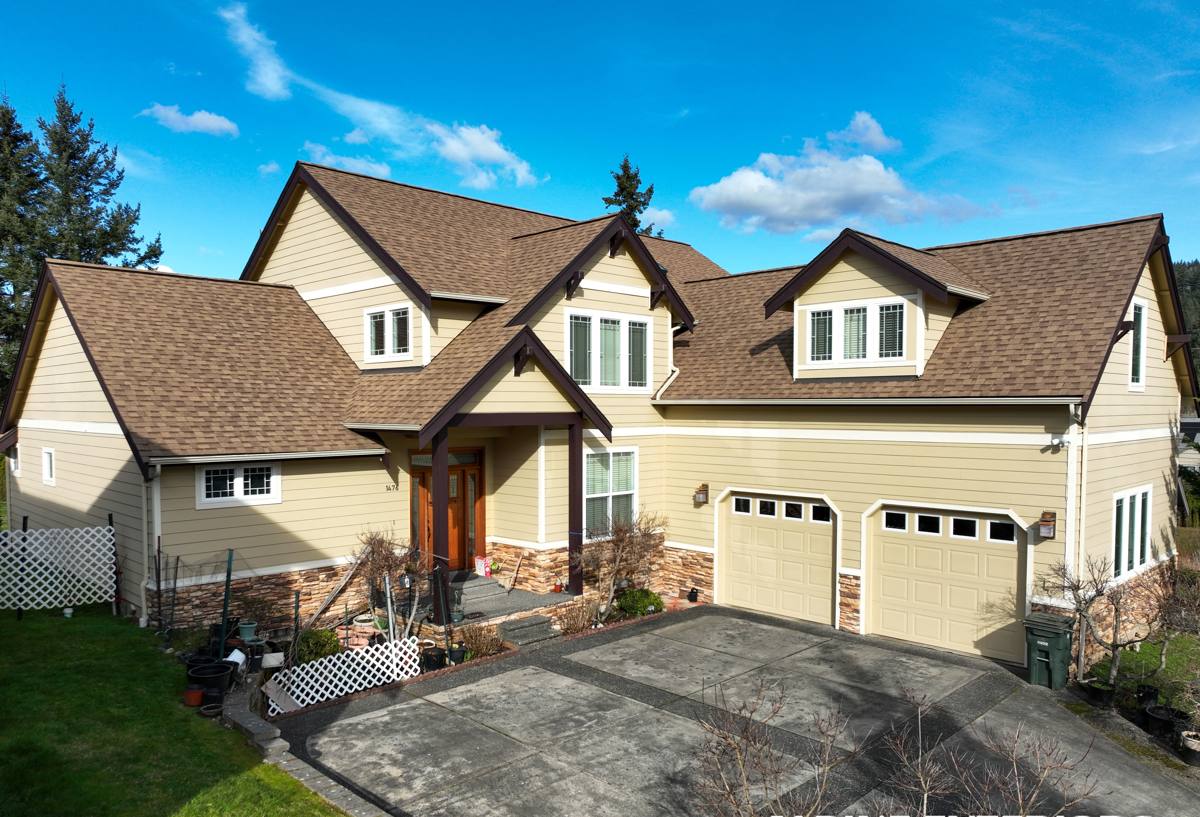
What Storms Actually Do to a Roof in the Sumas Area
Outflow Wind Events
Sumas sits near the mouth of the corridor that funnels cold air and wind down from the Fraser Valley in British Columbia, and that means wind events here can hit harder and more suddenly than in more sheltered parts of the county. Sudden wind load is what lifts shingle tabs, peels back ridge caps, and tears loose flashing that was sealed but never mechanically secured well enough to hold under a real gust. A roof that's held up fine through years of ordinary Whatcom County rain can still lose shingles in a single hard outflow event if the fastening pattern underneath was marginal to begin with.
Wind-Driven Rain at Flashing and Valleys
Once a storm has opened even a small gap — a lifted shingle, a cracked pipe boot, a seam in flashing — wind-driven rain finds it fast. Rain out here rarely falls straight down during a storm; it gets pushed sideways and even upward under shingle edges and around valley metal, which is exactly where storm damage tends to turn into a slow interior leak days or weeks after the wind itself has died down.
Tree and Debris Impact
Sumas is a more rural, tree-lined, and agricultural setting than Ferndale's in-town neighborhoods, and mature trees close to a house mean branch and debris impact are a real part of storm damage here, not just wind and rain on their own. A limb strike can crack shingles, punch through decking, or knock flashing loose without leaving an obvious hole from the ground, which is why a proper storm inspection checks more than just the spot that looks damaged from the yard.
Freeze-Thaw Damage After a Storm
Sumas sees colder winter snaps and more freeze-thaw cycling than milder, coastal towns elsewhere in the county. Once a storm has let water into a shingle, underlayment, or roof deck, a hard freeze that follows can expand that trapped moisture and turn a minor storm crack into a larger structural problem before anyone's back on the roof to catch it. Timing the repair matters as much as the repair itself.
Signs Your Sumas Roof Has Storm Damage
- Missing, cracked, or curled shingles, especially on wind-exposed slopes
- Granules collecting in gutters or at downspout outlets after a storm
- Bent, lifted, or missing flashing around chimneys, vents, and valleys
- Dented or cracked pipe boots and vent covers
- New water staining on interior ceilings or around chimneys after a storm
- Visible daylight through the roof deck when viewed from the attic
- Broken limbs, debris, or impact marks left on the roof surface
- Sagging felt or a soft, spongy feel underfoot on the roof deck
Any one of these is worth a call. Storm damage that looks minor from the ground — a single lifted shingle, a dented vent cap — is often the entry point for water that does real damage long before it's noticed from inside the house.
How We Handle a Storm Damage Call
- Emergency tarping and stabilization — if the roof has an active leak or exposed decking, the first priority is stopping water intrusion, not performing a full repair on day one.
- Full roof inspection — once the immediate risk is controlled, we walk the entire roof, not just the obviously damaged section, since wind and debris damage often extends beyond what's visible from the ground.
- Documentation — we photograph and note the damage in detail, which matters as much for your records as for ours.
- Written estimate — a clear, itemized scope of what needs repair versus what's cosmetic, before any work beyond emergency stabilization begins.
- Repair — matched materials with correct flashing, underlayment, and fastening detail for this area's wind and moisture exposure, not just a patch over the damage.
Insurance Claims: What We Can and Can't Do
We're not insurance adjusters, and we won't pretend to be. What we can do is give you an honest, detailed, photographed record of the damage and a clear written estimate you can hand to your insurance company or your own adjuster. Some storm damage is a straightforward covered claim; some is closer to routine wear that a storm just exposed. We'll tell you honestly which one we think we're looking at rather than inflating a report to chase a bigger claim.
Repair or Replace? Deciding After Storm Damage
Not every storm-damaged roof needs to come off. The right call depends on how much of the roof is affected, the roof's age going into the storm, and whether the deck underneath has taken on moisture.
| Situation | Usually Means | Why |
|---|---|---|
| Isolated wind damage on an otherwise sound, newer roof | Targeted repair | Matched shingles and correct flashing restore the section without disturbing a roof that's still performing well |
| Storm damage on a roof already near the end of its rated life | Full or partial replacement | Patching an aging roof usually just delays a bigger job while the rest of the surface keeps aging toward failure |
| Storm damage plus visible deck moisture or soft spots | Deck repair alongside roofing repair | Trapped moisture from a storm compromises decking, not just the shingles above it |
| Storm damage spread across multiple slopes or valleys | Replacement often more cost-effective than repeated patch repairs | Extensive flashing and underlayment work across a large area can approach the cost of a full re-roof anyway |
We'll walk you through which category your roof falls into and why, rather than defaulting to whichever option is easier to sell.
What a Correct Storm Repair Actually Involves
A storm repair that only replaces the shingles you can see from the ground tends to fail again in the next storm. Done correctly, a repair in this area accounts for:
- Matching shingle profile and, where possible, color to the surrounding roof
- Self-adhered underlayment or ice-and-water shield at repaired valleys and eaves, not just standard felt
- Flashing that's properly lapped and mechanically fastened, not just re-sealed with caulk over the old damage
- Fastening patterns rated for this area's wind exposure, not a bare minimum-code pattern
- A check of attic and roof deck ventilation, since a storm repair is a natural point to catch trapped moisture before it spreads
None of these add significant cost to a storm repair relative to the materials themselves, but skipping them is exactly how a roof ends up back on the repair list after the next hard wind event.
Why a Sumas-Familiar Crew Matters After a Storm
Response time and local knowledge both matter more during storm damage repair than on a routine job. A crew that already works Sumas and the surrounding valley knows how outflow wind funnels down from the border, which roof orientations take the worst of it, and how quickly valley humidity can turn an unprotected leak into interior damage. That's the difference between a tarp that holds through the next system moving through and one that fails within a day, and between a repair built for this area's real wind and moisture exposure and one built for a calmer, drier climate somewhere else.
Reducing Storm Damage Risk Before the Next One
Not all storm damage is preventable, but a roof already in good repair going into a storm holds up better than one with existing weak points. A few things worth checking before the next windstorm season:
- Trim back tree limbs that hang over or close to the roofline
- Have loose or aging flashing re-secured before it becomes a catch point for wind
- Clear moss buildup on shaded slopes, since moss holds moisture and can lift shingle edges that then catch wind
- Check that gutters and downspouts are clear so storm runoff doesn't back up under the roof edge
- Get an inspection after any major wind event, even if nothing looks obviously wrong from the ground
If your Sumas roof took damage in a recent storm, or you'd like an honest inspection before the next one, we're glad to come take a look. Reach out using the form below to schedule a free, no-pressure estimate.