 Ferndale Roofing
 Replacing a Deck in Sumas: What This Valley Climate Actually Requires
Sumas sits out at the far edge of Whatcom County, near the Canadian border in the flat, low-lying farmland of the Nooksack valley. It's a different setting than the coastal towns closer to Bellingham Bay, and that matters for a deck more than most homeowners expect. A deck has no roof and no siding to shield it — it sits directly in whatever the weather does, and in Sumas that means driving rain that comes in sideways more often than straight down, valley humidity and fog that linger longer after a storm than they would on higher ground, and a moss season that runs across most of the year. Salt air is less of a factor here than it is for towns right on Bellingham Bay, but the combination of sustained dampness, wind, and winter freeze-thaw cycling puts its own steady wear on an outdoor structure.
This page is specifically about replacing an existing deck in Sumas — not building a new deck from scratch on a bare lot, and not patching a board here or there. Replacement is its own project with its own set of decisions, especially when the deck being torn out was built years or decades ago under older assumptions about codes, fasteners, and flashing that don't hold up the same way today.
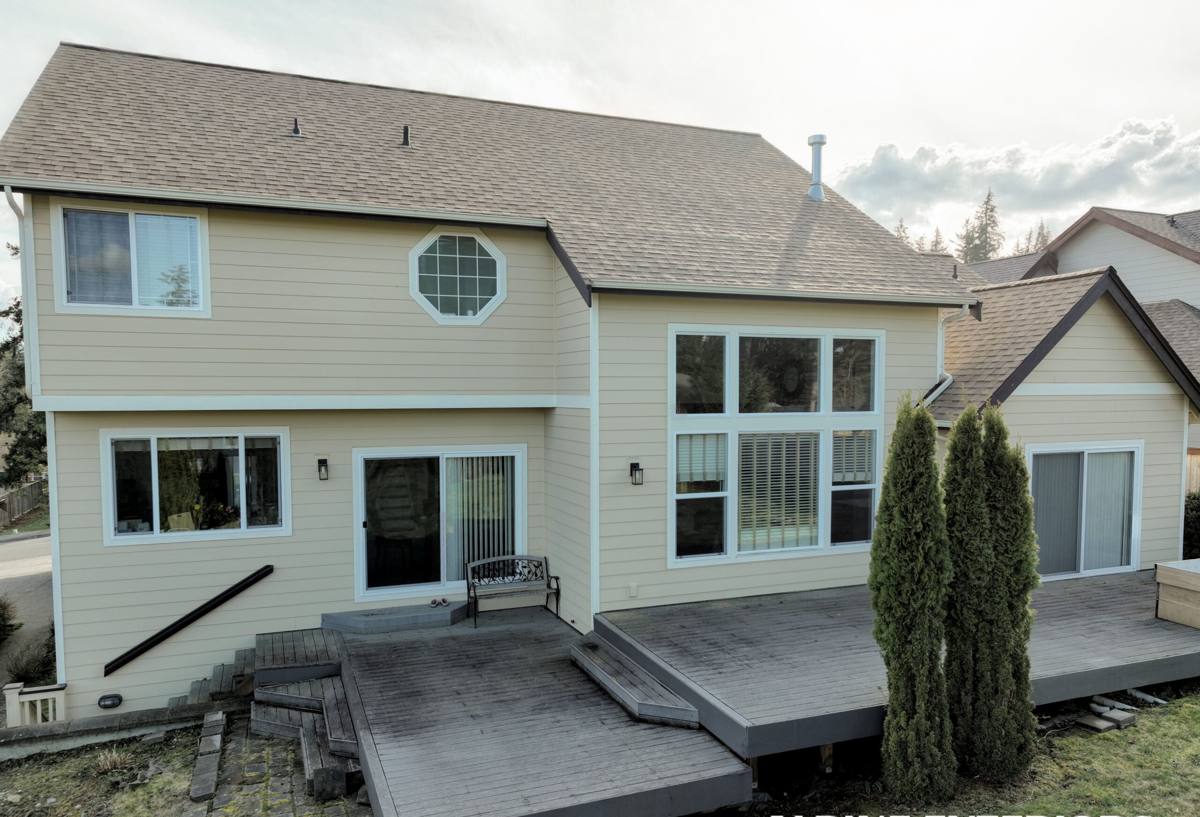
What a Sumas Climate Does to an Aging Deck
Driving Rain and Wind-Driven Moisture
Storms moving through this part of the valley don't just fall straight down onto a deck surface — wind pushes rain sideways, up under railings, and into the ledger connection where the deck ties into the house. An older deck built without that wind-driven pattern in mind often has minimal or no ledger flashing at all, which is one of the most common places water has been quietly working its way into the house framing for years without anyone noticing from the outside.
Valley Humidity and a Long Moss Season
Because Sumas sits low in the valley floor, moisture and fog tend to linger longer here after a storm passes than they would on a well-drained hillside lot. That extra dwell time, combined with mild temperatures, gives moss and mildew a season that runs most of the year rather than just a few wet months. Horizontal deck surfaces are usually the first place it shows up, since they hold standing water longer than a vertical wall does, and any decking material with even a little surface porosity gives moss something to grip.
Freeze-Thaw Cycling
Sumas sees more frequent hard frosts and occasional real cold snaps than milder coastal parts of the county, partly due to its position near the corridor that funnels colder air down from the north. Water that's already worked into a porous board, a cracked footing, or a loose fastener connection expands when it freezes, which accelerates cracking and structural failure faster than a purely wet-but-mild climate would.
Reduced Salt Exposure, Real Corrosion Risk Anyway
Sumas doesn't take the same direct salt-air exposure that decks closer to Bellingham Bay deal with, but that doesn't mean fastener corrosion isn't a concern. Sustained valley dampness plus freeze-thaw cycling is more than enough to corrode standard hardware over time, especially at the ledger, post bases, and any joist hangers that sit close to grade.
Signs Your Sumas Deck Needs Replacing, Not Just Repairing
Not every deck problem calls for a full tear-out. But a handful of signs usually mean patching individual boards is just delaying a bigger job while the underlying damage keeps spreading:
- Soft, spongy, or visibly rotted framing underneath the deck, especially near the ledger or post bases
- Rust staining running down from fasteners, or hardware that's visibly corroding
- A ledger board with no visible flashing, or flashing that's cracked, gapped, or missing sections
- Railings or posts that flex or feel loose when leaned on
- Persistent moss or dark staining that returns quickly after cleaning
- Footings that are cracked, heaving, or sitting above where current code requires them
- A deck old enough that it predates current guardrail height and baluster spacing requirements
If what you're seeing matches more than one or two of these, a full replacement is usually the more honest recommendation than a patch job that just gets a few more seasons out of a structure that's already failing underneath.
Why Deck Replacement Is a Chance to Fix What the Original Build Didn't
Deck-building codes and best practices have changed a fair amount over the years, and a lot of older Sumas decks were built under standards that today's inspectors and reputable crews no longer consider acceptable. Replacing a deck is the point where those gaps actually get corrected, rather than rebuilt into the new structure by habit.
Ledger Attachment and Flashing
Older decks were sometimes attached to the house with nails instead of proper lag screws or through-bolts, and often without dedicated ledger flashing at all. Current standards call for mechanical fasteners sized for the load and a flashing detail that actually sheds water away from the house framing, not just caulk covering a gap.
Guardrail Height and Baluster Spacing
Guardrail height requirements and the maximum gap allowed between balusters have both been tightened over the years, largely for fall-safety reasons. A deck built decades ago may have a railing that looks fine but doesn't meet current spacing or height requirements, and replacement is the natural point to bring that up to today's standard.
Footing Depth and Post Connections
Footings on older decks weren't always set to the depth the local building department requires today, and post-to-footing connections have gotten more specific about uplift and lateral load resistance. A correctly done replacement means new footings set to current requirements, not footings reused from a structure built to a different standard.
Joist Hangers and Fastener Grade
Toe-nailed joists without hangers were common in older construction and are a weak point that shows up as squeaking, sagging, or eventual failure. Modern joist hangers, sized and fastened correctly, along with corrosion-resistant fasteners throughout, are standard on a properly done replacement.
Choosing Decking Material for a Sumas Replacement
Material choice matters more here than it would in a drier, more sheltered town, since the gap in performance between a well-suited product and a poorly-suited one shows up faster under this much sustained moisture and moss pressure.
| Material | Moisture & Valley Humidity | Moss Resistance | Upkeep |
|---|---|---|---|
| Cellular PVC | Excellent — no wood fiber to absorb moisture | Strong, smooth non-porous surface | Occasional washing |
| Capped composite | Strong — cap layer resists moisture and staining | Good on most product lines | Occasional washing |
| Uncapped composite | Moderate — some moisture absorption at exposed fiber | Fair; more prone to buildup over time | Periodic cleaning |
| Cedar | Moderate — natural resistance, but needs sealing | Fair when sealed and maintained | Regular oiling or sealing |
| Pressure-treated wood | Weak against sustained valley moisture without upkeep | Poor without regular treatment | Regular sealing or staining |
We build with whatever material fits the homeowner's budget, but for a Sumas replacement sitting in this much sustained dampness, capped composite or PVC are usually the more honest long-term recommendation over uncapped composite or untreated wood.
What a Correct Deck Replacement Involves
The visible decking surface gets most of the attention, but in this climate the tear-out, framing, and flashing work underneath is what actually determines how long the new deck lasts. A replacement done right here includes:
- Full tear-out of the old structure with an honest inspection of the ledger area, rim joist, and any framing behind it for hidden rot before anything new goes up
- New footings set to current code depth, sized correctly for the deck's load and span
- Proper ledger flashing integrated with the house's existing water management, not caulk alone
- Corrosion-resistant fasteners and joist hangers throughout, sized for the actual load
- Correct board gapping for drainage and material movement, so wind-driven rain and moss-holding moisture can actually drain and dry
- Guardrail height and baluster spacing built to current code, not matched to whatever the old deck had
- Grading and ventilation underneath the new deck so moisture doesn't sit against the framing between storms
How Our Process Works
We start with a site visit to look at the existing deck's actual condition — how far the rot or corrosion has spread, what the ledger connection looks like once we open it up, and how the site's exposure and grading affect drainage. That assessment tells us honestly whether a full replacement is warranted, which for a deck showing the signs above, it usually is.
From there we handle permitting through Whatcom County, since deck replacement generally requires permitting even when it's replacing something that was already there. Tear-out comes first, followed by new footings, framing, and ledger flashing built to current code, then the decking surface, railings, and any stairs. We finish with a walkthrough covering exactly what your chosen material needs going forward, which for most modern decking is minimal, but not nothing.
Cost Factors for a Sumas Deck Replacement
| Factor | What It Affects | Why It Matters Here |
|---|---|---|
| Extent of hidden rot or corrosion | Framing and ledger repair scope | Valley dampness lets moisture damage spread further before it's visible from the surface |
| Footing and post upgrades | Structural cost to meet current code | Older decks were often built to shallower footing depths than current requirements |
| Decking material | Material cost and long-term upkeep | Higher moisture and moss pressure widens the performance gap between material tiers |
| Size and layout | Labor and material quantity | Multi-level decks or stairs add complexity beyond a simple rectangular replacement |
| Site access | Labor time and equipment needs | Rural and agricultural properties in the Sumas area can have longer driveways or wider staging needs than an in-town lot |
Exact costs depend on what we find once the old deck comes off, which is why we give a real number after seeing the property rather than quoting off a generic price sheet.
Why It Matters That We Already Work Sumas
A crew that mostly builds decks closer to the water can still do competent work, but a Sumas replacement has variables that come up less often elsewhere in Whatcom County — valley humidity that keeps a deck damp longer after a storm, colder winter wind funneling down from the north, and rural site access that a strictly in-town crew doesn't deal with as regularly. Working this area on a regular basis means we're not guessing at footing depth, ledger flashing detail, or fastener grade on your project. We've seen which materials and construction details actually hold up against Sumas's specific mix of valley dampness, moss pressure, and freeze-thaw cycling, and which shortcuts on an older deck tend to fail first.
That familiarity also shows up in smaller judgment calls — how to grade underneath a replacement deck so it doesn't just recreate the same moisture problem the old one had, or being straightforward with a homeowner about what a deck here realistically needs to last rather than upselling extras that don't matter for this site.
Get a Straight Answer About Your Deck
If your deck in Sumas is showing rot, loose railings, corroding fasteners, or is simply old enough to predate current codes, we're glad to take a look and give you an honest read on what full replacement would involve. Reach out using the form below for a free, no-pressure estimate.