 Ferndale Roofing
 Board & Batten Siding in Sumas: A Style That Has to Earn Its Keep
Board and batten siding gets chosen for how it looks — the clean vertical lines, the strong shadow pattern the battens throw across the wall, the way it reads as more custom than a standard lap profile. That's a legitimate reason to want it. But in Whatcom County, a siding profile that looks good in a showroom photo has to survive a very different reality once it's on a wall in Sumas: driving rain that comes sideways off the valley, a moss season that can run most of the year, and the kind of persistent regional dampness that never fully lets a wall dry out between storms.
We install board and batten siding for homeowners in this area regularly, and we've been called out to repair or replace it when it was installed wrong by someone treating it like a purely cosmetic choice. This page covers what board and batten actually needs to hold up here, what a correct installation looks like, and why we only build it out of James Hardie fiber cement — never vinyl, never engineered wood, never primed spruce or cedar boards.
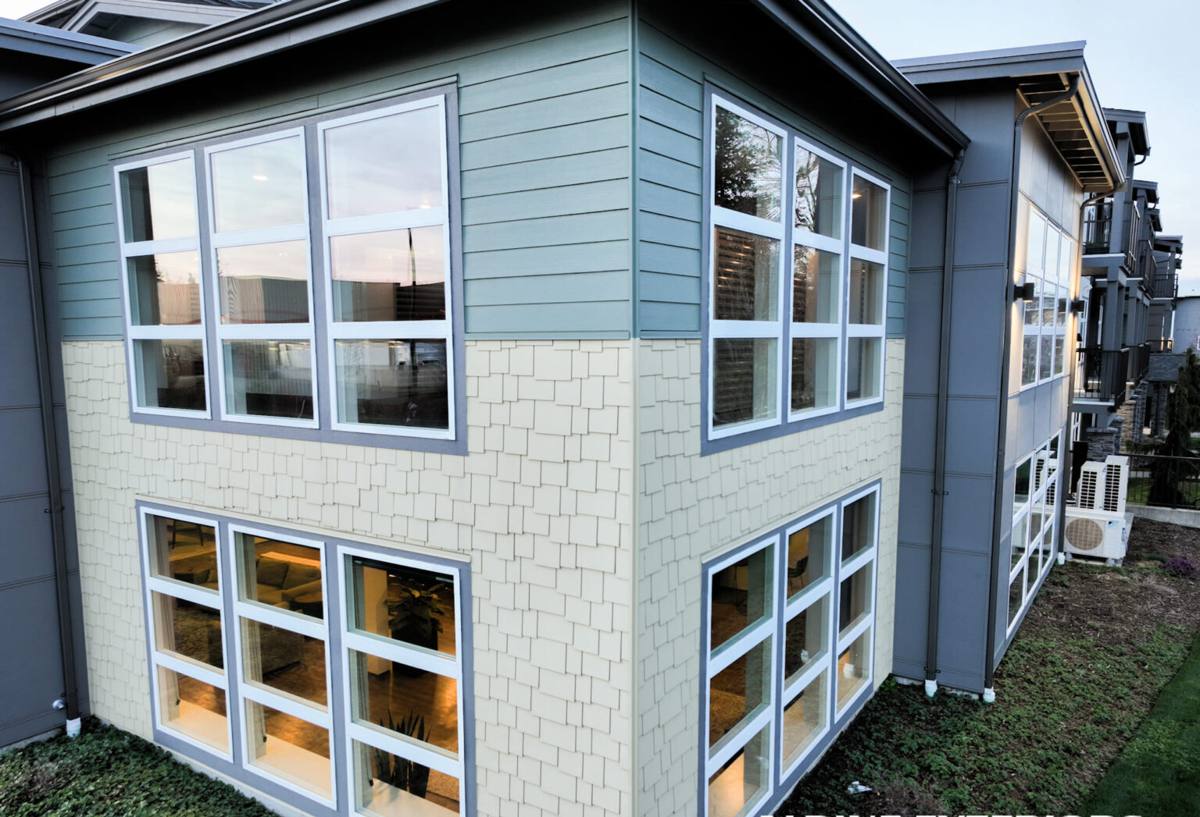
Why Sumas's Climate Is Harder on Vertical Siding Than People Expect
Board and batten is a vertical siding profile, and vertical profiles behave differently in wet weather than horizontal lap siding. Water doesn't just run down the face of the wall — it can travel along the batten seams and get pulled inward by wind pressure, especially during the sideways, driving rain that comes through this part of Whatcom County during fall and winter storms. If the seams, the flashing, and the underlying water-resistive barrier aren't detailed correctly, that moisture finds its way behind the siding instead of off of it.
Add in the region's long moss season — shaded walls, north-facing elevations, and anything near overhanging trees will grow moss and algae for a good stretch of the year if the material and finish don't resist it — and you've got two separate problems a board and batten installation has to solve at once: keeping bulk water out, and keeping the surface itself from becoming a place organic growth wants to live. Homes closer to Puget Sound influence also deal with a salt-air component in the mix, which accelerates corrosion on fasteners and hardware that aren't rated for it. None of this is exotic weather. It's just steady, and it's exactly the kind of steady punishment that separates a siding job that lasts twenty-five years from one that starts failing in five.
What Actually Goes Wrong on Bad Installations
- Battens face-nailed directly through both layers into sheathing with no gap, trapping moisture between boards
- No rain screen or drainage gap, so any water that gets behind the siding has nowhere to go and no way to dry
- Butt joints and seams caulked instead of properly flashed, which fails long before the siding does
- Fasteners that aren't corrosion-resistant, leading to rust streaking and eventual fastener failure
- Cut edges of fiber cement left unsealed, letting moisture wick into the board from the ends
What a Correct Board & Batten Installation Involves
Done right, board and batten is a system, not just a pattern of boards nailed to a wall. For a Sumas home, that system needs to include:
- A water-resistive barrier and drainage plane behind the entire assembly, lapped and taped correctly at every seam and penetration
- A rain screen gap — typically created with vertical furring strips — so any water that does get past the outer layer has an air gap to drain and dry through, rather than sitting against the sheathing
- Corrosion-resistant fasteners rated for fiber cement and for coastal-influenced, humid climates, driven at the correct spacing and depth
- Properly flashed penetrations at every window, door, hose bib, and light fixture — these are the spots where board and batten installations most commonly fail
- Sealed cut ends on every field-cut board, using a manufacturer-approved sealant, so exposed fiber cement isn't left to absorb water
- Correct batten spacing and fastening so the assembly can handle normal seasonal movement without cracking caulk lines or popping fasteners
This is the difference between a board and batten wall that photographs well on installation day and one that still looks and performs the same way after a decade of Whatcom County winters.
Why We Only Build This in James Hardie Fiber Cement
Board and batten shows up in several materials, and it's worth being direct about why we've standardized on one of them. We don't install vinyl board and batten, engineered wood panel systems, or primed spruce and cedar board and batten — not because those products can't be manufactured well, but because of how each one behaves over years of real exposure in this climate, and the maintenance burden that gets handed to the homeowner as a result.
| Material | Moisture Behavior | Moss/Algae Resistance | Long-Term Maintenance |
|---|---|---|---|
| Vinyl board & batten | Doesn't absorb water, but panels can warp or bow with heat and cold cycling; seams rely on overlap, not seal | Surface stays clean easier, but growth still collects in J-channels and seams | Low upkeep but limited repair options once brittle or faded |
| Primed wood (spruce/cedar) | Absorbs moisture readily; end grain and cut edges are especially vulnerable | Organic material — most susceptible to moss, algae, and rot | Repainting and caulk maintenance on a recurring cycle, plus rot risk |
| Engineered wood panel | Resists water better than solid wood but is still wood-based at its core; edge swelling is a known risk if seals fail | Better than raw wood, worse than fiber cement | Moderate — dependent on manufacturer coatings staying intact |
| James Hardie fiber cement | Doesn't rot, swell, or support insect activity; engineered for wet, humid climates | ColorPlus finish resists moss and algae growth better than painted wood surfaces | Occasional washing; no repainting cycle required with ColorPlus |
James Hardie's fiber cement is non-combustible, dimensionally stable in the kind of wet-to-dry cycling Whatcom County sees all year, and available with a factory-applied ColorPlus finish that's baked on rather than field-painted — which matters a great deal on board and batten specifically, since the batten edges and cut lines are exactly where a field-applied finish tends to wear first. Hardie's engineered HZ product lines are built for climates like this one, and the warranty backing it is transferable, which adds real value if a Sumas home changes hands.
Our Process for a Sumas Board & Batten Project
1. On-Site Assessment
We look at the existing wall assembly, check for any moisture or rot already present behind the current siding, and evaluate sun exposure, tree cover, and elevations most exposed to wind-driven rain — all of which affect how we detail the installation.
2. Drainage Plane and Flashing Plan
Before a single board goes up, we plan out the water-resistive barrier, flashing at every penetration, and the rain screen strategy for that specific wall. This is the step that gets skipped on rushed jobs and it's the one that determines whether the siding lasts.
3. Installation
Furring strips, then Hardie panel or board sections, then battens — fastened to spec, cut ends sealed, and every seam and penetration flashed as planned rather than caulked over as an afterthought.
4. Finish and Walkthrough
We check fastener lines, batten spacing, and trim details, then walk the job with the homeowner before calling it done.
Style and Color Considerations for Board & Batten
Board and batten reads differently than lap siding — the vertical lines and shadow reveal from the battens tend to suit certain home styles particularly well, including farmhouse, craftsman, and modern facades that are common in this part of Washington. James Hardie's ColorPlus palette gives homeowners a range of finish options without needing a repaint cycle down the road, which is worth factoring in early since board and batten is often used as an accent on gables or entry features as much as a full-wall treatment. We can talk through where it makes the most visual and practical sense on your specific home during the estimate.
Seasonal Maintenance for Board & Batten in This Climate
- Rinse the siding once or twice a year, focusing on shaded and north-facing walls where moss and algae collect fastest
- Walk the exterior after major fall and winter storms to check for any new gaps at trim or flashing
- Keep gutters and downspouts clear so runoff isn't dumping extra water directly onto wall sections
- Trim back vegetation and tree limbs that keep a wall section shaded and damp longer than the rest of the house
- Have any caulk lines at trim and penetrations checked periodically — this is normal upkeep, not a sign of failure
Why Hiring a Crew That Already Works in Sumas Matters
Board and batten forgives fewer mistakes than standard lap siding — the vertical seams, the batten fastening pattern, and the drainage detailing all have to be right the first time, because a callback repair on a board and batten wall is more visible and more disruptive than patching a lap section. A crew that's already worked on homes in this area understands what Whatcom County's rain and moss season actually do to a wall over time, not just what a manufacturer's install guide says in general terms. That local experience shows up in the small decisions — where to add extra flashing, how to detail a shaded gable end, which fastener spacing holds up best against the wind patterns this area sees — that a one-time or out-of-area crew is more likely to miss.
Get an Honest Look at Your Home
If you're weighing board and batten siding for a home in Sumas, we're happy to walk the property, look at what's there now, and give you a straight answer on what correct installation would involve for your specific walls and exposure. There's no pressure and no obligation — just a clear picture of the work and the materials, using the form below to get started.