 Ferndale Roofing
 Siding Installation for Birch Bay Homes
Birch Bay sits right on the water, and that changes what a siding job actually needs to hold up to compared to a home a few miles inland in Ferndale proper. Homes here face salt-laden air coming straight off the shoreline, wind that drives rain sideways into walls instead of letting it run straight down, and a moss and mildew season that runs long even by Whatcom County standards. We install siding on Birch Bay properties regularly, from full-time residences to homes that started as weekend cabins and got winterized into year-round living space, and the approach we bring is built specifically around what that shoreline exposure does to a wall assembly over years, not just what looks good on installation day.
We install James Hardie fiber cement siding exclusively — no vinyl, no LP SmartSide, no Cemplank, no Allura, no primed spruce or cedar. For a property sitting this close to salt water and open wind, that's not a marketing preference. It's the product system we trust to still be doing its job a decade or two from now.
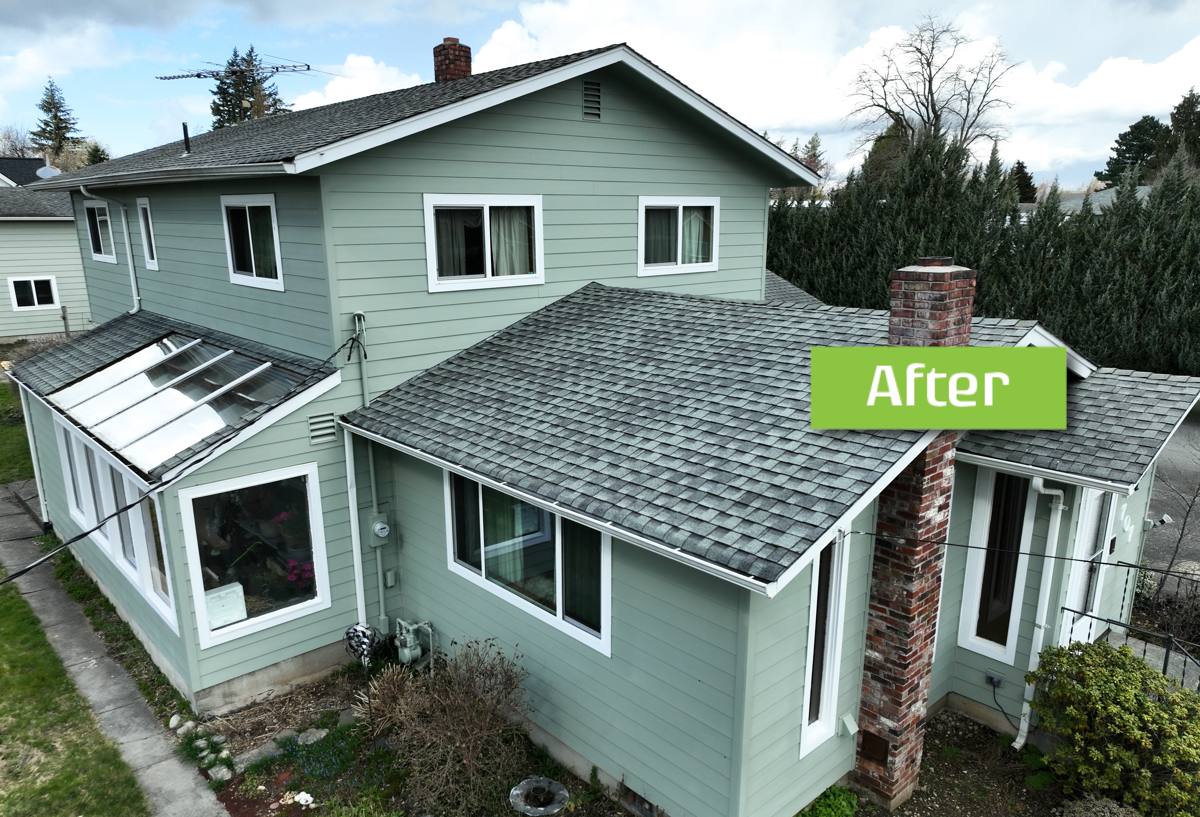
What Birch Bay's Shoreline Climate Does to Siding
Salt Air and Corrosion
Airborne salt from the bay settles on exterior surfaces continuously, not just during storms, and it's harder on exposed metal — fasteners, flashing, trim caps — than on inland properties. Fastener corrosion is one of the quieter failure points in coastal siding jobs: a fastener that starts to rust can loosen its grip on the panel or trim it's holding, and once water gets behind a siding course through a compromised fastener, the damage spreads from the inside where nobody sees it until the siding itself starts failing.
Wind-Driven Rain Off the Water
Storms coming off open water don't just drop rain, they push it. On a Birch Bay lot, water gets driven into seams, corners, and any gap in flashing at an angle that a calmer inland site rarely sees. Siding and trim that aren't detailed to shed rain moving sideways — not just rain falling straight down — tend to show water staining and soft spots first at panel joints, window and door trim, and inside corners, exactly where wind-driven rain concentrates.
A Long Moss and Mildew Season
Persistent coastal humidity, mild temperatures, and plenty of shaded wall area on wooded or north-facing lots add up to a moss and mildew season that stretches across most of the year here. It shows up as green or dark staining on shaded siding first, and it's more than a cosmetic problem — sustained organic growth holds moisture directly against the wall, which is the exact condition that leads to rot underneath if it isn't addressed.
Why We Install James Hardie Fiber Cement Here
We've watched, across years of exterior work throughout Whatcom County, which siding materials actually hold up to sustained coastal exposure and which ones quietly turn into maintenance problems within a decade. For a Birch Bay property specifically, dealing with salt air, wind-driven rain, and a long wet season, the case for fiber cement is a strong one.
- Non-combustible core: Fiber cement doesn't feed a fire the way wood-based or wood-derived siding can, which matters for household safety and insurance underwriting alike.
- Factory-applied ColorPlus finish: The color is baked on under controlled factory conditions rather than brushed on in the field, so it holds up to salt air, UV, and sustained moisture far longer than site-applied paint.
- Climate-engineered HZ product lines: Hardie builds different formulations for different climate zones, including versions engineered for regions with sustained moisture exposure — a real match for a shoreline property.
- Dimensional stability: Fiber cement doesn't swell, cup, or warp the way engineered wood siding can after repeated wet-season moisture cycles, which matters more here given how long that wet season runs.
- Strong transferable warranty: Hardie backs its products with a solid warranty structure, provided the installation follows spec, which gives a homeowner real protection rather than a sales claim.
Every one of those products we don't install has a place in the broader market, and plenty of homeowners elsewhere are satisfied with them. But for homes taking this kind of shoreline exposure, we made a professional call that one system we trust completely, installed to spec, is worth more than a cheaper option that shifts maintenance risk back onto the homeowner a few years down the road.
Siding Material Comparison for a Birch Bay Property
| Material | Salt Air / Moisture Behavior | Maintenance Burden | Our Position |
|---|---|---|---|
| James Hardie fiber cement | Non-combustible, dimensionally stable, engineered HZ lines for sustained moisture exposure | Low — factory finish holds color and resists moisture intrusion | What we install, exclusively |
| Vinyl siding | Can warp, crack, or fade under sustained UV and temperature swings; seams can allow water intrusion | Low upfront but prone to becoming brittle over time in coastal exposure | Not installed |
| Cedar or primed wood | Absorbs moisture readily; prone to rot, cupping, and paint failure under sustained damp and salt exposure | High — regular refinishing and moisture monitoring required | Not installed |
| LP SmartSide (engineered wood) | Wood-based core is more moisture-sensitive than fiber cement, particularly at cut edges and seams | Moderate to high — edge sealing and moisture management are critical | Not installed |
The differences on this table aren't marketing spin — they're the reasons a coastal property needs a material that doesn't rely on perfect, unbroken maintenance to keep water out.
What a Correct Siding Installation Involves
Rain Screen and Drainage Plane
A siding job that just nails panels over house wrap and calls it done is gambling on the caulk never failing. Correct installation on a shoreline property includes a proper drainage plane and, where the wall assembly calls for it, a rain screen gap that lets any moisture that does get past the siding drain and dry out instead of sitting trapped against the sheathing. On a property taking this much wind-driven rain, that detail is what separates siding that lasts decades from siding that looks fine for a few years and then starts failing from the inside out.
Flashing and Fasteners
Every window, door, and penetration needs flashing that actually sheds water downward and outward, not caulk doing the job flashing should be doing. Given how hard salt air is on exposed metal here, we pay close attention to fastener selection and coverage so corrosion isn't the weak point that lets water in five or ten years down the road.
Grade Clearance and Salt Spray Zones
Siding installed too close to grade wicks up ground moisture, and on a property closer to the water table or exposed to direct salt spray off the bay, that clearance matters even more than it would inland. We also pay attention to which elevations take the most direct spray and wind exposure and detail those walls accordingly rather than treating every side of the house identically.
Repair vs. Full Replacement
Not every siding issue on a Birch Bay home calls for a full tear-off. A storm-damaged section, an isolated trim failure at a window, or an area with impact damage can often be repaired and matched into existing Hardie siding. But if water has been tracking behind the wall for a while, or the home still has an older, non-Hardie product nearing the end of its service life, patching it usually just delays a bigger job while hidden rot keeps spreading underneath. We'll tell you honestly which situation you're actually looking at before recommending either option.
Our Process for a Birch Bay Siding Job
- On-site assessment: We walk the property, check current siding and trim condition, note which walls take the most wind and salt exposure, and look for any signs of moisture already behind the wall.
- Tear-off and substrate check: Old siding comes off and we inspect the sheathing and framing underneath before anything new goes up. This is where hidden rot or trapped moisture gets caught, not guessed at.
- Drainage plane and flashing installation: House wrap, rain screen detailing where called for, and flashing at every window, door, and penetration go in before a single piece of Hardie siding is fastened.
- Hardie siding installation to spec: Panels are fastened, lapped, and sealed according to Hardie's installation requirements, with fastener selection and coverage suited to the property's actual salt and wind exposure.
- Final walkthrough: We go over the finished work with the homeowner and explain what was done and why, so you're not left guessing what's behind the new siding.
Why a Birch Bay-Experienced Crew Matters
A crew that installs siding around Birch Bay regularly knows which walls take the worst of the salt spray and wind, how fast moss establishes on a shaded, damp lot here, and which flashing and fastening details are worth the extra time given what this specific shoreline throws at a house over a full year. That's different knowledge than what a crew brings from installing siding on drier, more sheltered lots elsewhere in Whatcom County. A contractor who treats a Birch Bay property the same as an inland job in Ferndale or Bellingham is missing exposure differences that show up as callbacks a few winters later — loose trim, moisture staining, or premature caulk failure at seams that weren't detailed for what this location actually experiences.
Before You Hire: What to Check
- Confirm the contractor holds a current Washington state contractor license and active insurance
- Ask specifically about their experience with coastal or shoreline properties, not just siding work in general
- Ask what drainage plane and flashing details they use, and why, rather than accepting a vague answer
- Ask which siding material they recommend for a property with this level of salt and wind exposure, and why
- Get the warranty terms in writing, both the manufacturer's and the installer's own workmanship warranty
- Walk the property with the contractor before getting a quote, rather than accepting a price based on square footage alone
If your Birch Bay home needs new siding, a repair, or just an honest look at what's happening behind an aging wall, we're glad to take a look. Reach out using the form below to schedule a free, no-pressure estimate.