 Ferndale Roofing
 Roof Replacement for Point Roberts Homes
Point Roberts sits at the end of a small peninsula that hangs south off the Tsawwassen Peninsula in British Columbia, separated from the rest of Whatcom County by water and by the international border itself. It's a unique piece of geography, and it puts local roofs through a heavier, more constant version of the marine exposure the rest of the county deals with only part of the year. A roof out here doesn't get the benefit of hills, tree cover, or other buildings breaking up the wind the way a lot of inland Ferndale properties do. It takes weather from open water on more than one side, and that changes what "correct installation" actually means when it's time for a full roof replacement.
This page is specifically about roof replacement for Point Roberts homes — what the local climate demands, what a properly done tear-off and reroof involves, and why the practical realities of working in this particular community matter as much as the materials on the roof itself.
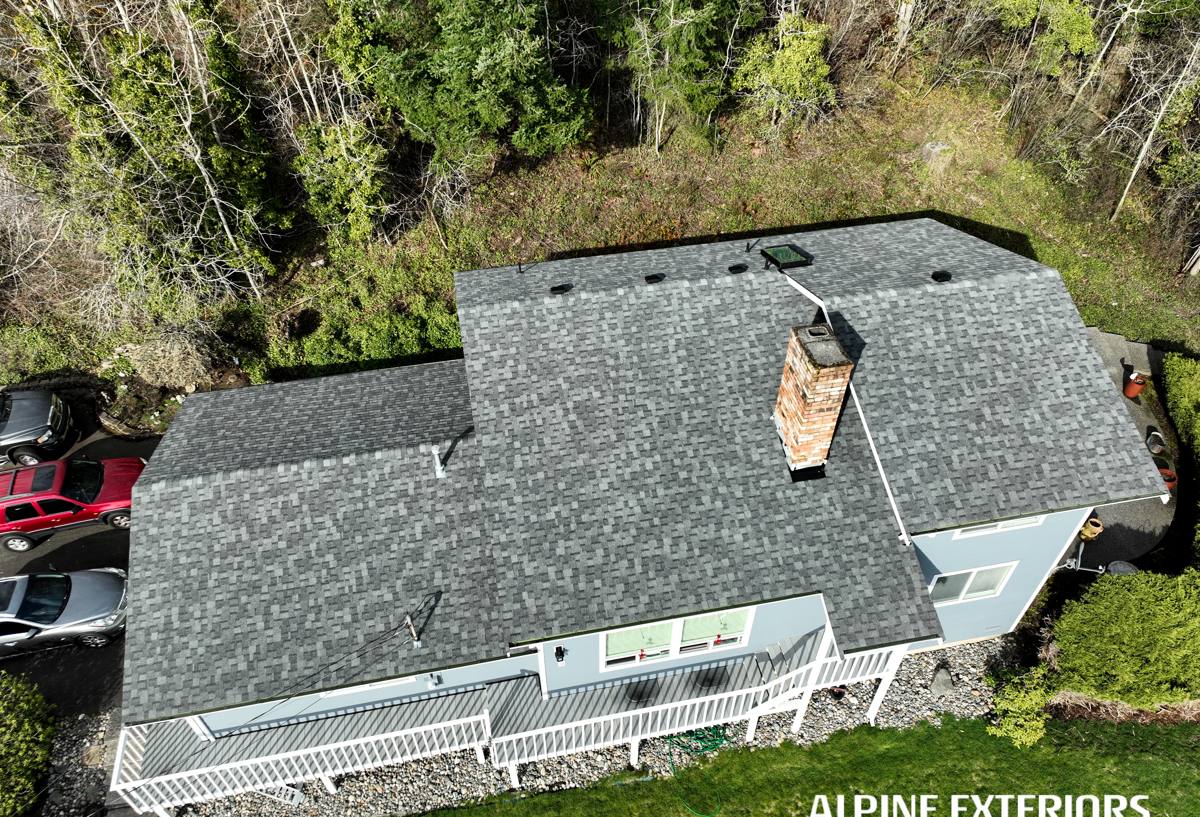
What This Peninsula's Exposure Does to a Roof
Salt Air From Open Water
With Boundary Bay and the Strait of Georgia both close by, salt-laden air reaches Point Roberts roofs more consistently than it reaches most other parts of Whatcom County. Over time, that salt exposure speeds up corrosion in exposed fasteners, drip edge, and flashing metal, and it wears down lower-grade finishes faster than a drier, more sheltered site would. A roofing system spec'd for a typical inland home can start showing its age early out here — rust streaks at fastener heads, chalky or faded shingle color, flashing that pits before it should.
Wind-Driven Rain From More Than One Direction
A peninsula exposed to open water on multiple sides doesn't get a single, predictable prevailing wind the way a more sheltered inland lot does. Storms can push rain sideways and upward from different directions depending on how the system tracks, and that matters for roofing because wind-driven rain doesn't behave like straight-down rainfall. It gets forced up under shingle tabs, into valleys, and behind flashing that isn't lapped correctly — which is why so many roof leaks in this kind of environment start at a seam or a penetration rather than out in the open field of the roof.
A Long Moss and Mildew Season
Cool, damp air off the water keeps moss and mildew active on Point Roberts roofs for a large part of the year, especially on shaded or north-facing slopes. Left alone, moss doesn't just look bad — it holds moisture directly against the roof surface, works its way under shingle edges, and can shorten the usable life of an otherwise sound roof by years.
Sustained Wind Loading
Open-water exposure also means stronger, more sustained wind during winter storm systems than a lot of homes see further inland. That matters for fastening patterns and for how well an aging roof is actually anchored down, since wind uplift on a marginal or improperly fastened roof is one of the more common causes of storm-related roofing failures in this kind of location.
What a Correct Roof Replacement Involves Here
Material choice matters, but on a property with this much exposure, installation detail is what actually determines whether a new roof performs for its full expected lifespan or starts causing problems within a few winters.
Full Tear-Off and Deck Inspection
We don't recommend layovers on a Point Roberts roof. A full tear-off is the only way to actually see the condition of the roof deck underneath, and on a property that's taken this much sustained moisture exposure over the years, hidden deck damage is common enough that skipping the inspection is a real risk, not a formality.
Underlayment Built for Wind-Driven Rain
Standard felt underlayment wasn't designed for the kind of sideways, wind-forced water intrusion a peninsula roof deals with. We use synthetic and self-adhered underlayment products at eaves, valleys, and other vulnerable areas specifically because they hold up better against wind-driven rain than older felt systems.
Flashing Detail at Every Penetration
Valleys, chimneys, skylights, and wall intersections are where the vast majority of roof leaks actually start, and that's doubly true here given how often rain arrives at an angle instead of straight down. Correct flashing work — properly lapped, properly fastened, not just caulked over gaps — is one of the details that separates a roof that lasts from one that doesn't.
Ventilation That Matches the Climate
Poor attic ventilation traps moisture underneath the roof deck, which accelerates rot and gives moss an extra source of dampness to work with from below. On a home that already deals with heavy exterior moisture exposure, getting intake and exhaust ventilation right is part of doing the job correctly, not an optional upgrade.
A Practical Reroof Checklist
- Full tear-off to bare deck, not an overlay on top of existing roofing
- Deck inspection and repair of any soft, rotted, or delaminated sheathing before new material goes down
- Synthetic or self-adhered underlayment, especially at eaves and valleys
- Ice-and-water-style membrane or equivalent protection at vulnerable transitions
- New flashing at every valley, chimney, skylight, and wall intersection — not reused old flashing
- Fastening pattern matched to the wind exposure of the specific roof, not a generic minimum
- Balanced intake and exhaust ventilation appropriate to the attic or roof assembly
- A written warranty covering both material and workmanship
Choosing Roofing Materials for a Point Roberts Home
Asphalt shingles remain the most common and cost-effective choice for most Point Roberts homes, and a good algae-resistant architectural shingle, correctly installed, holds up well against this climate. Metal roofing is worth considering on some properties for its wind performance and longevity, though it comes with a higher upfront cost. The table below breaks down what actually drives cost and performance on a reroof out here.
| Factor | What It Affects | Why It Matters in Point Roberts |
|---|---|---|
| Tear-off vs. layover | Labor scope and ability to inspect the deck | Hidden moisture damage under older roofing is common on properties with this much sustained exposure |
| Shingle or material grade | Wind rating, algae resistance, expected lifespan | Higher wind ratings and algae resistance both matter more on an exposed, open-water lot |
| Underlayment type | Resistance to wind-driven water intrusion | Synthetic and self-adhered products outperform older felt underlayment in this kind of exposure |
| Flashing scope | Valleys, chimneys, skylights, wall intersections | Most leaks in this climate start at flashing details, not the open field of the roof |
| Ventilation upgrades | Attic moisture control and long-term deck health | Poor ventilation compounds the moisture problem a marine climate already creates |
| Roof pitch and access | Labor time, staging, and safety equipment | Steeper or harder-to-access roofs add real time regardless of location |
Exact pricing depends on the roof itself — size, pitch, deck condition, and material choice — which is why we give a real number after walking the roof in person rather than quoting off a generic price sheet.
Why Getting Materials and a Crew to Point Roberts Is Different
Point Roberts is part of Whatcom County, but it isn't connected to the rest of the county by land — reaching it by road means crossing the international border twice, since the only land route runs through Tsawwassen, British Columbia. That's a fact of life for anyone who lives there, and it's also something that shapes how roofing work gets done. A contractor who doesn't normally work this area has to think through material delivery, crew scheduling, and border timing every single time, on top of the roofing work itself. A crew that's already set up to work Point Roberts regularly has that logistics problem solved before the first shingle ever gets ordered, which means fewer delays, fewer surprises, and a schedule that's easier to actually hold to.
It also matters for anything that comes up after the job is done. A workmanship warranty is only useful if the contractor who wrote it can reasonably get back out to the property when something needs attention. A crew already working this peninsula on a regular basis can respond the way a homeowner expects a local company to respond — not treat a Point Roberts callback as a special trip that keeps getting pushed back.
Our Process for a Point Roberts Roof Replacement
- An in-person roof inspection, including a look at the attic or roof deck where accessible, before any number gets quoted
- An honest assessment of whether the roof needs full replacement or whether a repair is a reasonable option for now
- A written, itemized estimate covering tear-off, underlayment, flashing, ventilation, and material specifics — not a one-line total
- Scheduling that accounts for weather and, where relevant, the logistics of getting material and crew to the property
- A full tear-off, deck inspection, and correctly detailed installation, with any deck repairs communicated before we cover them up
- A final walkthrough, cleanup, and magnetic nail sweep before the job is considered done
Signs Your Point Roberts Roof Needs Replacing, Not Just Repair
- Shingles that are cracked, curling, or missing granules across large sections rather than one isolated spot
- Moss or dark staining that returns quickly after cleaning, especially on shaded or north-facing slopes
- Soft, spongy, or sagging areas anywhere on the roof deck
- Daylight visible through the roof deck from inside the attic
- Rusting fasteners, corroding flashing, or flashing that's visibly pulled away from a valley or penetration
- Water stains on interior ceilings or exterior fascia and soffit boards
- A roof that's approaching or past the expected lifespan of its material, especially if it's never been fully torn off and replaced
- Rising energy bills that may point to a roof and attic assembly that's no longer sealing or ventilating properly
A single isolated issue — a lifted shingle after a storm, a small flashing leak at one penetration — is often a legitimate repair rather than a full replacement. Multiple signs showing up together, especially combined with an older roof, usually means repair is just delaying the inevitable and letting hidden deck damage keep spreading in the meantime.
Why a Local Crew That Already Works Point Roberts Matters
A crew that works this specific stretch of the county regularly understands how salt air, multidirectional wind-driven rain, and a long moss season behave on real Point Roberts roofs over a full year, not just how a shingle performs on a manufacturer's spec sheet. That experience shapes practical decisions on install day — which slopes hold moisture longest, where extra flashing attention actually pays off, and which fastening details are worth the added time so a homeowner isn't dealing with a leak after the next winter storm off the water. Combined with the logistics of the peninsula's location, working with a crew that's already established here, rather than a contractor making a one-time trip, is a real, practical difference for a job this size.
What to Expect When You Reach Out
- A roof inspection in person, not a drive-by estimate
- A clear, honest answer on repair versus full replacement
- A written estimate that spells out tear-off, underlayment, flashing, and material specifics
- No pressure to sign on the spot
If your Point Roberts home needs a new roof, or you'd just like an honest second opinion on what's actually going on up there, we're glad to take a look. Reach out using the form below to schedule a free, no-pressure estimate.