 Ferndale Roofing
 Windows Built for Point Roberts, Not Just Whatcom County
Point Roberts sits on its own peninsula, cut off from the rest of Whatcom County by water and by an international border, and that geography shapes everything about how a home ages here. Homes on this stretch of coastline take a different kind of beating than a house fifteen miles inland in Ferndale or Bellingham. Salt-laden air off the water works its way into every gap in a window frame. Wind-driven rain doesn't just fall, it gets pushed sideways into siding and trim. And the long, damp moss season that defines a Pacific Northwest winter keeps everything around your windows wet for months at a stretch. Windows that would hold up fine in a drier climate start failing early out here, and the failure usually starts at the installation, not the glass itself.
This page is about one job done right: replacing or installing windows in Point Roberts homes, with an approach built around the specific conditions of this peninsula.
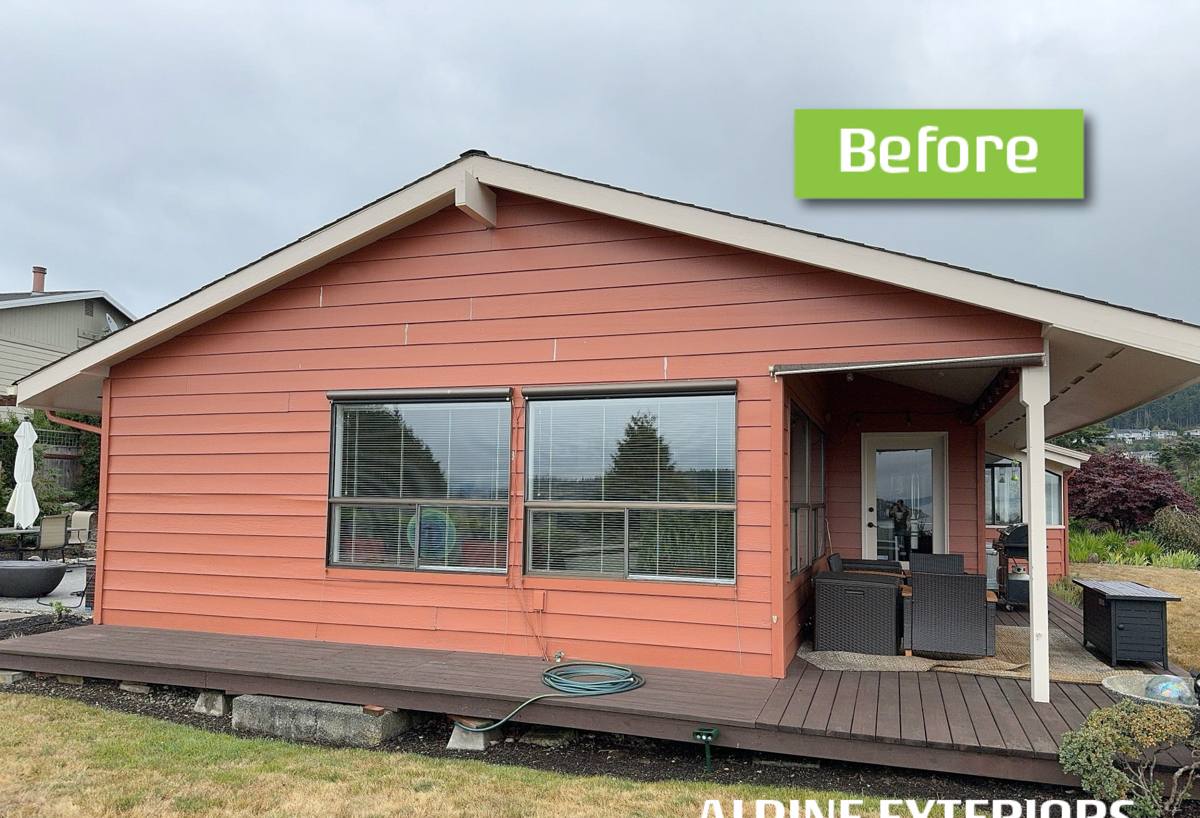
What This Climate Actually Does to a Window
Salt Air and Corrosion
Airborne salt is corrosive to metal hardware, fasteners, and some frame finishes. Over years, salt exposure accelerates pitting and corrosion on lower-grade hardware, which is why hinge and lock mechanisms on cheaper windows tend to stiffen up or fail well before the glass unit does. It also breaks down poor-quality sealants faster than a typical inland installation would see.
Wind-Driven Rain
A window doesn't have to be pointed at the water to take water. Wind off the strait can push rain sideways and upward against a wall, which means water testing a window from angles a standard installation might not fully account for. This is a flashing and drainage-plane problem more than a glass problem — if the water management around the window opening isn't right, wind-driven rain finds the gap.
Moss Season and Sustained Moisture
Whatcom County's moss season isn't just about roofs. Extended periods of damp, low-drying conditions mean wood trim, sills, and any exposed fasteners around a window stay wet longer than they would in a sunnier climate. That sustained moisture is what turns a small installation flaw into a rot problem two or three years down the road, not twenty.
Signs Your Current Windows Are Losing the Fight
- Fogging or a visible haze between panes — the seal on the insulated glass unit has failed
- Soft or discolored trim and sill wood, especially on the sides that face prevailing wind
- Drafts you can feel even with the window latched and locked
- Hardware that's stiff, corroded, or won't latch flush anymore
- Visible gaps or cracked caulk lines where the frame meets the siding
- A musty smell near the window that shows up during wet months and fades in summer
- Condensation forming on the interior frame or sill, not just the glass
Any one of these on its own isn't necessarily an emergency. Several of them together, especially on windows over 15-20 years old, usually means the installation is letting moisture in around the frame rather than the window unit simply being old.
What a Correct Installation Actually Involves
The window itself matters, but in this climate the installation detail is what determines whether that window lasts. A correct job includes:
Opening Prep and Inspection
Before a new window goes in, the rough opening gets inspected for existing rot, soft framing, or prior water damage. Skipping this step is the single most common reason a "new" window fails within a few years — it gets installed into a compromised opening and the same water path just reopens.
Flashing and Drainage Plane
Proper flashing integrates with the home's existing weather-resistive barrier so water is directed out and down, never trapped behind the frame. In a wind-driven-rain climate, the sill pan and side flashing details matter more than they would somewhere drier — this is where most installation shortcuts show up years later as soft drywall or rot.
Sealant Selection and Placement
Not every sealant is rated for the same movement and UV exposure, and salt air shortens the working life of lower-grade caulks. We use sealants and backer rod placement suited to marine exposure, and we don't rely on caulk alone to do a flashing detail's job.
Fastening and Hardware
Fastener choice matters near salt air — corrosion-resistant fasteners cost a little more and hold up considerably longer than standard hardware in this environment.
Insulation and Air Sealing
The gap between the window frame and the rough opening gets properly insulated and air-sealed, not just stuffed with fiberglass. Done wrong, this creates a cold spot that condenses moisture on the interior side of the frame during our wetter months.
Frame Material: What Holds Up Here
There's no single "best" window material for every home — it depends on your home's exposure, budget, and how much upkeep you want to take on. Here's how the common options actually perform in a salt-air, high-moisture coastal climate:
| Frame Material | Moisture/Salt Behavior | Maintenance | Typical Fit |
|---|---|---|---|
| Vinyl | Doesn't corrode or rot; seams and hardware quality vary by manufacturer | Low — occasional cleaning | Most homes, strong value |
| Fiberglass | Very stable in temperature swings and moisture; resists warping | Low | Higher-exposure walls, long-term durability priority |
| Aluminum | Corrosion-resistant coatings needed near salt air; can conduct cold, leading to condensation | Moderate | Modern styling, larger openings |
| Wood-clad | Attractive, but exposed wood elements are vulnerable in sustained moisture if cladding is compromised | Higher — needs monitoring at joints and sills | Homes prioritizing traditional appearance, with realistic upkeep expectations |
We'll walk through which of these makes sense for your specific walls and exposure rather than pushing one product line. The right call often differs from one side of a house to another depending on which direction takes the weather.
Our Process for a Point Roberts Installation
- On-site assessment — we look at your current windows, the condition of the openings, and which walls take the worst of the wind and rain
- Honest scope discussion — full replacement, retrofit, or targeted repair, whichever actually fits the condition we find, not the most expensive option by default
- Written estimate — clear line items, no vague allowances
- Scheduling around the peninsula's access — because Point Roberts is only reachable through a border crossing, we plan material delivery and crew scheduling as a single trip rather than piecemeal runs, which keeps the job moving and keeps costs predictable
- Removal and opening inspection — old windows come out, and we inspect the framing before anything new goes in
- Installation with full flashing and sealing detail — as described above, not shortcuts
- Final check and walkthrough — operation, seals, and cleanup before we consider the job done
Why a Crew That Already Works Point Roberts Matters
Point Roberts creates real logistical realities that a crew unfamiliar with the area will underestimate. Every trip in or out crosses an international border, which means material runs, permit pickups, and mid-job supply trips are not as simple as driving across town. A contractor who hasn't planned around that will either pad your timeline with avoidable delays or cut corners to avoid extra trips — neither is good for your project.
There's also the matter of knowing the housing stock. Many homes on the peninsula were built as, or have been converted from, seasonal or vacation properties, which means older window installations sometimes weren't detailed for full-time, year-round exposure to this climate. A crew that's worked in the area recognizes those patterns quickly instead of discovering them mid-project.
Living With New Windows in a Salt-Air, Moss-Season Climate
Even a correctly installed window benefits from a little seasonal attention out here:
- Rinse exterior frames periodically to reduce salt buildup, especially on walls facing open water
- Check exterior caulk lines each fall before moss season settles in, and flag any cracking early
- Keep gutters and downspouts clear so roof runoff isn't sheeting down past window heads
- Operate hardware through the winter rather than leaving windows shut and untouched for months — moving parts that sit unused are more prone to sticking
- Wipe down interior sills if you notice condensation buildup during cold snaps, and mention it to us if it's a recurring pattern rather than a one-off cold morning
What Affects the Cost of a Window Installation Here
| Factor | Why It Matters |
|---|---|
| Number and size of openings | Larger and more numerous windows increase material and labor |
| Frame material chosen | Vinyl, fiberglass, aluminum, and wood-clad carry different material costs |
| Condition of existing openings | Rot or prior water damage found during removal adds repair scope |
| Exposure of each wall | Wind- and water-facing walls may warrant upgraded flashing or sealant details |
| Access and logistics | Point Roberts' border-crossing access factors into scheduling and trip planning |
| Full replacement vs. retrofit | Retrofitting into an existing, sound frame is generally less involved than a full tear-out |
We don't quote from a distance on a job like this — every home's exposure and existing condition is different enough that an honest number requires an on-site look.
Get a Straight Answer About Your Windows
If your windows are fogging, drafting, or showing soft trim after another wet Whatcom County winter, it's worth having someone look before moss season does more damage underneath the surface. We'll give you a clear, no-pressure estimate and tell you honestly whether you need full replacement or something less. Use the form below to request a free estimate for your Point Roberts home.