 Ferndale Roofing
 Point Roberts' Roofing Climate: Salt Air, Driving Rain, and a Long Moss Season
Point Roberts sits on its own peninsula at the edge of the Strait of Georgia, and that location shapes everything about how a roof ages there. Homes catch salt-laden air off the water almost year-round, which speeds up corrosion on anything metal — fasteners, flashing, gutters, even the coating on some shingles. Add in driving rain that comes in sideways off the water during winter storms, and you get wind-driven moisture finding its way into laps and seams that would stay dry on a more sheltered inland roof.
Then there's moss. Whatcom County's wet season runs long, and Point Roberts' marine exposure keeps roofs damp for extended stretches even between storms. Moss and algae don't just look bad — they hold moisture against the roofing material, work their way under shingle tabs, and shorten the life of a roof that would otherwise last two or three decades. A new roof installation here has to be planned around all three of these factors together, not treated like a standard install with a shingle swap at the end.
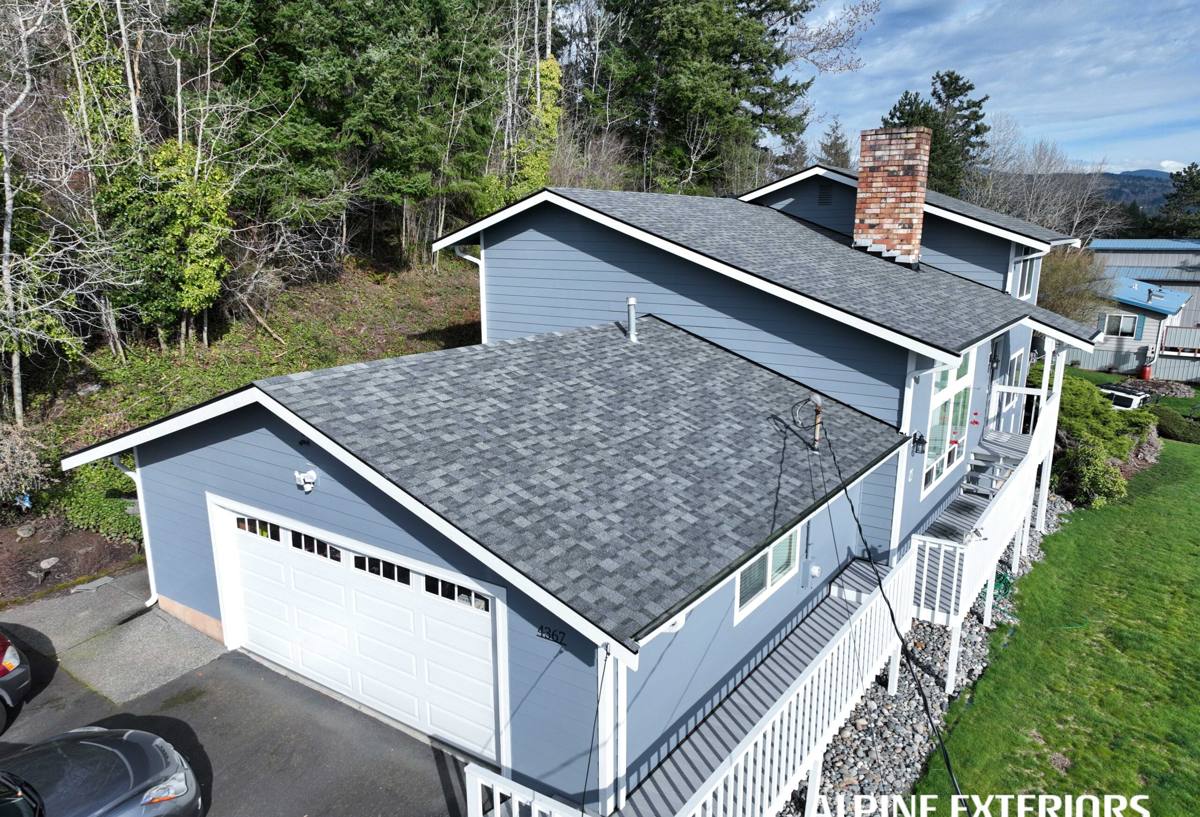
What a New Roof Needs to Handle in This Exclave
Point Roberts is a genuine exclave — it's only reachable by land through Canada, or by air and water. That's not a roofing detail, but it matters for how a roof gets built and maintained there. Materials, crews, and equipment all have to cross the border to get to the job site, and any warranty or maintenance visit later on means making that trip again. A roof installed here needs to be built right the first time, with materials chosen for the local exposure, because a "we'll just swing by and fix it" mentality doesn't work the same way it does for a job five minutes from the shop.
Practically, that means we lean toward roofing systems and details that reduce the number of return trips a roof will ever need: corrosion-resistant fasteners and flashing, underlayment that's rated for extended UV and moisture exposure, and shingle products with built-in algae resistance rather than relying on a homeowner to schedule regular moss treatments.
Salt Air and Metal Components
Plain galvanized fasteners and flashing corrode faster in a salt air environment than they would a few miles inland. We spec stainless steel or high-quality coated fasteners and flashing on Point Roberts installs specifically because of this — it costs a little more up front and saves a callback down the road.
Wind-Driven Rain
Standard nailing patterns and minimal underlayment coverage are built for average conditions, not sideways rain off open water. We treat valleys, eaves, and any roof-to-wall transitions as high-risk zones and detail them accordingly, which is covered in more depth below.
Material Choices That Hold Up Near the Water
There's no single "best" roofing material for every Point Roberts home — it depends on the roof's exposure, the home's style, and the owner's budget and maintenance appetite. Here's how the common options actually perform under salt air, driving rain, and moss pressure specifically.
| Material | Salt Air / Corrosion Behavior | Moss & Algae Resistance | Maintenance Load |
|---|---|---|---|
| Algae-resistant asphalt shingles | Good — non-metallic surface, but relies on corrosion-resistant flashing/fasteners | Built-in copper or zinc granules slow algae growth | Low to moderate; periodic soft-wash still recommended |
| Standard (non-AR) asphalt shingles | Same base durability, but no algae protection | Poor — dark streaking and moss colonization common within a few years | Higher; more frequent treatment needed |
| Metal roofing | Excellent when properly coated; needs marine-grade fasteners and coatings | Very good — smooth surface sheds moisture, little for moss to grip | Low once installed correctly |
| Cedar shake | Neutral — not a corrosion concern itself, but fasteners/flashing still need upgrading | Poor without proactive treatment; moss thrives in wood grain | Highest; requires regular cleaning and treatment |
For most Point Roberts homes we recommend algae-resistant architectural shingles as the practical middle ground — strong performance against moss and reasonable upfront cost — with metal roofing as the upgrade option for owners who want the lowest long-term maintenance and are comfortable with the higher installed cost.
What a Correct New Roof Installation Involves
Tear-Off and Deck Inspection
Every new roof starts with a full tear-off down to the decking, not an overlay. This is the only point in the project where we can actually see the plywood or OSB underneath, check for soft spots or moisture staining, and replace any damaged sections before they're covered up for another 20-plus years. On coastal homes, we pay particular attention to decking near eaves and valleys, where trapped moisture does the most damage over time.
Underlayment and Flashing
We use self-adhered, waterproof underlayment (ice-and-water shield) at eaves, valleys, and any roof penetrations, with synthetic underlayment across the rest of the field. Given the wind-driven rain this area sees, we extend that waterproof coverage further up the roof than the bare code minimum in exposed areas. Flashing around chimneys, skylights, and wall transitions is installed in corrosion-resistant material and detailed to shed water outward at every layer, not just caulked and hoped for.
Ventilation
A roof that traps humid air underneath it will rot from the inside regardless of how good the shingles are. Balanced intake and exhaust ventilation keeps the attic space dry and reduces the moisture buildup that feeds both wood rot and, indirectly, exterior moss growth by keeping the whole system drier overall.
Shingle or Panel Installation
Fasteners, nailing patterns, and exposure lines are set to the manufacturer's high-wind specification, not the minimum standard install — appropriate given how exposed this peninsula is to open water. Ridge caps and starter strips get the same attention, since these are common points where wind-driven rain finds a way in on a poorly finished roof.
Our Process From Estimate to Cleanup
- On-site inspection and honest assessment of whether repair or full replacement makes sense
- Written estimate that spells out materials, scope, and timeline — no vague allowances
- Whatcom County permitting handled before work begins
- Material staging and delivery planned around the border crossing, so the crew isn't waiting on supplies mid-job
- Weather-aware scheduling — we don't tear off a roof and leave it exposed to a Strait of Georgia storm system
- Full tear-off, deck inspection and repair, underlayment, flashing, and installation as outlined above
- Site cleanup, including magnetic sweep for stray fasteners
- Final walkthrough so you know exactly what was done and what to expect from the new roof going forward
Why a Ferndale Crew That Already Works Point Roberts Matters
Because Point Roberts is only reachable by driving through Canada or by water, not every roofing contractor is set up to work there efficiently — some avoid it entirely, and others treat it as a one-off trip that adds cost and delay. A crew that already has a routine for getting people and materials across, understands Whatcom County permitting for the area, and has seen how the local salt air and moss actually affect roofs over time is going to plan the job better from day one. It also matters after the install: if there's ever a warranty question or a detail that needs a second look, you want a crew for whom that trip is routine, not a hardship they'll put off.
Signs Your Point Roberts Home Needs a New Roof
- Shingles that are cupping, cracking, or losing their granules faster than you'd expect for their age
- Heavy moss growth that comes back quickly even after cleaning
- Rust staining or visible corrosion on flashing, vents, or fasteners
- Water stains on interior ceilings or in the attic after wind-driven storms
- Daylight visible through the roof deck from inside the attic
- A roof approaching or past 20–25 years old with asphalt shingles, or showing wear well before that timeline due to salt exposure
Cost Factors Specific to Point Roberts Jobs
Beyond the usual factors — roof size, pitch, layer count, and material choice — a few things specific to this location affect the final number. Corrosion-resistant fasteners and flashing cost more than standard-grade materials but reduce the odds of an early callback. Logistics for getting crews and materials across the border are built into scheduling rather than the price itself, but they do mean we plan deliveries in fewer, larger trips rather than making multiple runs. Extended waterproof underlayment coverage in high-exposure areas adds some material cost but is worth it given the wind-driven rain this peninsula sees regularly.
We'll walk through all of this in plain terms during your estimate — what's driving the price, where there's room to adjust, and what we wouldn't recommend cutting given the local conditions.
Ready to Talk Through Your Roof
If your Point Roberts home is due for a new roof, or you're not sure yet whether repair or full replacement makes more sense, we're happy to take a look and give you a straight answer. Fill out the form below for a free, no-pressure estimate — we'll walk the roof, explain what we see, and give you honest options built for what this stretch of coastline actually puts a roof through.