 Ferndale Roofing
 Why Point Roberts Decks Wear Out Differently
Point Roberts sits out on its own peninsula, surrounded on almost every side by water. That location is part of what makes it a great place to have a deck — and part of what makes deck repair out here a different job than it is fifteen miles inland in Ferndale. Salt-laden air off the water settles on wood, metal, and finishes day after day, and it doesn't take a storm to do damage. It's the steady, low-grade exposure that adds up.
Layer in the driving rain that's normal for this stretch of Whatcom County, and you get moisture pushed sideways into joints, fastener heads, and end grain that a south-facing deck somewhere drier would rarely see. Then comes moss season, which in this part of the Pacific Northwest can run from fall through spring. Moss and algae don't just look bad on a deck surface — they hold moisture against the wood, and that constant dampness is exactly what feeds rot underneath a stain job that still looks fine from a few feet away.
None of this means a deck on Point Roberts is doomed to fail early. It means the repair work has to account for salt, water, and moss as ongoing conditions rather than one-time problems, and that changes what "fixing" a deck correctly actually looks like.
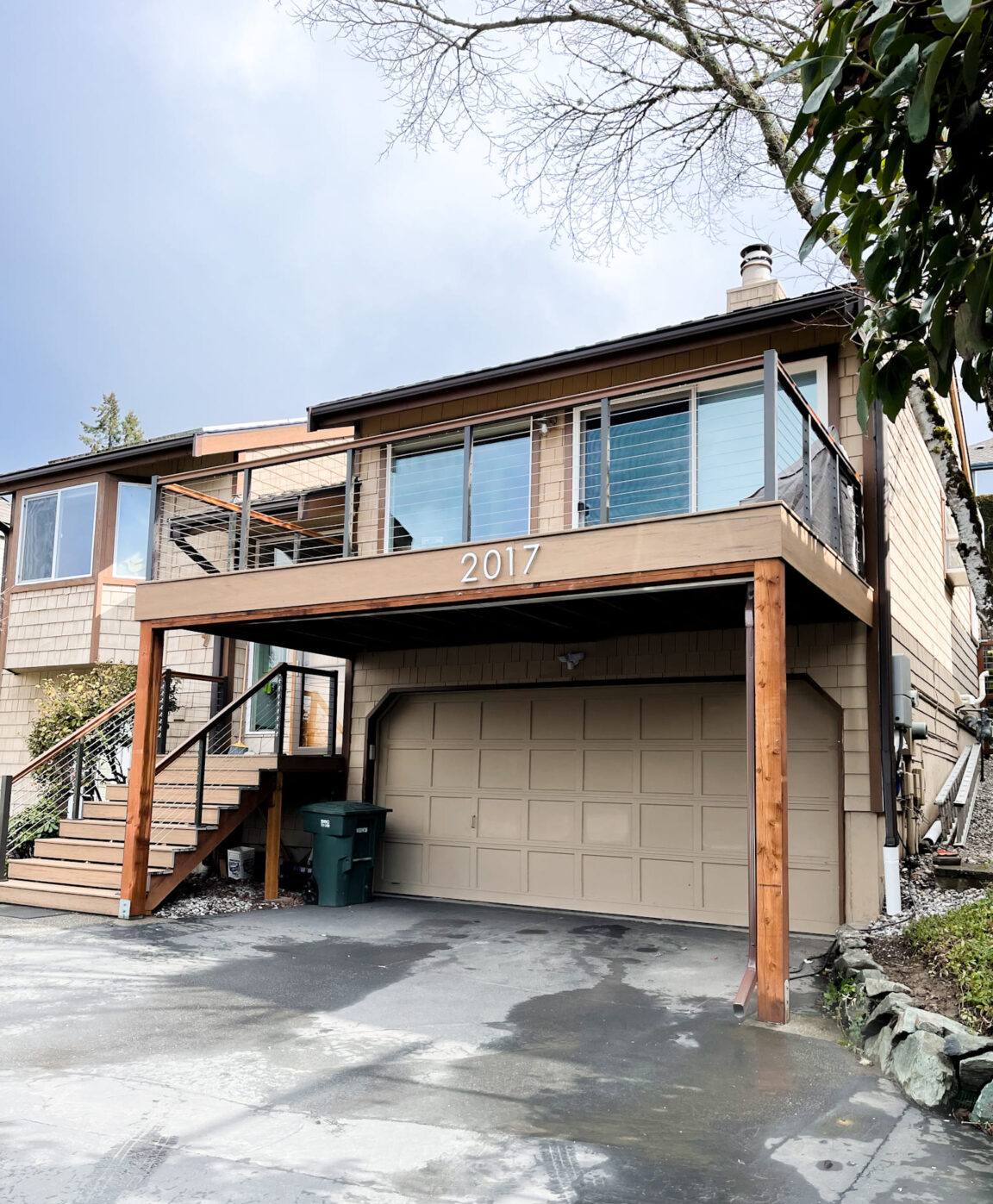
Signs Your Deck Needs Repair, Not Just a Cleaning
A pressure wash or a fresh coat of stain can hide a lot of problems for a season, but it doesn't fix them. Some signs mean it's time to have the structure looked at, not just the surface:
- Boards that feel soft, spongy, or flex more than they used to underfoot
- Gaps between boards that have widened or edges that have started to cup
- Rust streaks bleeding out from screw heads, brackets, or bolts
- Any separation or daylight where the deck ledger meets the house
- Railings or posts that wobble when you lean on them
- Moss or dark staining that comes back within weeks of cleaning
- Stair stringers or treads that sag or feel uneven
Any one of these on its own might be minor. Several together usually mean moisture has been getting into the structure for a while, and that's worth a proper look before it turns into a safety issue.
What a Correct Deck Repair Actually Involves
A deck repair that only addresses what you can see from standing on it isn't a complete repair. The parts that actually hold the deck up matter more than the boards on top.
Framing and Structure
Ledger boards, joists, beams, posts, and footings are the skeleton of the deck. The ledger connection — where the deck attaches to the house — is one of the most common failure points we find, because it's a spot where water can collect and sit against wood and framing that isn't easy to see without pulling back flashing or trim. Posts and footings get checked for rot at the base and for movement or settling in the ground.
Decking Surface and Railings
Individual boards get evaluated one at a time. Some can be spot-repaired or replaced without touching the rest of the deck; others signal a wider problem if several boards in the same area are failing together. Railings and guard posts get the same structural attention as the frame underneath, since a loose railing is a safety issue, not just a cosmetic one.
Fasteners and Hardware
In a marine climate, hardware often fails before the wood around it does. Corroded joist hangers, rusted-through screws, and degraded bolts can leave a deck looking fine on the surface while it's structurally compromised underneath. Replacing hardware with the right coastal-rated fasteners is not optional in a repair here — it's the difference between a fix that lasts and one that fails again in a couple of years.
Flashing and Moisture Management
Good flashing at the ledger and around posts directs water away from wood instead of letting it pool. A lot of the deck failures we see trace back to missing or poorly installed flashing from the original build, not to the age of the wood itself.
Repair or Replace? How We Make the Call
Not every deck problem means starting over, and not every deck is worth patching. The decision usually comes down to how much of the structure is still sound.
| Factor | Repair Usually Makes Sense | Replacement Usually Makes Sense |
|---|---|---|
| Framing condition | Ledger, joists, and posts are structurally sound with isolated soft spots | Rot or corrosion is widespread through the main framing |
| Age of the deck | Deck is under 15-20 years old and was built to a reasonable standard | Deck is original to an older home with outdated framing or connections |
| Extent of damage | Damage is contained to a section — a stair run, a corner, a few boards | Damage shows up in multiple, unrelated areas across the deck |
| Ledger connection | Ledger attachment and flashing are intact or easily corrected | Ledger area has significant rot or was never flashed properly |
| Your plans for the deck | You're happy with the current size, layout, and material | You want a different footprint, material, or layout anyway |
We'll always tell you honestly which category your deck falls into. There's no benefit to us talking you into a full rebuild if a targeted repair will genuinely hold up.
Material and Hardware Choices That Hold Up Near the Water
Every decking material handles a salt-air, high-rain climate a little differently, and none of them are maintenance-free.
Pressure-treated lumber is the most common choice and the easiest to spot-repair board by board, which matters for a repair job rather than a full rebuild. It needs consistent sealing or staining to keep moisture out, more so here than in a drier climate, since the protective coating breaks down faster under constant damp and salt exposure.
Composite decking resists rot and doesn't need staining, which appeals to homeowners who are tired of the upkeep. It's not maintenance-free, though — salt film and organic debris from moss season still need to be rinsed off regularly, or the surface stains and grows algae just like wood can. Composite is also less forgiving to repair piecemeal; damaged sections are typically swapped out rather than patched.
Cedar has natural resistance to rot and insects and a look a lot of homeowners like, but it's softer and more prone to surface damage, and it still needs regular sealing near the water to perform well long-term.
Whatever the decking material, hardware is where we don't cut corners. Standard zinc-coated fasteners corrode quickly in this environment. We use stainless steel or hot-dip galvanized fasteners and connectors rated for coastal exposure, because replacing a few dollars' worth of hardware now is a lot cheaper than replacing a joist hanger failure later.
Our Deck Repair Process
- Inspection. We check the framing, ledger connection, posts, footings, and hardware — not just the visible decking — and note anything moisture or rot has already affected.
- Written scope and honest recommendation. You get a clear explanation of what needs repair, what's optional, and what we'd recommend based on the condition of the structure, not a upsell script.
- Repair work. Damaged framing, boards, and hardware get replaced with materials suited to the exposure your deck actually gets. Flashing and moisture management get corrected where it's part of the problem.
- Cleanup and walkthrough. We clear debris and walk the finished repair with you so you know exactly what was done and what to keep an eye on going forward.
If your deck's height, footprint, or the scope of the repair triggers a Whatcom County permit requirement, we'll flag that up front rather than let it become a surprise mid-project.
Keeping Your Repaired Deck in Good Shape
A correct repair buys you years, but a little regular upkeep buys you more — especially in a climate that doesn't let up on salt, rain, or moss for long.
- Rinse salt film and debris off the deck surface every few weeks, more often right after storms
- Sweep leaves and moss buildup out of gaps between boards before they trap moisture
- Re-seal or re-stain wood decking on the schedule your product actually calls for, not just when it looks worn
- Check railings and stair connections for movement once or twice a year
- Look at exposed fasteners for early rust streaking before it spreads
- Keep gutters and downspouts near the deck clear so runoff isn't draining directly onto it
Why Hiring a Crew That Already Works Point Roberts Matters
Point Roberts is separated from the rest of Washington by Canada, which means getting a crew and materials out there isn't the same as scheduling a job on the mainland side of Whatcom County. Crews generally route through Canada to reach the peninsula, and that travel time has to be planned for rather than treated as an afterthought. A contractor who doesn't regularly work Point Roberts may not build that into their scheduling or pricing up front, which can turn into delays on your end.
There's also the matter of simply knowing the conditions. A crew that's repaired decks all over inland Whatcom County has plenty of general experience, but a crew that specifically works Point Roberts has seen how salt air, wind-driven rain, and moss season actually play out on this stretch of coastline, deck after deck. That familiarity shows up in the details — where flashing tends to fail first, which hardware holds up and which doesn't, how quickly moss comes back on a north-facing section. It's the difference between a repair based on general best practices and one based on what actually works here.
If your deck is showing signs of wear, sagging, or moisture damage, we're happy to take a look and give you an honest, no-pressure estimate — just fill out the form below to get started.