 Ferndale Roofing
 Building a Deck That Can Actually Handle Point Roberts
Point Roberts sits in a category of its own. It's part of Whatcom County, but it's a peninsula cut off from the rest of the mainland — reachable by land only by driving through Canada, or by water. That geography matters for more than just getting there. It means the point is fully exposed to marine weather off the Strait of Georgia and Boundary Bay, with very little inland buffer to soften what comes off the water. A deck built here needs to be built for that exposure from the ground up, not adapted from a plan meant for a more sheltered lot.
We build and repair decks throughout the Ferndale area, and Point Roberts is one of the more demanding places we work. The salt air, the driving rain off the water, and a moss season that runs longer here than almost anywhere else in Whatcom County all shape the decisions that go into a deck that's actually going to last — the fasteners, the framing details, the material choice, and the maintenance plan.
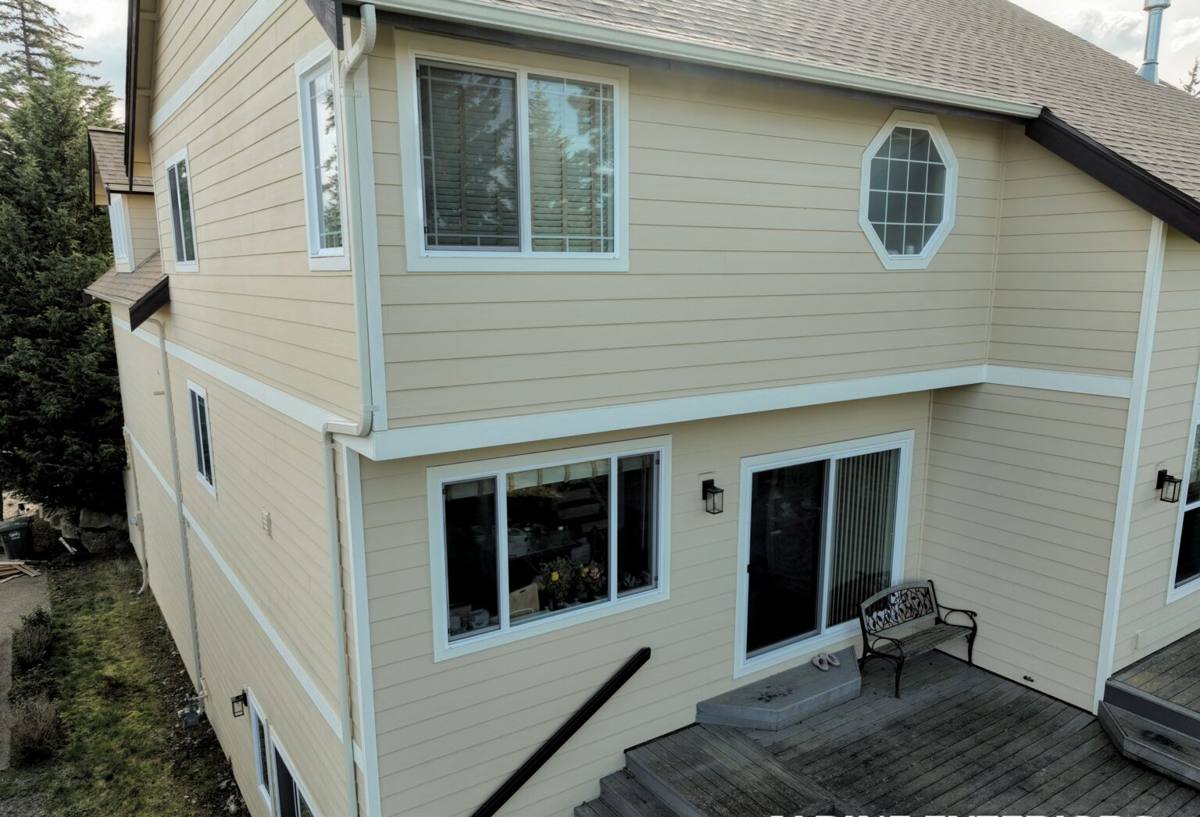
What the Climate Actually Does to a Deck Here
Salt Air and Corrosion
Airborne salt is corrosive to metal, and a waterfront or near-waterfront property gets a steady dose of it year-round. Standard fasteners and connectors that are perfectly fine on an inland deck can start rusting and staining within a couple of seasons on a Point Roberts lot. Once corrosion starts on a structural fastener, it's not just cosmetic — it weakens the connection it's supposed to be holding.
Driving Rain and Moisture Intrusion
Wind-driven rain off the water doesn't fall straight down — it gets pushed sideways into ledger boards, under railing posts, and into any gap in the flashing. On an exposed peninsula like this, that horizontal rain load is a real design factor, not an afterthought. The places most decks fail first — the ledger connection to the house, post bases, and stair stringers — are exactly the places that take the worst of it.
A Long Moss Season
Cool, damp air and shaded or north-facing surfaces are a recipe for moss and algae, and that season runs long here. Moss holds moisture against decking and framing far longer than open sun would, which accelerates rot in wood and can make composite and even concrete surfaces slick and slippery. A deck that isn't designed with drainage and airflow in mind will grow moss faster than most homeowners expect, especially underneath the structure where it's rarely seen until it's a problem.
Choosing a Decking Material for This Environment
There's no single "best" decking material — there's a best fit for how exposed your lot is, how much maintenance you want to do, and your budget. Here's how the common options hold up specifically against salt air, standing moisture, and moss:
| Material | How it handles this climate | Maintenance |
|---|---|---|
| Pressure-treated wood | Affordable and strong, but needs sealing regularly to resist moisture and moss; end grain and fastener holes are vulnerable points | High — annual cleaning and periodic sealing |
| Cedar | Naturally moisture- and insect-resistant, but the surface grays and can still host moss in shaded, damp spots without upkeep | Moderate to high |
| Composite decking | Resists rot and doesn't need sealing, but can still develop surface moss/mildew in constantly shaded, damp areas — quality varies a lot by product line | Low — periodic washing |
| PVC/capped polymer | Fully non-porous, best resistance to moisture and staining, holds up well to salt air; higher upfront cost | Lowest |
What we won't do is put a low-grade composite or an uncapped board in full shade on an exposed Point Roberts lot and call it low-maintenance — in that setting it will grow moss and hold moisture just like any other surface, and the warranty fine print on some of those products doesn't hold up well to that reality. We'll tell you honestly which tier fits your site and your budget before you buy anything.
Framing and Hardware That Actually Hold Up
The decking surface is the part people notice, but the framing and hardware underneath are what determine whether the deck is safe in ten years. In a salt-air environment, that starts with fastener and connector selection — hot-dip galvanized rated for coastal exposure at minimum, and stainless steel at ledger connections, stair stringers, and anywhere corrosion would compromise structure rather than just appearance. It's a bigger upfront cost than standard hardware, but it's the difference between a deck that's still solid in fifteen years and one that needs structural repairs in five.
The ledger board — where the deck attaches to the house — gets particular attention. Proper flashing here, installed so water is shed away from the house framing rather than trapped behind the ledger, is the single most important detail on the entire structure. We also run flashing tape over the top of joists before decking goes down, so any water that gets past the surface boards doesn't sit directly on end grain.
Footings, Drainage, and Airflow Underneath
Footings need to be sized and set to Whatcom County's frost depth and soil bearing requirements, and on many Point Roberts lots the soil and drainage conditions call for a site-specific look rather than a standard assumption. Beyond the footings themselves, two things matter most for long-term durability in this climate:
- The deck surface needs a slight slope and gaps sized to shed water fast rather than let it pool on top of boards
- The space underneath a raised deck needs enough airflow to dry out between rain events — a low, enclosed underside with no ventilation is exactly where moss and rot take hold fastest
If the deck is going over a living space below, or if the underside will be enclosed for storage, that changes the waterproofing approach entirely, and it's worth discussing during design rather than after the framing is already up.
Permits and Whatcom County Code
Point Roberts is unincorporated, so deck permits and inspections go through Whatcom County. Most decks above a certain height or attached to the house require a permit, with inspections at the footing and framing stages before decking goes down, plus a final inspection covering railing height and guard spacing. Skipping this step is a real risk — beyond the legal exposure, an unpermitted deck can complicate a home sale down the road when it turns up in a title search or a buyer's inspection. We handle the permit application and coordinate inspections as part of the project, so it's one less thing you have to manage.
Our Process, Start to Finish
Because of the location, a Point Roberts project runs a little differently than one in central Ferndale, and we plan for that up front rather than discovering it mid-project.
- Site visit and design: We look at sun exposure, wind exposure, drainage, and how the deck will tie into the house before recommending a material and layout.
- Proposal and permit prep: A clear, itemized proposal, followed by the Whatcom County permit application and any required documentation.
- Material and logistics planning: Because the point is only reachable by crossing through Canada, we plan material deliveries and crew scheduling around that in advance, so the project isn't waiting on a truck that can't get through on short notice.
- Construction: Footings, framing with corrosion-rated hardware, flashing at every vulnerable point, then decking, stairs, and railings.
- Inspections: Coordinated with Whatcom County at the required stages.
- Final walkthrough: We go over the finished deck with you, including basic care specific to this climate — cleaning schedule, what to watch for with moss, and how to keep drainage clear underneath.
Why a Crew That Already Works Point Roberts Matters
A contractor who's never worked past the border crossing is learning the logistics of this location on your project, at your expense — in scheduling delays, in material that shows up late, or in details that get missed because the crew wasn't planning for how different this site is from a typical mainland lot. Before hiring anyone for a Point Roberts deck, it's worth asking directly:
- Have you built or repaired decks in Point Roberts before, and can you speak to specifics of the location?
- How do you plan material delivery and crew scheduling around the border crossing?
- What fastener and hardware grade do you use for coastal/salt-air exposure, and why?
- Are you familiar with the Whatcom County permit process for an unincorporated area, and will you handle it?
- What's your plan for ledger flashing and under-deck drainage on this specific property?
A crew that already works this area has already solved the logistics, already knows what Whatcom County inspectors look for, and already builds with this climate as the default assumption rather than an exception.
What a Point Roberts Deck Project Costs
Every deck is priced around the specifics of the site, but the main factors that move the number are consistent. Broad, honest ranges depend heavily on size, material, and site conditions — we'll give you an exact number after seeing the property.
| Factor | Why it moves the cost |
|---|---|
| Decking material | Pressure-treated is the low end; composite and PVC cost more upfront but less in long-term maintenance |
| Height and railing requirements | Taller decks need stairs, guardrails, and additional structural engineering |
| Fastener and hardware grade | Coastal-rated stainless and hot-dip galvanized hardware costs more than standard-grade connectors |
| Existing deck removal | Demolition and disposal of an old structure adds labor before the new build starts |
| Site access and delivery | Material logistics across the border can affect scheduling and delivery costs |
| Permit and engineering | Whatcom County permit fees and any required structural engineering |
If you're planning a new deck or need an old one assessed for a Point Roberts property, we're glad to come take a look. The estimate is free, there's no pressure attached to it, and you'll get a straight answer about what the site actually needs — just fill out the form below to get started.