 Ferndale Roofing
 Metal Roofing for Everson Homes: Why the Climate Here Matters
Everson sits in the Nooksack River valley, a short drive from Ferndale and close enough to the coast that Whatcom County's weather patterns hit hard here too. Homes in this area deal with driving rain that comes in sideways during winter storms, salt-tinged air rolling in off the bay, and a moss season that can run eight months or longer under the tree cover common to this part of the county. A roof that isn't specifically built for that combination wears out faster than the warranty paperwork suggests it should.
Metal roofing, installed correctly, handles all three of those stressors better than most other roofing materials available to homeowners here. But "installed correctly" is doing a lot of work in that sentence. A metal roof that's flashed wrong, fastened wrong, or missing proper underlayment can leak just as badly as a bad asphalt job — sometimes worse, because problems on a metal roof tend to hide until they're serious. This page is about what a correct metal roof looks like for an Everson home, and why the details matter more here than they would in a drier climate.
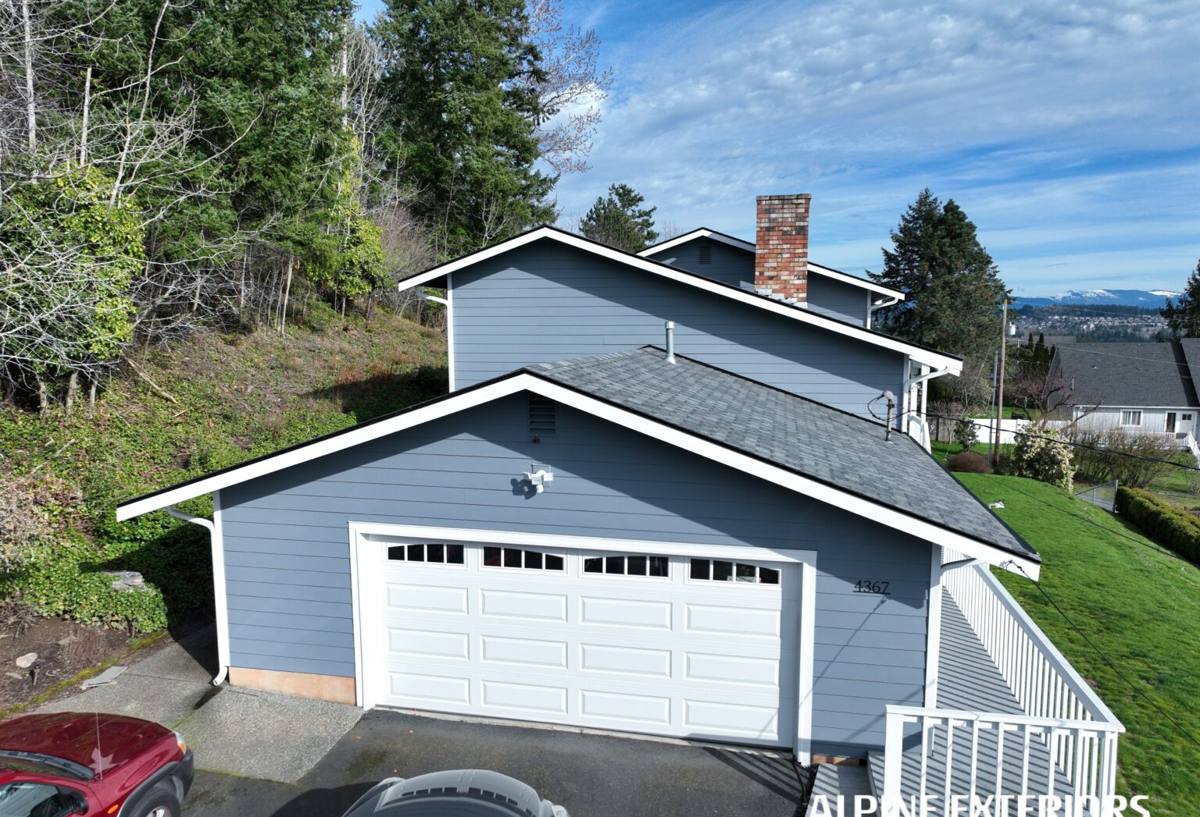
What Driving Rain and Moss Season Actually Do to a Roof
Wind-Driven Water Finds the Weak Points
Rain that falls straight down mostly runs off. Rain that's being pushed sideways by wind — a normal winter pattern in this part of Whatcom County — gets forced up under laps, around penetrations, and into any seam that wasn't detailed properly. On a metal roof, that means flashing at valleys, chimneys, skylights, and wall transitions has to be built to shed water moving in more than one direction, not just installed to a minimum-code checklist.
Moss Doesn't Just Sit There — It Works
Moss needs shade, moisture, and time, and Everson's tree cover and damp winters give it plenty of all three. On asphalt shingles, moss roots into the granule surface and lifts edges, which is how a lot of shingle roofs start leaking years before they're actually worn out. Metal doesn't give moss the same foothold, but it isn't immune — moss and organic debris can still build up in valleys, around fasteners, and anywhere water sits instead of draining, and trapped moisture against any roofing material eventually causes problems.
Salt Air Is Slow but Real
Salt-laden air accelerates corrosion on unprotected metal and hardware. It's a bigger factor the closer a home sits to open water, but the broader Whatcom County coastal influence means it's worth accounting for on any metal roof installation in the area — mainly in the choice of coatings, fasteners, and flashing metals, not in whether metal roofing is a good fit to begin with.
Metal Panel Options That Make Sense for This Area
Not every metal roofing system is built the same way, and the differences matter more in a wet, moss-prone climate than they do somewhere dry. The comparison below is general — the right choice for any specific home depends on roof pitch, budget, and how the house looks.
| Panel Type | Fastener Exposure | Typical Cost Tier | Best Fit |
|---|---|---|---|
| Standing seam | Concealed — fasteners are hidden under the seam | $$$ | Homes wanting the longest maintenance-free lifespan and a clean, modern look |
| Corrugated / exposed-fastener panel | Exposed — fasteners penetrate the panel face | $ | Budget-conscious projects, outbuildings, simpler rooflines |
| Stone-coated steel | Concealed under the coated granule surface | $$ | Homes wanting a shingle or shake look with metal's durability |
Exposed-fastener panels cost less up front, but every fastener is a potential leak point once the rubber gasket underneath it ages and shrinks — and in a climate with this much sustained rain, that gasket is under near-constant stress. Standing seam avoids the problem entirely because there are no fasteners through the panel face in the field of the roof. We walk homeowners through the honest trade-offs for their specific roof rather than steering everyone toward the same product.
What a Correct Metal Roof Installation Involves
A lot of what determines whether a metal roof performs well in this climate happens underneath the panels, in places nobody sees again once the job is done. This is the checklist we hold ourselves to on every Everson metal roof:
- Full tear-off to sound decking, with any soft or water-damaged sheathing replaced before anything new goes down
- A synthetic underlayment rated for the panel type, not a generic felt that degrades under prolonged moisture exposure
- Ice-and-water barrier at eaves, valleys, and penetrations — the places wind-driven rain is most likely to force its way in
- Flashing custom-fit to each valley, wall transition, chimney, and vent, not stock pieces bent to fit
- Fasteners and clips matched to the panel metal to avoid galvanic corrosion between dissimilar metals
- Panel fastening or clip spacing set for local wind exposure, not just manufacturer minimums
- Attic and roof ventilation checked and corrected if needed, since trapped moisture under a roof causes damage no matter how good the panels above it are
- A final walk-through covering drainage paths, valley clearance, and anywhere debris or moss is likely to collect
Skip any one of these and the roof can still look right for a few years. In this climate, the shortcuts tend to show up as a leak during the first serious wind-driven storm, or as rot discovered when the roof is finally opened up for repair.
How Our Process Works
Inspection and Honest Assessment
We start by getting on the roof, not just looking at it from the driveway. That means checking the decking condition, existing ventilation, valley design, and any trouble spots the homeowner has already noticed — moss buildup, staining, soft spots, or areas that behave differently in winter weather.
A Written Scope, Not a Verbal Estimate
Every proposal spells out the panel type, underlayment, flashing approach, and any decking repair allowance in writing before work starts. If the roof needs more than expected once we're into it — which happens more often on older Everson homes with layered roofing history — we explain the reason and the cost before proceeding, not after.
Installation and Cleanup
Tear-off, deck repair, underlayment, flashing, and panel installation follow in that order, with flashing and valley work treated as the part of the job that determines whether the roof actually performs, not an afterthought once the panels are up. We clean the site and haul debris as we go, not just at the end.
Maintenance in a Wet, Moss-Prone Climate
A correctly installed metal roof needs far less upkeep than shingles, but "far less" isn't "none." In Everson's climate, the two things worth checking once or twice a year are valley and gutter drainage — because trapped debris holds moisture against the roof even when the panels themselves are shedding water fine — and fastener or sealant condition on any exposed-fastener sections. Standing seam systems with concealed fasteners cut that second item out almost entirely, which is part of why we lean toward them when budget allows.
We don't recommend pressure-washing moss or debris off a metal roof. It's unnecessary in most cases and can damage coatings or force water under laps. A soft brush and a garden hose, or a professional roof cleaning, handles it without the risk.
Why a Crew That Already Works in Everson Matters
Roofing crews that mostly work drier, inland regions sometimes under-detail flashing and ventilation because it's never caused a callback where they normally work. That same shortcut on a home exposed to Whatcom County's driving rain and salt air shows up as a leak within a few seasons. Working this area regularly means we've already seen which valley designs hold up, which older Everson roof lines need extra flashing attention, and how much ventilation a given attic actually needs given the moisture load this climate puts on a roof — not theory, just what repeated local jobs teach a crew over time.
It also means we're not guessing at typical roof pitches or the kind of tree cover and moss exposure a given property is dealing with. That local familiarity shows up as fewer surprises mid-project and a roof that's built for the conditions it actually has to survive, not generic conditions from a manufacturer's install guide.
Is Metal Roofing the Right Call for Your Everson Home?
Metal roofing isn't the right fit for every budget or every roofline, and we'll say so plainly if that's the case for a particular home. But for homeowners planning to stay put for the long haul, or who are tired of dealing with moss and granule loss on an aging shingle roof, a correctly installed metal system is one of the few roofing upgrades that genuinely reduces maintenance instead of just moving the problem a few years down the road.
If you're weighing options for a home in Everson or anywhere else in the Ferndale area, we're glad to take a look and give a straight answer, including if metal isn't the best move for your specific roof. Request a free, no-pressure estimate using the form below and we'll get a crew out to take a real look at your roof.