 Ferndale Roofing
 Windows Built for Marietta's Coastal Exposure
Marietta sits close enough to the water that homes here deal with a different mix of weather than inland parts of Whatcom County. Salt-laden air off the bay works on window hardware, frame finishes, and exterior caulking in ways that inland neighborhoods simply don't experience as fast. Add in driving rain that comes sideways during winter storms and a moss season that stretches for months on shaded north- and west-facing walls, and you have a climate that is genuinely tough on window systems that weren't built or installed with that exposure in mind.
Window replacement in Marietta isn't just about swapping out old glass for new. It's about choosing materials, hardware, and sealing methods that are matched to salt exposure, sustained moisture, and the freeze-thaw swings that show up in colder stretches. A window that performs fine in a drier or more sheltered part of the county can fail early here if it wasn't specified or installed correctly for this environment.
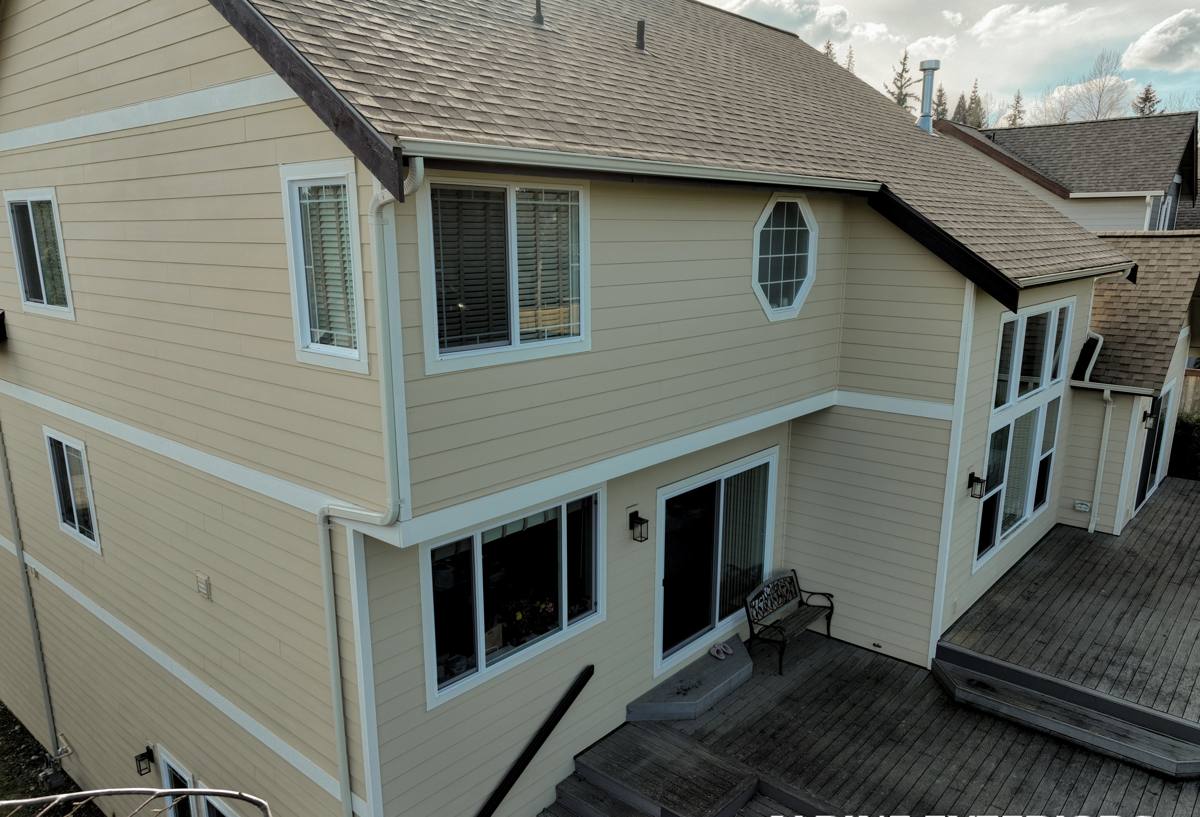
What Salt Air and Driving Rain Actually Do to Windows
It helps to understand the specific failure patterns we see on Marietta homes, because they shape how we approach every replacement job.
Salt Air and Hardware Corrosion
Salt in the air accelerates corrosion on exposed metal components — hinges, cranks, locks, and lesser-quality aluminum cladding. Once corrosion starts, hardware binds up, locks stop seating properly, and weatherstripping compresses unevenly. This is one of the most common reasons we're asked to look at windows that are otherwise still in decent shape.
Driving Rain and Water Intrusion
Wind-driven rain doesn't just hit a window head-on — it gets pushed sideways and upward into any gap in the flashing, sealant, or frame joint. Over time, a compromised seal lets water track behind the trim and into the wall cavity, which is where the real damage happens: rot, mold, and insulation that's lost its effectiveness. By the time you see staining on interior trim, the moisture has usually been working behind the scenes for a while.
Moss and Prolonged Moisture Retention
Shaded exterior walls in Marietta hold moisture longer through the fall and winter, and that's exactly the environment moss and mildew like. On windows, this shows up as sills and lower frame sections that stay damp for extended periods, which shortens the life of wood components and can degrade sealants faster than manufacturers' warranties assume.
Signs Marietta Homeowners Should Watch For
- Windows that feel drafty even when fully latched, especially during storms with wind off the water
- Visible corrosion or stiffness in cranks, hinges, or locking hardware
- Fogging or moisture between panes on double- or triple-glazed units — a sign the seal has failed
- Soft or discolored wood at the sill or lower frame corners
- Paint or finish that's bubbling, peeling, or chalking faster than expected
- Difficulty opening or closing sashes that used to move freely
- Persistent moss or dark staining on the sill or exterior trim that keeps coming back after cleaning
What a Correct Window Replacement Involves
Replacing a window well is mostly about what happens before the new unit ever goes in. The window itself matters, but the flashing, sealing, and integration with the existing wall assembly are what determine whether it holds up to Whatcom County weather for the next couple of decades.
1. Removing the Old Window and Inspecting the Opening
We remove the existing window carefully and inspect the rough opening for hidden rot, moisture damage, or compromised framing. This step matters more in coastal areas like Marietta, since water intrusion around old windows can travel further into the wall than it appears from outside. Any damaged framing gets addressed before a new window ever goes in — installing a new window into a wet or rotted opening just resets the clock on the same problem.
2. Flashing and Weatherproofing
Proper flashing — installed in the correct sequence with house wrap or building paper — is what actually keeps driving rain out, more than the window itself. We integrate sill pans, flashing tape, and drip caps so water sheds outward and downward, never behind the cladding.
3. Setting and Sealing the Window
The window is shimmed, leveled, and fastened according to the manufacturer's specifications, then sealed with exterior-grade sealant rated for sustained moisture exposure. In salt-air environments, we pay particular attention to sealant selection, since not every caulk product holds up equally well to salt and UV exposure over time.
4. Interior and Exterior Finish Work
Trim, casing, and insulation around the frame are completed to match the home and to close off any air or moisture pathway. This is also when we check that operable hardware moves freely and locks seat correctly.
Choosing the Right Window for This Climate
There's no single "best" window material — the right choice depends on exposure, budget, and how much upkeep a homeowner wants to take on. Here's how the common options compare for a coastal Whatcom County property like those in Marietta.
| Frame Material | Salt Air Performance | Maintenance | Typical Trade-Offs |
|---|---|---|---|
| Vinyl | Good — won't corrode or rust | Low | Budget-friendly; limited color/finish options over the frame's life |
| Fiberglass | Very good — dimensionally stable, resists corrosion | Low | Higher upfront cost; strong long-term value in harsh exposure |
| Aluminum | Poor to fair unless marine-grade and well-coated | Moderate to high | Prone to corrosion near salt air unless properly specified; conducts cold |
| Wood (clad or unclad) | Fair — depends heavily on cladding and maintenance | High | Attractive appearance; requires diligent upkeep in wet, shaded areas |
For homes closer to the water, we generally steer homeowners toward vinyl or fiberglass frames with corrosion-resistant hardware, simply because they hold up with less ongoing maintenance. Wood-clad windows can still be a good fit on more sheltered elevations where moss and moisture pressure are lower, but we're upfront about the maintenance commitment that comes with them.
Glass Packages Worth Considering
Double-pane, low-E glass is the standard baseline for this climate and makes a real difference in comfort and energy costs. Triple-pane adds further insulation value and is worth discussing for homes with more exposed, west- or north-facing walls that take the brunt of storms off the water — though it comes at a higher cost and isn't necessary for every elevation of every home.
Our Process for Marietta Window Replacement Projects
- On-site assessment. We look at each window individually — exposure, condition, framing, and how the home is oriented relative to prevailing wind and rain.
- Honest recommendation. Not every window on a home needs the same treatment. We'll tell you which ones genuinely need replacement now and which can reasonably wait.
- Material and glass selection. We walk through frame and glass options based on your budget and how much maintenance you want to take on long-term.
- Installation with proper flashing and sealing. This is where most of the long-term performance is decided, and it's not a step we shortcut.
- Final check. We confirm hardware operation, seal integrity, and finish work before calling the job done.
Why Hiring a Crew That Knows Marietta Matters
A window installed correctly for a dry, inland climate isn't automatically installed correctly for a home exposed to salt air and driving rain. The flashing details, sealant choices, and even the hardware finish that hold up well in Marietta are specific to this kind of exposure. A crew that already works in this part of Whatcom County has seen how windows here actually fail over time — not in a manufacturer's lab, but on real homes dealing with real coastal weather — and builds that experience into how the job gets done.
We're also familiar with the older housing stock common in this area, including original window openings that may not match modern standard sizes, and framing conditions that are common in homes exposed to decades of coastal moisture.
Maintaining New Windows in a Salt Air, High-Moisture Climate
- Rinse salt residue off frames and glass periodically, especially after storms with onshore wind
- Keep weep holes clear of debris so water can drain properly
- Lubricate hardware (hinges, cranks, locks) on a regular schedule to prevent binding
- Clean sills and trim to discourage moss and mildew buildup, particularly on shaded elevations
- Check and refresh exterior caulking every few years, since even good sealant has a service life
- Address any soft or discolored trim right away rather than waiting for it to spread
If you're dealing with drafty, corroded, or fogged windows in Marietta, we'd be glad to take a look and give you a straightforward assessment of what's going on and what your options are. Reach out for a free, no-pressure estimate using the form below.