 Ferndale Roofing
 Windows in Marietta Take a Different Kind of Beating
Marietta sits close enough to the water that homes here deal with a combination most inland Whatcom County neighborhoods don't: salt-laden air off the bay, wind-driven rain that hits window walls sideways instead of straight down, and a wet season that stretches long enough for moss and algae to get a real foothold on anything that stays damp. None of that is dramatic on its own, but stacked together over years, it's exactly the combination that finds every weak point in a window installation — a gap in the flashing, a bead of caulk that was never really sealing anything, a frame material that wasn't built for constant moisture exposure.
That's the backdrop for how we approach window installation in Marietta. It's not a different product line — it's the same solid materials and glass options we'd recommend anywhere in the Ferndale area — but the install details get more attention, because in this location, the details are what fail first.
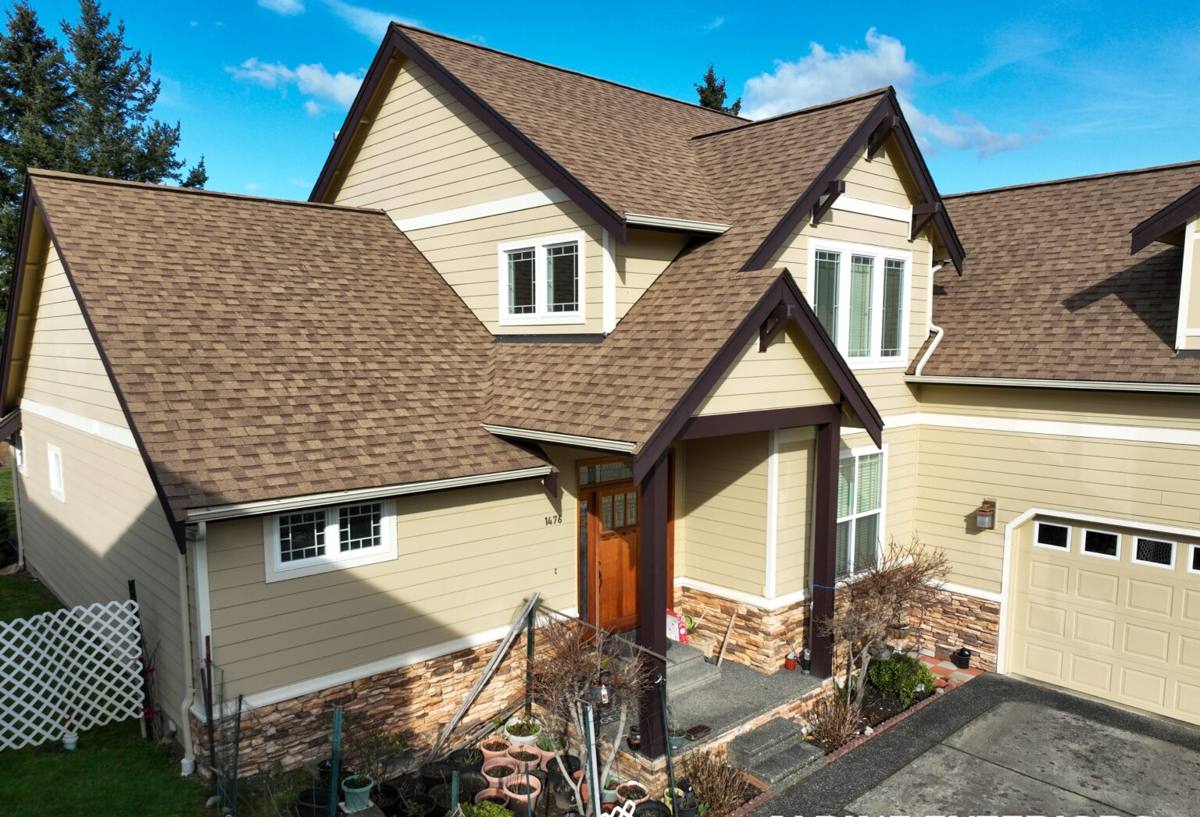
Signs a Window Is Actually Due for Replacement
Not every drafty or foggy window needs a full replacement, but in Marietta's climate, problems tend to escalate faster than they would somewhere drier. Worth a look if you're seeing:
- Fogging or a milky haze between panes — the seal on the insulated glass unit has failed and moisture is trapped inside
- Wood trim or sills that feel soft, spongy, or show dark staining, especially on the side of the house that takes the most weather
- Visible daylight or a noticeable draft around the sash even with the window latched
- Difficulty opening, closing, or locking — often a sign the frame has swelled, warped, or shifted
- Paint or finish that keeps failing on the interior sill no matter how often it's touched up
- Visible mold or persistent black staining on interior trim near the glass
Any one of these can sometimes be repaired. Several at once, especially on an older window, usually means the frame and seals have reached the point where replacement costs less over time than repeated patching.
Choosing a Window Material for a Coastal Whatcom County Property
Frame material matters more here than it does in a drier, more sheltered part of the county. Salt air accelerates corrosion on some hardware and finishes, and constant moisture is unforgiving of any material that relies on paint or sealant to stay protected.
| Material | Moisture & Salt Air Behavior | Maintenance | Notes for This Area |
|---|---|---|---|
| Vinyl | Won't rot or corrode; performs well in damp, salty air | Low — occasional cleaning | Our most common recommendation for Marietta; good value and low upkeep |
| Fiberglass | Very stable in moisture and temperature swings; strong in coastal conditions | Low | Higher upfront cost, longer expected service life, worth it on exposed elevations |
| Wood-clad | Attractive interior wood look, but exterior cladding and any exposed wood need consistent upkeep near salt air | Moderate to high | We'll be upfront if a spot isn't a good fit for wood — sheltered elevations only |
| Aluminum | Durable but conducts heat and cold, and hardware can corrode faster in salt air without marine-grade fittings | Moderate | Rarely our first recommendation for this location |
We're not going to tell you a product is "bad" — every one of these materials has a legitimate use somewhere. But for a home in Marietta taking direct salt air and driving rain, we'll steer you toward the option that holds up with the least maintenance, and we'll explain the trade-offs honestly rather than upselling the most expensive choice by default.
What a Correct Installation Actually Involves
The window itself is maybe half the job. The other half — the part that determines whether it still performs well in ten years — is how it's tied into the wall around it.
Flashing and Weatherproofing
Every opening needs to be flashed so water is directed out and away from the wall, not just sealed with caulk and hoped for. That means proper sill pan flashing, correctly lapped side and head flashing, and integration with the house's existing weather-resistive barrier so water sheds down and over each layer — never behind it. On a home taking regular wind-driven rain, this step is non-negotiable, not optional upgrade.
Fit, Shimming, and Structural Opening
A window that's out of square or improperly shimmed will bind, leak, or stress the seals prematurely. We check the rough opening for square and level, correct problems before the new unit goes in, and shim and fasten according to the manufacturer's specifications so the frame isn't under load it wasn't designed for.
Sealing and Finish
Interior and exterior sealant, insulation in the gap between frame and opening, and correct trim work all affect both energy performance and long-term moisture control. Gaps packed too tight or left too loose both cause problems — this is a place where experience shows.
Any of these steps done poorly won't necessarily show up as a leak in month one. It shows up two or three winters later, after enough driving rain and freeze-thaw cycles have found the weak spot — which is exactly why the install matters as much as the window itself.
Our Process, Start to Finish
- On-site assessment — we look at your existing windows, framing condition, and the specific exposure of each elevation (a window facing the prevailing weather needs more attention than a sheltered one)
- Material and glass recommendation — based on that assessment, not a one-size-fits-all package
- Written estimate — clear on scope, materials, and what's included
- Careful removal — old windows come out without damaging surrounding siding or trim any more than necessary, and we check for hidden rot or water damage while the opening is exposed
- Installation — proper flashing, shimming, insulation, and sealing as described above
- Exterior and interior finish work — trim, caulking, and touch-up so the result looks finished, not patched
- Final walkthrough — every window operates smoothly and locks properly before we call it done
Glass and Energy Performance
Glass package affects comfort, energy bills, and condensation resistance more than most homeowners expect. A few things worth understanding before you choose:
Double-pane vs. triple-pane: Double-pane with a Low-E coating and argon gas fill is a solid, proven choice for most homes in this area and is the standard most manufacturers build around. Triple-pane adds cost and weight for modestly better insulation — it's worth considering on a north-facing wall that takes constant wind, but it isn't automatically the "better" choice for every window in the house.
Low-E coatings: These microscopically thin coatings reduce heat transfer through the glass, keeping interiors warmer in winter and cooler in summer, and they also cut down on UV fading of flooring and furniture. Standard on nearly every quality window today.
Condensation resistance: In a damp climate, glass that resists interior condensation is worth prioritizing — persistent moisture on the inside of a window is what eventually damages sills and trim, even with a perfectly good window itself.
What Affects the Cost
We don't publish a flat price because window jobs vary a lot house to house, but here's what actually drives the number up or down:
| Factor | How It Affects Cost |
|---|---|
| Number and size of windows | The most direct driver — larger openings and more windows scale cost accordingly |
| Frame material | Vinyl is typically the most budget-friendly; fiberglass and wood-clad cost more upfront |
| Glass package | Triple-pane, specialty coatings, or tinted/obscure glass add cost over a standard double-pane Low-E unit |
| Access and elevation | Second-story or hard-to-reach windows take more time and equipment than ground-floor units |
| Condition behind the old window | Rot or water damage found during removal adds repair cost, but it's better to find and fix it now than seal it back up |
| Trim and exterior finish | Matching existing trim profiles or repainting/staining adds labor beyond the window install itself |
We'll always flag anything that changes the price before we proceed — no surprise line items after the fact.
A Homeowner's Checklist Before You Sign a Contract
- Confirm the contractor is licensed and insured to work in Washington, and ask to see proof
- Ask specifically how they'll flash the opening — a vague answer is a red flag
- Get the glass package (pane count, coatings, gas fill) written into the estimate, not just "energy efficient windows"
- Ask what happens if they find rot or damage once the old window is out
- Clarify the warranty on both the product and the labor separately — they're not always the same
- Ask how long the job will take and how many windows will be open at once, especially if you have pets or small children in the home
Why a Crew That Already Works Marietta Matters
A window installer who mostly works drier, more sheltered parts of Whatcom County can still do competent work — but there's real value in a crew that already knows what a bay-adjacent property like the ones in Marietta demands: which elevations take the worst of the driving rain, how much moss and organic buildup to expect around window trim if it's not detailed correctly, and where salt air has historically caused hardware or finish problems on similar homes nearby. That familiarity shows up in fewer callbacks and windows that are still performing the way they should well past the honeymoon period.
If you're weighing repair versus replacement, comparing materials, or just want a straight answer about what your windows actually need, we're happy to take a look. Fill out the form below for a free, no-pressure estimate — we'll tell you honestly what we'd do if it were our own house.