 Ferndale Roofing
 Windows Built for Marietta's Coastal Conditions
Marietta sits close enough to the water that homes here deal with a different set of window problems than houses further inland in Whatcom County. Salt-laden air moves through window hardware and seals. Driving rain off the Strait pushes water sideways against glazing and frames, not just straight down. And the long, damp moss season that defines a Ferndale winter keeps window sills, tracks, and exterior trim wet for weeks at a stretch. Windows that aren't built or installed with that in mind fail early — fogged glass, soft frames, hardware that seizes up, and sashes that won't seal tight anymore.
We install custom windows specifically sized and detailed for Marietta's older and newer homes alike, with flashing and sealing details chosen for this exact microclimate rather than a generic install method pulled from a manufacturer's minimum-standard instructions.
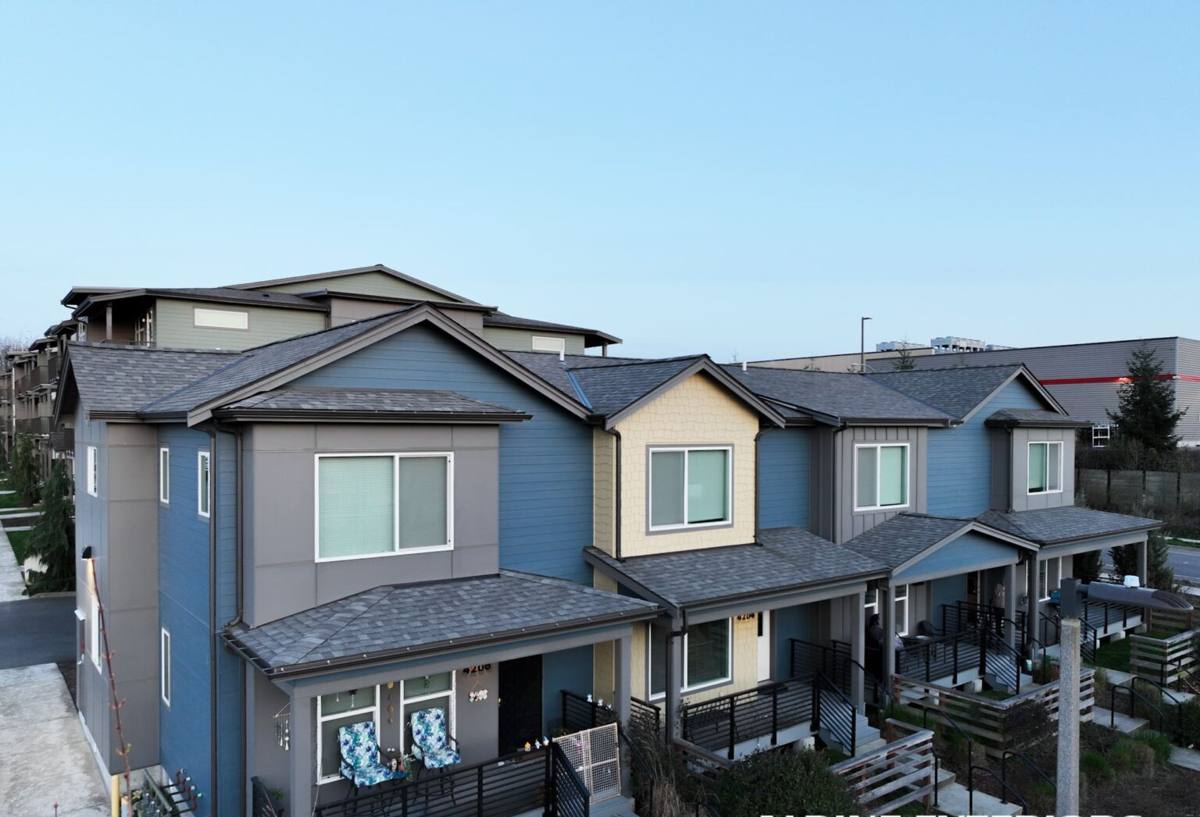
What Marietta's Climate Actually Does to a Window
Salt Air and Metal Components
Even a few miles from open saltwater, airborne salt accelerates corrosion on window hardware — hinges, locks, balance mechanisms, and screen frames. Cheaper aluminum or basic steel hardware pits and seizes faster here than it would in a dry inland climate. We spec corrosion-resistant hardware for Marietta jobs as a default, not an upgrade.
Driving Rain and Wind-Driven Water
Storms coming off the water don't just drop rain straight down — wind pushes it laterally into window assemblies, testing every seam in the flashing and the window unit itself. A window that would pass fine in a sheltered inland yard can leak here if the sill pan, flashing lap sequence, or sealant joint isn't done correctly. This is one of the most common sources of hidden rot we find behind older windows in this area.
Moss, Moisture, and Wood Rot
Ferndale's moss season isn't just cosmetic — it's an indicator of how long surfaces stay wet. Wood window sills, exterior trim, and even fiberglass or vinyl frames with poor drainage paths stay damp for extended stretches in fall and winter. Standing moisture at the sill is the number one cause of rot we see in window replacements in this area, more than age or the window brand itself.
Signs a Marietta Home Needs New Windows
- Soft or spongy wood at the sill or lower frame when pressed with a finger
- Fogging or moisture between panes of double-glazed units — a sign the seal has failed
- Windows that are difficult to open, close, or lock, especially after damp weather
- Visible gaps, drafts, or daylight around the frame when the window is shut
- Paint that's bubbling, peeling, or chalking on the frame or nearby trim
- Water staining on interior drywall or trim below or beside a window
- Noticeable temperature difference near the window compared to the rest of the room
Choosing the Right Window Materials for This Neighborhood
Material choice matters more here than in a mild inland climate. Some materials handle Marietta's combination of salt air, rain, and prolonged dampness better than others.
| Frame Material | How It Handles Marietta's Climate | Maintenance Reality |
|---|---|---|
| Vinyl | Good moisture resistance, no rot risk, holds up well to salt air | Low — occasional cleaning, no painting or sealing required |
| Fiberglass | Very stable in temperature swings and moisture; strong long-term option | Low — durable finish, minimal upkeep |
| Wood (clad exterior) | Can perform well if the exterior cladding and flashing details are done correctly | Moderate — exposed wood surfaces need monitoring for moisture intrusion at joints |
| Bare wood | Requires diligent upkeep to avoid rot in this climate; we recommend it only where matching historic character is the priority | High — regular painting/sealing and inspection needed |
| Aluminum | Conducts cold and can corrode faster near salt air without a quality finish | Moderate — finish quality determines longevity |
For most Marietta homes, we steer clients toward vinyl or fiberglass because they hold up with the least ongoing maintenance in a climate that punishes anything porous or prone to corrosion. Where a homeowner wants the look of true wood for a historic or architectural reason, we'll talk through what that upkeep actually looks like honestly, rather than glossing over it.
What a Correct Installation Involves
Sill Pan and Flashing Sequence
The single biggest factor in whether a window leaks isn't the window itself — it's the flashing and sill pan work around it. A proper install uses a sloped sill pan that directs any water that gets past the window back outside the wall assembly, with flashing layered correctly so water sheds downward and outward at every lap, never trapped behind house wrap or siding.
Air and Water Sealing
We seal the interior air barrier separately from the exterior water barrier — they do different jobs and shouldn't be combined into one sloppy bead of caulk. The exterior seal keeps bulk water out; the interior seal stops air leakage and condensation risk inside the wall cavity.
Proper Fastening and Shimming
Windows need to be shimmed square and plumb, then fastened per the manufacturer's schedule — not just caulked into a rough opening and called done. An out-of-square window stresses the frame, causes hardware to bind, and creates gaps that let water and air through even on a brand-new unit.
Trim and Exterior Detailing
Exterior trim gets back-primed and sealed at end grain and joints — the spots most likely to soak up moisture during a wet Whatcom County winter. This detail is easy to skip and one of the most common reasons trim rots out in just a few years.
Our Process for a Marietta Window Project
- On-site assessment — we look at existing window condition, framing, siding type, and any signs of prior water intrusion before recommending anything
- Honest scope and options — we walk through material and style options with real trade-offs, not a single upsell pitch
- Accurate measurement — custom sizing for the actual rough opening, not a generic stock size that requires excessive shimming or filler
- Removal and inspection — old windows come out carefully so we can check the framing and sheathing underneath for hidden rot before it gets covered back up
- Correct flashing and installation — sill pan, flashing sequence, air seal, and fastening done to a consistent standard on every unit
- Exterior finish work — trim, caulking, and paint or stain detail completed to shed water, not just look finished
- Final walkthrough — every window opened, closed, and locked with you before we consider the job done
Cost Factors for Marietta Window Projects
Window project costs vary based on several factors specific to the home and scope, not just the number of windows:
| Factor | Why It Affects Cost |
|---|---|
| Frame material chosen | Vinyl, fiberglass, and clad-wood carry different material costs and labor needs |
| Condition of existing framing | Hidden rot found during removal means added repair before a new window can go in correctly |
| Window size and configuration | Larger units, custom shapes, or multi-panel assemblies cost more than standard single units |
| Number of windows in the project | Whole-home projects typically bring a better per-window cost than one-off replacements |
| Trim and siding tie-in work | Matching existing trim profiles or siding cuts adds labor beyond the window install itself |
| Story height and access | Second-story or hard-to-access windows take more time and equipment to install safely |
We give straightforward, itemized estimates so you know what you're paying for and why — no vague lump-sum numbers that hide what's actually being done.
Why Hiring a Crew That Already Works in Marietta Matters
A crew that regularly works Marietta and the surrounding Ferndale area already knows which details matter here: how to flash a window against wind-driven rain off the water, which hardware holds up against salt air instead of seizing within a few years, and how to detail a sill so moss-season moisture doesn't sit and rot the wood underneath. That's the difference between an installation that looks fine on move-out day and one that's still performing correctly five winters later. We'd rather take the extra time on flashing and sealing details up front than come back for a leak repair after the first serious storm season.
Maintaining Your Windows After Installation
- Clear debris and moss from window sills and tracks each fall before wet weather sets in
- Check exterior caulking annually for cracking or gaps, especially on the weather-facing side of the home
- Operate locks and hardware periodically through winter so mechanisms don't seize from disuse and moisture
- Rinse salt residue off frames and hardware occasionally if the home is close to open water
- Watch for condensation between panes, which signals a seal failure worth addressing before it worsens
- Keep gutters and downspouts clear so roof runoff isn't dumping extra water near window trim
A little seasonal attention goes a long way toward getting the full service life out of a window investment in this climate.
If you're weighing window replacement or repair for a Marietta-area home, we're happy to take a look and give you a straightforward, no-pressure estimate — just fill out the form below and we'll get back to you.