 Ferndale Roofing
 Why Siding Repair Looks Different in Lynden's Climate
Lynden sits inland from Bellingham Bay, but that doesn't mean the siding on Lynden homes gets an easier ride than houses closer to the water. Whatcom County's marine air, long wet winters, and the moss season that stretches from fall through spring all reach into the Nooksack Valley too. Driving rain pushed by wind doesn't need to originate at the coast to find the gaps in aging caulk or the seam where two pieces of siding no longer sit tight. Add in the moisture-laden air that settles overnight and burns off slowly under our grey-sky mornings, and you get siding that stays damp longer than it should, season after season.
That combination — wind-driven rain, prolonged dampness, and heavy moss and algae growth — is exactly why a "quick patch" approach to siding repair fails so often around here. A repair that looks fine the day it's finished can trap moisture behind it within a year if the water management wasn't rebuilt correctly. Ferndale Roofing Co has done enough repair work throughout Whatcom County, including in Lynden, to know which shortcuts cause callbacks and which repairs actually hold up through a full Pacific Northwest winter.
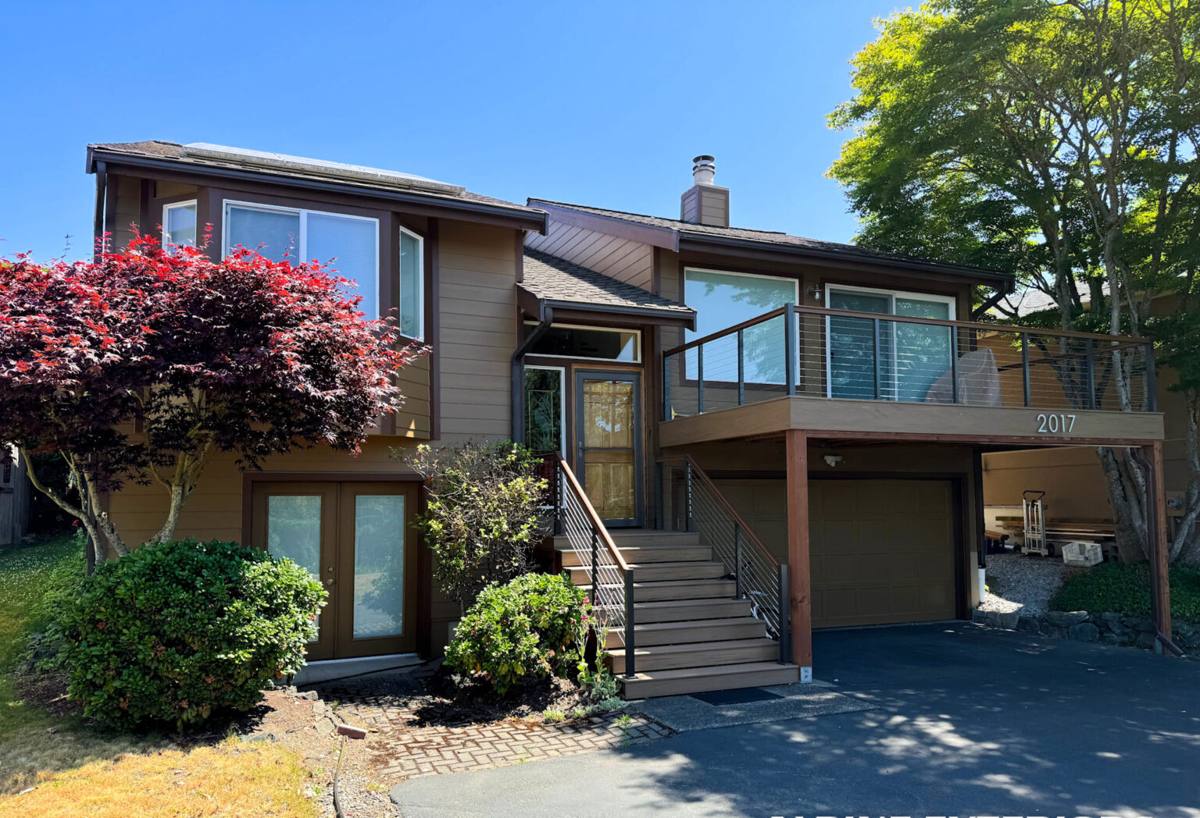
The Damage Patterns We See Most Often on Lynden Homes
Every region has its own signature failure points, driven by its own weather. In this part of Whatcom County, three patterns show up again and again.
Moisture Intrusion Behind the Siding
This is the damage that worries us most, because it's invisible until it isn't. Failed caulk joints, gaps around window and door trim, or siding that was never properly flashed at the top allow water to work its way behind the cladding. Once that happens, sheathing and framing can stay wet for weeks at a time in our climate, leading to rot that's often worse than it looks from the outside. A repair that only addresses the visible crack or gap, without checking what's happening behind it, is not a real repair.
Moss and Algae Growth
Whatcom County's long, damp shoulder seasons are ideal growing conditions for moss and algae on siding, especially on north-facing walls and areas shaded by trees or fences. Beyond the cosmetic issue, moss holds moisture against the siding surface far longer than open air would, accelerating whatever deterioration is already underway. On older wood-based or composite siding, this is frequently the first visible sign that something more serious is happening underneath.
Impact and Wear Damage
Cracked or dented panels from storm debris, ladders, lawn equipment, or simple age-related brittleness are common too. On their own, these are usually straightforward fixes. The complication is finding replacement material that matches the existing siding's profile, exposure, and color closely enough that the repair doesn't stand out — a real issue on homes with older or discontinued siding products.
Repair or Replace? How We Make the Call
Not every siding problem needs a full replacement, and not every problem should be patched. We inspect first and give you an honest read on which category your home falls into, rather than defaulting to whichever job is bigger.
| Situation | Usually a Repair | Usually a Replacement |
|---|---|---|
| Damage extent | Isolated to one or two panels or a small section | Spread across multiple walls or elevations |
| Underlying moisture | Sheathing and framing test dry once siding is removed | Rot or sustained moisture found behind siding |
| Material match | Matching siding is available or a discreet patch is possible | Product is discontinued or match would be visibly obvious |
| Age of siding system | Siding is otherwise sound and well within its service life | Siding is near or past its expected lifespan overall |
| Recurrence | First occurrence of this type of damage | Same failure has already been "fixed" more than once |
When a home is borderline, we'll tell you both options honestly, including what each one costs and what each one buys you in terms of remaining service life. We're not in the business of talking a homeowner into a bigger job than they need.
What a Correct Siding Repair Actually Involves
A siding repair is a water management job first and a cosmetic job second. Skipping the first part is how "repaired" siding ends up back on our schedule a year or two later.
Inspection and Moisture Testing
Before any material comes off the wall, we look at the full scope of the problem: how far the damage extends, whether nearby areas show early signs of the same issue, and whether moisture has reached the sheathing. On repairs where trapped water is suspected, we check the framing and sheathing condition once the affected siding is removed, not after the new piece is already installed over it.
Matching Material and Finish
For homes already sided in James Hardie fiber cement, this is usually straightforward — Hardie's product lines and ColorPlus finishes are manufactured to consistent specifications, so a properly sourced replacement plank blends in cleanly. For homes with older wood, vinyl, or other composite siding, matching profile, texture, and weathering is harder, and we'll tell you upfront if a perfect match isn't realistic.
Flashing and Water Management
Any repair that touches a seam, corner, window, or door gets its flashing and water-resistive barrier checked and corrected, not just caulked over. This is the step that determines whether the repair actually solves the underlying problem or just hides it for a season.
Sealants and Finish Work
We use sealants rated for the temperature swings and sustained moisture exposure typical of Whatcom County winters, not a generic all-purpose caulk that will crack and separate within a couple of wet seasons. Paint and color matching is done to blend with existing siding as closely as the material allows.
Our Process, From Call to Completion
- An on-site inspection where we look at the full elevation, not just the spot you called about, and check for signs the problem may be more widespread.
- A written estimate that separates repair scope from any additional work we'd recommend, with reasoning for each.
- Scheduling that accounts for weather — we don't open up a wall section during a stretch of driving rain if we can help it.
- Removal of damaged material and inspection of the sheathing and framing underneath before anything new goes back on.
- Correct flashing, water-resistive barrier repair, and installation of matching siding material.
- Sealant, caulking, and finish work, followed by a final walkthrough with the homeowner.
Why We Repair and Rebuild with James Hardie Fiber Cement
Ferndale Roofing Co installs James Hardie fiber cement siding exclusively — we don't install vinyl, LP SmartSide, or cedar, and when a repair calls for new material, Hardie is what we bring to the job. There are practical reasons for that standard, especially in this climate. Hardie's HZ product lines are engineered for specific climate zones, including the wet, moderate-temperature conditions common throughout the Pacific Northwest. The fiber cement itself doesn't absorb water the way wood-based products can, which matters enormously given how long our siding stays damp during a normal Whatcom County winter. It's also non-combustible, which is a meaningful consideration as wildfire smoke and dry-season risk become a bigger part of Pacific Northwest summers.
The factory-applied ColorPlus finish is baked on under controlled conditions rather than field-painted, which gives it better fade and wear resistance over time and makes future color matching on repairs more reliable. Combined with a strong transferable warranty, it's a system we're comfortable standing behind on both new installations and repair work — which is why, on a home that already has Hardie siding, repairs are usually the cleanest and most cost-effective work we do.
Signs Your Lynden Home Needs a Siding Repair Estimate
- Visible cracks, splits, or holes in one or more siding panels
- Soft or spongy spots when you press on the siding near the base of the wall
- Persistent moss or dark staining that returns shortly after cleaning
- Peeling paint or bubbling finish, especially near seams or trim
- Gaps opening up at caulk lines around windows, doors, or corners
- Visible warping, buckling, or panels pulling away from the wall
- Musty smells or interior wall staining on the side of the house facing prevailing weather
Any one of these on its own may be minor. Several appearing together, or appearing on the same wall repeatedly, usually means it's worth having someone look before the next wet season sets in.
Cost Factors in a Siding Repair
Every repair is different, but the same handful of factors drive most of the cost difference between a simple patch and a more involved job.
| Factor | Why It Matters |
|---|---|
| Extent of moisture damage found | Rotted sheathing or framing behind the siding adds structural repair, not just a siding swap |
| Accessibility of the affected area | Second-story walls, tight setbacks, and areas requiring staging cost more to access safely |
| Material availability | Matching an existing profile or discontinued color can require special ordering |
| Scope of flashing work | Repairs that involve windows, doors, or roof-to-wall transitions require more careful, more time-consuming water management work |
| Number of affected areas | Multiple isolated repairs across a home cost more in total than one concentrated repair, even at similar square footage |
We break these factors out in every estimate so you know what's driving the price, rather than getting a single lump number with no explanation behind it.
Why Local Experience in Lynden Matters
Siding repair done by a crew that already works throughout Whatcom County means fewer surprises. We know what driving rain and a long moss season do to siding in this part of Washington because we see it on a regular basis, not as a one-off. That translates into faster, more accurate diagnosis on the initial inspection, realistic timelines that account for our wet-weather scheduling constraints, and repair work built to hold up through the specific conditions Lynden homes face year after year — not a generic fix pulled from a different climate's playbook.
It also means straightforward, local accountability. If a repair doesn't perform the way it should, you're calling a crew that's still working in your area next season, not chasing down someone who moved on after a single job.
If your siding is showing any of the signs above, or you'd just like an honest opinion on whether repair or replacement makes more sense for your home, we're happy to take a look. Reach out for a free, no-pressure estimate using the form below.