 Ferndale Roofing
 Why Roof Replacement in Lynden Is Its Own Kind of Job
Lynden sits a little differently than the rest of our Whatcom County service area. It's flatter, more rural, and set back from the coastline that runs along Ferndale and the Bay. That doesn't mean it gets an easier winter. Moisture-heavy marine air still moves across the whole county, and by the time it reaches Lynden it's dropped plenty of rain and left roofs damp for days at a stretch. Add a long stretch of shaded, slow-drying months each year, and you get a climate that's genuinely hard on a roof system, just in a slightly different way than a home two exits closer to the water.
We're based in Ferndale and we've replaced roofs across this stretch of Whatcom County long enough to know that a "standard" roof replacement isn't really standard here. The materials, the ventilation plan, and the flashing details all need to answer to driving rain, a long moss season, and the humidity that settles into this region for months at a time. This page is about what that looks like when it's done right, specifically for a full roof replacement on a Lynden home.
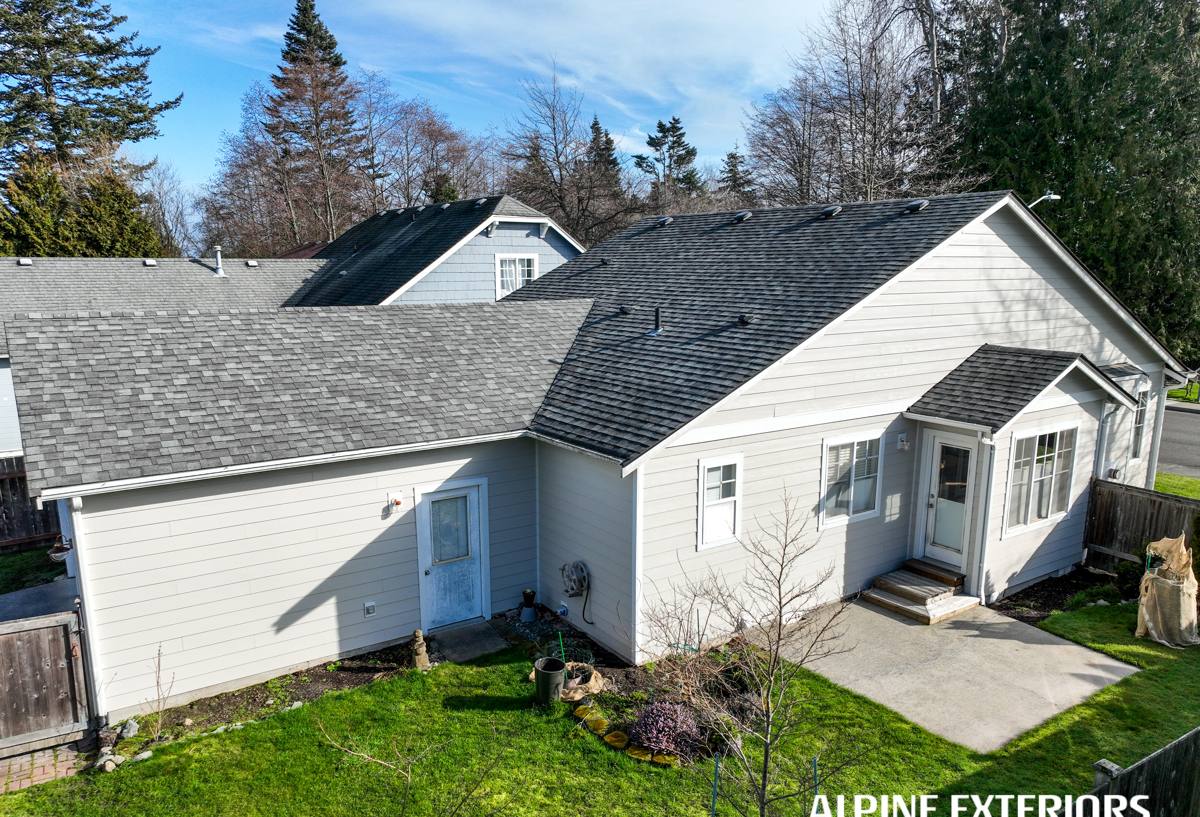
What Actually Wears Out a Lynden Roof
Moss and Organic Growth
Moss is the most visible sign of an aging Whatcom County roof, and Lynden's tree cover and slower-drying air give it plenty of opportunity. Moss isn't just cosmetic. As it spreads across a shingle or shake roof, it holds moisture against the surface long after the rest of the roof has dried out. Over time that constant dampness lifts shingle edges, breaks down granule adhesion, and works its way under flashing. A roof that looks "mossy but fine" from the ground is often further along than it looks.
Driving Rain and Wind-Driven Moisture
This region doesn't just get rain — it gets rain pushed sideways by wind often enough that it matters for how a roof is built. Wind-driven rain finds its way under poorly lapped shingles, around loose flashing, and into any gap a fair-weather installation would never expose. A roof replacement built for a drier climate, with shortcuts on underlayment or flashing, tends to show leaks here years before it should.
Freeze-Thaw and Temperature Swings
Whatcom County winters aren't extreme, but they're inconsistent — nights near freezing followed by wet, mild days, sometimes within the same week. That freeze-thaw cycle is hard on aging shingles, caulking, and any roofing material that's already brittle or waterlogged. It's a slower kind of damage than a wind event, but it adds up year after year.
Signs a Lynden Home Is Ready for a Full Replacement
Homeowners often ask for repairs when what the roof actually needs is a full replacement. Here's what we look for when we're deciding which one actually makes sense:
- Shingles that are cupping, curling, or missing granules across large sections rather than one isolated area
- Moss or algae staining that keeps coming back within a season or two of cleaning
- Soft spots or sagging when walked on, which usually points to deck damage underneath
- Daylight visible through the roof deck from inside the attic
- Repeated leaks in different spots rather than the same one recurring
- A roof that's already had two or more patch repairs in the last few years
- Visible wear at valleys, flashing, and penetrations even if the field of the roof looks okay
- A roof approaching or past the upper end of its material's realistic lifespan for this climate
If a roof is showing two or more of these at once, patch repairs are usually a short-term fix that costs more in the long run than a properly planned replacement.
What a Correct Roof Replacement Actually Involves
Tear-Off and Deck Inspection
A real replacement starts with a full tear-off down to the deck, not a layer installed over the old one. That's the only way to actually see what's underneath — soft or rotted plywood, old damage that's been hidden for years, or framing issues that a layover would just bury again. Any damaged decking gets replaced before anything new goes down.
Underlayment and Ice-and-Water Barrier
Given how much wind-driven rain this area sees, we don't treat underlayment as an afterthought. Ice-and-water barrier goes at the eaves, valleys, and around penetrations — the places where water is most likely to be pushed or pooled — with synthetic underlayment across the rest of the deck. This is one of the details that separates a roof that holds up through a wet Whatcom County winter from one that starts leaking at the first real storm.
Ventilation
Proper intake and exhaust ventilation keeps the attic space closer to outdoor temperature and moisture levels, which matters more here than in drier climates. Poor ventilation traps humid air against the underside of the deck, which speeds up rot, encourages mold, and can shorten the life of the new roof from the inside out — even if the shingles on top are installed perfectly.
Flashing and Penetrations
Flashing around chimneys, vents, skylights, and wall intersections is where most roof leaks actually start, not in the open field of shingles. We replace flashing as part of a full replacement rather than reusing old pieces, since corroded or improperly lapped flashing is one of the most common causes of early leaks in this region.
Choosing a Roofing Material for Lynden's Climate
There's no single "best" material for every home — it depends on budget, roof pitch, and how much long-term maintenance a homeowner wants to take on. Here's how the common options compare for a wet, moss-prone climate like this one:
| Material | Moss & Moisture Resistance | Typical Lifespan Here | Maintenance Needs |
|---|---|---|---|
| Architectural asphalt shingle | Good, especially with algae-resistant granules | 25–30 years | Periodic moss removal, gutter care |
| 3-tab asphalt shingle | Fair — thinner profile shows wear sooner | 15–20 years | More frequent moss and wear monitoring |
| Standing seam metal | Very good — sheds moss and water quickly | 40–50+ years | Low, occasional fastener/seam check |
| Cedar shake | Requires ongoing upkeep to resist rot and moss | 20–25 years with maintenance | Higher — regular treatment and cleaning |
We're upfront with homeowners about trade-offs rather than pushing one product. Cedar shake, for example, can look great on the right home, but it demands consistent upkeep in a climate this wet, and we'll say so plainly rather than let a homeowner find that out the hard way. Architectural asphalt shingle remains the most common choice we install here because it balances upfront cost, appearance, and how well it actually performs through a Whatcom County winter. Metal is worth a serious look for homeowners planning to stay long-term or wanting to minimize moss maintenance altogether.
Cost Factors Worth Understanding Before You Get a Quote
Every quote should be based on your actual roof, not a flat per-square rate pulled from a website. The factors that move the number most are:
- Roof size and number of layers currently on the deck — tear-off cost rises with each existing layer
- Roof pitch and access — steep or hard-to-access roofs take longer and require more safety setup
- Deck condition — hidden rot found during tear-off adds material and labor, and we'll always show you what we find before replacing it
- Material choice — asphalt, metal, and cedar carry different material and labor costs
- Number of valleys, penetrations, and flashing details — more complexity means more labor time
We walk every roof in person before quoting so the number reflects your actual roof, not a rough estimate.
Our Process, Start to Finish
- On-site inspection and honest assessment of whether repair or full replacement makes sense
- Written estimate that breaks down material, labor, and any deck repair allowance
- Scheduling that accounts for Whatcom County's wet-season windows, so tear-off doesn't sit exposed longer than necessary
- Full tear-off, deck inspection, and any needed repairs, shown to you before we cover them up
- Ice-and-water barrier, underlayment, ventilation components, flashing, and new roofing material installed to manufacturer and code specification
- Cleanup, including magnetic sweep for stray fasteners and haul-away of old material
- Final walkthrough so you know exactly what was done and what to watch for going forward
Why Hiring a Crew That Already Works in Lynden Matters
A roof replacement done for the wrong climate is a roof replacement you'll be paying for twice. Contractors who mostly work drier regions sometimes default to lighter underlayment packages or skip extra flashing detail because it's never been an issue for them. In a Whatcom County winter, those shortcuts show up as leaks within a few seasons, not decades.
Working this area regularly means we're not guessing at what holds up here — we've seen what moss, driving rain, and a damp winter do to roofs built without those conditions in mind, and we build accordingly from the first estimate. That local familiarity also means straightforward scheduling and a crew that isn't learning this climate on your roof.
If your Lynden home's roof is showing wear, or you just want an honest opinion on whether repair or replacement is the right call, we're happy to take a look. The estimate is free, there's no pressure, and you'll get a straight answer either way — use the form below to get started.