 Ferndale Roofing
 Roof Repair for Lynden Homes
Lynden sits in one of the wetter, mossier corners of Whatcom County, and that shows up on roofs faster than most homeowners expect. We work on houses throughout the Lynden area on a regular basis, alongside our base in nearby Ferndale, and the repair calls we get here follow a pretty consistent pattern: moss-related shingle damage, valley and flashing leaks after a hard driving rain, and wear that shows up around chimneys, skylights, and roof-to-wall transitions. This page is about that one job — roof repair, done right, for Lynden roofs — not a general overview of everything we offer.
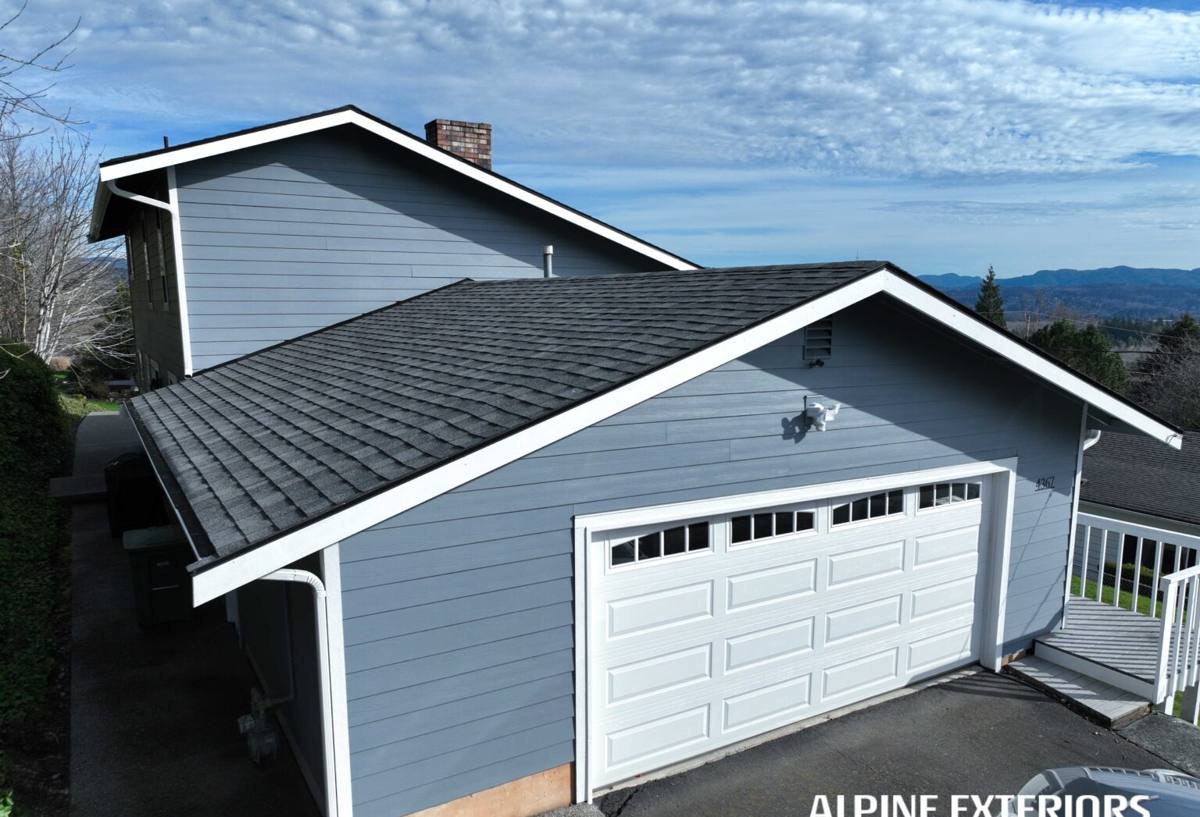
Why Lynden Roofs Wear the Way They Do
Whatcom County's climate is the main driver of what fails on a roof out here. Lynden gets long stretches of steady, low-intensity rain punctuated by wind-driven storms that push water sideways into laps, flashings, and vent penetrations that were never designed to handle horizontal water. Add in salt-tinged air moving inland from the Strait of Georgia and the Puget Sound lowlands, and you get a slow, steady corrosion effect on exposed metal fasteners, flashing edges, and gutter hardware that inland regions simply don't deal with.
Then there's moss. The combination of shade, moisture, and mild temperatures that Whatcom County sees for much of the year is close to ideal moss-growing weather. Moss doesn't just sit on a roof looking bad — it holds moisture against the shingle surface, lifts shingle tabs as it grows under the edges, and slowly breaks down the granule layer that protects asphalt shingles from UV and weather. A roof that looks intact from the ground can already have moss working underneath the surface layer.
The Repair Calls We See Most Often in This Area
- Moss-lifted shingles allowing wind-driven rain to get underneath
- Valley leaks where two roof planes meet and water volume concentrates
- Flashing failures around chimneys, skylights, and roof-to-wall intersections
- Corroded or loosened fasteners on metal flashing and gutter hardware
- Clogged or sagging gutters backing water up under the roof edge
- Soft spots or staining on interior ceilings that trace back to a small, slow leak
What a Correct Repair Actually Involves
A roof repair is only as good as the diagnosis behind it. We don't patch the spot where water showed up inside the house — we trace the path water actually traveled to get there, because those two points are frequently several feet apart on a sloped roof. That means a physical roof inspection, not just a look at the ceiling stain, before any material gets ordered or any repair gets proposed.
Once we know the cause, the repair itself typically involves some combination of:
- Removing and replacing damaged or moss-compromised shingles in the affected section
- Re-flashing vulnerable transition points — chimneys, skylights, sidewalls, valleys
- Clearing moss and treating the surrounding area to slow regrowth
- Resealing or replacing failed pipe boots and vent flashings
- Checking and correcting fastener patterns where wind or age has loosened material
- Confirming gutters and downspouts are actually moving water away from the repaired area
We match materials to what's already on your roof wherever possible, both for appearance and because mismatched materials at a repair seam can create their own moisture problems down the line.
How Our Process Works
1. Inspection and Diagnosis
We get on the roof, not just in the attic or on a ladder from the driveway. Moss damage, lifted flanges, and cracked flashing sealant are often only visible up close, and a repair estimate based on a ground-level guess is a repair estimate that's likely to be wrong.
2. A Written, Specific Estimate
You get a clear explanation of what's failing, why, and what the repair involves — not just a total. If there's a range depending on what we find once material is pulled back (common with moss and rot damage), we tell you that up front rather than surprising you mid-job.
3. The Repair Itself
Most Lynden repair jobs are completed in a single day. We protect landscaping and gutters during the work, remove and dispose of old material, and clean up debris — including moss and granule buildup — before we leave.
4. Follow-Up Confirmation
For leak repairs especially, we want you to have realistic expectations about how the fix performs through the next rain, and we're reachable if something doesn't look right afterward.
Repair or Replace? A Cost-Factor Comparison
Not every damaged roof needs a full replacement, and not every leak can be permanently solved with a patch. Here's how we generally think through that decision with homeowners:
| Factor | Favors Repair | Favors Full Replacement |
|---|---|---|
| Roof age | Under 12–15 years, otherwise healthy | Nearing or past manufacturer's expected lifespan |
| Damage extent | Localized — one section, valley, or penetration | Widespread moss, granule loss, or multiple leak points |
| Underlying decking | Solid, no soft spots found | Soft, spongy, or water-stained sheathing found during inspection |
| Shingle condition nearby | Still flexible, granules intact | Brittle, curling, or bald patches across large areas |
| Budget timing | Address the immediate problem now | Willing to invest once for a longer-term reset |
In practice, most of the calls we get in Lynden are legitimate repair situations — a roof with years of useful life left that just needs the moss and leak issue addressed correctly. We'll tell you honestly if we think a repair is a short-term fix on a roof that's closer to the end of its life; that's a disservice we're not willing to do to a homeowner just to sell a smaller job.
Moss: Prevention Matters as Much as the Repair
Fixing moss damage without addressing why the moss grew there in the first place just means you'll be back in this position in a few years. Shaded, north-facing roof sections and areas with poor airflow are the most common moss hosts in this climate. As part of a repair in a moss-affected area, we talk through practical steps that actually reduce regrowth:
- Physical moss removal using methods that don't gouge or lift healthy shingle granules
- Zinc or copper control strips near the ridge, which let rainwater carry moss-inhibiting minerals down the roof slope over time
- Keeping overhanging branches trimmed back to reduce shade and improve airflow
- Regular gutter clearing so trapped moisture and debris don't sit against the roof edge
None of this is a one-time fix. Moss control in a climate like ours is ongoing maintenance, and we're upfront about that rather than promising a permanent solution that doesn't exist.
Flashing and Fasteners: The Small Stuff That Causes Big Leaks
Most leaks we trace back on Lynden roofs don't come from a hole in the shingle field — they come from a failure at a transition point. Flashing around chimneys, skylights, and sidewalls is where two different materials and two different roof planes meet, and it's where sealant dries out, metal corrodes, and small gaps open up over years of driving rain and temperature swings. Fasteners tell a similar story: exposed nail heads and screws on flashing and gutter hardware are constantly exposed to moisture and mild salt content in the air here, and corrosion loosens their grip well before the surrounding material looks obviously worn.
This is why we inspect these points specifically on every repair call, even when the reported leak seems to point somewhere else. A five-minute check of a chimney flashing or a pipe boot can save a homeowner from a repeat service call six months later.
What to Check Before You Call
A few things you can look for yourself, safely, from the ground or an attic access point, before scheduling a repair visit:
- Ceiling stains that appear or darken specifically during or right after heavy rain
- Visible moss patches, especially on shaded or north-facing roof sections
- Granules collecting in gutters or at downspout outlets (a sign of shingle wear)
- Daylight visible through the roof deck from inside the attic
- Sagging or discolored sections along roof valleys or near chimneys
- Gutters pulling away from the fascia or overflowing during rain
If you notice any of these, it's worth getting a professional look before the next storm system rather than waiting until the leak gets worse or spreads to a new area.
Why It Matters to Hire a Crew That Already Works in Lynden
Roofing crews unfamiliar with this specific climate sometimes underestimate how aggressively moss and driving rain work on a roof here compared to drier parts of the state. We're not guessing at what Whatcom County weather does to a roof — we see the same moss patterns, the same valley leaks, and the same flashing wear on a regular basis across Ferndale, Lynden, and the surrounding communities. That local pattern recognition is part of what makes a diagnosis accurate the first time, instead of a repair that addresses the symptom but misses the actual cause.
If you're dealing with a leak, visible moss damage, or you just want a second opinion on a repair another contractor proposed, we're happy to take a look and give you a straightforward assessment. Reach out for a free, no-pressure estimate using the form below.