 Ferndale Roofing
 New Roof Installation for Lynden Homes
Lynden sits inland from the salt water but still gets the same wet, gray Whatcom County weather pattern that wears down roofs across this part of the county: long stretches of low-intensity rain, damp air that never fully dries out between storms, and a moss season that can run most of the year in shaded yards. A new roof installation here isn't just about picking a shingle color. It's about choosing materials and installation details that hold up to years of that pattern without needing constant babysitting.
We're based in Ferndale and run crews into Lynden regularly, so we're not learning the area's quirks on your job. We know which roof styles in this part of the county tend to hold moss in the north-facing valleys, which underlayment choices actually matter here versus in a drier climate, and how local permitting and inspection typically go. That local familiarity shows up in fewer surprises during the job and a roof that's built for the conditions it will actually face, not a generic spec sheet.
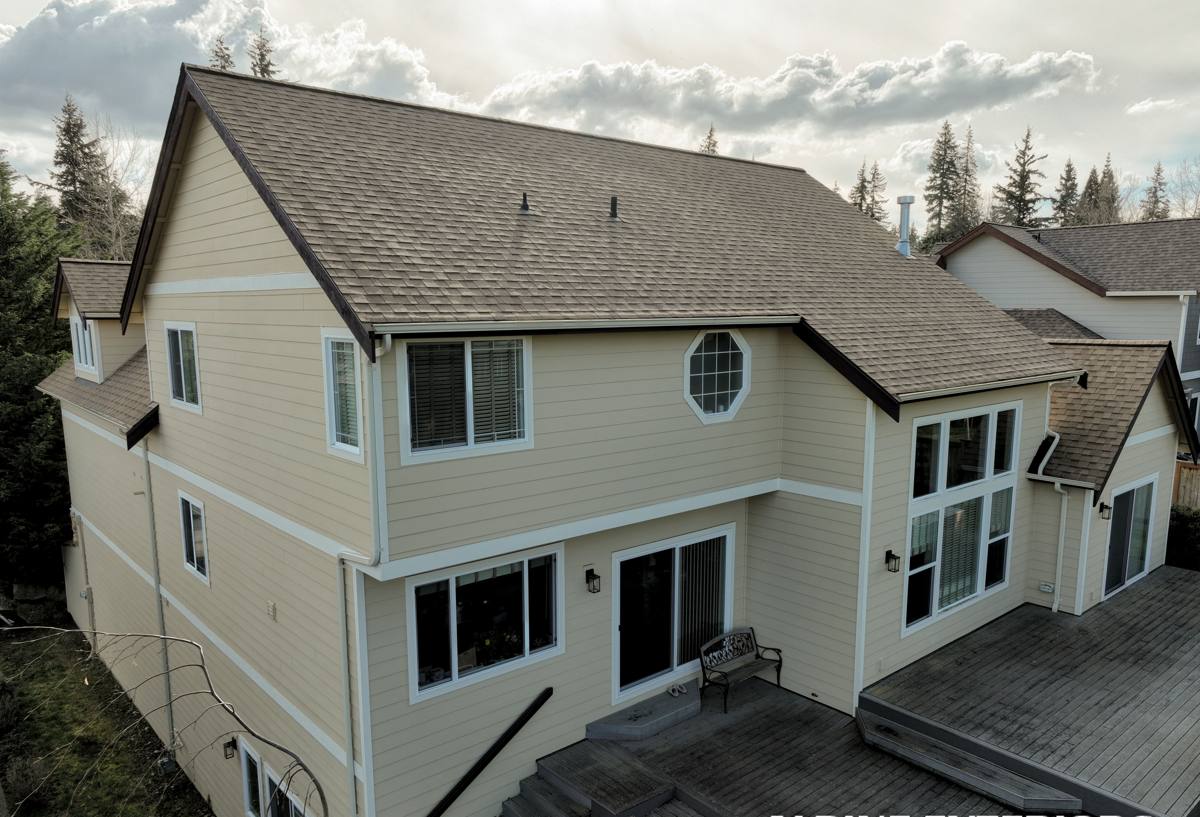
What Lynden's Climate Does to a Roof
Whatcom County weather is persistent rather than dramatic. Homeowners here don't usually deal with hurricane-force wind events, but they do deal with:
- Driving rain that gets pushed sideways under poorly sealed flashing and around chimneys, skylights, and vent penetrations
- Long moss and algae seasons, especially on roof sections shaded by trees or facing north, where surfaces stay damp for days at a time
- Salt-tinged air moving inland off the Strait of Georgia and Bellingham Bay, which accelerates corrosion on unprotected metal fasteners, flashing, and vent stacks
- Freeze-thaw cycles in winter that are mild but frequent, which stress any spot where water has already found a way under the roofing material
None of these are dramatic on their own. The problem is that they're constant, year-round, decade after decade. A new roof installed with shortcuts in flashing, ventilation, or fastener quality won't fail in year one — it'll fail quietly around year eight or ten, right when you thought you were past the point of worrying about it.
Moss Season Isn't Optional to Plan For
If your property has mature trees, has north-facing roof planes, or backs up to a wooded area, moss isn't a maybe — it's a when. A correct new roof installation accounts for this from the start: proper ventilation to keep the roof deck drier, material choices that resist moss better than others, and clean roof-to-gutter transitions so water and debris don't sit and feed growth. Trying to solve moss after the fact with chemical treatments is a maintenance chore. Solving it during installation is a design decision.
What a Correct New Roof Installation Involves
A full roof replacement is more than tearing off old material and nailing down new shingles. Done right, it includes:
- Tear-off and deck inspection — removing the old roofing down to the deck and checking for soft spots, rot, or delamination that need to be repaired before anything new goes down.
- Deck repair as needed — replacing damaged sheathing rather than roofing over it, since a compromised deck undermines everything installed on top of it.
- Underlayment — a water-resistant barrier across the whole roof, with extra protection (ice-and-water membrane) at vulnerable spots like eaves, valleys, and around penetrations, where wind-driven rain is most likely to find a way in.
- Flashing — new metal flashing at chimneys, skylights, sidewalls, and valleys. This is one of the most common places older roofs fail, and it's not a place to reuse old material just to save a step.
- Ventilation — intake and exhaust venting that lets the attic breathe, which keeps the roof deck drier, helps shingles last longer, and reduces the moisture that feeds moss and mildew.
- Roofing material installation — installed to manufacturer spec with correct nailing patterns and exposure, not just "close enough."
- Final details — ridge caps, exposed fastener sealing, gutter apron work, and a cleanup that gets nails and debris off your property.
Roofing Material Options for Lynden Properties
There's no single "best" roofing material for every home — it depends on your roof's pitch, your budget, how much shade and moss pressure the property has, and how long you want to go before your next major roof project. Here's how the common options compare for this climate:
| Material | Typical Lifespan | Moss/Moisture Behavior | Maintenance |
|---|---|---|---|
| Architectural asphalt shingles | 25–30 years | Good with proper ventilation; algae-resistant granule options help in shaded areas | Low; periodic moss treatment on shaded sections |
| Standing seam metal | 40–50+ years | Sheds water and moss well due to smooth, steep-shedding surface | Very low; check fastener and sealant condition periodically |
| Composite/synthetic shingles | 30–50 years | Resists moisture absorption; performance varies by product line | Low |
| Cedar shake | 20–30 years with upkeep | More moisture-sensitive; needs active moss and mildew management in damp, shaded spots | Higher; regular cleaning and treatment recommended |
We install and stand behind shingle and metal roofing systems for the vast majority of homes in this area. Where we steer clients away from certain products, it's a maintenance and moisture conversation, not a knock on the material itself — some options simply require more ongoing attention to perform well in a climate that stays damp as often as this one does, and we'd rather be upfront about that trade-off before you commit than let you find out the hard way.
Our Process for a Lynden Roof Replacement
1. On-Site Assessment
We look at your existing roof, attic ventilation, deck condition where visible, and any problem areas you've noticed — leaks, moss buildup, sagging, or granule loss. This is also when we talk through material options based on your home's exposure and shade.
2. Written Estimate
You get a clear, itemized estimate — material, labor, and scope — before any work starts. No vague allowances, no pressure to sign on the spot.
3. Scheduling and Permitting
We handle the permitting process and schedule the job around weather windows, since a proper tear-off and installation needs a dry stretch to protect your home during the work.
4. Installation
Tear-off, deck inspection and repair, underlayment, flashing, ventilation, and material installation, done in sequence with daily cleanup so your property isn't left exposed or littered with debris overnight.
5. Final Walkthrough
We walk the finished roof with you, cover care and maintenance basics for this climate, and make sure everything matches what was in the estimate.
Why a Local Crew Matters for This Job
Roofing crews that don't regularly work Whatcom County can still do competent work, but local experience shows up in the details: knowing how much ventilation a Lynden-area attic actually needs versus a drier climate spec, understanding which flashing details matter most against driving rain, and not being surprised by local permitting requirements or inspection timelines. Being based in Ferndale also means we're not driving in from out of the area for warranty callbacks or follow-up questions — we're already working in this part of the county.
Signs Your Lynden Home May Need a New Roof
- Shingles that are curling, cupping, or losing significant granules
- Persistent moss growth that comes back quickly after cleaning
- Daylight visible through the attic roof deck, or damp insulation after storms
- Roof age approaching or past the manufacturer's expected lifespan
- Visible sagging along the roofline or in valleys
- Frequent granules collecting in gutters
- Flashing that's rusted, lifted, or separating from chimneys and walls
If you're seeing one or two of these, a repair may still be enough. If you're seeing several at once, or your roof is well into its expected lifespan, a full replacement is usually the more cost-effective path rather than chasing repairs on a roof that's reaching the end of its service life.
Planning and Budgeting for the Project
Costs vary by roof size, pitch, material choice, and how much deck repair is needed once tear-off starts — so we don't quote sight-unseen numbers here. What we can tell you is that the estimate we give you after an on-site assessment is the number we build the job around, and if we find something during tear-off that changes scope (like unexpected deck rot), we'll walk you through it and get your sign-off before proceeding, not after.
If your Lynden home is due for a new roof, we're happy to come take a look. The estimate is free, there's no pressure, and you'll leave the conversation with a clear picture of your options and what the job actually involves — use the form below to get started.