 Ferndale Roofing
 Lynden's Climate Is Hard on Siding — Here's Why That Matters
Homes in and around Lynden sit in one of the wetter, mossier stretches of Whatcom County, and the siding on those homes takes the brunt of it. Driving rain off the Pacific pushes moisture sideways into wall assemblies for months at a stretch. A long, cool moss season keeps north- and shade-facing walls damp far longer than homeowners in drier climates ever have to think about. And salt-laden air moving in off the Salish Sea and Bellingham Bay works its way inland, accelerating corrosion on fasteners, trim, and anything not built to shrug it off.
None of that is unique to any one street or subdivision in Lynden — it's the reality of siding a home anywhere in this part of Whatcom County. But it does mean the siding decision matters more here than it would in a drier, more sheltered climate. Products and installation shortcuts that might get away with mediocre results in Eastern Washington show their weaknesses fast on the west side of the Cascades, and Lynden's combination of rain, shade, and salt exposure is about as demanding a test as siding sees in this state.
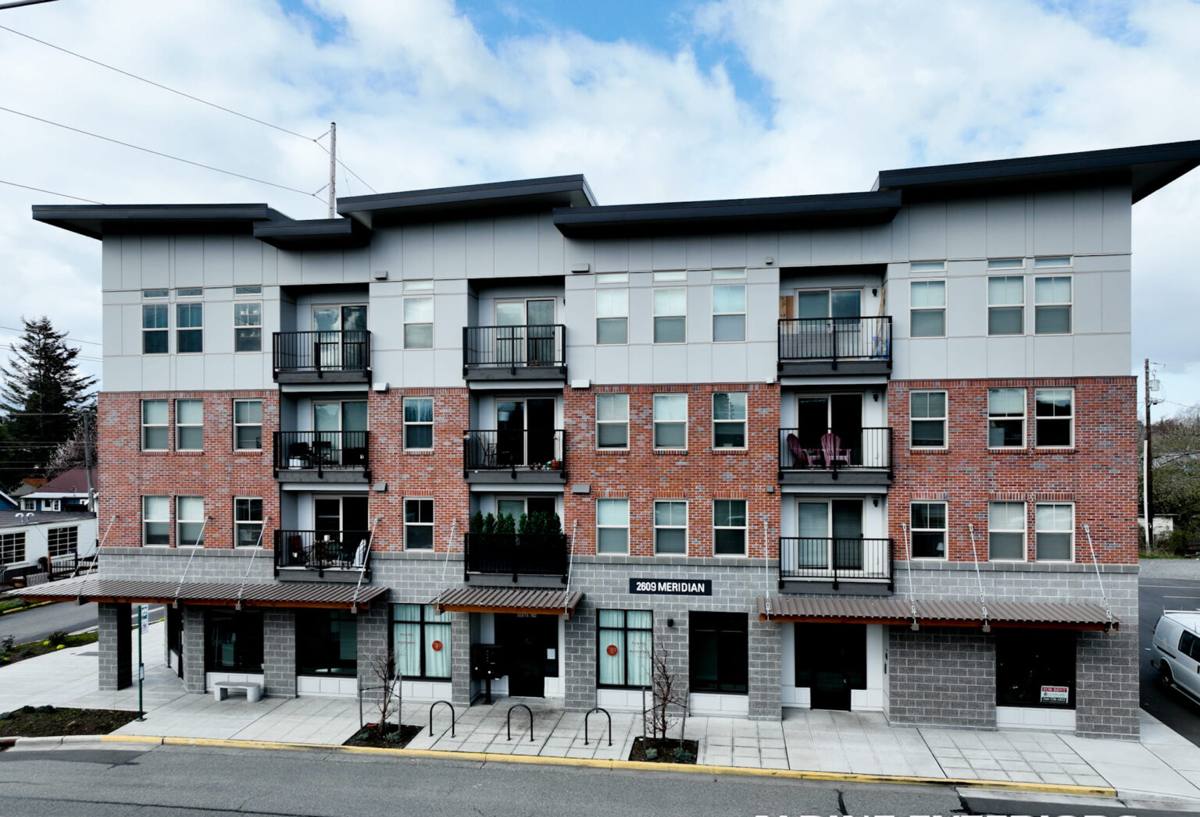
What Fiber Cement Siding Actually Needs to Do Here
Shed water, not absorb it
Siding in this climate spends a large share of the year wet. The question isn't whether a wall will get rained on — it's what happens to that moisture once it hits the surface. Fiber cement is dimensionally stable and doesn't swell, cup, or delaminate the way wood-based products can when they stay damp for long periods. That stability is what keeps seams tight and paint lines straight year after year, instead of opening hairline gaps that let water behind the cladding.
Resist moss, mildew, and organic growth
Shaded walls, fences, and roofs around Lynden grow moss without much encouragement, and siding is no exception. A siding material that's easy for organic growth to take hold on turns into a maintenance chore — pressure washing, treatments, repainting — far sooner than it should. Fiber cement's dense, factory-finished surface gives moss and mildew less to grip, and it holds up to the occasional cleaning a shaded wall in this climate is going to need.
Hold a finish through freeze-thaw and salt exposure
Whatcom County doesn't get brutal winters, but it does get repeated freeze-thaw cycling and damp cold that finds any weakness in a paint film or a fastener. Combined with salt-influenced air, this is exactly the environment where cheap fasteners rust, where field-applied paint chalks and fades unevenly, and where corners and butt joints start showing their age within a few years. Siding built and finished for this specific kind of exposure holds its look and its function much longer.
Why We Install Only James Hardie in Lynden
We made a deliberate decision as a company to install James Hardie fiber cement siding exclusively — not LP SmartSide, not vinyl, not Cemplank or Allura, not primed spruce or cedar. That's not brand loyalty for its own sake; it's a standard we hold because of what we've seen hold up in this exact climate and what we're willing to put our name behind.
Climate-engineered product lines
James Hardie engineers its siding by climate zone, and the HZ10 line is built specifically for the wet Pacific Northwest — formulated to perform in high-moisture, high-humidity conditions rather than a one-size-fits-all national product. For a home in Lynden, that means the siding on the wall was designed with this region's rain and dampness in mind from the start, not adapted after the fact.
ColorPlus factory finish
Most Hardie siding we install goes on with the ColorPlus factory-baked finish rather than field-applied paint. That finish is cured under controlled conditions and backed by its own warranty against fading and peeling — a meaningful advantage in a climate where site-applied paint often struggles to cure and adhere properly during the wetter months.
Non-combustible and durable by design
Fiber cement is non-combustible, which matters for insurance and for peace of mind, and it resists the pests, rot, and impact damage that shorten the life of wood-based siding. Paired with a strong, transferable warranty, it's the product we're comfortable standing behind on homes we're going to keep servicing for years.
Fiber Cement vs. the Alternatives
Homeowners comparing siding options in this climate are usually weighing fiber cement against vinyl or engineered wood products. Here's how they actually compare on the factors that matter most in Whatcom County's weather:
| Factor | James Hardie Fiber Cement | Vinyl | Engineered Wood (e.g. LP SmartSide) |
|---|---|---|---|
| Moisture behavior | Dimensionally stable; won't swell or rot | Doesn't rot, but can warp and gap in heat/cold cycling | Wood-based core is vulnerable if moisture gets behind it |
| Moss/mildew resistance | Dense surface, factory-finished, cleans up well | Resists mildew but shows staining and chalking | Organic material is more susceptible to fungal growth over time |
| Fire resistance | Non-combustible | Melts/deforms under heat | Combustible wood-based product |
| Finish longevity | ColorPlus factory finish, warrantied | Color molded in but fades/chalks over time | Typically field- or factory-primed, needs repainting |
| Warranty | Strong, transferable manufacturer warranty | Varies widely by manufacturer/grade | Shorter warranty periods common, moisture exclusions typical |
This isn't a claim that the alternatives are junk — vinyl and engineered wood both have a place, and plenty of manufacturers stand behind their products. It's simply why, weighing these factors against what we see fail first on homes in this climate, fiber cement is the only siding we're willing to install and warranty our workmanship on.
What a Correct Fiber Cement Installation Involves
Fiber cement siding is only as good as the installation behind it. Most of the siding failures we get called out to inspect in this area trace back to installation shortcuts, not the product itself. A correct job includes:
Proper clearances and drainage
Siding needs to sit above grade, decks, and roofing with the clearances Hardie specifies, and it needs a drainage plane — typically a weather-resistant barrier with a rainscreen gap — behind it so any moisture that does get past the surface can drain and dry instead of sitting against the sheathing.
Correct fasteners and fastening pattern
Corrosion-resistant fasteners, driven at the manufacturer's specified spacing and depth, are non-negotiable in a salt-influenced climate. Overdriven or underdriven nails, or the wrong fastener type, are one of the most common causes of early siding failure we see.
Flashing at every penetration
Windows, doors, vents, hose bibs, light fixtures — every penetration through the siding is a potential entry point for water. Correct flashing and integrated water management at each of these details is what actually keeps a wall dry, far more than the siding material itself.
Caulking and joint treatment done right
Butt joints, corners, and trim need the right sealants and gaps, applied per manufacturer spec, not just caulked shut. Sealing a joint the wrong way can trap moisture instead of shedding it.
Our Process, Start to Finish
When we take on a Lynden siding project, the sequence looks like this:
- On-site assessment of the existing siding, sheathing, and any moisture or rot damage before we quote anything
- Careful removal of old siding and inspection of the sheathing underneath, with repairs made before anything new goes up
- Installation of a weather-resistant barrier and drainage plane suited to this climate
- Hardie siding installed to manufacturer specification — clearances, fastening, flashing, and joint treatment
- Trim, corners, and detail work finished to match the home and hold up to the same exposure
- Final walkthrough and cleanup before we consider the job done
We don't skip the sheathing inspection step. Covering up hidden rot or moisture damage with new siding just guarantees a bigger problem later, and in a climate this wet, what's happening behind the old siding matters as much as what goes on in front of it.
Signs Your Current Siding Is Already Losing the Fight
If your home in the Lynden area has any of the following, it's worth having it looked at before small problems turn into structural ones:
- Soft, spongy, or visibly warped sections of siding, especially near the ground or under windows
- Persistent moss or dark staining that comes back soon after cleaning
- Paint that's peeling, bubbling, or chalking heavily rather than just fading evenly
- Visible gaps opening up at seams, corners, or butt joints
- Rust streaks running down from fasteners or trim
- Rising energy bills with no other clear cause, which can point to a compromised weather barrier
Why a Crew That Already Works Lynden Makes a Difference
Siding work in this climate rewards experience with the specifics of the area — knowing how long a wall stays wet after a typical fall storm, which orientations need extra attention to moss and shade, and how to sequence a job around a stretch of Whatcom County weather that can turn without much notice. A crew that already works in and around Lynden isn't learning those lessons on your project. We schedule around the weather instead of fighting it, and we install to the same standard on every wall regardless of which direction it faces, because in this climate every direction eventually gets tested.
If you're weighing a siding replacement or want a second opinion on what's happening with your current siding, we're happy to take a look. Reach out for a free, no-pressure estimate using the form below — we'll walk the exterior with you, tell you honestly what we see, and lay out what correct James Hardie installation would look like for your home.