 Ferndale Roofing
 Windows Built for Lummi Island, Not Just Whatcom County in General
Lummi Island sits out in the water, and that changes what a window installation actually needs to hold up to. A window that performs fine in a sheltered inland yard can fail years early on the island because it's dealing with constant salt-laden air, wind-driven rain coming straight off the water, and long stretches of shade and moisture that keep moss and mildew active almost year-round. We're a Ferndale-based crew that already does regular work out on the island, so this page is about what actually matters for a correct window job there — not a generic replacement-window pitch.
None of this is exotic. It's the same physics as anywhere in Whatcom County, just turned up. Salt air accelerates corrosion on hardware and fasteners. Driving rain finds any gap in flashing or sealant. Moss and algae hold moisture against wood trim and siding long after a storm has passed. A window installed without accounting for those three things will look fine on day one and start failing quietly behind the trim within a few winters.
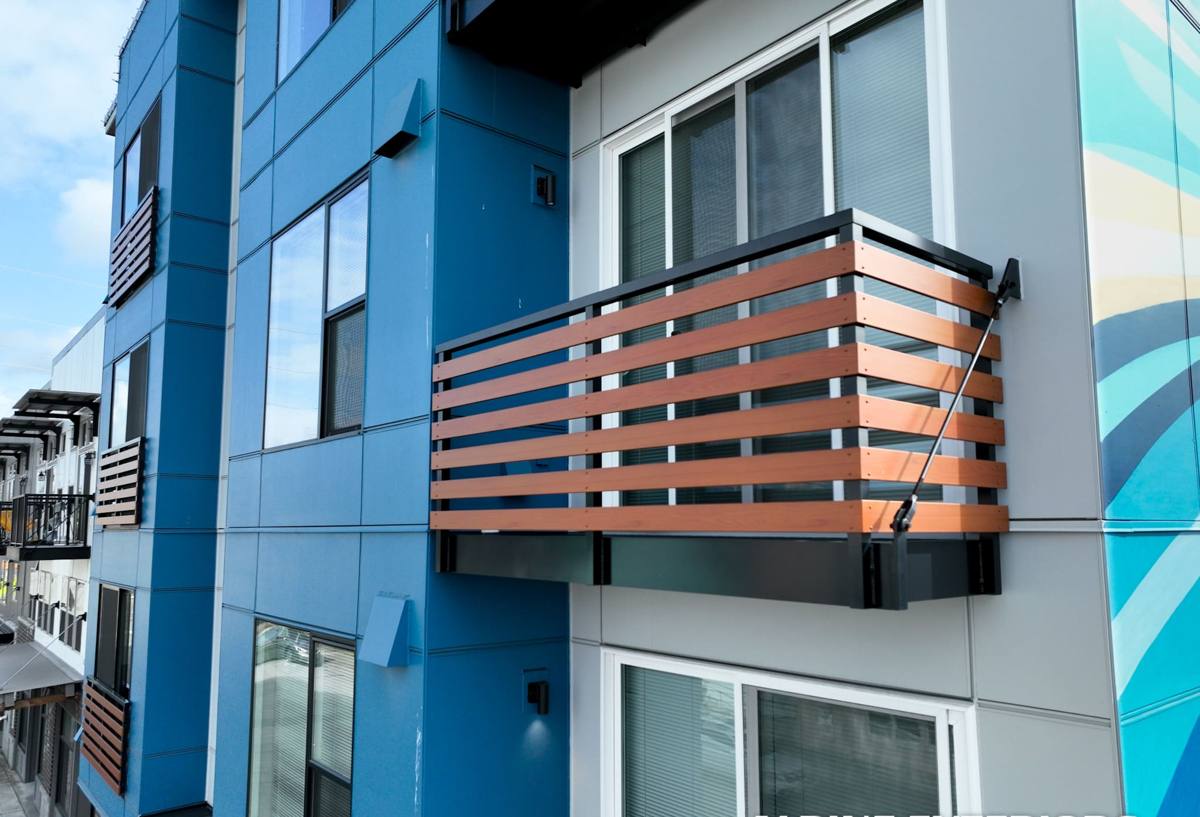
What Salt Air, Rain, and Moss Actually Do to a Window Opening
Salt Air
Airborne salt is corrosive to unprotected metal — screws, hinges, balance hardware, and cheaper aluminum components. On the island it's a constant, low-grade exposure rather than an occasional coastal storm. Over time it can pit hardware, discolor finishes, and, worse, corrode fasteners hidden inside the frame where you can't see it happening.
Driving Rain
Wind off the water doesn't let rain fall straight down — it drives it sideways into the wall, which puts real pressure on every seam around a window opening. A window that's simply caulked around the edges instead of properly flashed will eventually let water behind the trim, and once that happens the damage is happening inside the wall cavity where nobody sees it until there's a soft spot or a stain.
Moss Season
Shaded, moisture-heavy conditions keep moss and algae active on siding, trim, and window sills for much of the year. Beyond the cosmetic issue, moss holds water against wood longer than bare wood would hold it on its own, which is exactly what accelerates rot at sills and casings — the same spots that already take the brunt of driving rain.
Signs a Lummi Island Home's Windows Need Attention
- Soft or spongy wood at the sill, especially on the side of the house that faces the water or prevailing wind
- Hardware that's stiff, pitted, or won't lock cleanly — a common early sign of salt corrosion
- Persistent moss or dark staining on the sill or lower trim that keeps coming back after cleaning
- Condensation or fogging between panes, which means a seal has failed and the insulating gas is gone
- Visible gaps, cracked caulk, or daylight around the frame when you look closely from inside
- Drafts or a noticeable temperature difference near the window on a windy day
- Paint or finish that's bubbling or peeling specifically around the window opening rather than the whole wall
Any one of these on its own isn't necessarily an emergency, but on an island property they tend to compound faster than they would somewhere more sheltered, simply because the exposure never really lets up.
What a Correct Installation Actually Involves
The window unit itself is only part of the job. Most window failures we see out on the island trace back to how the opening was prepared and sealed, not a defect in the window. A correct installation includes:
- Removing the old unit carefully and inspecting the framing and sheathing underneath for hidden rot before anything new goes in
- Repairing or replacing any compromised framing rather than installing a new window over a soft opening
- Proper flashing integration — building paper or house wrap and flashing tape layered so water is directed out and down, shingle-style, never trapped behind the window
- A correctly bedded and shimmed unit so it's square, level, and not relying on caulk to hold its shape
- Sealing with the right sealant for the exposure, applied at the right points — not everywhere, since trapping moisture behind a seal in the wrong spot can be worse than leaving a gap
- Interior and exterior trim work finished so water sheds away from the opening instead of pooling on a horizontal surface
Skip any one of these steps and the window can still look correct for a year or two before a problem shows up. That's part of why window installation is a poor place to cut corners on an exposed property.
Choosing Frame Materials for Salt Air and Standing Moisture
There's no single "best" window material for every home — it depends on exposure, budget, and how the house is built. What matters is understanding the honest trade-offs for a coastal, high-moisture setting like Lummi Island.
| Frame Material | How It Handles Salt Air & Moisture | Maintenance |
|---|---|---|
| Vinyl | Won't corrode or rot; performs consistently in salt air | Low — periodic cleaning, no painting |
| Fiberglass | Very stable in temperature swings and moisture; strong long-term option near water | Low — occasional cleaning |
| Wood (unclad) | Handsome, but bare wood is the most vulnerable to rot in constant damp and moss exposure | High — regular painting/sealing required |
| Wood-clad (vinyl or aluminum exterior) | Good option if you want a wood interior look with a protected exterior face | Moderate — interior wood still needs upkeep |
| Aluminum | Prone to corrosion and condensation in salt air unless it's a marine-grade or thermally broken product | Moderate to high depending on grade |
Our default recommendation for direct water-exposed elevations is vinyl or fiberglass, simply because they remove corrosion and rot from the list of things you have to think about. If a homeowner wants a wood interior, wood-clad units let us keep that look without putting bare wood on the outside face where the weather actually hits it.
Glass and Hardware Details Worth Asking About
Low-E glass coatings help with year-round comfort and reduce fading from UV exposure, which matters on a property with long summer daylight and big windows facing the water. Stainless steel or corrosion-resistant hardware — hinges, cranks, locks — is worth specifying up front on any coastal property rather than accepting standard-grade hardware that's rated for inland use.
Our Process for Window Jobs on Lummi Island
Working on the island means planning around the ferry, not just around the weather. We build that into scheduling from the start rather than treating it as a surprise:
- Site visit and measurement — we assess the actual exposure on your specific elevations, since a window facing open water needs different attention than one tucked against a windbreak
- Materials staged and confirmed before crossing — we order and stage everything ahead of time so a trip isn't wasted on a missing part
- Crew and equipment scheduled around ferry timing — we plan the workday around the crossing so we're not rushing the flashing and sealing details to make a departure
- Full opening inspection during removal — since we're already on-site, we check framing condition thoroughly rather than doing a quick swap
- Cleanup and walkthrough before we leave — especially important on the island, where a callback means another ferry trip for everyone
Because we already work Lummi Island regularly, this isn't a special trip we have to price around — it's part of our normal service area, and we plan for it accordingly.
What Affects Window Installation Cost Here
| Factor | Why It Matters on Lummi Island |
|---|---|
| Frame material chosen | Vinyl and fiberglass cost less upfront than wood-clad and need less long-term upkeep |
| Number and size of openings | Larger water-facing windows often need more careful flashing and take more labor time |
| Condition of existing framing | Hidden rot found during removal adds repair scope before a new window can go in correctly |
| Elevation and exposure | Water-facing walls generally warrant upgraded hardware and sealant detailing |
| Access and logistics | Ferry scheduling and site access factor into project timing more than pricing, but both affect planning |
We give straight, itemized estimates rather than a flat per-window number, because the framing condition and exposure on your specific home genuinely change what the job needs.
Why a Crew That Already Works This Island Matters
Window installation isn't just a product install — it's a judgment call about flashing sequence, sealant choice, and how much attention a given elevation needs based on real exposure. A crew that only occasionally makes it out to the island doesn't build up that judgment. We do this work regularly enough on Lummi Island, and throughout Ferndale and the rest of Whatcom County, to know which details actually matter for salt air, driving rain, and a long moss season — and which ones are just upsells.
That local familiarity also means fewer surprises with scheduling. We're not treating a ferry crossing as a novelty; it's a normal part of how we plan a job week, which keeps your project moving instead of getting bumped every time weather or timing gets complicated.
Get a Straight Estimate for Your Windows
If your windows are showing wear from salt air, rain, or moss, or you're planning ahead for a replacement before it becomes an emergency, we're happy to take a look and give you an honest read on what your home actually needs. Use the form below to request a free, no-pressure estimate.