 Ferndale Roofing
 Why Lummi Island Siding Wears Differently Than Inland Homes
Lummi Island sits out in the salt water of the Salish Sea, and that changes what siding has to deal with compared to a house a few miles inland in Ferndale or Bellingham. Salt-laden air drifts onto exposed walls year-round, driving rain off the water hits certain elevations hard during fall and winter storms, and the long, damp Whatcom County shoulder seasons keep north- and west-facing siding wet for weeks at a time. Add in the tree cover that shades many island lots and you get a long moss and algae season that doesn't let up the way it might on a sunnier, more open site.
None of this is exotic — it's just more of what every siding product in this region deals with, concentrated. Salt accelerates corrosion on fasteners and trim metal. Sustained moisture is what breaks down siding materials that aren't built to shed water repeatedly without swelling, cracking, or losing their finish. Moss and algae hold moisture against the wall surface longer than bare siding would on its own, which compounds the problem. A repair that doesn't account for all three — salt, water, and organic growth — tends to fail again within a few years.
Signs Your Siding Needs Repair, Not Just a Cleaning
Homeowners on the island often assume a mossy or stained wall just needs a wash. Sometimes that's true. Other times the growth and staining are a symptom of something underneath that a pressure washer won't fix. Here's how to tell the difference.
Cosmetic issues a cleaning can handle
- Light green or black film on the surface with no soft spots underneath
- General dulling of paint color from age and UV exposure
- Dust and pollen buildup on lower courses near the ground
Signs that point to actual repair work
- Boards that feel spongy, soft, or give slightly when pressed
- Visible cracking, buckling, or separation at seams and corners
- Paint that's peeling or bubbling rather than just faded
- Rust streaks running down from nail heads or trim fasteners
- Gaps opening up around window and door trim
- Moss or algae that returns within weeks of being cleaned
That last one matters more than it sounds. Moss that keeps coming back fast, even after a proper cleaning, usually means the siding surface or the caulking around it is holding moisture instead of shedding it — and that's a repair issue, not a maintenance issue.
What a Correct Siding Repair Actually Involves
A repair that's done right isn't just "replace the bad board and repaint." On a marine-exposure property like Lummi Island, the sequence matters:
- Diagnose the source, not just the symptom. Damaged siding is often a downstream effect of a flashing gap, a caulk failure, or a grading issue pushing water where it shouldn't be. Replacing the board without fixing the cause means the same spot fails again.
- Check the water-resistive barrier behind the siding. If moisture has been getting through for a while, the house wrap or building paper underneath may be compromised. Repairing over a damaged barrier just delays the next failure.
- Inspect fasteners and trim hardware. Salt air corrodes exposed steel faster than people expect. Corroded fasteners get replaced with corrosion-resistant hardware, not just re-driven.
- Match the replacement material and profile. Mismatched board thickness or exposure creates shadow lines and water traps that stand out and cause problems later.
- Seal and finish to spec. Caulking at joints and trim, and a finish coat that matches the existing color, so the repair doesn't read as an obvious patch.
Skipping any of these steps is how a "quick fix" turns into a repeat service call a couple of winters later.
Repair vs. Replacement: How We Make the Call
Not every damaged section needs a full re-side, and we're not going to tell an island homeowner they need new siding on the whole house when a targeted repair will genuinely hold up. The honest answer depends on how much of the wall is affected and what's driving the damage.
| Situation | Usual Recommendation |
|---|---|
| One or two damaged boards, isolated cause identified | Targeted repair |
| Damage clustered on one elevation exposed to prevailing storms | Repair that elevation, monitor the rest |
| Soft or failing boards spread across multiple walls | Full or large-section replacement |
| Underlying material (LP, vinyl, primed wood, older fiber cement) failing at the seams broadly | Replacement with James Hardie, repair not cost-effective long term |
| Water-resistive barrier compromised behind more than a small area | Replacement, since the wall has to be opened up anyway |
We'll always give you the repair option when it's the honest fit. But if a home is losing this argument to salt air and rain year after year, we'll say so plainly rather than sending a crew back out on the same wall every couple of seasons.
Why Repairs and Replacements Both Go Back On With James Hardie
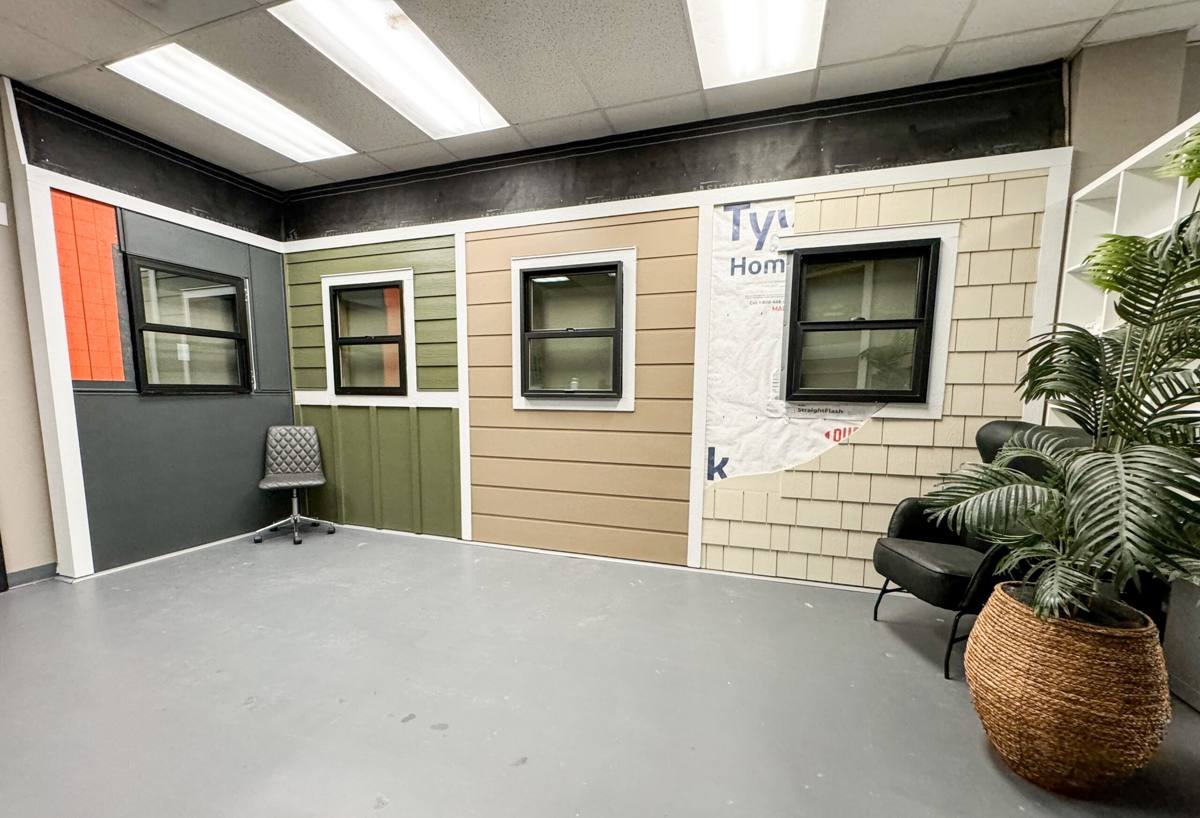
We install James Hardie fiber cement siding exclusively — not LP SmartSide, not vinyl, not Cemplank or Allura, not primed spruce or cedar. That's a deliberate standard, not a brand preference, and it matters most on exposure like Lummi Island gets.
Fiber cement doesn't rot, and it isn't a food source for the moss and algae that thrive in this climate the way wood-based products can be. Hardie's HZ5 product line is engineered specifically for climates with heavy moisture and freeze-thaw cycling — relevant here even though winters aren't severe, because the wet-dry cycling itself is what stresses siding over time. The ColorPlus factory finish is baked on under controlled conditions and holds color and adhesion far better against sun and salt exposure than field-applied paint on wood or engineered wood substrates, which reduces how often repainting becomes a maintenance item. And it's non-combustible, which matters increasingly as wildfire-driven insurance underwriting tightens across Washington.
When we repair a section of existing non-Hardie siding, we'll do the job correctly with compatible materials if that's the scope you want. But when a homeowner is facing a bigger repair decision — a wall's worth of damage, a product that's failing broadly — we're going to recommend Hardie for the replacement portion, because it's what we'd put on our own home in this exposure.
Our Process for Lummi Island Jobs
Working on the island adds a logistics layer that inland Ferndale jobs don't have, and we plan for it rather than treating it as a surprise.
- Ferry scheduling. Crew, tools, and materials move on the ferry schedule, so we batch trips and plan work days around sailing times to avoid wasted hours waiting at the dock.
- Material staging. Board and trim materials are pre-cut and staged before crossing whenever the scope allows, so we're not making return trips mid-job for something we could have brought the first time.
- Weather windows. Repair work involving open wall sections gets scheduled around weather forecasts more tightly here than on the mainland, since a bad crossing day can cost the whole work window, not just delay a start time.
- One thorough visit over several short ones. Where it makes sense, we'll scope the job to address everything found during inspection in one mobilization rather than coming back piecemeal.
None of this changes the quality of the work. It changes how we schedule it, so island customers aren't paying for inefficient back-and-forth trips.
What Affects the Cost of a Repair
| Factor | Why It Matters |
|---|---|
| Extent of damage | A few boards versus a full elevation changes labor and material scope significantly |
| Underlying cause | Fixing a flashing or barrier issue behind the siding adds work but prevents repeat failure |
| Access and ferry logistics | Island scheduling and material transport factor into overall job planning |
| Material match | Matching existing Hardie color and profile is simpler than matching an older or discontinued product |
| Trim and fastener condition | Corroded hardware from salt exposure often needs replacing along with the siding itself |
We walk every job in person before quoting. On the island in particular, a phone estimate isn't reliable — too much depends on which elevation is affected and what's actually happening behind the siding.
Simple Maintenance That Extends the Life of a Repair
A good repair holds up longer with a small amount of upkeep, especially given how persistent moss and algae are in this part of Whatcom County.
- Rinse siding annually, focusing on shaded and north-facing walls where growth returns fastest
- Keep gutters clear so overflow isn't running down the siding face
- Trim back vegetation and tree limbs holding shade and moisture against exterior walls
- Re-caulk trim joints if you notice gaps opening, rather than waiting for water intrusion
- Have a professional look at any soft spot or discoloration promptly instead of waiting for it to spread
Why Hiring a Crew That Already Works Lummi Island Matters
A contractor who hasn't worked the island before is guessing at scheduling, guessing at logistics, and often passes that inefficiency on to you in the estimate or the timeline. A crew that already understands the ferry schedule, plans material trips accordingly, and knows what salt air and heavy moss coverage actually do to different siding products over time gives you a more accurate diagnosis and a repair that's sized correctly the first time — not a return trip next season for the same wall.
If you're dealing with damaged, soft, or persistently mossy siding on your Lummi Island home, we're happy to come take a look and give you a straight answer — repair or replacement — along with a free, no-pressure estimate.