 Ferndale Roofing
 Building Decks for Lummi Island's Marine Climate
A deck on Lummi Island lives outside year-round in conditions that are noticeably harder on wood, metal, and finishes than a typical inland build. Salt air off the water accelerates corrosion on anything metal. Driving rain off the Strait pushes moisture into joints and end grain that a calmer site would never see. And Whatcom County's long, damp shoulder seasons keep shaded or north-facing surfaces wet enough, long enough, for moss and algae to take hold. None of this makes a deck project impossible — it just means the materials, fasteners, and drainage details have to be chosen for this specific environment, not for a catalog average.
We're a Ferndale-based crew, and Lummi Island is part of our regular service area, not a one-off trip. That matters more than it sounds like it should, and we'll get into why further down.
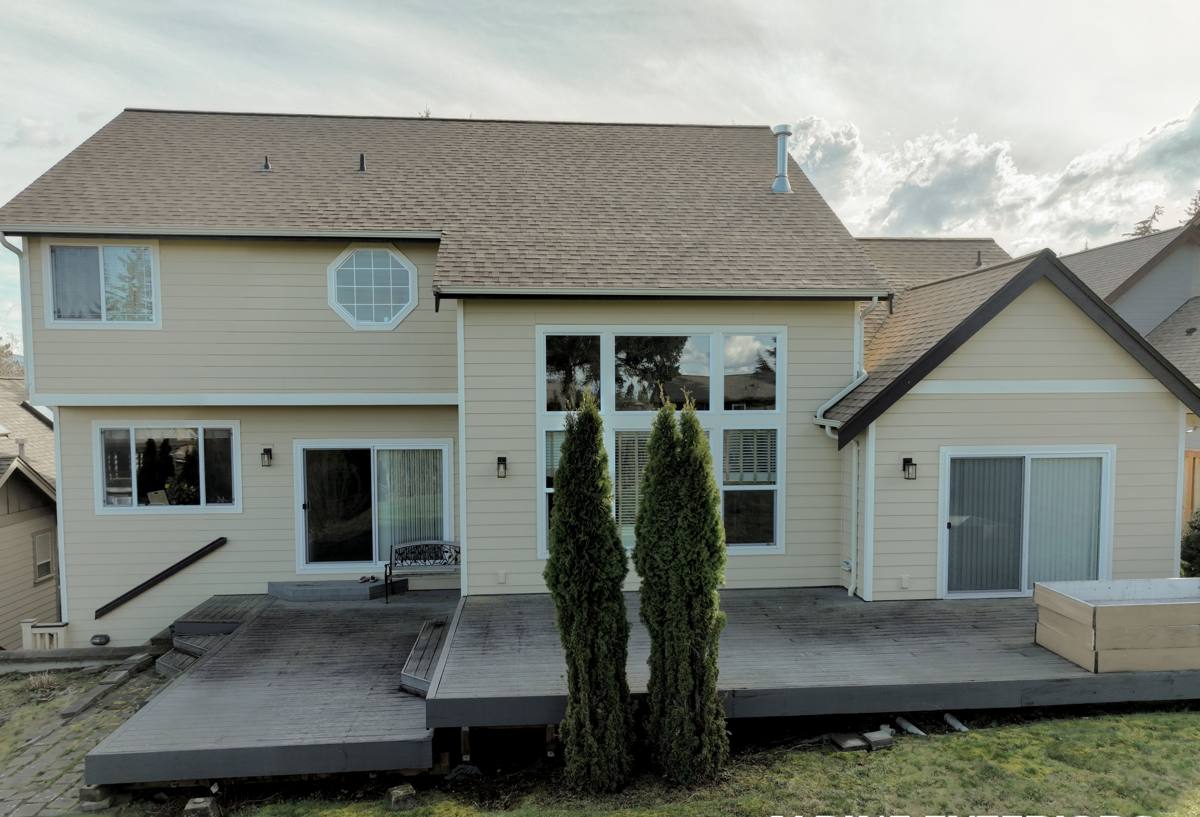
What a Lummi Island Deck Is Actually Up Against
Before any design decisions get made, it's worth being honest about the conditions a deck out here has to survive:
- Salt-laden air corrodes unprotected steel fasteners, hinges, and hardware faster than the same products would fail a few miles inland.
- Wind-driven rain off the water doesn't just fall straight down — it gets pushed sideways into ledger connections, stair stringers, and any horizontal surface that isn't properly flashed or sloped.
- Extended damp seasons mean shaded boards, north sides of the house, and areas under tree cover stay wet longer, which is exactly what moss and algae need to establish.
- Wind exposure on waterfront and elevated lots puts more lateral load on railings and structure than a sheltered inland deck sees.
- Site access on the island is more limited than on the mainland — narrower roads, tighter delivery windows, and the ferry itself all affect how a project gets staged and built.
A deck designed without accounting for these factors might look fine the day it's finished. The problems — soft framing, rusted fasteners, slick moss-covered boards, failing finishes — usually show up two or three years in, once it's too late for a cheap fix.
Material Choices That Actually Hold Up Here
There's no single "right" decking material for every homeowner — budget, look, and maintenance tolerance all factor in. But in a salt-air, high-rain environment, some choices are clearly more forgiving than others. Here's how the common options compare for this specific climate:
| Decking Material | Salt Air / Moisture Behavior | Maintenance Load | Honest Trade-Off |
|---|---|---|---|
| Pressure-treated lumber | Decent if properly sealed and re-sealed; end grain and fastener holes are the weak points | Regular cleaning and re-staining/sealing on a recurring schedule | Lowest upfront cost, but the ongoing upkeep is real and easy to fall behind on |
| Cedar / natural wood | Naturally rot-resistant but still needs finish maintenance in wind-driven rain | Periodic cleaning, sealing, and moss/algae treatment | Best natural look, but requires the most consistent homeowner attention here |
| Composite decking | Handles moisture well; doesn't absorb water or rot, but can stay damp on the surface longer, which favors algae growth in shaded areas | Occasional washing; no sealing or staining | Higher upfront cost, much lower long-term maintenance |
| PVC / capped composite | Best moisture resistance of the common options; fully sealed surface sheds water and resists staining | Lowest — mostly just periodic washing | Highest material cost, but the most forgiving choice for this climate |
We'll walk through these trade-offs honestly during your estimate rather than steering everyone toward the most expensive option. For a lot of Lummi Island homes, especially ones with wind and salt exposure, the maintenance savings of composite or PVC decking pay for themselves in avoided upkeep — but a well-built and properly maintained wood deck is still a legitimate choice if you don't mind the seasonal work.
Fasteners and Hardware
This is where a lot of otherwise decent decks fail early in a marine climate. Standard galvanized fasteners can start showing rust streaks and corrosion within a few seasons of direct salt air exposure. For Lummi Island projects, we use stainless steel or coated fasteners rated for coastal exposure, and we pay close attention to any hardware carrying structural load — post bases, joist hangers, and hurricane ties — since those are the last things you want failing quietly under a deck.
Hidden Fasteners vs. Face Screws
Hidden fastener systems give a cleaner surface with no exposed screw heads to corrode or trap moisture, which is an advantage in this climate. Face-screwed boards are more affordable and easier to service if a single board needs replacing later. Neither is wrong — it depends on your budget and whether you value the cleaner look enough to trade off some repair simplicity.
What's Underneath Matters More Than What You Walk On
The decking surface gets all the attention, but the framing underneath is what determines whether a deck lasts. In a high-rain, salt-air environment, we pay particular attention to:
- Ledger board flashing — the connection where the deck attaches to the house is the single most common source of hidden water damage if it isn't properly flashed and sealed.
- Joist protection — tape or coating on the tops of joists keeps standing water from soaking into end grain and starting rot from the inside out.
- Footings appropriate to the site — sloped or waterfront lots common on the island often need footing depths and placements adjusted for the actual grade and soil, not a generic layout.
- Airflow underneath — decks built too low or too tight to the ground trap moisture and encourage rot and moss growth where you can't see it.
None of this shows in a finished photo. It's the difference between a deck that's solid in ten years and one that needs structural repair.
Our Process for a Lummi Island Deck Project
Building on the island adds a logistics layer that a mainland Ferndale project doesn't have, and we plan for it from the start rather than treating it as an inconvenience.
Site Visit and Design
We start with an in-person visit to look at the site — sun and wind exposure, drainage, slope, and how the deck will connect to the house. This is also when we talk through material options honestly, based on how exposed the location is, not a one-size-fits-all recommendation.
Permitting
Deck permitting is handled through Whatcom County, and requirements can vary depending on the deck's size, height, and attachment to the structure. We'll tell you upfront whether your project needs a permit and handle that process as part of the job rather than leaving it on you to figure out.
Working Around the Ferry
Because Lummi Island is only reachable by ferry, material deliveries and crew trips have to be planned around the schedule, not around convenience. We stage materials and organize the work to minimize back-and-forth trips — fewer wasted crossings means a more efficient build and fewer delays waiting on a missed sailing. This is one of the biggest practical differences between a crew that regularly works the island and one that's building here for the first time.
Build and Walkthrough
Framing, flashing, and structural work get inspected before decking goes down — those are the parts you won't be able to check later. Once the surface, railings, and stairs are complete, we walk the finished deck with you before calling the job done.
Maintaining a Deck Through Whatcom County's Moss Season
Even the right materials need some seasonal attention in this climate. A simple maintenance routine goes a long way toward keeping a deck safe and good-looking:
- Sweep debris and standing leaves off the deck regularly, especially in fall — trapped organic matter holds moisture and feeds moss and algae growth.
- Wash the surface at least once or twice a year, more often on shaded or north-facing sections, to keep moss from establishing.
- Check and clear gaps between boards so water can drain through instead of pooling.
- Inspect fasteners and hardware periodically for rust or corrosion, particularly on railings and stair connections.
- Re-seal or re-stain wood decking on the schedule the product calls for — skipping a cycle in this climate shows up fast.
- Watch for slick, greenish buildup on stairs and walkways, especially after long wet stretches, since moss makes surfaces genuinely dangerous underfoot.
Why Hiring a Crew That Already Works Lummi Island Matters
A contractor who builds here occasionally has to relearn the logistics every time — ferry timing, material staging, site access, permitting quirks specific to the county. A crew that already works the island regularly has that figured out, which translates directly into fewer delays and fewer surprises on your project. It also means we've seen firsthand how decks in this specific environment hold up — or don't — over time, and we build accordingly instead of guessing.
We're a Ferndale company, and Lummi Island is part of our regular Whatcom County service area. You're not paying a premium for a specialty trip out to the island — it's work we already know how to plan for.
If you're considering a custom deck for your Lummi Island property, we're happy to come take a look, walk through material options honestly, and put together a straightforward, no-pressure estimate. Use the form below to get started.