 Ferndale Roofing
 Lynden's Weather Puts Real Stress on Exterior Siding
Homes in the Lynden area sit in the same Whatcom County weather system as Ferndale: onshore air carrying salt and moisture off the Sound, long stretches of driving rain in fall and winter, and a moss season that can run most of the year on shaded, north-facing walls. That combination is hard on siding in ways that don't show up right away. Salt-laden air accelerates corrosion on fasteners and trim. Wind-driven rain finds its way behind poorly lapped or under-flashed siding. And moss doesn't just grow on roofs — it takes hold in siding seams, behind trim boards, and anywhere moisture sits against a wall long enough to feed it.
We've done enough siding work in this corridor to know which walls fail first (the ones facing prevailing weather, under-eave sections with no roof overhang protection, and lower courses near grade) and which details matter most when we're specifying materials and installation methods for a Lynden home.
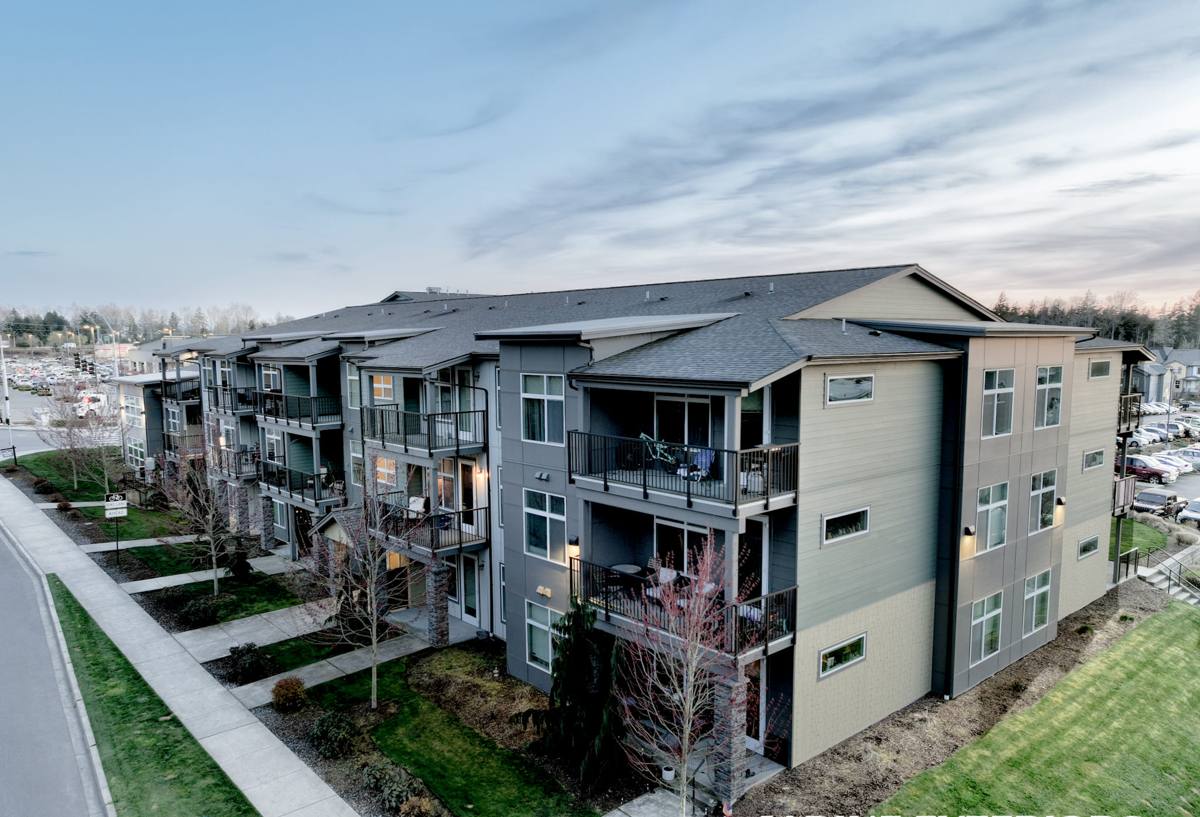
Why James Hardie Fiber Cement Is Built for This Climate
Climate-engineered HZ5 formulation
James Hardie manufactures its siding in different formulations for different climate zones. The Pacific Northwest falls under Hardie's HZ5 engineering, which is built around freeze-thaw cycling and sustained moisture exposure rather than heat and humidity. That's the right starting point for a Lynden home — a product engineered for a drier southern climate isn't the same product, even if it looks similar on a shelf.
Non-combustible, dimensionally stable
Fiber cement doesn't expand and contract the way vinyl does with temperature swings, and it doesn't absorb and swell the way wood-based products can when they take on moisture. That stability matters directly for moss and rot resistance: a siding board that stays dimensionally consistent keeps its joints, caulk lines, and paint film intact for longer, which means fewer entry points for the moisture that feeds moss and drives rot.
ColorPlus factory finish
Hardie's ColorPlus finish is baked on at the factory under controlled conditions, rather than field-applied after installation. In a climate with this much rain, that matters — a factory finish holds up to UV and moisture exposure more consistently than a field-applied coat, and it comes with its own finish warranty separate from the product warranty.
Long-term, transferable warranty
James Hardie backs its siding with a strong product warranty, and unlike some warranties that reset or void when a house changes hands, Hardie's is designed to transfer to a new owner if the home is sold within the coverage period. For a homeowner thinking about resale down the road, that's a real difference — it's one less thing a buyer's inspector flags, and one less negotiating point at closing. Combined with the separate ColorPlus finish warranty, it's a more complete package than most alternative siding products offer.
What a Correct Installation Actually Involves
James Hardie siding is only as good as the installation behind it. The product is engineered to shed water, but that only works if the details underneath it are done correctly. On a Lynden-area home, we pay particular attention to:
Water management behind the siding
Correct weather-resistive barrier and flashing at every window, door, and penetration — not just the visible caulk line, but the layered flashing underneath it that actually directs water back out. Wind-driven rain in this area doesn't fall straight down; it gets pushed sideways and upward under laps that aren't detailed correctly.
Proper fastening and gaps
Hardie's install specifications call for specific nailing patterns, minimum gaps at butt joints, and clearance at the bottom of the wall so the board never sits in standing water or wicks moisture from grade. Skipping these details voids the manufacturer's warranty and is exactly where we see failures on other homes we're asked to inspect or repair.
Caulking and touch-up painting done right
Cut edges and any field-applied caulk need proper sealing and, where required, touch-up paint matched to the ColorPlus finish. Left undone, a cut edge is an open door for moisture — and in a climate with this much sustained rain, that door gets used.
Our Process When We Work in a Lynden Home
- Walkthrough and assessment — we look at existing siding condition, moisture damage, trim, and roof-to-wall transitions before quoting anything.
- Tear-off and substrate check — old siding comes off and we inspect sheathing for hidden rot or moisture damage before anything new goes up.
- Weather barrier and flashing — house wrap and flashing are installed or corrected at every penetration, valley, and transition.
- Hardie panel or plank installation — installed to manufacturer spec for fastening, gapping, and clearance, matched to the HZ5 requirements for this region.
- Trim, caulking, and touch-up — all cut edges sealed and finished to protect against the exact moisture exposure this area sees.
- Final walkthrough — we go over the finished job with the homeowner before calling it done.
Why We Install Only James Hardie — Not Vinyl or LP SmartSide
We standardized on James Hardie fiber cement and don't install vinyl, LP SmartSide, Cemplank, Allura, primed spruce, or cedar. That's a professional standard, not a knock on every homeowner who has one of those products on their house already — plenty of those products are reasonable choices in the right circumstances. Our reasoning is specific to what we see in this climate and what we're willing to warranty our labor against:
- Vinyl can warp, fade, and become brittle with UV and temperature cycling, and it relies heavily on correct installation to manage water at all — problems that are expensive to diagnose after the fact.
- LP SmartSide is a wood-strand product with an engineered resin coating; it depends on that coating and correct field sealing staying intact to resist the sustained moisture this region gets.
- Primed spruce and cedar are natural wood products that need ongoing maintenance — repainting, resealing, and moisture monitoring — to hold up against a moss season this long.
James Hardie's fiber cement, factory finish, and non-combustible composition line up with what we've seen actually hold up here over time, which is why it's the only product we put our labor warranty behind.
What Lynden-Area Siding Projects Typically Cost
Every home is different, but a few factors consistently move the price on a Hardie siding job in this area. We won't quote a number without seeing the house, but this gives you a sense of what drives cost up or down.
| Cost factor | Why it matters here |
|---|---|
| Existing siding removal | Tear-off and disposal of old material, plus time to inspect and repair any hidden moisture damage underneath |
| Substrate repair | Rot or moisture-damaged sheathing found during tear-off has to be replaced before new siding goes on |
| Plank vs. panel style | Lap plank siding and vertical panel systems have different labor requirements and trim details |
| Trim and accessory work | Corner boards, window and door trim, and fascia detailing add labor beyond flat wall footage |
| Home height and access | Multi-story sections and steep or limited-access lots take more time and equipment |
| Color and finish | Factory ColorPlus finishes come in a range of standard colors; custom field-painting adds cost |
Keeping Moss and Moisture From Winning Long-Term
Correct installation gets you most of the way there, but a few ongoing habits keep a Hardie siding job performing the way it's designed to in this climate:
- Keep gutters clear so water isn't overshooting onto siding below the roofline
- Trim back vegetation and tree branches that keep shaded wall sections damp longer than they need to be
- Rinse visible moss or algae growth off siding with a garden hose and soft brush rather than a pressure washer, which can force water behind laps and joints
- Check caulk lines around windows, doors, and trim every year or two and have any cracked or missing sealant redone before the rainy season
- Have a contractor check flashing and clearances at grade if you notice discoloration or soft spots near the bottom of a wall
Why Hiring a Crew That Already Works This Area Matters
Siding installed to spec on paper can still fail if it's not adapted to how weather actually behaves on a given lot. A crew that already works in and around Lynden knows which wall orientations take the worst of the wind-driven rain, which older homes in this area tend to have moisture issues hiding behind original siding, and how the moss season here differs from a drier inland climate. That local pattern recognition doesn't come from a spec sheet — it comes from doing the work here repeatedly.
Scheduling around the rainy season
Whatcom County's wettest stretches aren't a surprise to a crew that works here year-round. We plan tear-off and install sequencing so a home isn't sitting open to weather longer than necessary, and we know which weeks tend to give the most reliable install windows versus which ones carry the highest risk of rain delays. That's a scheduling advantage that's hard to get from a contractor commuting in from outside the area.
It also means we're not learning the permitting expectations or common construction details of Whatcom County homes on your project. We show up already knowing what a correct installation looks like in this specific climate, which shortens the learning curve and reduces the chance of the kind of installation mistakes that void a manufacturer's warranty.
If you're weighing a siding project on a Lynden-area home, we're happy to walk the exterior with you, point out what we see, and put together a free, no-pressure estimate — no obligation, just an honest look at what your home needs.