 Ferndale Roofing
 Building New in Fairhaven Means Building for the Water
Fairhaven sits close enough to Bellingham Bay and the Salish Sea that the weather off the water shapes almost every exterior decision on a new build, and windows are no exception. A window that would hold up fine forty miles inland can start showing problems here within a few years if it wasn't chosen and installed with this specific climate in mind. Salt-laden air, wind-driven rain off the water, and a long stretch of the year where surfaces stay damp enough for moss and algae to take hold all put extra stress on window frames, seals, and the flashing details around them.
For a new-construction project, this is the easiest point in the whole process to get windows right — because the openings, the weather-resistant barrier, and the flashing sequence are all being built at the same time, instead of retrofitted into an existing wall later. Get it right now and you avoid dealing with leaks, fogged glass, or corroded hardware years down the road.
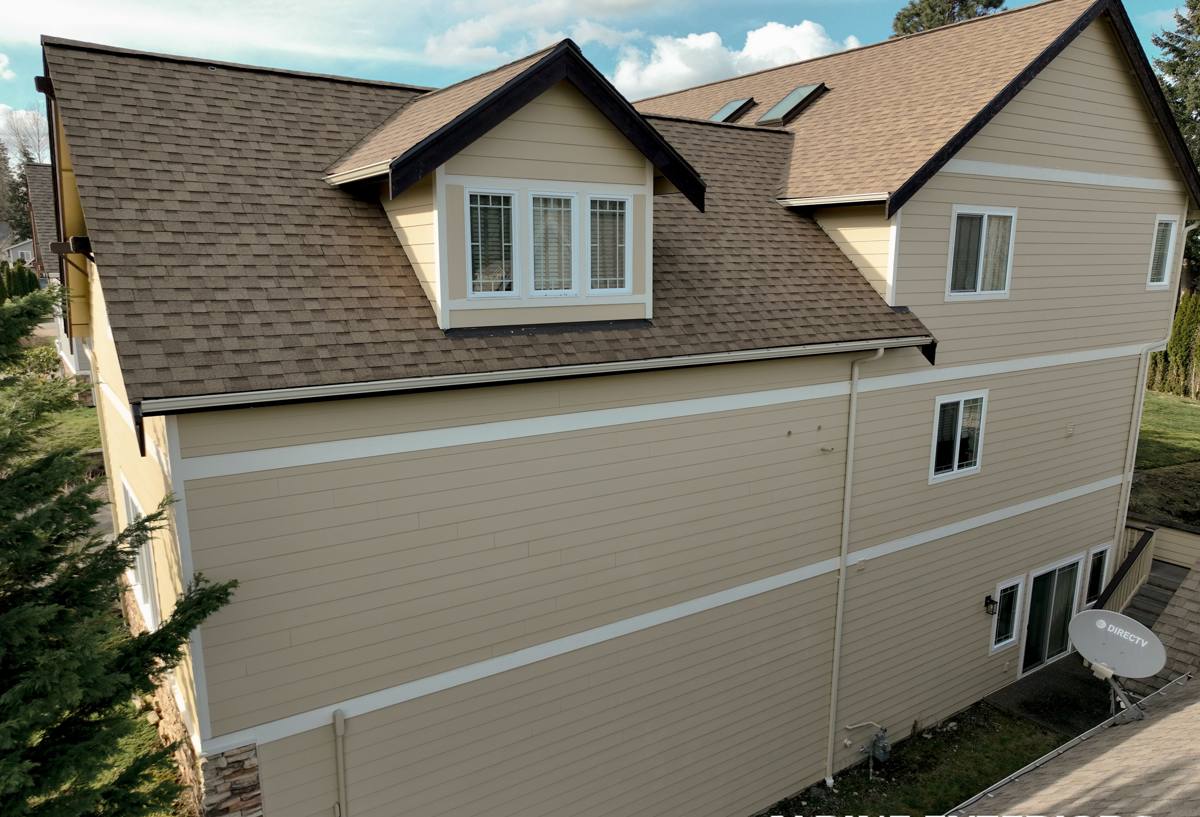
New-Construction Windows Are a Different Job Than Replacements
New-construction windows are built with a nailing flange (fin) around the perimeter of the frame, which gets fastened directly to the wall sheathing and integrated with the house wrap and flashing before siding goes on. That's different from a replacement or "pocket" window, which gets set into an existing finished opening without disturbing the wall covering.
On a new build, this means the window installation isn't a standalone task — it's one step in a sequence that includes the rough opening framing, the weather-resistant barrier (house wrap or a fluid-applied membrane), sill pan flashing, the window itself, and then head and side flashing that ties back into the wrap above and beside the opening. Every one of those layers has to overlap correctly, shingle-style, so water moving down the wall is always directed outward, never behind the window or into the framing. Skipping a step or doing them out of order is one of the most common causes of hidden water damage in newer homes, and it's very hard to catch during a walkthrough because the problem is buried behind the siding.
Why Sequencing Matters More Here Than Inland
In a drier climate, a minor flashing shortcut might go unnoticed for a decade. With the volume of driving rain Whatcom County's coastal areas see over a wet season, gaps or reversed laps in the flashing tend to show up as staining, soft trim, or interior moisture problems much sooner. That's a big part of why we treat flashing sequence as non-negotiable rather than something to speed through.
What Fairhaven-Area Homes Need From Their Windows
Salt Air and Coastal Exposure
Airborne salt accelerates corrosion on unprotected metal components — hardware, screws, and certain frame materials are all affected over time. This doesn't mean every home near the water needs the most expensive window on the market, but it does mean frame material, hardware finish, and fastener selection should account for coastal exposure rather than being chosen the same way they would be for a home well inland.
Wind-Driven Rain
Storms coming off the water often push rain sideways into a wall instead of straight down, which puts much more pressure on flashing and seals than a calm vertical rain does. Sill pan flashing with a proper back dam, correctly lapped head flashing, and quality sealant at the right joints (not everywhere — over-sealing can trap moisture) are what actually keep that kind of weather out.
Moss and Constant Shade
Homes tucked under tree cover or on north-facing walls stay damp longer through the year, which is exactly the condition moss and algae need to get started. On windows, that shows up as green or black growth in sill corners and along frame joints where water sits instead of draining. Frame profiles with clean drainage paths and sills with a slight outward pitch shed water faster and give moss less to hold onto.
Choosing Frame and Glass for This Climate
There's no single "best" window material — the right choice depends on budget, the home's design, and how much long-term maintenance the homeowner wants to take on. Here's how the common options generally compare for a coastal Whatcom County build:
| Frame Material | Moisture & Salt Air Behavior | Maintenance | Typical Fit |
|---|---|---|---|
| Vinyl | Won't corrode; performs well in salt air; some flexing possible in very large sizes | Low — occasional cleaning | Most cost-conscious new builds |
| Fiberglass | Very stable in temperature swings and moisture; strong resistance to coastal weathering | Low | Larger openings, higher-end builds |
| Aluminum-clad wood | Attractive exterior durability, but any breach in the cladding exposes wood to moisture over time | Higher — cladding and interior wood need monitoring | Design-driven projects prioritizing a wood interior look |
| Bare aluminum | Prone to condensation and corrosion in a wet, salty climate without a thermal break | Moderate to high | Generally not our recommendation for this climate |
We steer most Fairhaven-area clients toward vinyl or fiberglass for the field of the house because they hold up with the least ongoing attention in a marine climate. Where a project calls for a wood-look interior, clad options can still work well — we just make sure the client understands the added maintenance commitment before we spec it.
Energy Code and Performance in a Marine Climate Zone
Washington's energy code sets minimum performance targets for new-construction windows based on climate zone, and Whatcom County falls under the state's marine zone requirements — which call for tighter thermal performance than warmer, drier parts of the state. Every window we install carries an NFRC label showing its U-factor (how well it resists heat loss) and solar heat gain coefficient, so the performance numbers going into your build can be verified rather than taken on faith.
Beyond code minimums, a few other factors matter for comfort and long-term performance in this climate:
- Low U-factor glass reduces condensation risk on the interior glass surface during cold, damp stretches of the year
- Argon or krypton gas fill between panes improves insulating performance without changing the look of the window
- Warm-edge spacer bars reduce cold spots at the glass edge, which is where condensation typically starts first
- Tempered or laminated safety glazing is required by code in certain locations — near doors, low to the floor, in wet areas, and in other hazard locations defined by the building code
Our New-Construction Window Process
On a new build, we coordinate closely with the general contractor or builder so window installation lands at the right point in the schedule — after the weather-resistant barrier is up and rough openings are framed correctly, but before siding closes everything in. Our process generally includes:
- Confirming rough opening sizes against the approved window schedule before anything is ordered
- Installing sill pan flashing with a back dam at every opening, not just the ones facing prevailing weather
- Setting each window plumb, level, and square, with shims placed to manufacturer spec so the frame isn't stressed
- Integrating head, jamb, and sill flashing with the house wrap in proper shingle-lap order
- Sealing and insulating the gap between the frame and rough opening without over-packing it, which can bow the frame
- A final check of operation, drainage weep paths, and hardware before we sign off and the siding crew moves in
We also photograph the flashing details before they're covered by siding, so there's a record of what's behind the wall if it's ever needed later — for a warranty question, a future renovation, or just peace of mind.
Coordinating With Your Builder and Trades
New-construction windows sit at the intersection of several trades — framing, the weather barrier, the window install itself, and then siding and trim. When those trades aren't communicating, small mismatches creep in: a rough opening cut slightly out of spec, a window ordered before final wall dimensions were confirmed, or siding scheduled before flashing has had time to be inspected. We work directly with builders and framers on timing and opening verification so the window installation isn't the step that causes a schedule delay or, worse, gets rushed to keep the schedule.
If your project is going through inspection, we make sure our flashing and installation details are ready to be viewed before they're covered — nothing about our process depends on work being hidden from an inspector.
Why a Crew That Already Works This Area Matters
A window installation crew that regularly works Ferndale and the surrounding Whatcom County coastline already has a working sense of how this climate behaves through a full year — which walls take the worst of the wind-driven rain, how much shade a given lot really gets, and what kind of maintenance schedule actually holds up here versus what looks fine on paper. That local pattern recognition shows up in small decisions: which openings get extra attention on the flashing, which frame material makes sense for a shaded, damp lot versus an open, sunnier one, and where a homeowner can reasonably save money without creating a maintenance headache later.
It also means fewer surprises during the build. We're used to coordinating with builders and trades on this kind of schedule, and we're not learning the local weather patterns and code requirements on your project.
If you're planning a new build in Fairhaven or elsewhere around Ferndale, we're happy to walk through your window schedule and talk through material and performance options before anything is ordered. Reach out for a free, no-pressure estimate using the form below.