 Ferndale Roofing
 Windows Built for Fairhaven's Coastal Conditions
Fairhaven sits close enough to Bellingham Bay that salt-laden air is a daily fact of life, not an occasional nuisance. Add in the driving rain that comes off the water during fall and winter storms, plus the long, damp moss season that Whatcom County is known for, and you have a climate that is genuinely hard on windows. Frames corrode faster, seals fail sooner, and condensation problems show up in homes that would go decades without them in a drier inland climate. When we talk about "energy-efficient windows" for a Fairhaven home, we're not just talking about a lower heating bill. We're talking about a window system that can actually survive the environment it's installed in while it saves you money.
This page covers what that looks like in practice: what the climate does to windows over time, what a correct installation actually involves, how our process works from estimate to final walkthrough, and why it matters to hire a crew that already understands Fairhaven's particular mix of weather and older housing stock.
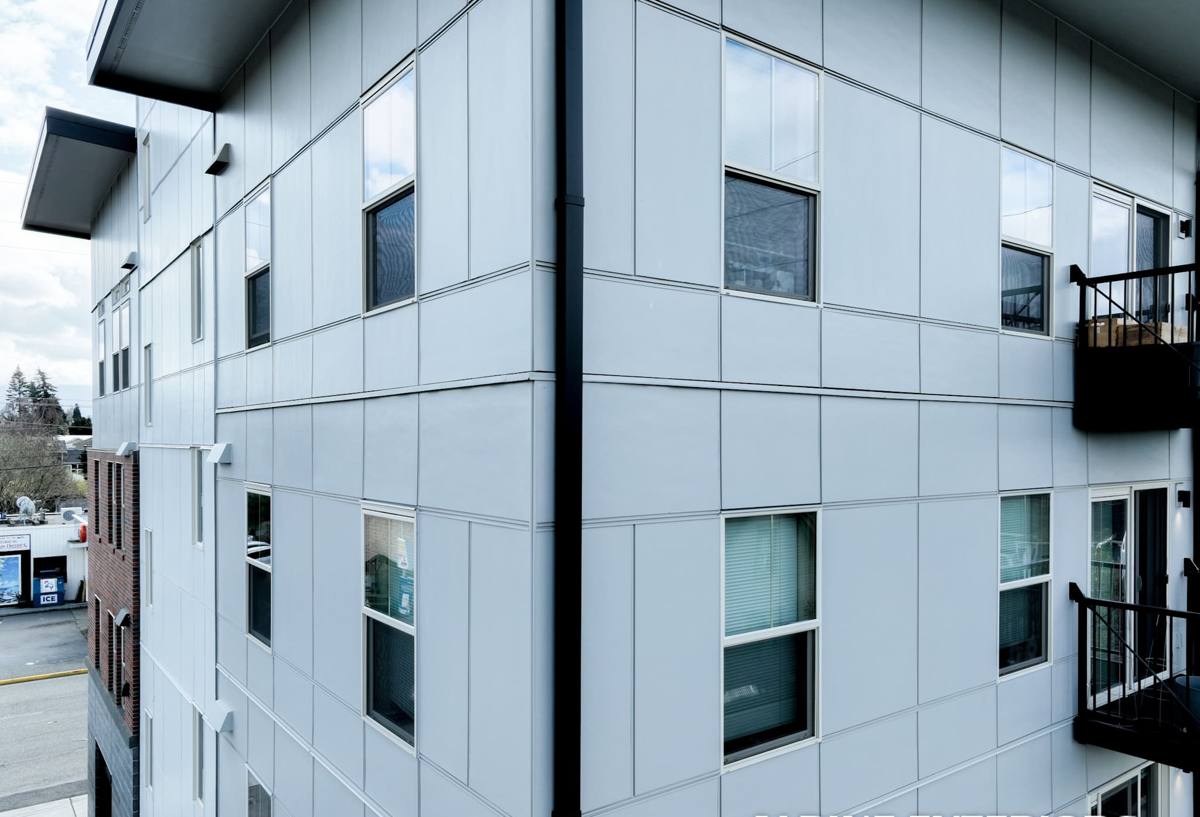
What Salt Air, Driving Rain, and Moss Season Actually Do to Windows
Salt air and metal components
Airborne salt accelerates corrosion on anything metal — window hardware, aluminum cladding, screws, and older aluminum-framed units. Once hardware starts to pit or seize, windows stop sealing tightly even if the glass itself is fine. This is a slower, quieter failure than a cracked pane, which is exactly why it gets missed until a homeowner notices drafts or a window that won't latch properly anymore.
Driving rain and water intrusion
Wind-driven rain doesn't just hit a window — it gets pushed sideways and upward into gaps that would never see water in a calm rain. Flashing details and sill pan work matter more here than in a lot of other parts of the state. A window that's a perfectly good product on paper can still leak if the flashing and sealant details around it weren't done correctly for a coastal wind exposure.
Moss season and prolonged moisture
Whatcom County's extended wet season means wood trim, sills, and surrounding siding stay damp for long stretches at a time. Moss and algae growth on nearby siding or roofing holds moisture against the building longer than most homeowners realize, and that moisture finds its way to window perimeters. Old caulking and worn weatherstripping don't stand up to that kind of sustained exposure — they dry out, crack, and stop doing their job well before the glass itself is a problem.
What "Energy-Efficient" Really Means for This Area
Energy efficiency isn't a single spec — it's a combination of glass performance, frame material, and installation quality. For a Fairhaven home, we weigh those factors against the coastal environment, not just against a generic efficiency rating.
| Factor | Why It Matters Here |
|---|---|
| Low-E glass coatings | Reduces heat loss through the glass, which matters most during the long stretch of cool, overcast months typical of this area |
| Multi-point locking hardware | Keeps the sash compressed evenly against weatherstripping, which resists wind-driven rain intrusion better than single-point latches |
| Frame material | Needs to resist corrosion and moisture absorption without excessive long-term maintenance in a salt-air, high-rain environment |
| Insulated frame construction | Reduces condensation risk at the frame edge, which is where moisture problems most often start on older or lower-grade windows |
| Proper flashing integration | Determines whether the window actually stays dry in wind-driven rain, regardless of how good the window unit itself is |
A high-efficiency window with poor flashing detail will leak. A basic window installed with excellent flashing and air-sealing will still underperform on comfort and energy cost. Getting both right is the whole job — that's the standard we hold ourselves to on every Fairhaven project.
What a Correct Window Installation Involves
A lot of window problems we get called out to fix didn't start with the window product — they started with shortcuts during installation. For a coastal Whatcom County home, we treat the following as non-negotiable:
- Full removal of old flashing and inspection of the rough opening for hidden rot or moisture damage before anything new goes in
- Sill pan flashing installed to shed water outward, not just caulk relied on to keep water out
- Weather-resistive barrier integration so the window ties properly into the home's existing water management system, not just sits inside a hole in the wall
- Correct shimming and fastening so the frame doesn't bow or twist, which causes uneven weatherstripping compression and future drafts
- Low-expansion foam or backer rod and sealant used appropriately around the perimeter — never sealant alone as the only air and water barrier
- Interior and exterior trim resealed and finished to shed water away from the new unit
- A final water test or visual inspection under simulated wind-driven conditions where practical, especially on wall exposures that face prevailing storms
Skipping any one of these steps might not cause a problem in year one. It tends to show up in year three or four, usually as a soft spot in interior trim or a musty smell that wasn't there before — right in line with how long it takes moss-season moisture to work its way into places it shouldn't be.
Our Process for Fairhaven Window Projects
1. On-site assessment
We look at more than the windows themselves — we check surrounding trim, siding condition, and signs of past water intrusion, since those often explain why a window is underperforming in the first place.
2. Straightforward recommendation
You'll get an honest read on what actually needs replacing versus what can be repaired, along with frame and glass options that make sense for a coastal exposure — not an upsell to the most expensive option on the shelf.
3. Scheduled installation
We plan around Whatcom County's weather patterns where we can, minimizing the time any opening is exposed during removal and installation.
4. Flashing and sealing done to the standard above
This is where most of the long-term performance is actually decided, and it's the step we don't compress to save time.
5. Final walkthrough
We check operation, locking hardware, and finish work with you before calling the job done.
Cost Factors to Expect
Every home and window count is different, so we won't quote a number without seeing the project. What generally moves the price up or down on a Fairhaven job:
| Factor | Effect on Cost |
|---|---|
| Number of openings replaced at once | Per-window cost typically drops as the job size increases |
| Frame material chosen | Higher-end, corrosion-resistant frame options cost more up front but reduce long-term maintenance in salt air |
| Condition of the rough opening | Hidden rot or water damage found during removal adds repair work before the new window can go in |
| Trim and siding tie-in complexity | Older homes with custom trim profiles take more time to match and finish correctly |
| Access and site conditions | Second-story or hard-to-access windows add labor time |
Signs Your Current Windows Are Costing You More Than You Think
- Visible fogging or moisture between panes of double-glazed units
- Drafts you can feel near the frame edge, even with the window fully latched
- Hardware that's stiff, corroded, or won't lock smoothly anymore
- Soft or discolored trim around the window, inside or outside
- A noticeable difference in room temperature near the window compared to the rest of the house
- Musty smell near a window that gets worse during the wetter months
Any one of these on its own might not mean a full replacement is needed. Several of them together, especially on a home that's been through a few Whatcom County winters without window updates, usually means the windows are working against your heating bill rather than for it.
Why Hire a Crew That Already Works in Fairhaven
Window installation looks similar on paper everywhere in the country. What's different here is the exposure — the combination of salt air, sideways rain, and a moss season that lasts months rather than weeks. A crew that's used to installing in a dry inland climate can put in a technically fine window and still miss the flashing and sealing details that matter specifically in a coastal Whatcom County setting. We work in this environment regularly, which means we're not guessing at what holds up here and what doesn't — we're applying what we've already seen work on homes with the same weather exposure yours has.
If your windows are original to the house, showing early signs of wear, or you're just trying to get ahead of another wet season before it turns into a repair bill, we're happy to take a look. Reach out for a free, no-pressure estimate — there's a form below this page ready whenever you are.