 Ferndale Roofing
 Why Everson Homes Take a Beating on Their Siding
Everson sits inland from Ferndale along the Nooksack River corridor, but it doesn't escape the weather pattern that shapes exterior work across Whatcom County. Moist, salt-tinged air moves in off the Sound and settles into low-lying river valleys. Driving rain arrives sideways more often than straight down. And the moss season here isn't a few weeks in spring — it can run eight months or longer, feeding on any surface that stays damp and shaded for more than a day or two at a time.
Siding is the first line of defense against all of that, and it's usually the last thing homeowners think about until something visibly fails — a soft spot near a window, a panel that's started to bow, or a streak of green creeping up from the foundation line. By the time those signs show up on the surface, there's a good chance moisture has already been working underneath for a while.
We're based out of Ferndale and work Everson regularly, which means we've seen the specific ways local weather attacks siding: north-facing walls that never fully dry out, trim boards where caulking has failed and let water track behind the panel, and older siding materials that were never really built for a climate this wet for this long.
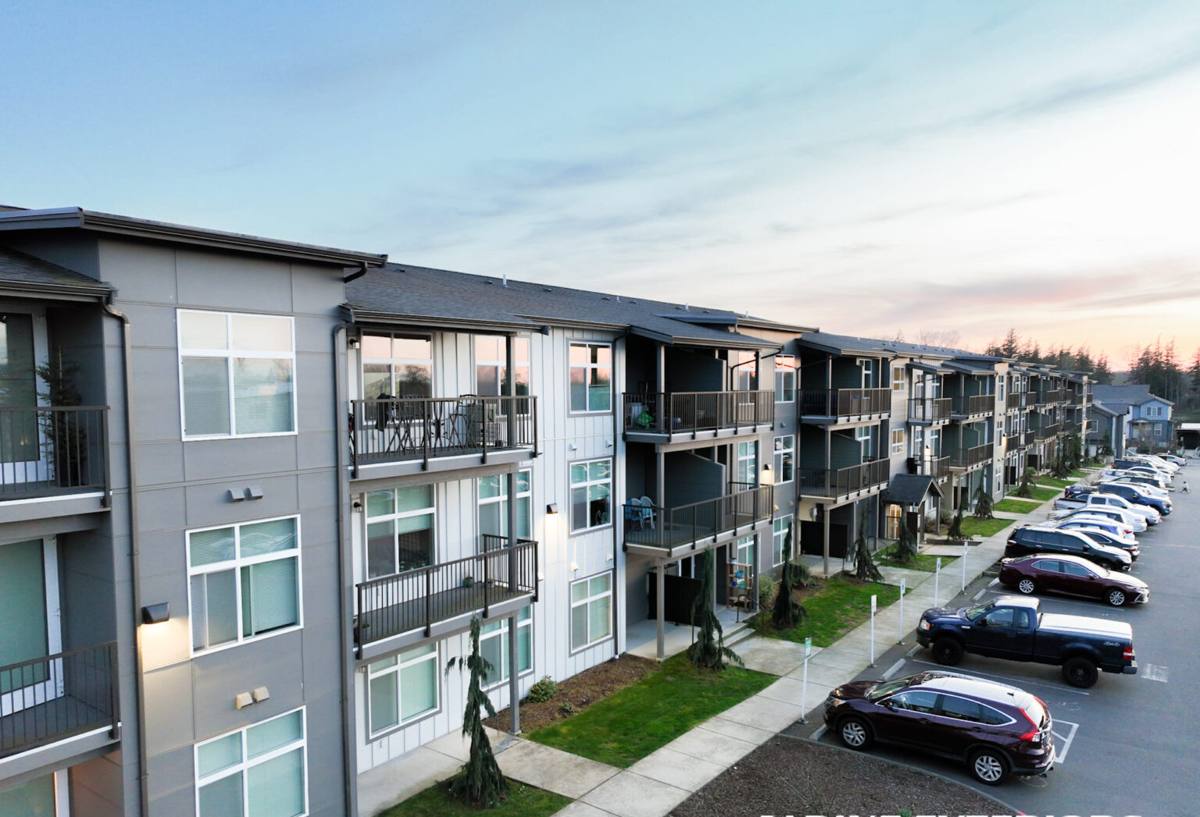
Common Siding Repair Issues We See in Everson
Not every repair call is the same, but a handful of problems show up again and again on Everson homes because of the local climate and building stock:
- Moisture-swollen or delaminating panels — especially on older wood-based or composite siding that wasn't rated for constant damp exposure
- Cracked or split boards near corners and butt joints, where panels expand and contract with temperature and moisture swings
- Failed caulking and flashing around windows, doors, and roof-to-wall transitions, which lets water get behind the siding instead of running off it
- Moss and algae staining on shaded north and east walls, which holds moisture against the surface longer than direct sun-exposed walls
- Impact damage from storms, fallen branches, or lawn equipment that's gone unrepaired long enough for water to get into the gap
- Soft or spongy siding near ground level, often from splash-back off hard surfaces or grade that slopes toward the house instead of away
Some of these are cosmetic and can wait. Others are actively letting water into the wall assembly, and every week they go unaddressed makes the eventual fix bigger and more expensive.
What a Correct Siding Repair Actually Involves
A siding repair that's done right is more than swapping a damaged board for a new one. The visible siding is only the outer layer of a system that includes a water-resistive barrier, flashing, and the wall sheathing behind it. If any of those layers were compromised — which is common once you've found rot or soft spots — patching over the surface without addressing what's underneath just hides the problem for a season or two.
Steps we take on a proper repair
- Remove the damaged section and inspect the sheathing and house wrap underneath for hidden moisture or rot
- Dry out and, if needed, repair or replace compromised sheathing before any new siding goes back on
- Correct the underlying cause — bad flashing, missing kick-out flashing, failed caulking, poor grading — not just the symptom
- Install new siding material that matches the existing profile, exposure, and finish as closely as possible
- Re-flash and re-seal all penetrations, joints, and transitions using materials suited to a wet marine climate
- Check surrounding panels for early-stage damage that isn't obvious yet but is likely to fail soon
That last step matters more than most homeowners expect. Siding damage rarely happens in isolation — if one section failed from years of moisture exposure, the panels next to it were exposed to the same conditions and are often not far behind.
Repair vs. Replace: How We Make the Call
One of the most common questions we get on an Everson repair call is whether it makes more sense to fix the damaged section or replace the whole wall — or the whole house. There's no universal answer, but there are clear factors that push the decision one way or the other.
| Factor | Leans toward repair | Leans toward replacement |
|---|---|---|
| Extent of damage | Isolated to one or two sections | Spread across multiple walls or the whole house |
| Age of existing siding | Newer material still under warranty | Original siding is decades old and near end of life |
| Underlying material | Sound sheathing and framing found on inspection | Rot or moisture damage found in the wall structure |
| Material match | Discontinued profile can still be reasonably matched | Existing product is long discontinued or mismatched already |
| Root cause | Fixable localized issue (flashing, caulk, one impact spot) | Systemic issue affecting the whole exterior envelope |
We'll always give you a straight answer here. If a targeted repair genuinely solves the problem, that's what we'll recommend and price — we don't upsell a full re-side when a section repair will hold up. But if we open a wall and find the damage goes deeper, we'll show you what we found before doing anything else, so you're deciding with full information rather than guessing.
Our Process, Start to Finish
1. Inspection and assessment
We start by walking the exterior with you, looking at the reported problem area and the rest of the siding for related issues. We check flashing, caulking, grading, and any visible moisture staining. For anything that looks like it could involve hidden damage, we'll explain what we're checking for and why before opening anything up.
2. A clear scope and estimate
You get a written explanation of what needs to happen, why, and what it will cost — before work starts. If we find something worse once we're inside the wall, we stop and talk to you before proceeding, not after.
3. The repair itself
We remove only what needs to come out, address the moisture source, and rebuild the assembly correctly — sheathing, barrier, flashing, then siding. We match exposure and profile as closely as the product line allows so the repaired section doesn't stand out.
4. Final check and cleanup
Before we consider the job done, we walk it with you, confirm the fix addressed the actual cause, and make sure the site is left clean. If the repair area needs paint or finish touch-up to blend with surrounding siding, that's part of the job, not an add-on.
Why We Repair With James Hardie, Not Whatever's Closest to Matching
When we're patching in new material next to existing siding, there's sometimes a temptation to grab whatever's cheapest or fastest to source just to fill the gap. We don't do that. On any repair where we're introducing new siding material — whether it's a small patch or a full wall section — we use James Hardie fiber cement, and for a specific set of reasons that matter more in a climate like this one.
James Hardie's HZ5 product line is engineered for climates with prolonged moisture exposure and freeze-thaw cycling, which describes Whatcom County's weather well. It's non-combustible fiber cement, so it doesn't absorb and hold water the way wood-based or composite products can, and it isn't prone to the swelling and delamination we see so often on repair calls involving older siding materials. The factory-applied ColorPlus finish also means a repaired section can match the existing color more accurately and hold that color longer than a field-painted patch will.
We don't install vinyl, LP SmartSide, Cemplank, Allura, or primed wood siding — on new installs or on repairs. That's not a knock on every homeowner who has one of those products already; plenty of them are holding up fine and don't need to be ripped out just because we'd choose differently. But when we're the ones opening up a wall and putting new material in, we're not going to install something we don't stand behind for the long term. Hardie's transferable warranty and track record in wet marine climates are why it's the only material we bring to a repair.
Why a Ferndale-Based Crew Matters for an Everson Repair
Siding repair is one of those jobs where local knowledge actually changes the outcome. A crew that works Whatcom County regularly knows which wall orientations hold moisture longest, which older siding products in this area tend to fail the same way, and what flashing details get skipped most often on homes built decades ago before current best practices were standard.
There's also a practical side to being local. We're not driving in from out of the area for a one-off job — if a repair needs a follow-up visit, or if you want us to check back after the next wet season to confirm everything's holding, that's a short trip for us, not a scheduling headache. And because we work in this climate constantly, we're not guessing at how a repair will perform through an Everson winter — we've already seen how our work holds up through several of them.
Signs It's Time to Call for a Siding Repair
Most siding failures don't happen overnight. Catching the early signs saves money because the fix stays small.
- Soft, spongy, or bouncy spots when you press on the siding
- Paint that's peeling, bubbling, or failing faster in one area than the rest of the house
- Visible gaps, cracks, or warping in individual panels
- Persistent moss or dark staining that keeps coming back after cleaning
- Musty smell or visible staining on interior walls that share an exterior wall with a damaged section
- Siding that's pulling away from the wall or has visible nail pops
- Water stains on soffits or trim near a siding transition
If you're seeing more than one of these at once, it's worth having someone look before the next stretch of wet weather.
What Affects the Cost of a Siding Repair
Every repair is different, so we don't quote blind — but these are the factors that typically move the price up or down:
| Cost factor | Why it matters |
|---|---|
| Size of the damaged area | A single panel patch costs far less than a multi-wall section |
| Hidden damage behind the siding | Rotted sheathing or framing adds labor and material beyond the visible repair |
| Height and accessibility | Second-story or hard-to-reach areas require more setup time |
| Material matching | Matching an older or discontinued profile can take more sourcing effort |
| Underlying cause | Fixing a flashing or drainage issue adds scope beyond just the siding itself |
| Paint or finish blending | Field-finishing to match existing color adds a step ColorPlus prefinished panels can sometimes avoid |
We'd rather walk you through these factors on your specific home than throw out a number that doesn't mean anything until we've actually seen the damage.
After the Repair: Keeping It From Happening Again
A repair is only as good as what happens after it. A few habits go a long way toward protecting the work and the rest of your siding through Everson's long wet season:
- Keep gutters clear so water isn't overflowing directly onto siding below
- Trim back vegetation and tree limbs that keep walls shaded and damp
- Check caulking around windows and trim once a year, before the rainy season starts
- Rinse moss and algae buildup off siding before it gets a chance to hold moisture against the surface
- Watch drainage and grading near the foundation so water moves away from the house, not toward it
None of this requires a contractor — it's just maintenance that keeps small problems from becoming repair calls.
If you're seeing damage, staining, or soft spots on your Everson home's siding, we're happy to take a look and give you an honest read on what's going on — no pressure, no obligation. Fill out the form below and we'll get a free estimate scheduled.