 Ferndale Roofing
 Composite Decking Built for Everson's Wet-Side Climate
Everson sits in Whatcom County, where the deck-building math is different than it is in drier parts of the state. Homes here deal with a long wet season, heavy driving rain off and on for months, and a moss season that seems to stretch longer every year. Add in the broader marine-influenced air that moves through this part of the county, and you've got a climate that is hard on any exterior surface that touches the ground or sits low to it. A deck built without that context in mind will show it within a couple of seasons — cupping boards, green streaks, soft spots at the fasteners, or a substructure that never quite dries out between storms.
We install composite decking for homeowners in Everson because it's the material best suited to this specific set of conditions, but the material is only half the job. The other half is building the deck the right way underneath, so the composite boards you're paying for actually get to perform the way they're supposed to.
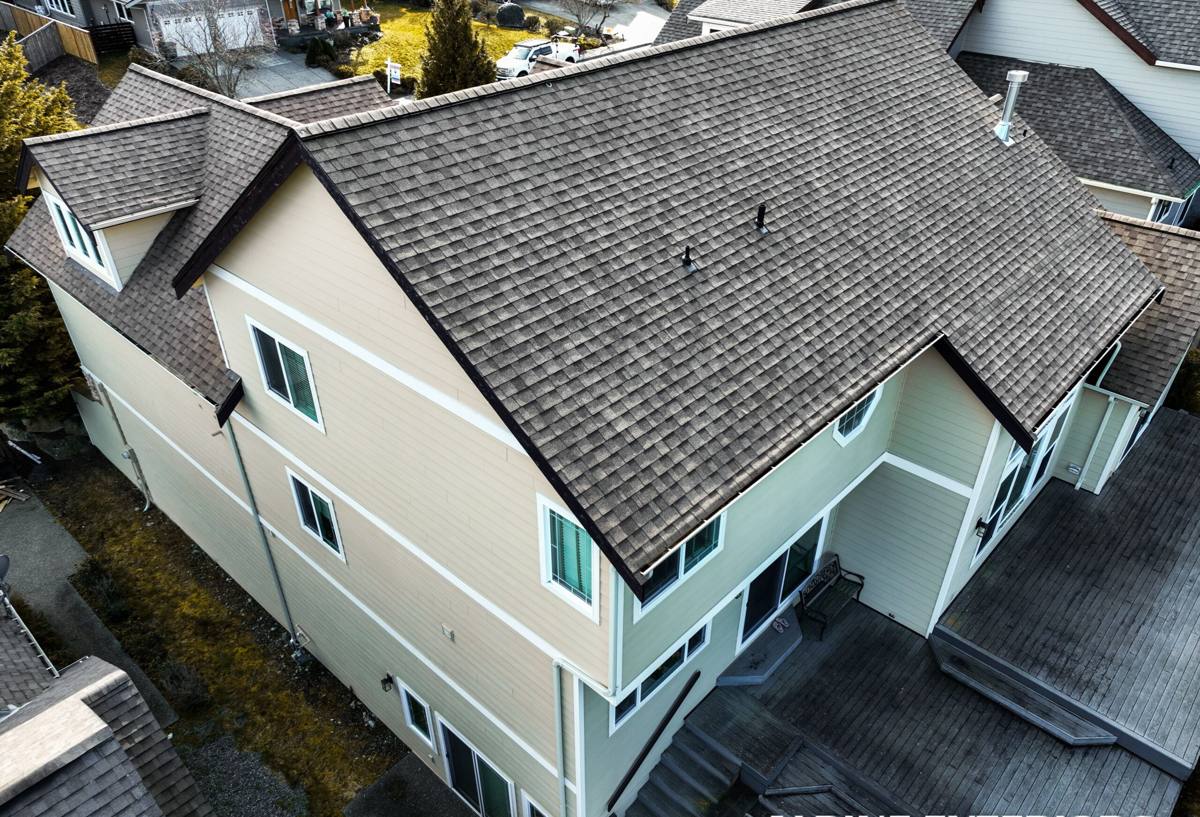
What Everson Homes Actually Need From a Deck
Before we talk product, it's worth being honest about what the local climate demands. This isn't a generic "decks get wet" pitch — it's specific to what happens here:
- Extended moisture exposure. Long stretches of rain mean a deck surface and substructure that stay damp for days at a time, not hours.
- Moss and algae pressure. Shaded yards, tree cover, and consistently damp air give moss a long season to establish itself on any surface that doesn't shed water and dry quickly.
- Temperature swings. Whatcom County gets cold snaps and warm spells in the same season, which stresses any material that expands and contracts differently than the fasteners holding it down.
- Ground-level humidity. Many Everson lots have mature trees and less direct sun on part of the yard, which slows drying under and around the deck structure.
None of this means a deck can't work well here — it means the design decisions (ventilation, drainage, board spacing, fastener choice) matter more than they would in a dry climate, and cutting corners on any of them shows up faster.
Why Composite Makes Sense for This Area
Composite decking isn't automatically the right answer everywhere, but for the conditions Everson deals with, it solves the problems that traditional wood decking struggles with most: moisture absorption, splintering, and the ongoing maintenance cycle of staining and sealing that a wet climate makes almost mandatory. Here's how the trade-offs actually break down:
| Factor | Wood Decking | Composite Decking |
|---|---|---|
| Moisture absorption | Absorbs water, prone to swelling/warping in long wet seasons | Minimal absorption, especially capped boards |
| Moss and algae | Textured grain gives moss a place to grip; needs regular cleaning | Smoother, denser surface sheds moisture faster and resists growth better |
| Maintenance cycle | Sanding, staining, or sealing every 1-3 years in this climate | Periodic washing; no staining or sealing required |
| Upfront cost | Lower material cost | Higher material cost |
| Long-term cost | Ongoing labor and materials for upkeep | Lower lifetime maintenance cost |
| Fastening sensitivity | More forgiving of minor installation error | Requires correct clip spacing and gapping for the product to perform as designed |
The honest trade-off: composite costs more upfront, and it has to be installed correctly — gapping, fastening, and ventilation all matter more with composite than with wood, because the manufacturer's warranty depends on it. That's the part a lot of installs get wrong, and it's where a deck either performs for decades or starts causing problems in year three.
What a Correct Composite Deck Installation Actually Involves
A composite deck is only as good as the structure underneath it and the details most homeowners never see. In a climate like Whatcom County's, these details are not optional extras — they're the difference between a deck that sheds water and one that traps it.
Framing and Ventilation
Joists need to be spaced correctly for the specific composite product being used — composite often requires tighter joist spacing than wood decking does, especially on angled or picture-frame layouts. Airflow underneath the deck matters just as much; a low-clearance deck with no ventilation traps humid air against the framing year-round, which is exactly the condition that leads to hidden rot in the substructure even when the surface boards look fine.
Fasteners and Board Gapping
Hidden fastener clip systems are the standard for a clean composite finish, but they have to be spaced to the manufacturer's specification — not stretched to save material. Board gapping has to account for both drainage and the material's expansion and contraction across our temperature swings. Too tight, and boards can buckle in a warm spell; too loose, and debris and moisture collect in the gaps.
Drainage at Ground Level and Ledger Connections
Where a deck attaches to the house, proper flashing keeps water from working its way behind siding or into the rim joist — this is one of the most common failure points on any deck, wood or composite, and it's a roofing-adjacent detail we take seriously because it's the same principle as flashing a roof-to-wall transition. At ground level, grading and gravel or drainage strategy under the deck keeps standing water from sitting against posts and footings through the wet months.
Post Bases and Footings
Footings need to be set below frost depth and posts need proper base connectors that keep the post end off standing water. This is a detail that's easy to skip and hard to inspect once the deck is finished — which is exactly why it needs to be done right the first time.
Our Process, Start to Finish
We keep the process straightforward and give you visibility at each stage:
- On-site assessment. We look at your existing structure (if replacing a deck), grading, drainage, sun exposure, and how the space connects to your house before recommending anything.
- Product and layout discussion. We walk through composite board options, colors, and layout with you, including where board direction and picture-framing make sense for your space.
- Written estimate. You get a clear scope of work and price before anything is scheduled — no surprises added mid-project.
- Demo and structural prep. Old decking removed if applicable, framing inspected and corrected or built new to current code and the composite manufacturer's spec.
- Installation. Framing, ventilation, flashing at the ledger, and composite board installation with correct fastening and gapping.
- Final walkthrough. We go over the finished deck with you, including basic care guidance specific to our climate.
Cost Factors for a Composite Deck in Everson
Every deck is priced on its own specifics, but the factors that move the number the most are consistent from project to project:
| Factor | Why It Affects Cost |
|---|---|
| Deck size and shape | More square footage and complex angles (picture-framing, curves) mean more material and labor |
| Height off the ground | Taller decks need more substantial framing, stairs, and railing |
| Composite product tier | Capped composite and premium color/texture lines cost more than base-tier boards |
| Existing structure condition | Reusing sound framing costs less than a full tear-out and rebuild |
| Site access | Difficult access for material delivery or equipment adds labor time |
| Railing and lighting | Composite or metal railing systems and integrated lighting are priced separately from decking |
As a broad range, most composite deck projects land somewhere between a mid-size deck replacement and a larger, fully custom build — the only way to get a real number is a site visit, since ground conditions and existing structure vary so much house to house in this area.
Maintenance Reality: What Composite Still Needs
Composite is genuinely lower-maintenance than wood, but "low-maintenance" doesn't mean "no maintenance," especially with our moss season. Here's what actually keeps a composite deck performing well long-term:
- Sweep or rinse off leaves, needles, and organic debris regularly, especially in fall — trapped organic material is what feeds moss and staining.
- Wash the deck surface with soap and water (or a manufacturer-approved cleaner) once or twice a year to clear early moss and mildew before it sets in.
- Keep gutters and downspouts near the deck clear so overflow isn't dumping directly onto or under the decking.
- Check that gaps between boards stay clear of debris so water keeps draining through as designed.
- Trim back overhanging branches and vegetation that keep sections of the deck shaded and damp longer than the rest.
- Inspect railing posts and stair connections annually for movement, since these take the most structural stress over time.
Why a Crew That Already Works Everson Matters
A deck built for a dry-climate spec sheet doesn't automatically hold up here. Knowing how deep to set footings for our frost patterns, how much ventilation a low-clearance deck actually needs given our humidity, and how to flash a ledger board so it doesn't become a hidden water path into the house — that comes from building decks in this specific area, not from a generic install manual. It also means knowing what permitting and inspection expectations look like locally, so the project doesn't stall waiting on paperwork nobody planned for.
We're a roofing and exterior contractor first, which means we think about water the way a roofer does — where it's going, what it touches on the way, and what happens if it doesn't drain the way it's supposed to. That mindset carries directly into how we frame, flash, and finish a deck.
Get a Straight Answer on Your Deck Project
If you're planning a new composite deck or replacing a tired wood deck in Everson, we're happy to take a look and give you an honest read on what your project needs — no pressure, no upsell. Use the form below to request a free estimate and we'll get back to you to schedule a time that works.