 Ferndale Roofing
 Deck Repair on Lummi Island: A Different Kind of Wear
Lummi Island sits out in Whatcom County waters, reachable only by a passenger and vehicle ferry, and that isolation shapes more than the commute — it shapes how decks on the island age. A deck built to a generic spec, with generic hardware, tends to show its weaknesses here faster than the same deck would twenty minutes inland. Salt-laden marine air, wind-driven rain coming off open water, and a moss season that barely lets up put real, sustained stress on the connections, fasteners, and framing that hold a deck together. This page covers what that means for deck repair specifically on Lummi Island — what to look for, what a correct repair actually involves, and why the logistics of an island job are different enough that they change how the work should be planned.
This is written as general guidance for island homeowners, not a diagnosis of any specific deck. Every structure is different, and the only way to know what a particular deck actually needs is a hands-on inspection.
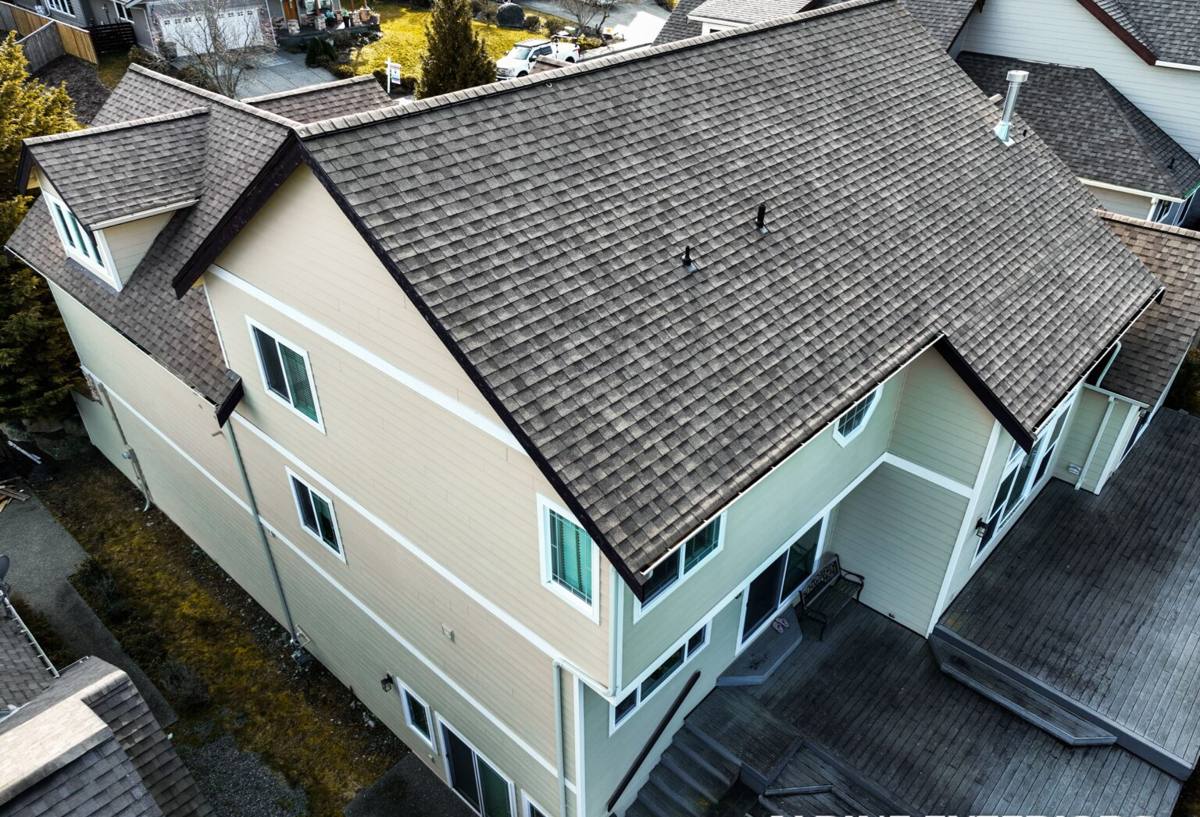
What the Marine Climate Does to a Deck
A deck is mostly connections — ledger to house, joists to ledger and beams, posts to footings, decking to joists, railings to posts. Every one of those connections relies on fasteners and hardware, and on an island exposed to open water, that hardware takes a harder beating than it would on a sheltered inland lot.
Salt Air and Fasteners
Salt-laden air moving off the water accelerates corrosion in fasteners, joist hangers, and other structural hardware. Standard galvanized fasteners that hold up fine inland can start showing rust and pitting years sooner this close to salt water, and a corroding fastener doesn't announce itself — it just gets weaker at the exact connections that carry the deck's structural load. This is the single biggest reason we spec fastener and hardware grade differently on island jobs than we would elsewhere.
Wind-Driven Rain and the Ledger Connection
Open water means open wind, and wind pushes rain sideways and even upward into gaps that a straight-down rainfall would never reach. The ledger board — the framing member that bolts the deck directly to the house — is the connection most exposed to this, because it sits at the seam between two structures. If the flashing behind the ledger isn't detailed correctly, wind-driven rain works its way behind it and into the house's rim joist and wall framing, which is a much bigger and more expensive problem than a worn deck board.
A Moss Season That Doesn't Really End
Shaded, north-facing, or tree-covered decks on Lummi Island can stay damp for most of the year, and that dampness is exactly what moss and mildew need to establish. Moss on a deck surface isn't just cosmetic — it holds moisture against the wood or composite surface long after the rain has stopped, and on wood decking, that sustained moisture is what turns a surface problem into rot.
Signs Your Deck Needs Repair, Not Just Cleaning
Some deck problems are obvious. Others are quiet until they aren't. A few things worth checking, or having a contractor check, before assuming a deck is fine:
- Soft or spongy spots underfoot, especially near the house or along the outer edge
- Rust streaks below joist hangers, bolts, or other visible hardware
- Gaps, staining, or soft wood at the ledger board where the deck meets the house
- Railings or posts that flex or move more than they should when pushed
- Persistent moss or dark staining that comes back quickly after cleaning
- Nails backing out or fasteners that spin freely instead of holding tight
- Visible daylight or gapping between decking boards that has gotten noticeably wider over time
- A musty smell coming from underneath the deck, which often means moisture is trapped below the surface
Any one of these on its own might be minor. Several together, especially near the ledger or support posts, usually means it's worth a real inspection rather than another round of pressure washing.
Repair or Rebuild? How to Tell the Difference
Not every aging deck needs to come down. The honest answer depends on where the damage is and how far it has spread, and it's a question worth asking a contractor directly rather than assuming the worst — or assuming a patch will hold.
| What We Find | Repair Is Usually Enough | Rebuild Is Usually Needed |
|---|---|---|
| Decking boards | A handful of boards are cupped, splintering, or rotted; the rest are sound | Most boards show the same age-related wear across the whole deck |
| Ledger board | Isolated staining with sound wood underneath once opened up | Soft, spongy, or rotted wood at the ledger-to-house connection |
| Framing and joists | Damage is limited to one or two joists near a known leak point | Multiple joists show rot, or the framing was undersized to begin with |
| Posts and footings | Posts are sound but hardware or bracing needs updating | Footings have shifted, settled, or were never poured to current code depth |
| Railings | Balusters or a rail section need replacement to meet code spacing | The whole railing system is undersized or wasn't built to code originally |
The pattern in that table matters more than any single item: isolated, localized damage is usually a repair; widespread damage, or damage at a structural connection like the ledger or footings, usually points toward a rebuild. We'll open up suspect areas and show you what we find before recommending either path.
What a Correct Deck Repair Actually Involves
A deck repair that actually holds up on Lummi Island isn't just swapping bad boards for new ones. It's a sequence, and skipping steps is how a repair ends up needing to be redone in a few years.
- Full structural inspection — checking the ledger connection, joists, beams, posts, and footings before touching any surface decking, since surface wear is often a symptom of a problem underneath.
- Ledger flashing correction — if the ledger board's flashing isn't properly lapped with the house's water-resistive barrier, that gets corrected as part of the repair, not left as-is.
- Hardware and fastener upgrade — replacing corroded or undersized hangers, bolts, and fasteners with grades suited to marine exposure, not just matching what was there before.
- Framing repair — sistering or replacing any joists or beams showing rot or damage, sized to current structural requirements.
- Decking replacement — matching board spacing and fastening pattern so new sections tie in cleanly with sound existing decking.
- Railing and guard inspection — confirming height, baluster spacing, and post attachment meet current code, since older decks were often built to looser standards.
Whatcom County requires permits for most deck construction and structural repair work, and a legitimate contractor will pull them rather than treat that as optional paperwork.
Wood, Composite, or a Mix: What Makes Sense Here
Homeowners often ask whether to repair with the same wood decking or switch to composite when boards need replacing. Both have a place, and the honest answer depends on what you're solving for.
Wood decking — typically pressure-treated lumber or cedar — costs less upfront and is easy to match into existing wood-framed decks, but it needs regular sealing or staining to hold up against this island's rain and moss exposure, and skipped maintenance shows up fast as graying, splintering, and eventually rot. Composite decking costs more per board but doesn't need staining, resists moisture absorption far better than wood, and holds up to moss and mildew with far less maintenance — which matters on an island where a maintenance trip isn't a quick errand. The trade-off is composite can run hotter underfoot in direct sun, and like any manufactured product, quality and warranty structure vary by brand and product line. For a full deck surface replacement, we'll walk you through both honestly rather than steering you toward whichever is easier for us to install.
Getting a Crew and Materials to an Island Job
Every project on Lummi Island runs on ferry logistics whether anyone plans for it or not. Materials, tools, and crew all have to cross on a schedule that isn't ours to control, which means an island deck repair gets planned differently than a mainland one from day one.
In practice that means ordering and staging materials ahead of the crew's arrival instead of running back and forth for a forgotten item, building a work schedule around ferry sailing times rather than assuming a crew can simply show up early or stay late, and grouping tasks so a trip to the island is used efficiently rather than repeated more than necessary. None of that is complicated, but it has to be planned for — a crew that hasn't worked the island before tends to learn this the hard way, on the homeowner's timeline.
Why Hiring a Crew That Already Works Lummi Island Matters
A contractor who already does regular work on the island has already solved the logistics problem, already knows how to schedule around the ferry, and — just as important — already knows what island exposure actually does to a deck versus what a textbook says it should do. That's not a small thing when you're trying to compare bids or figure out whether a quoted repair scope is actually complete.
It's worth asking directly: how often does this contractor work on Lummi Island, and can they speak specifically to how they handle ledger flashing, fastener grade, and moss exposure for a deck out here, rather than giving a generic answer that could apply anywhere in Whatcom County. A vague answer on those points is worth treating as a red flag before you commit.
Keeping a Repaired Deck Sound After We Leave
A correct repair buys you years, but a few simple habits stretch that further, especially given how long the moss season runs here.
- Clean moss and debris out of the gaps between boards a couple of times a year, especially on shaded sections
- Keep gutters and downspouts near the deck clear so water isn't dumping directly onto or under it
- Reseal or restain wood decking on the schedule the product actually requires, not just when it visibly needs it
- Walk the deck once or twice a year and check for soft spots, loose railings, or rust streaks below hardware
- Keep vegetation trimmed back from the deck surface and the area underneath to reduce shade and trapped moisture
If you own a home on Lummi Island and want a straightforward look at your deck's condition, we're happy to come take a look and give you a free, no-pressure estimate for whatever repair the deck actually needs.