 Ferndale Roofing
 Building a Deck That Actually Holds Up in Birch Bay
Birch Bay sits right on the water, and that changes what a deck needs to survive. A deck built the same way you'd build one twenty miles inland, away from the salt air and wind off the Salish Sea, will show its age faster here — soft spots in the decking, rusted fastener heads bleeding rust streaks, railings that wobble sooner than they should. We build decks for this stretch of Whatcom County specifically, which means choosing materials and hardware with the coastal exposure in mind from the first conversation, not adding fixes after the fact.
This page covers what a custom deck project looks like for a home in Birch Bay: the material trade-offs, the parts of the structure that matter most in salt air and heavy rain, how we approach the build, and what to expect from a contractor who already knows this area.
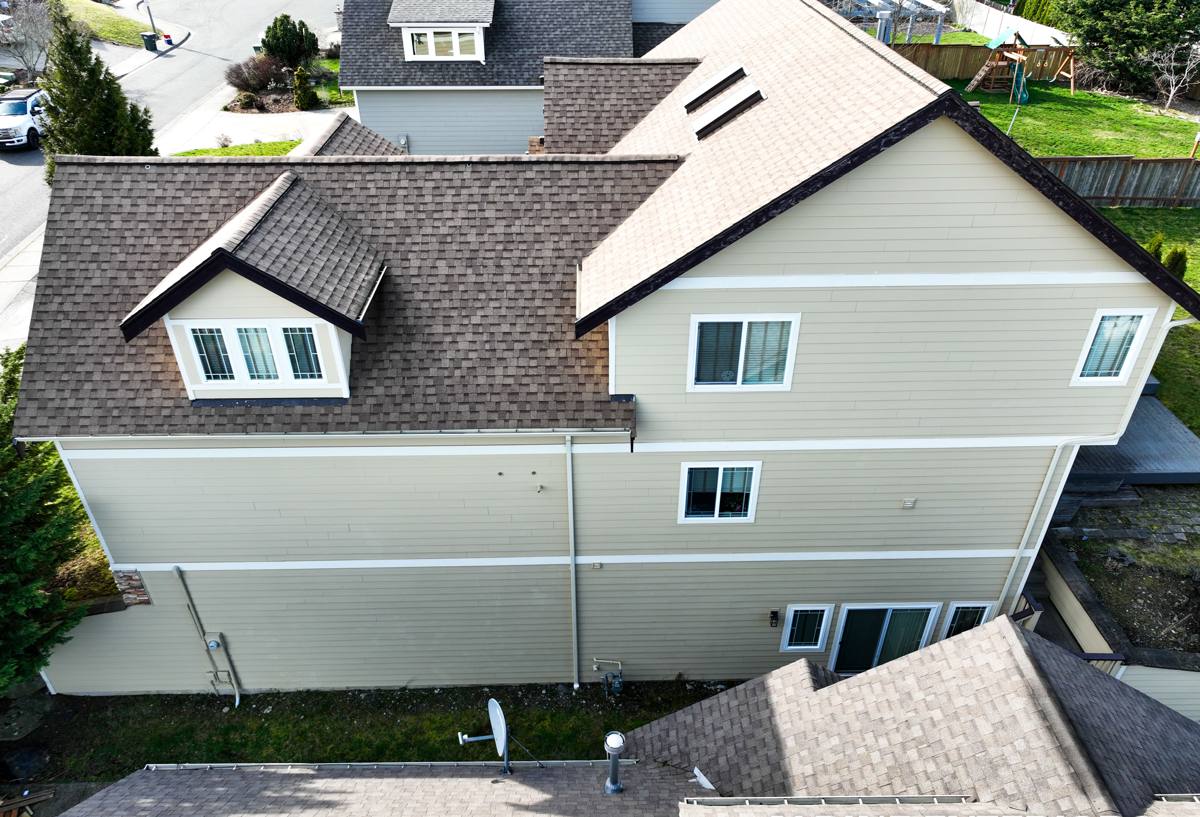
What Salt Air, Driving Rain, and Moss Season Do to a Deck
Three things wear on a Birch Bay deck harder than they would on a deck ten or fifteen miles inland:
- Salt-laden air speeds up corrosion on any exposed metal — fastener heads, joist hangers, railing brackets, hinges. Standard coated screws that hold up fine elsewhere can start rusting and staining the decking around them within a few seasons here.
- Driving, wind-blown rain doesn't just fall straight down near the water — it gets pushed sideways into ledger boards, under railing caps, and into any seam that isn't properly flashed or sealed. Water finds the gaps a calm-weather deck design would never expose.
- A long moss and mildew season means anything that stays damp and shaded — the underside of boards, tight-spaced decking, north-facing stair stringers — grows a slick green film that's both a maintenance headache and a slip hazard.
None of this means a deck can't hold up here. It means the framing, fastener choices, and drainage details need to account for it from the design stage, not get patched after the first winter.
Decking Material Options for This Climate
There's no single "right" decking material for every home — it depends on budget, how much upkeep you want to do, and how close to the water you are. Here's how the common options compare for Birch Bay conditions specifically:
| Material | Salt Air / Moisture Behavior | Maintenance | Notes for This Area |
|---|---|---|---|
| Pressure-treated lumber | Resists rot when properly treated, but surface checking and splintering happen faster in salt air and freeze-thaw cycles | Needs regular sealing/staining — more often here than inland | Lowest upfront cost; best for owners willing to stay on top of maintenance |
| Cedar | Naturally rot- and insect-resistant, but UV and salt exposure gray and dry it out faster near the water | Periodic oiling or sealing to keep it from drying and cracking | Good look for the coastal setting; needs more attention than composite |
| Composite decking | Doesn't absorb moisture like wood, resists staining from salt residue | Occasional washing to keep moss and mildew film from building up in shaded spots | Higher upfront cost, lowest long-term upkeep — a common choice for waterfront and near-waterfront homes |
| PVC / capped polymer | Fully moisture-sealed, no wood fibers to absorb salt spray or rain | Lowest maintenance of the group; still needs occasional cleaning | Best moisture performance of the common options, priced accordingly |
We'll walk through these trade-offs against your actual budget and how you plan to use the deck — a lot of it comes down to how much time you want to spend maintaining it versus paying more up front.
What's Underneath Matters More Than What's On Top
Framing and Fasteners
The decking boards are what you see, but the framing and hardware underneath are what determine whether the deck is still solid in ten years. In a salt-air environment, we treat fastener and connector selection as a structural decision, not a finishing detail — stainless steel or heavily coated, corrosion-rated fasteners and joist hangers cost more than standard hardware, but standard hardware is exactly what shows up rusted and streaking a Birch Bay deck within a few years.
Ledger Board Flashing
Where a deck attaches to the house is the single most common source of hidden rot on any deck, anywhere. In a climate with driving rain, that ledger connection needs proper flashing — not just caulk — to keep water from working its way behind the board and into the rim joist or sheathing. This is the kind of detail that's invisible when a deck is new and expensive to fix once it's not.
Board Spacing and Airflow
Tight-spaced boards look clean when a deck is brand new, but they trap moisture and debris that feeds moss growth underneath. Proper gapping and adequate airflow under the deck structure — not just at the edges — helps boards dry out between rains instead of staying damp through the shoulder seasons, which is when moss gets its foothold.
Footings and Structural Support
Whatcom County's coastal soil holds moisture longer than sandy or well-drained inland lots, which affects how footings are set and how deep they need to go to reach stable, frost-safe ground. We size and place footings based on the actual soil and drainage conditions on your lot rather than a one-size-fits-all spacing, and we build in proper drainage around footings so standing water isn't sitting against concrete and posts through the wet months.
Railings, Stairs, and Finish Details
Railings and stair components take a lot of direct weather exposure and a lot of hand contact, so we pay attention to a few things that matter more here than they would in a drier climate:
- Railing post connections use corrosion-resistant hardware, since these joints see constant flexing and moisture
- Cap rails are detailed to shed water off the top rather than pooling on a flat surface
- Stair treads get material and surface choices that stay gripable when wet or mossy, not just when dry
- Fascia boards are chosen and fastened to resist the same salt exposure as the decking itself
How We Approach a Custom Deck Project
Every deck we build starts with actually looking at your property, not just measuring a rectangle. That includes the direction the deck faces, how exposed it is to wind off the water, where water naturally drains on your lot, and how the deck will tie into your house's siding and roofline.
- On-site walkthrough — we look at sun/wind exposure, drainage, and how the deck should connect to the house before talking materials
- Material and design conversation — honest trade-offs between wood, composite, and PVC based on your budget and how much maintenance you want to take on
- Written estimate — clear about materials, hardware, and scope so there are no surprise substitutions mid-project
- Permitting — we handle what's required for the project so you're not chasing paperwork with the county
- Build — framing and flashing done right first, since that's the part you won't see again once decking goes down
- Final walkthrough — going over the finished deck and what upkeep it actually needs for this climate
Why Hiring a Crew That Already Works Birch Bay Matters
A lot of deck problems in this area aren't caused by bad workmanship in a general sense — they're caused by a build that would've been fine in a drier, calmer climate but wasn't built for salt air, driving rain, and a long damp season. A crew that regularly works Birch Bay and the surrounding Whatcom County coastline already knows which fastener grades hold up, which ledger flashing details actually keep water out in a wind-driven rain, and how footings behave in this soil through a wet winter. That's the difference between a deck that needs re-fastening and board replacement in a handful of years and one that just needs normal upkeep.
Keeping a Birch Bay Deck in Good Shape
Even a well-built deck needs some seasonal attention in this climate. A simple maintenance routine goes a long way:
- Sweep debris off the decking regularly, especially in fall — trapped leaves and needles hold moisture against the boards
- Rinse off salt residue and grime periodically, particularly on composite or PVC decking near the water
- Check for early moss growth in shaded or low-airflow spots and clean it off before it spreads and gets slick
- Inspect fastener heads and railing connections yearly for early rust staining or looseness
- Re-seal or re-stain wood decking on a regular schedule — don't wait until it's visibly gray and dry
- Confirm gaps between boards and under-deck airflow paths aren't blocked by planters, storage, or debris buildup
If you're planning a new deck or replacing one that hasn't held up to the Birch Bay weather, we're happy to take a look and put together a free, no-pressure estimate. Use the form below to get started.