 Ferndale Roofing
 Why Birch Bay Homes Wear Out Their Siding Faster
Birch Bay sits right on the water in Whatcom County, and that changes what siding has to survive here compared to a home a few miles inland. Homes along and near the shoreline take on marine air carrying salt, which is corrosive to metal fasteners and trim and slowly breaks down paint films and weaker siding materials over time. Add in wind-driven rain coming straight off the water during winter storms, and siding here has to shed moisture at angles that a standard install detail doesn't always plan for.
Then there's the shade. Birch Bay's mix of mature evergreen tree cover and marine humidity creates a long moss and algae season — longer than you'll see on drier, sunnier sites elsewhere in the county. Moss holds moisture against the siding surface for weeks at a time, which is exactly the condition that rots wood-based products and lifts paint on lower-grade materials. None of this means Birch Bay homes need something exotic. It means they need siding installed correctly, in a material that's actually engineered to hold up to salt, rain, and sustained damp shade — not siding that looks fine on a dry day in a showroom.
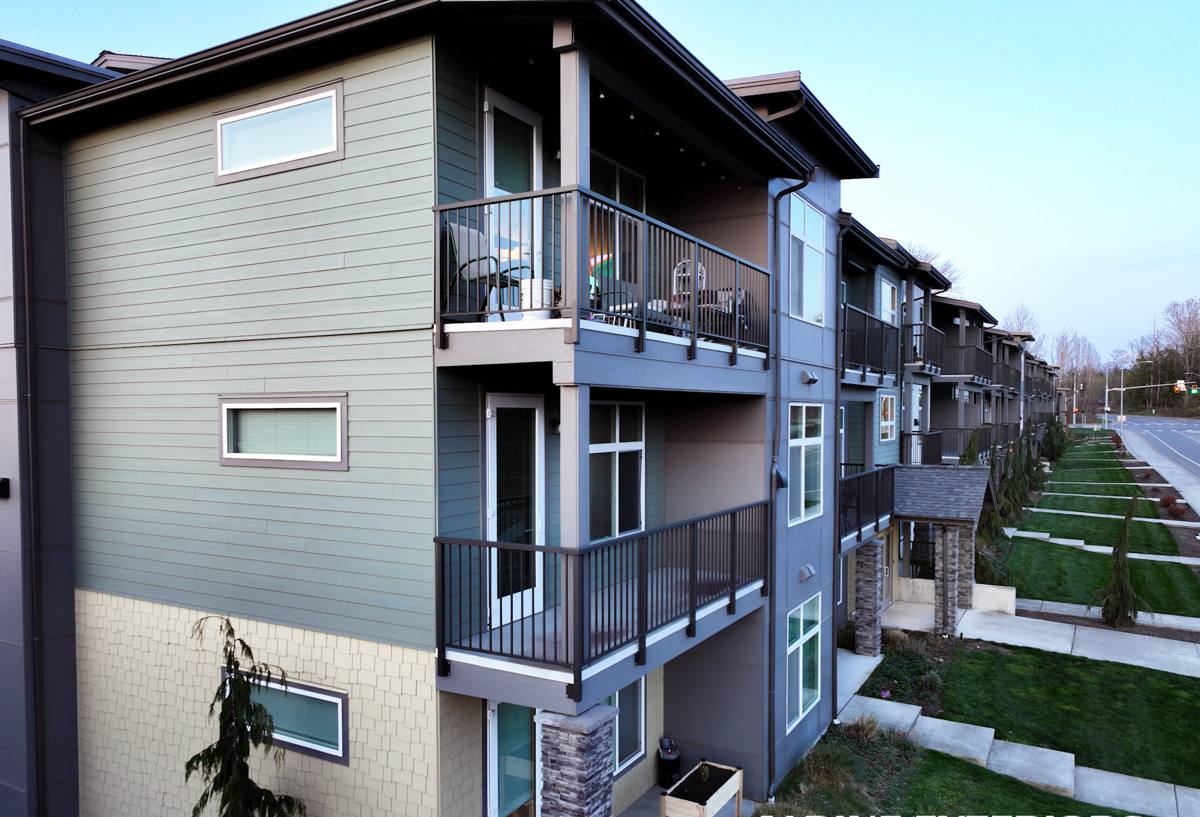
Signs a Birch Bay Home Needs Siding Replacement, Not Just Repair
Not every siding problem means a full tear-off. But in a marine, moss-prone environment, some symptoms mean the material itself is failing rather than just needing a touch-up. Worth a closer look if you're seeing:
- Soft, spongy, or crumbling spots when you press on the siding, especially near the bottom courses and around windows
- Persistent moss or dark streaking that comes back within a season or two of cleaning
- Paint that's peeling, bubbling, or chalking heavily rather than just fading
- Visible gaps, warping, or cupping in individual boards or panels
- Rust staining running down from nail heads or trim fasteners — a common sign of corrosion in salt-exposed areas
- Rising interior humidity, musty smells, or drafts near exterior walls, which can point to moisture already getting behind the siding
If you're only seeing one or two of these on isolated boards, spot repair may still make sense. Widespread moss return, soft wood, or fastener rust across multiple wall sections usually means the siding system itself — not just the surface — has reached the end of its useful life.
Why We Only Install James Hardie Fiber Cement Here
Ferndale Roofing Co installs one siding system: James Hardie fiber cement. We made that call specifically because of environments like Birch Bay, not in spite of them. Fiber cement is non-combustible and dimensionally stable — it doesn't swell, rot, or delaminate the way wood-based or wood-adjacent products can when they stay damp under moss and shade for weeks at a stretch. That matters more here than in drier parts of the county.
Built for This Climate Zone Specifically
James Hardie engineers its products by climate zone, and Whatcom County falls in the HZ5 zone — built around the freeze-thaw and moisture cycling common to the Pacific Northwest, rather than a one-size-fits-all national spec. That's a meaningful difference from siding products that use the same formulation everywhere they're sold.
A Factory Finish That Doesn't Rely on a Field Paint Job
James Hardie's ColorPlus Technology bakes the color finish onto the board at the factory, under controlled conditions, rather than relying on paint applied on site after installation. In a salt-air, high-moisture environment like Birch Bay, that factory-cured finish holds color and resists fading, chalking, and moisture-related paint failure noticeably better than field-applied coatings on lower-grade siding — and it comes with its own finish warranty.
We won't install vinyl, LP SmartSide, primed spruce, cedar, or other fiber cement brands like Cemplank or Allura. Each of those has legitimate uses somewhere, but for the maintenance burden, moisture behavior, or long-term warranty trade-offs they carry, we don't think they're the right call for a home exposed to Birch Bay's combination of salt, wind-driven rain, and sustained shade. James Hardie is what we stand behind and what we put our name on.
What a Correct Siding Replacement Involves
Siding failure is rarely just about the surface material — it's usually about what's happening underneath it. A proper replacement addresses the whole wall assembly, not just the visible boards.
| Step | Why It Matters in Birch Bay |
|---|---|
| Full tear-off and sheathing inspection | Reveals hidden rot or water damage from years of moss and moisture trapped behind old siding — common on shaded, water-facing walls |
| Weather-resistive barrier replacement | Wind-driven rain off the water finds gaps in an old or damaged barrier; a fresh, correctly lapped barrier is the real waterproofing layer |
| Flashing at windows, doors, and penetrations | Most siding leaks start at flashing failures, not the field of the wall — critical where storms drive rain sideways |
| Correct fastening per Hardie spec | Under- or over-driven fasteners and the wrong nail type shorten lifespan and void warranty coverage |
| Proper clearances and gaps | Gaps at trim, foundation, and butt joints let the assembly drain and dry instead of holding moisture against the board |
| ColorPlus-matched trim and caulking | Consistent finish and sealant at joints prevents early water intrusion points |
Skipping any one of these steps is how a siding job looks fine for a year or two and then fails early — usually right where moisture had a way in that nobody addressed.
How Our Process Works
We walk every Birch Bay home in person before quoting anything. That means checking which walls face the water and prevailing wind, where moss and shade have already done damage, and where the old siding and flashing are likely to have failed. From there:
- On-site assessment — we inspect existing siding, trim, and sheathing condition, and flag any areas we expect to find rot once tear-off starts
- Written estimate — a clear scope covering material, tear-off, sheathing repair allowances, flashing, and finish details, no vague allowances
- Tear-off and sheathing repair — old siding removed, damaged sheathing replaced before anything new goes up
- Weather barrier and flashing installation — the layer that actually keeps water out, done to spec before siding goes on
- James Hardie installation — fastened, gapped, and finished per manufacturer spec so the warranty stays valid
- Final walkthrough — we go over the finished work with you before calling the job done
What Affects Siding Replacement Cost in Birch Bay
We don't quote siding jobs off a phone call because the honest cost drivers vary a lot from house to house. The factors that actually move the number:
| Factor | Why It Matters |
|---|---|
| Home size and number of stories | More square footage and taller walls mean more material and labor, plus added equipment for access on multi-story homes |
| Condition of existing sheathing | Rot found during tear-off — more likely on shaded, water-facing walls here — adds repair scope you can't fully price until the old siding is off |
| Existing siding type | Some materials come off faster and cleaner than others, affecting tear-off time |
| Trim, color, and board profile choices | Custom trim details and certain ColorPlus colors carry different material costs |
| Site access | Waterfront lots, slopes, and tight setbacks can add setup and staging time |
| Window and penetration count | More flashing detail work around openings adds labor time |
We give real, written numbers after seeing the house — not a broad guess that changes once work starts.
Living With James Hardie Siding in a Marine Environment
Correctly installed James Hardie siding is low-maintenance, but "low-maintenance" doesn't mean "no maintenance" in a salt-air, moss-heavy environment like Birch Bay. A periodic gentle rinse to clear salt residue and organic buildup off the surface — especially on shaded walls — goes a long way toward keeping moss from establishing in the first place. Keeping gutters clear and trimming back vegetation that shades and dampens wall sections helps too. None of this is different from what any siding needs, but it matters more here because the conditions that cause buildup are more constant than they are further inland.
Why Hiring a Crew That Already Works in Birch Bay Matters
Siding crews that mostly work drier, inland jobs sometimes underbuild the moisture details that matter most on a waterfront-exposed home — because they rarely have to deal with wind-driven rain off open water or moss that never fully clears through the winter. A crew that regularly works Birch Bay and the rest of Whatcom County's coastline knows which walls take the worst of the weather, budgets for the sheathing repair that shaded, salt-exposed homes often need, and details flashing and fastening the way a marine environment actually requires — not just to code minimum.
A short checklist worth running through before hiring anyone for a siding project in this area:
- Do they install James Hardie to manufacturer spec, or a mix of materials depending on what's cheapest that week?
- Will they inspect and price sheathing repair as part of the process, not as a surprise change order?
- Can they explain their flashing and weather-barrier approach in plain terms, not just "we'll seal it up"?
- Do they carry proper licensing and insurance for exterior work in Washington?
- Will you get a written scope and estimate before any tear-off begins?
- Have they worked on homes exposed to similar wind and salt conditions before?
If a contractor can't answer those clearly, that's worth knowing before they're on your roofline.
Get a Straight Answer on Your Siding
If your Birch Bay home is showing soft spots, stubborn moss, peeling paint, or rusted fasteners, it's worth having someone look before it gets more expensive to fix. We offer free, no-pressure estimates — we'll walk the house, tell you honestly what we see, and give you real numbers for a James Hardie siding replacement done right for this climate. Use the form below to get started.