 Ferndale Roofing
 Birch Bay Sits at the Rough End of Whatcom County's Weather
Birch Bay catches weather that inland Ferndale doesn't have to deal with in the same way. Being right on the water means homes here take on salt-laden air, wind-driven rain coming straight off the water, and a moss season that runs longer than most homeowners expect in a Pacific Northwest marine climate. Siding that would hold up fine a few miles inland can start showing real wear in Birch Bay years earlier, especially on the sides of a house facing the water or shaded by trees.
That's not a reason to panic about your siding — it's a reason to repair it correctly the first time, with a crew that has actually worked this stretch of coastline and knows what it does to a home over time.
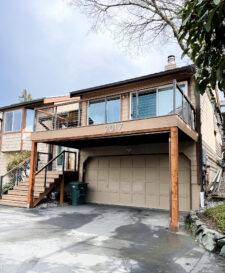
What Salt Air, Driving Rain, and Moss Actually Do to Siding
Salt Air
Airborne salt doesn't just sit on the surface — it settles into seams, around fastener heads, and into any small crack in a finish coat. Over time it accelerates corrosion on exposed fasteners and metal trim, and it can break down paint and caulk faster than the same products would wear in a drier, less salty environment. Homes closer to the water take the brunt of this; homes set back or shielded by trees or terrain see less of it, but rarely none.
Driving Rain
Wind off the water doesn't just drop rain straight down — it drives it sideways, forcing water up under laps and into gaps around vents, hose bibs, light fixtures, and trim that would stay dry in a calmer setting. Once water gets behind the siding, it's often the housewrap, flashing, and sheathing that take the damage, not the visible face of the siding itself. That's why some of the worst siding problems in Birch Bay aren't visible until a repair is already underway.
Moss and Algae
Shaded, damp, north- and east-facing walls are prime territory for moss and algae growth, and Birch Bay's tree cover and marine humidity keep those conditions in place for much of the year. Moss holds moisture directly against the siding surface and inside lap joints, which is a slow but steady way to shorten the life of any material that can absorb water or support organic growth.
Signs Your Birch Bay Home Needs Siding Repair
Most siding damage doesn't show up as one dramatic failure — it shows up as a handful of small signs that are easy to write off individually. Worth checking for:
- Panels that feel soft or spongy when pressed, especially near the bottom of walls or below windows
- Visible cracking, warping, or buckling in individual boards or panels
- Paint that's peeling or bubbling in patches rather than wearing evenly — often a sign of moisture trapped underneath
- Dark streaking, moss, or algae buildup concentrated along laps, corners, and shaded walls
- Gaps opening up at seams, trim boards, or around windows and doors
- Rust stains bleeding through paint at fastener heads
- A musty smell or discoloration on interior walls near an exterior wall — often the first sign of moisture that's already gotten past the siding
Any one of these on its own might be minor. Several together, or any sign paired with interior discoloration, is worth having looked at before the next wet season.
What a Correct Siding Repair Actually Involves
A repair that only addresses what's visible from the outside is a repair that's likely to fail again. Doing it right means treating the visible damage as a symptom and finding the cause before closing anything back up. That typically means:
- Removing the affected siding panels, not just patching over them
- Checking the housewrap and flashing underneath for tears, gaps, or improper laps that let water in
- Inspecting the sheathing behind the siding for soft spots or rot, and repairing or replacing it if needed — patching new siding over damaged sheathing just hides the problem
- Correcting whatever let water in the first place — a missing kick-out flashing, an improperly sealed penetration, a lap that wasn't installed to spec
- Installing new siding that matches the existing material's profile, thickness, and reveal so the repair doesn't stand out or create a new water path
- Fastening with corrosion-resistant hardware appropriate for a coastal environment
- Sealing and finishing to manufacturer specification, including proper caulking at joints and trim
Skip any of those steps and you're likely to be back at the same wall in a few years, except now with hidden damage that's had longer to spread.
Why We Repair Exclusively With James Hardie Fiber Cement
We install and repair with James Hardie fiber cement siding only — not vinyl, not LP SmartSide, not cedar or primed spruce, not other fiber cement brands. That's a deliberate standard, not a lack of options, and it matters even more on a repair than a full install because a repair has to match and perform alongside whatever's already on the wall.
In a climate like Birch Bay's, the case for Hardie comes down to a few specific things:
- It's non-combustible fiber cement, not an organic material moss and algae can feed on the way they can with wood-based siding
- Hardie's HZ5 product line is engineered specifically for regions with significant moisture exposure — which describes Birch Bay well
- The factory-applied ColorPlus finish is baked on under controlled conditions and holds up far longer against sun, salt, and moisture than a field-applied paint job, which is where a lot of siding finishes fail first in a marine climate
- It's dimensionally stable — it doesn't expand, contract, and shift with humidity swings the way wood and some engineered wood products do, so seams and caulk lines stay tighter over time
We're not going to tell you vinyl, wood, or engineered wood siding are junk — they're not, and each has legitimate uses. But vinyl can become brittle and crack with temperature swings and doesn't always take a matching finish well on a patch repair. Cedar and other wood siding need regular refinishing to keep moisture out, and that maintenance burden only grows in a wet, salty climate. Engineered wood products are vulnerable at cut edges and fastener penetrations if the factory seal is compromised, which is a real risk in high-moisture repair work. Those are honest trade-offs, and they're the reason we standardized on Hardie for every siding job we do, repairs included.
Our Process for a Birch Bay Siding Repair
The process doesn't change much from house to house, but the details we're watching for shift based on how exposed a given wall is to salt air, wind, and shade.
1. On-Site Inspection
We look at the visible damage, but also check adjacent siding, trim, and penetrations that often fail together. A moisture meter reading on suspect areas tells us whether we're dealing with a surface issue or something that's already gotten into the wall assembly.
2. Diagnose the Cause
Before we talk repair scope, we want to know why this spot failed — wind exposure, a shaded moss-prone wall, a flashing detail that was never right, or ordinary age. That answer shapes the repair.
3. Written Scope and Estimate
You get a clear explanation of what's being repaired, why, and what it involves — no surprises once the wall is opened up, and if we find something unexpected once panels come off, we tell you before proceeding.
4. Removal and Assessment
Affected panels come off, and we assess the housewrap, flashing, and sheathing underneath before anything new goes back on.
5. Correct the Root Cause
Any failed flashing, gap, or improperly sealed penetration gets fixed as part of the repair, not left for the new siding to fail against again.
6. Install Matching Hardie Material
New siding is installed to match the existing profile and reveal, fastened and flashed to spec, with attention to the specific exposure of that wall.
7. Finish and Color Match
Where a full-panel ColorPlus match isn't possible, we work to get as close a finish match as the situation allows and explain the options up front.
8. Cleanup and Walkthrough
We walk the repair with you, explain what was found and fixed, and leave the site clean.
Repair or Replace? What Actually Decides It
Not every damaged section needs a full re-side, and not every repair is worth doing instead of planning a replacement. The honest answer depends on a few factors:
| Factor | Repair Usually Makes Sense | Replacement Usually Makes Sense |
|---|---|---|
| Extent of damage | Isolated to one or two walls or sections | Widespread across most of the home |
| Age of existing siding | Siding is mid-life and otherwise sound | Siding is at or past its expected service life |
| Moisture behind panels | Contained to the repair area | Found in multiple areas, suggesting a systemic issue |
| Material match | Existing Hardie profile/color still available or close enough | Discontinued profile or heavily faded finish makes matching impractical |
| Homeowner plans | Staying long-term, wants to extend current siding's life | Planning other exterior work or a longer-term hold that favors a full update |
We'll give you a straight answer on which side of that table your home falls on — we don't upsell repairs into replacements, and we don't patch something that should honestly be replaced.
How Siding Materials Actually Hold Up in a Coastal Climate
Since Birch Bay's exposure is more demanding than most Whatcom County settings, it's worth being specific about how different siding materials behave here, not just in general terms.
| Material | Behavior in Salt Air and Moisture | Ongoing Maintenance |
|---|---|---|
| James Hardie fiber cement | Non-combustible, dimensionally stable, engineered HZ5 line for moisture-heavy climates | Low — factory ColorPlus finish holds color and integrity for years |
| Vinyl | Can become brittle with temperature swings; doesn't hold paint well for patch repairs | Low but limited repair and color options over time |
| Cedar / wood | Absorbs moisture, provides an organic surface moss and algae can establish on | High — regular refinishing needed to keep moisture out |
| Engineered wood (e.g. LP SmartSide) | Vulnerable at cut edges and fasteners if factory seal is compromised | Moderate — depends on seal integrity being maintained |
This is exactly why our repair work on Hardie siding stays limited to Hardie — mixing materials on a wall assembly, or patching a different product into a Hardie system, tends to create more long-term problems than it solves.
Why a Crew That Already Works Birch Bay Matters
Birch Bay isn't a generic suburb — it's a shoreline community with a lot of homes that see seasonal or part-time use, plus year-round residences that face more direct salt and wind exposure than homes set back from the water. A crew that already works this area knows the difference between normal weathering for this microclimate and damage that needs attention, and knows which walls on a typical Birch Bay lot take the worst of the weather.
That local familiarity matters in practical ways: knowing to check less-visible walls that catch prevailing wind and rain, understanding that a vacant seasonal property can hide a moisture problem longer before anyone notices it, and using fastening and flashing details that hold up specifically against salt air rather than a generic inland approach. It also means a faster, more accurate assessment the first time we're on site, instead of learning the area's quirks on your dime.
If you're seeing early signs of siding trouble on a Birch Bay home — or just want an honest read on whether a repair or a longer-term plan makes more sense — we're glad to come take a look. Reach out for a free, no-pressure estimate using the form below.