 Ferndale Roofing
 Birch Bay's Shoreline Climate Is Hard on a Roof
Birch Bay sits right on the water in Whatcom County, and that location cuts both ways. The views are part of why people live there, but the same exposure that makes the bay pleasant also puts extra stress on a roof that a home a few miles inland simply doesn't deal with. Salt-laden air, wind-driven rain coming straight off the water, and a long stretch of damp, shaded months that favor moss growth all combine to shorten the life of roofing materials that aren't chosen or installed with that environment in mind.
Salt Air and Corrosion
Homes near the water are exposed to airborne salt that settles on exterior surfaces and accelerates corrosion of unprotected or poorly coated metal. This doesn't mean metal roofing is a bad choice near the bay — it's actually one of the better options available — but it does mean the panel material, coating, and even the fasteners used need to be suited to a marine-influenced environment. Standard-grade materials that hold up fine twenty miles inland can corrode faster here.
Wind-Driven Rain Off the Water
Storms coming off the water tend to drive rain sideways as much as down, which puts real pressure on flashing details, panel laps, and anywhere the roof meets a wall, chimney, or vent. A roof that's watertight in a light, straight-down rain can still leak in a wind-driven event if the underlayment and flashing weren't detailed for that kind of exposure.
The Long Moss Season
Whatcom County's wet season runs long, and shaded or north-facing roof sections in Birch Bay stay damp for months at a stretch. Moss and algae take hold anywhere organic debris and moisture sit undisturbed, and on shingle roofs that growth works its way under the roofing surface over time. Metal roofing doesn't eliminate the moss issue entirely, but it gives moss far less to hold onto than a shingle or shake roof does.
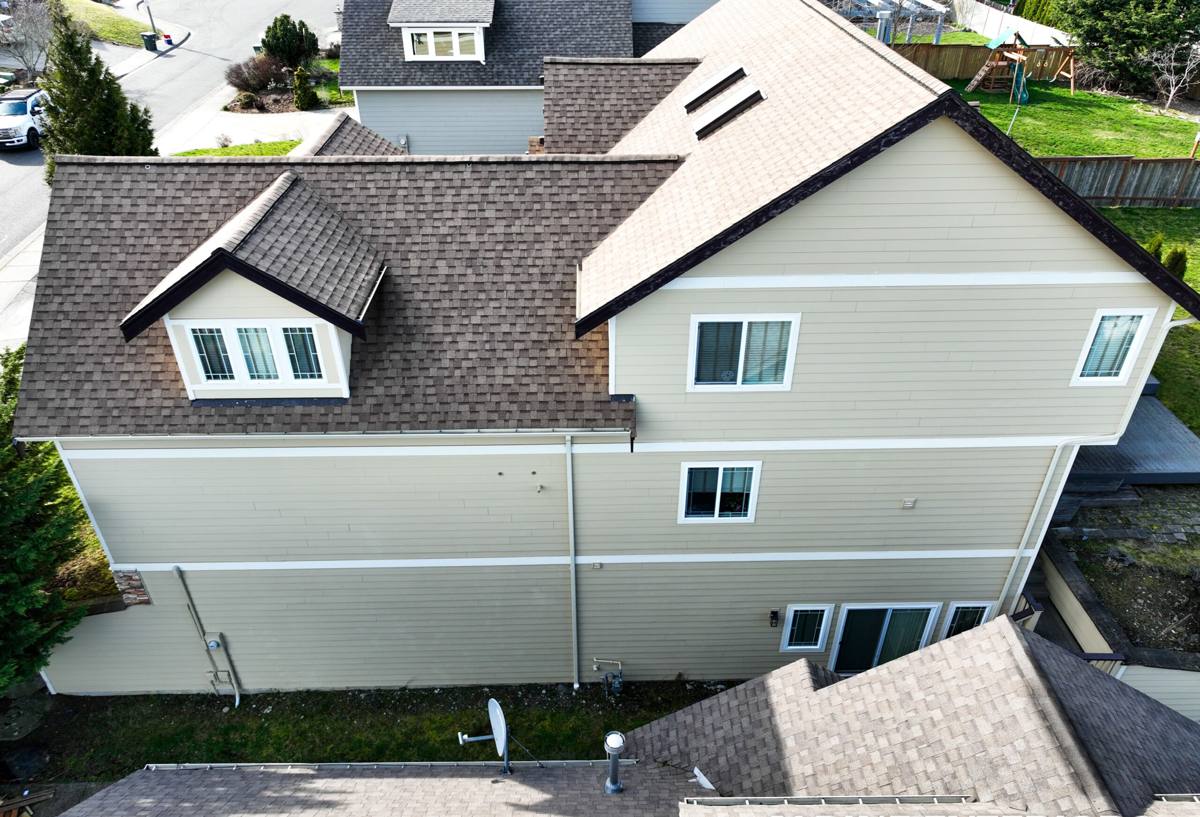
Why Metal Roofing Fits Birch Bay Homes
Metal roofing isn't the right fit for every house or every budget, but for a coastal Whatcom County property, it addresses the specific problems the climate creates. A properly installed standing seam or panel roof sheds wind-driven rain more reliably than a shingle roof because it has far fewer seams and no exposed fastener edges for water to work into. The smooth, hard surface also gives moss and algae much less to grip, which matters given how long the wet season runs here.
Metal roofing also holds up well in wind, which is a real consideration for a home with open water exposure. And because a correctly installed metal roof can last several decades, homeowners avoid the recoat-and-repair cycle that comes with older roofing materials — an appealing trade-off for anyone who doesn't want to be back up on the roof every few years.
What a Correct Metal Roof Installation Actually Involves
Metal roofing has a reputation for being low-maintenance, and it can be — but only if the installation underneath the panels is done right. Most of the problems we get called out to fix on metal roofs aren't failures of the metal itself; they're shortcuts taken during installation that don't show up until the first serious storm.
Underlayment and Water Protection
A quality synthetic or self-adhered underlayment underneath the panels is what actually keeps a home dry if wind-driven rain ever gets past the metal surface at a seam or penetration. Skipping a proper underlayment, or using a lightweight product not rated for the exposure, is one of the most common corners cut on metal roof jobs — and one of the hardest problems to catch after the panels are on.
Fasteners and Flashing for a Salt-Air Environment
In a marine-influenced climate like Birch Bay's, fastener and flashing material matters more than it would inland. Mismatched metals in contact with each other can set up galvanic corrosion over time, and standard fasteners can rust and stain a roof well before the panels themselves show any wear. Flashing at valleys, chimneys, skylights, and wall transitions has to be detailed for wind-driven rain, not just gravity-fed runoff.
Ventilation
A roof deck that can't breathe traps moisture underneath the metal, which leads to condensation problems and premature deck rot — issues that have nothing to do with the panels themselves but get blamed on the roof anyway. Proper ridge and intake ventilation is part of a correct metal roof installation, not an optional extra.
Choosing Panel Type and Finish for a Coastal Home
Not all metal roofing is built the same way, and the right choice for a Birch Bay home depends on budget, roof style, and how close the home sits to the water. Here's a general comparison of the common options:
| Panel Material | Coastal Performance | Typical Trade-Offs |
|---|---|---|
| Steel (Galvalume or similar coated steel) | Good, when properly coated and detailed; the most common choice | Coating quality matters more near salt air; lower cost than aluminum |
| Aluminum | Naturally corrosion-resistant, a strong fit for direct coastal exposure | Higher material cost; softer, so it needs careful handling during install |
| Painted finish (standard baked-on) | Adequate for most applications | Can fade or chalk faster under long-term UV and salt exposure |
| Premium PVDF/high-performance finish | Best long-term color and coating retention near the water | Higher upfront cost, longer-lasting result |
For a home directly exposed to the bay, we generally lean toward better-grade coatings and corrosion-resistant fasteners even if it costs a bit more upfront, because the alternative is dealing with premature rust staining or fastener failure well before the panels themselves are due for replacement.
Our Process for a Birch Bay Metal Roof
Every roof is different, but the general process we follow on Birch Bay homes looks like this:
- On-site assessment of the existing roof, deck condition, ventilation, and specific exposure to wind and water on that lot.
- A written proposal that spells out panel type, coating, underlayment, and flashing details — no vague "metal roof" line item.
- Tear-off and deck inspection, with any soft or damaged decking replaced before anything new goes down.
- Underlayment installation sized for the exposure, followed by flashing at all valleys, penetrations, and wall transitions.
- Panel installation with corrosion-appropriate fasteners and attention to consistent, correctly spaced seams.
- Final walkthrough and cleanup, including magnetic sweep for stray fasteners and debris removal.
Living With a Metal Roof in a Moss-Prone, Salty Climate
A correctly installed metal roof needs far less attention than a shingle roof, but "low-maintenance" isn't the same as "no-maintenance," especially this close to the water. A short annual routine goes a long way toward getting the full lifespan out of the roof:
- Clear debris (needles, leaves, branches) from valleys and around penetrations so it doesn't trap moisture against the panel surface.
- Rinse off salt buildup periodically, especially on roof sections most exposed to wind off the water.
- Check gutters and downspouts are flowing freely, since clogged gutters can back water up under roof edges.
- Look for any signs of scratched or worn coating after storms with blown debris, since exposed base metal is where corrosion starts.
- Have flashing and seams checked periodically rather than waiting for a visible leak, since coastal wind-driven rain finds weak points before homeowners usually notice them.
Cost Factors for a Birch Bay Metal Roof
Metal roofing costs more upfront than asphalt shingles, but the gap narrows when you account for how much longer it lasts and how little maintenance it typically needs. Exact pricing depends on the roof, but the main variables are:
| Factor | Why It Affects Cost |
|---|---|
| Panel material and coating grade | Aluminum and premium coatings cost more than standard coated steel |
| Roof pitch and complexity | Steep or cut-up roofs with multiple valleys and penetrations take more labor and material |
| Tear-off vs. new construction | Removing and disposing of existing roofing adds cost over installing on new decking |
| Deck condition | Rotted or soft decking found during tear-off needs repair before installation continues |
| Fastener and flashing spec | Corrosion-resistant hardware for coastal exposure costs more than standard-grade material |
As a broad guideline, homeowners can expect metal roofing to run higher per square foot than asphalt shingles, with the final number depending heavily on the factors above. We'll always walk through the real numbers for your specific roof rather than quoting off a generic range.
Why a Ferndale Crew That Already Works Birch Bay Matters
Roofing contractors who don't regularly work near the water sometimes treat a Birch Bay job the same as any inland roof — same fasteners, same underlayment spec, same approach. That's where problems start. A crew that already works this stretch of Whatcom County coastline knows to spec corrosion-resistant hardware without being asked, knows which flashing details actually hold up to wind-driven rain off the bay, and can respond quickly if a storm causes damage, instead of adding travel time on top of a repair delay.
Being based in Ferndale also means we're not guessing at permitting or inspection expectations for the area — we handle that as a normal part of the job, not an afterthought. For a roof that's meant to last decades in a demanding coastal environment, that local familiarity is worth as much as the materials themselves.
If you're considering a metal roof for your Birch Bay home, we're happy to take a look and walk you through what your specific roof needs — no pressure, no obligation. Use the form below to request a free estimate.