 Ferndale Roofing
 Building Decks for Birch Bay's Coastal Conditions
Birch Bay sits right on the water in Whatcom County, which means homes here take a different kind of weather beating than houses even a few miles inland. Salt-laden air off the water, wind-driven rain, and a long stretch of the year where everything outside stays damp all add up. A deck built the same way you'd build one in a dry inland yard won't hold up the same way on a Birch Bay lot, and we've seen plenty of decks that were built fine on paper but weren't built for this specific environment.
This page covers what actually matters when you're building or replacing a deck in Birch Bay: the materials that hold up, the framing details that keep water from doing damage you can't see, and what a correct build looks like from the ground up.
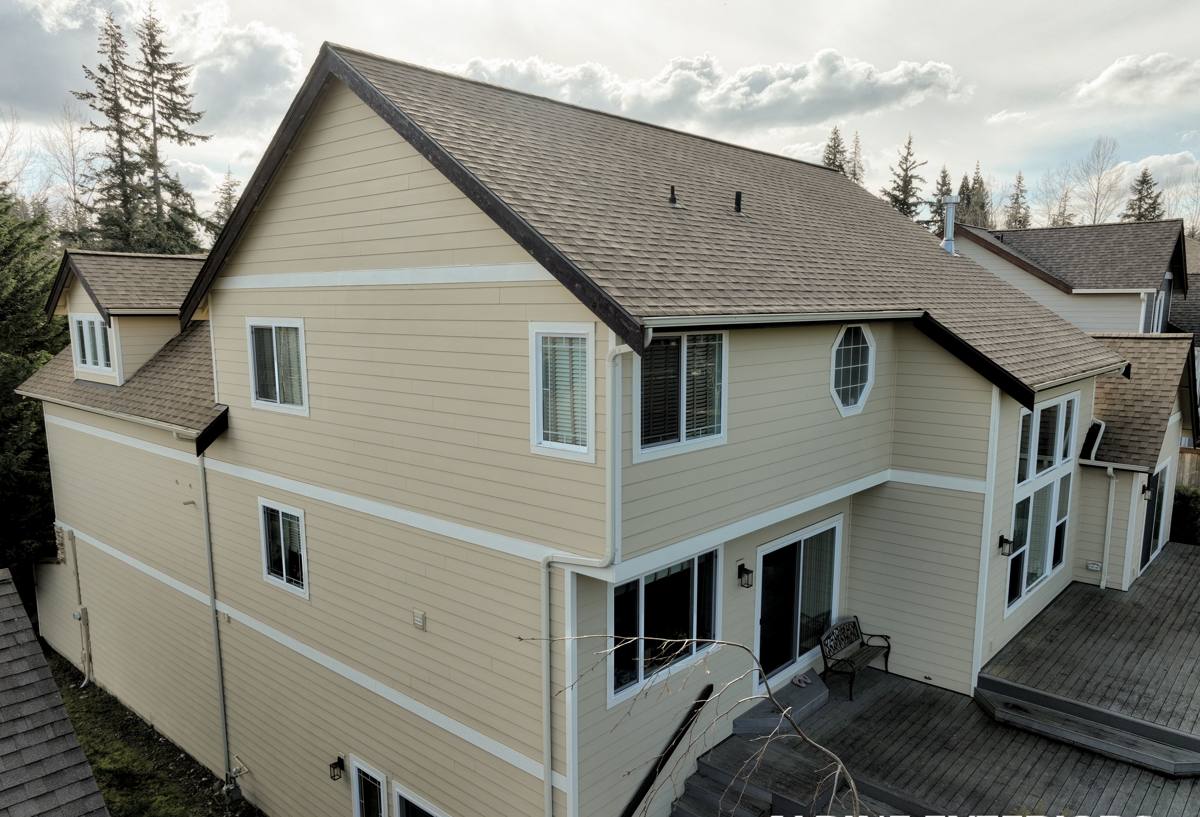
What Salt Air, Rain, and Moss Actually Do to a Deck
Salt Air and Metal Hardware
The biggest issue with coastal air is what it does to fasteners and metal connectors over time. Standard electro-galvanized screws and nails corrode faster near salt water than they do inland, and once a fastener starts rusting, it weakens right where the board relies on it most. We see this show up first at joist hangers, ledger bolts, and screw heads on the decking surface — small, easy-to-miss spots that turn into real structural problems if the wrong hardware went in during the build.
Driving Rain and Water Intrusion
Rain that comes in sideways off the water finds every gap a builder left. Where a deck ties into the house — at the ledger board — is the single most common place we find hidden rot on older Birch Bay decks, because that's where water gets driven up under siding and behind flashing that was never properly lapped or sealed in the first place.
Moss and Prolonged Dampness
Whatcom County's long wet season, combined with shade from surrounding trees on a lot of Birch Bay properties, keeps deck surfaces damp for extended stretches. That's ideal for moss and algae, which hold moisture against the wood, make boards slippery, and accelerate decay in materials that weren't rated for it. Board spacing, airflow underneath the deck, and surface texture all affect how fast moss takes hold — and how easy it is to keep off.
Getting the Framing and Substructure Right
The framing is what nobody sees and what everything else depends on. In a coastal, high-moisture environment, a few details matter more than they would elsewhere:
- Ledger attachment and flashing: the ledger board needs proper through-bolting and a correctly lapped flashing detail so water sheds away from the house rather than behind the siding.
- Post and footing depth: footings need to go below frost depth and bear on undisturbed soil, and any wood in contact with concrete or soil needs a ground-contact rating.
- Joist spacing: tighter joist spacing than the bare minimum reduces board deflection and bounce over time, especially with composite decking, which flexes more than solid wood between supports.
- Airflow underneath: keeping the deck framing high enough off grade, and clear of grading that traps water underneath, cuts down on the standing dampness that feeds rot and moss.
Choosing Decking Material for This Climate
There's no single "best" decking material — there's a best material for your budget, your maintenance tolerance, and how much direct weather and shade your deck actually gets. Here's how the common options compare for a Birch Bay property specifically:
| Material | How it handles salt air & rain | Moss/algae resistance | Maintenance |
|---|---|---|---|
| Pressure-treated wood | Good if properly sealed; fasteners must be rated for treated lumber | Needs regular cleaning and re-sealing to resist moss | Annual cleaning, re-stain/seal every 2-3 years |
| Cedar | Naturally rot-resistant, but surface graying and softening happen faster in salt air | Better than pressure-treated but still needs upkeep | Annual cleaning, periodic oiling or sealing |
| Composite (capped) | Excellent — doesn't absorb moisture the way wood does | Resists moss well, though surface grime still needs washing off | Low — occasional washing, no sealing or staining |
| PVC decking | Excellent — fully synthetic, unaffected by salt or rot | Very good moss resistance | Low — periodic washing only |
Wood costs less to install but more to maintain over the life of the deck; composite and PVC cost more upfront but a lot less in upkeep, which matters more on a property that gets this much rain and shade. We'll walk through the honest trade-offs for your specific site and budget rather than push one product across the board.
Hardware, Fasteners, and Flashing — Where Coastal Decks Actually Fail
Most deck failures we get called out for aren't the decking boards — they're the connections. In a salt-air environment, standard hardware simply isn't built for the exposure. Our standard for Birch Bay builds is to use stainless steel or hot-dip galvanized fasteners and structural connectors rated for coastal or treated-lumber use, not the cheaper coated hardware that's fine inland but corrodes faster here. We also flash every ledger connection properly and use joist tape over the tops of framing members so screw penetrations don't become entry points for water. It costs more in materials than cutting corners does, but it's the difference between a deck that needs hardware replaced in five years and one that doesn't.
Deck Hardware Checklist
- Stainless steel or hot-dip galvanized joist hangers and structural screws — not standard coated hardware
- Through-bolted ledger connection with proper flashing lapped under the siding
- Joist tape over framing to seal screw penetrations
- Ground-contact rated posts and any wood touching concrete or soil
- Fastener spacing and pattern matched to the manufacturer's specs for whichever decking material is used
Railings, Stairs, and Code Requirements
Guardrails, stair geometry, and footing depth aren't optional details — they're code requirements, and Whatcom County inspects new deck construction against the state building code. In general terms, guardrails need to be a minimum height with baluster spacing that keeps a small child from passing through, stair rise and run has to stay within a consistent range, and any deck above a certain height off grade needs guardrails on open sides. Permit requirements depend on the size and height of the deck and whether it's attached to the house, so this is something we confirm for your specific project rather than assume — getting it wrong means redoing work or failing inspection, and we'd rather build it right the first time.
How We Build a Deck, Start to Finish
- Site visit and estimate: we walk the site, look at drainage, sun/shade exposure, and how the deck will tie into the house, and give you a written estimate.
- Material selection: we go over decking, railing, and hardware options against your budget and how much maintenance you actually want to do.
- Permitting: we handle the permit application and coordinate the required inspections with Whatcom County.
- Demolition of old deck (if applicable): old decking, framing, and any compromised ledger material is removed and hauled off.
- Framing: footings, posts, ledger, and joists go in per code, with coastal-rated hardware and flashing throughout.
- Decking, railing, and stairs: surface material and railing system installed per manufacturer spec.
- Final inspection and walkthrough: we confirm the build passes inspection and walk you through basic care for whatever material you chose.
Deck Maintenance Checklist for Birch Bay Homeowners
Whatever material you choose, a little regular upkeep goes a long way in this climate. Here's what we recommend:
- Sweep debris and standing organic matter (leaves, needles) off the deck regularly — it holds moisture and feeds moss
- Wash the surface at least once a year with a deck cleaner appropriate for the material to knock back algae and moss before it takes hold
- Check under the deck periodically for standing water or blocked drainage
- Inspect ledger flashing and visible fasteners annually for rust staining or gaps
- Re-seal or re-stain wood decking on the schedule the product calls for — don't wait until it's visibly gray and dry
- Keep nearby vegetation trimmed back to cut down on shade and moisture buildup on the deck surface
Why Hire a Crew That Already Works in Birch Bay
A lot of deck problems we get called to fix weren't built badly out of laziness — they were built by crews that do good work inland but didn't account for what salt air, driving rain, and a long moss season do differently on a waterfront lot. Knowing to spec stainless hardware instead of standard coated screws, or to flash a ledger for wind-driven rain instead of just vertical runoff, comes from having actually built and repaired decks in this specific environment. We work throughout Ferndale and the surrounding Whatcom County coastline, including Birch Bay, and we build every deck to hold up to what this specific location throws at it, not to a generic inland standard.
If you're planning a new deck or replacing one that's showing its age, we're happy to come take a look and put together a straightforward, no-pressure estimate — just fill out the form below and we'll get in touch.