 Ferndale Roofing
 Roofing for Sumas' Particular Brand of Wet
Sumas sits up against the Canadian border in Whatcom County, and the roofs out here take a beating that's a little different from what you'd see further south. Between the salt-tinged marine air that moves in off the Sound, the driving rain that comes sideways during winter storms, and a moss season that can stretch from October clear through April, an asphalt shingle roof in this area is working hard almost year-round. It's not the heat or the hail that wears a roof out here — it's the slow, steady moisture exposure and the biological growth that comes with it.
That combination matters when you're picking materials and planning an installation. A shingle roof that would perform just fine in a drier climate can fail early here if the underlayment, ventilation, and flashing details aren't handled correctly. We build every Sumas roof around that reality, not around a generic spec sheet.
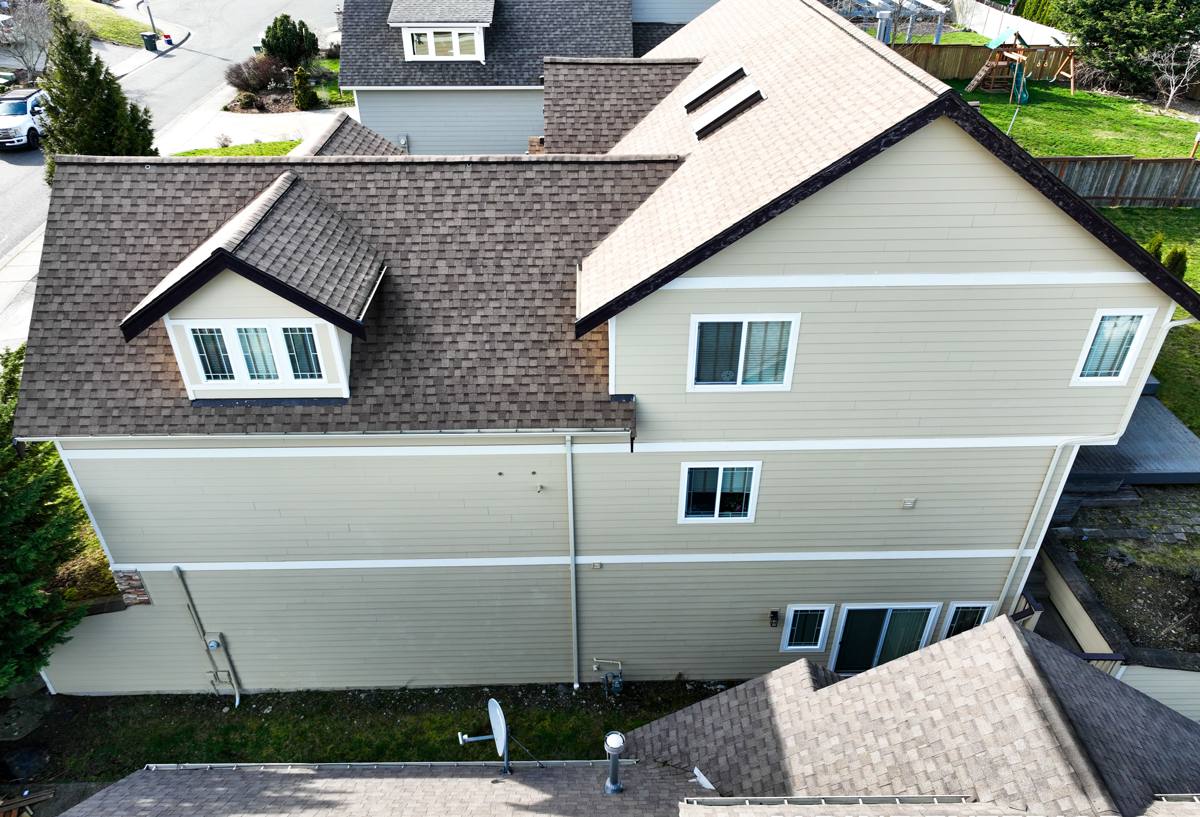
What a Correct Asphalt Shingle Installation Actually Involves
Asphalt shingles themselves are a mature, well-understood product. Where roofs actually fail in this climate is almost never the shingle — it's everything underneath and around it. A correct installation includes several layers working together:
Underlayment and Water Barrier
We install a synthetic underlayment across the full roof deck, with self-adhered ice-and-water shield at the eaves, valleys, and any roof-to-wall transitions — the spots where wind-driven rain is most likely to find a way in. In a climate that sees sustained horizontal rain, this layer is doing as much work as the shingles themselves.
Ventilation
A shingle roof needs balanced intake and exhaust ventilation to let moisture escape the attic space. Skip this step and you trap humid air against the underside of the roof deck, which shortens shingle life from below and can lead to sheathing rot that nobody sees until it's a real problem.
Flashing Details
Chimneys, skylights, sidewalls, and roof valleys are where the vast majority of leaks start — not in the open field of shingles. We use step flashing, counterflashing, and valley metal sized and installed to shed water correctly, not just caulked-over shortcuts that look fine on installation day and fail within a couple of winters.
Nailing Pattern and Fastening
Manufacturer nailing patterns exist for a reason — correct fastener placement is what keeps shingles from lifting in the wind gusts that come through this part of the county during winter storm systems. We follow the manufacturer's pattern to the letter, which also keeps the warranty intact if you ever need it.
The Moss and Algae Problem
Moss is the single most common issue we find on older shingle roofs in and around Sumas. It takes hold in shaded, north-facing sections and areas that stay damp longer after a rain, and once it establishes, it holds moisture directly against the shingle surface and works its way under the tabs. Left unaddressed for a few seasons, moss growth can lift shingles, create channels for water intrusion, and shorten a roof's usable life well before it should need replacing.
Dark algae streaking is a related but separate issue — it's a surface-level growth that mostly affects appearance rather than function, but it's a clear sign a roof is staying wet longer than it should. Both are manageable with the right shingle choice and a basic maintenance routine, which we'll get into below.
Choosing the Right Shingle for This Area
Not every asphalt shingle is built the same, and the difference matters more in a wet, moss-prone climate than it does somewhere dry.
Algae-Resistant Granules
Most quality shingle lines now offer a version with copper- or zinc-infused granules designed to resist algae growth over time. For a roof in this area, we consider this close to a baseline requirement rather than an upgrade — it directly addresses the streaking issue that's so common on older roofs here.
Architectural vs. 3-Tab
Architectural (dimensional) shingles are heavier, carry a higher wind rating, and shed water more effectively than traditional 3-tab shingles thanks to their layered profile. Given the wind-driven rain this area sees, we generally recommend architectural shingles for Sumas homes — the added material cost is modest relative to the improved wind performance and typical longer warranty terms.
Wind Rating
Look for a shingle rated for at least 110 mph, and confirm it's installed with the fastening pattern that keeps that rating valid. A high wind rating on the packaging doesn't mean much if the installation crew doesn't follow the pattern that earns it.
Our Process, Start to Finish
Inspection and Estimate
We start with a full roof inspection — deck condition, existing ventilation, flashing points, and any moss or moisture damage already present. You get a written estimate that spells out materials, scope, and price before any work begins, no surprises added later.
Tear-Off and Deck Prep
We remove the old roofing down to the deck rather than layering over it, which lets us actually check the sheathing for soft spots or rot before new material goes down. Any damaged decking gets replaced as part of the job, not treated as a change order surprise.
Installation
Underlayment, ice-and-water shield, flashing, and shingles go on in that order, following manufacturer specifications throughout. We keep the site protected and organized — landscaping and gutters covered, debris contained, magnetic sweep for nails at the end of each day.
Final Walkthrough
Once the job's done, we walk the roof and the property with you, answer questions, and make sure everything — ventilation, flashing, cleanup — meets the standard we set at the estimate.
What Affects the Cost
Every roof is different, so we don't quote sight-unseen, but these are the main factors that move the price up or down on a typical Sumas re-roof:
| Factor | Why It Matters |
|---|---|
| Roof size and pitch | Steeper roofs take longer and require more safety setup, which affects labor cost |
| Number of layers to remove | Tearing off multiple old layers adds labor and disposal cost versus a single-layer tear-off |
| Deck condition | Rotted or soft sheathing found during tear-off needs replacement before new roofing goes down |
| Shingle grade chosen | Architectural, algae-resistant shingles cost more upfront than basic 3-tab but hold up better here |
| Flashing and valley complexity | Roofs with multiple valleys, chimneys, or skylights need more detail work at each transition |
| Ventilation upgrades | Adding or correcting intake/exhaust venting protects the new roof but adds to scope |
Keeping a Sumas Roof Healthy Year After Year
A well-installed shingle roof still benefits from some basic upkeep in a climate like this one. None of it is complicated, but skipping it is how small issues turn into roof replacements a decade early.
- Keep gutters and downspouts clear so water doesn't back up under the eave line during heavy rain
- Have moss growth treated or removed before it spreads across shaded sections of the roof
- Trim back overhanging branches to reduce shade and debris buildup, both of which encourage moss
- Schedule a roof check after major windstorms to catch lifted or displaced shingles early
- Get a professional inspection every couple of years, especially once a roof passes the ten-year mark
- Address small flashing or caulking issues right away rather than waiting for a visible leak
Why It Matters That We Already Work in This Area
A crew that regularly works Whatcom County roofs knows what to expect before the tear-off even starts — which sections of a roof typically hold moss, how local wind patterns tend to find weak flashing, what deck condition is common on homes of a certain age out here. That's not something you get from a crew passing through the area for one job. It also means we're a known, reachable local business if you ever need a warranty question answered or a follow-up visit — not a phone number that goes quiet once the invoice is paid.
Warranty and Manufacturer Standards
Manufacturer warranties on shingles are only as good as the installation behind them — most warranties have installation requirements built in, and a shortcut during install can quietly void coverage you're counting on. We install to manufacturer specification as standard practice, not an upsell, so the warranty you're paying for actually holds up if you ever need it.
If you're planning a shingle roof for a Sumas property, we're happy to take a look and give you a straightforward, no-pressure estimate — just fill out the form below and we'll get in touch.