 Ferndale Roofing
 Siding Repair Built for Sumas Weather
Sumas sits in a corner of Whatcom County where the weather does not do anything gently. Winters bring long stretches of steady, wind-driven rain, and the damp, low-light stretches of fall through spring keep siding surfaces wet far longer than a sunny afternoon would suggest. Add in the marine-influenced air that moves through this part of Washington and a moss and algae season that can run most of the year, and you have a climate that is genuinely hard on exterior siding — especially siding that was never designed to shed water and resist organic growth in the first place.
When we get called out for siding repair in Sumas, the damage almost always traces back to one of two things: water that found a way behind the siding, or a surface material that could not stand up to sustained moisture and shade. A repair that only patches the visible problem without addressing the water path or the material's underlying weakness tends to fail again within a season or two. Our approach is to fix the cause, not just the symptom.
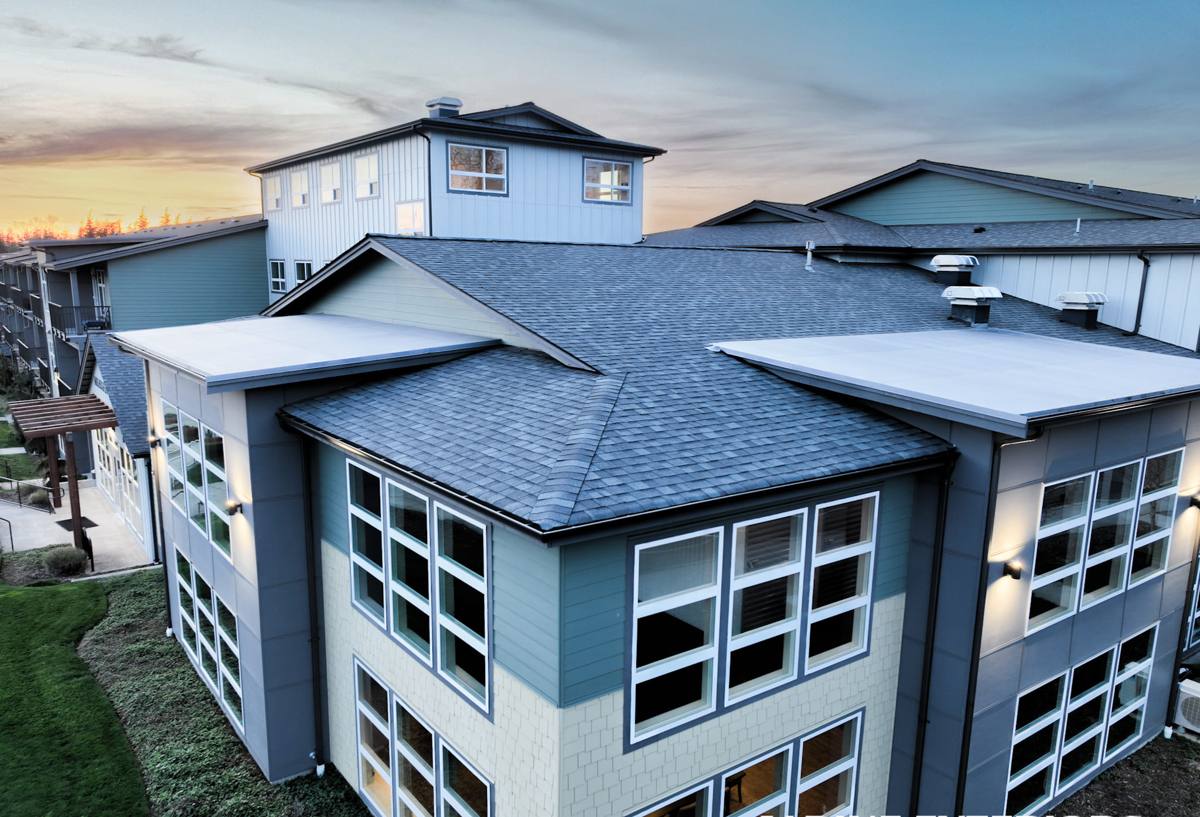
Common Siding Problems We Find on Sumas Homes
Moisture Intrusion Behind the Siding
This is the most serious and most common issue we find. Water works its way in around window trim, at butt joints, behind poorly lapped panels, or through cracked caulking, then travels behind the siding where it can soften sheathing, feed rot, and go unnoticed until paint starts bubbling or a wall feels soft to the touch. By the time it is visible from the outside, the damage underneath is often more extensive than it looks.
Moss, Algae, and Persistent Staining
Shaded walls, north-facing elevations, and areas near trees or fences that block airflow are where we see the heaviest moss and algae growth. Beyond the cosmetic issue, sustained moss growth holds moisture directly against the siding surface, which accelerates whatever damage is already happening underneath — particularly on wood-based products that were never engineered to handle constant dampness.
Impact Damage and Cracked or Warped Panels
Storm debris, ladders, landscaping equipment, and simple age all take a toll. Cracked, split, or warped panels are more than a cosmetic problem — any break in the siding surface is a new entry point for water, and it needs to be treated that way even if it looks minor.
Failed Caulking and Trim Joints
Caulking is not a permanent fix — it is a maintenance item with a real lifespan, and in a climate like this one it breaks down faster than homeowners expect. Once it cracks or pulls away from the joint, water has a direct path behind the siding at exactly the seams and transitions that are hardest to inspect from the ground.
Signs Your Sumas Home May Need Siding Repair
- Paint that is peeling, bubbling, or flaking in a localized area rather than across the whole wall
- Soft or spongy spots when you press on the siding, especially near the bottom courses or under windows
- Visible cracks, splits, or warping in individual panels or boards
- Persistent green or black staining that keeps returning after cleaning
- Gaps opening up at seams, corners, or where siding meets trim, window, or door casings
- A musty smell or visible moisture on the interior wall directly opposite a suspect area of siding
- Caulking that has cracked, shrunk, or separated from the joint it was meant to seal
Any one of these on its own may be minor. Several showing up in the same area of the house is usually a sign that water has been getting in for a while.
What a Correct Siding Repair Actually Involves
Finding the Real Water Path First
The visible damage is rarely where the problem started. A correct repair means pulling back enough siding to trace where water is actually entering and how far it has traveled — not just cutting out the damaged board and calling it done. Skipping this step is the single biggest reason siding repairs fail again within a year or two.
Checking What's Underneath
Once we're behind the siding, we check the house wrap or weather-resistant barrier, the flashing at windows, doors, and penetrations, and the condition of the sheathing itself. If the water barrier has failed or flashing was installed incorrectly, replacing siding on top of that same setup just resets the clock on the same failure.
Matching Materials and Reveal
A patch that does not match the existing siding's exposure, profile, or finish stands out and can also perform differently in weather, which creates new stress points at the transition. We match reveal, profile, and finish as closely as the existing product allows, and we're upfront when an exact match isn't realistic.
Sealing and Finishing Correctly
Proper flashing and integration with the existing weather barrier come before any caulk is applied — caulk is a secondary seal, not the primary defense against water. Paint and caulk are then matched and applied to manufacturer specification so the repair blends in and holds up.
Repair or Replace? What Actually Decides It
| Factor | Points Toward Repair | Points Toward Replacement |
|---|---|---|
| Extent of damage | Isolated to one or two areas | Recurring issues across multiple walls |
| Underlying structure | Sheathing and framing are sound | Rot has spread into framing or sheathing |
| Siding material | Product still performs well overall | Original material is prone to repeat failure |
| Age of siding | Well within expected service life | Nearing or past the end of its practical life |
| Match availability | Existing product can be closely matched | Product discontinued or badly weathered/faded |
We will always tell you honestly which side of that table your home falls on. If a targeted repair will hold up, that is what we recommend — replacement is not the answer just because it's the easier sale.
Our Siding Repair Process
1. On-Site Inspection
We look at the visible damage, check surrounding areas for related issues, and where needed pull back a section of siding to assess what's happening underneath before quoting anything.
2. Honest Scope and Estimate
You get a clear explanation of what we found, what needs to happen, and why — including if we think a section is better replaced than patched.
3. Repair Behind the Siding First
Any compromised sheathing, flashing, or weather barrier gets corrected before new siding goes back on. This is the step that determines whether a repair actually lasts.
4. Siding and Finish Work
Matched siding is installed, sealed, and finished to blend with the surrounding wall as closely as the existing material allows.
5. Walkthrough
We walk the repair with you, explain what was done, and flag anything else on the exterior worth keeping an eye on going forward.
Why We Repair With James Hardie, Not Whatever's Easiest to Match
When an existing siding material is failing repeatedly — cracking, absorbing moisture, feeding moss growth — patching it with more of the same product just buys time before the next call. In those cases, we talk with homeowners about transitioning the affected section, or eventually the whole elevation, to James Hardie fiber cement siding rather than continuing to chase failures in a product that was never suited to this climate.
Hardie's HZ5 product line is engineered specifically for climates like ours, with a factory-applied ColorPlus finish that resists the fading and moisture absorption that leads to repeat repairs. It's non-combustible, holds paint and caulk far better over time than wood-based or vinyl products, and comes with a strong transferable warranty. We install it because it holds up to exactly the conditions that cause most of the repair calls we get in Sumas — not because it's the only thing we know how to work with.
Why a Crew That Already Works in Sumas Matters
Whatcom County's siding problems are not uniform — a home tucked into a shaded, tree-lined lot handles moisture very differently than one on an open, wind-exposed corner. A crew that regularly works Sumas and the surrounding communities has already seen how local exposure, tree cover, and weather patterns play out on real houses, which means less guesswork diagnosing your specific situation and a repair that's built for the conditions your home actually faces, not a generic textbook fix.
It also means accountability. A local crew that plans to keep working in this area has every reason to get the repair right the first time, because a callback isn't a stranger's problem — it's ours, on a street we'll be back on.
If you're seeing early signs of siding trouble on your Sumas home, it's worth having someone look before it turns into a bigger repair. Reach out for a free, no-pressure estimate — we'll give you a straight answer about what's going on and what it will take to fix it.