 Ferndale Roofing
 Why Birch Bay Roofs Wear Differently Than Roofs Inland
Birch Bay sits right on the water, and that changes what a roof has to survive year after year. A roof a few miles inland in Whatcom County deals with rain and cold. A roof in Birch Bay deals with all of that plus a steady drift of salt-laden air coming off the bay, wind-driven rain that gets pushed sideways into laps and flashing that would stay dry elsewhere, and a shaded, damp microclimate on north-facing slopes and tree-lined lots that keeps moss and moisture problems going longer into the year. None of this means a roof in Birch Bay is doomed to fail early. It means the roof needs to be specified and installed with those conditions in mind, not treated like any other job in the county.
We've replaced enough roofs along this stretch of coastline to know where the damage actually starts. It's rarely the field of the roof. It's the edges, the penetrations, the low-slope transitions, and the metal — the places where salt air and driving rain find a way in over time.
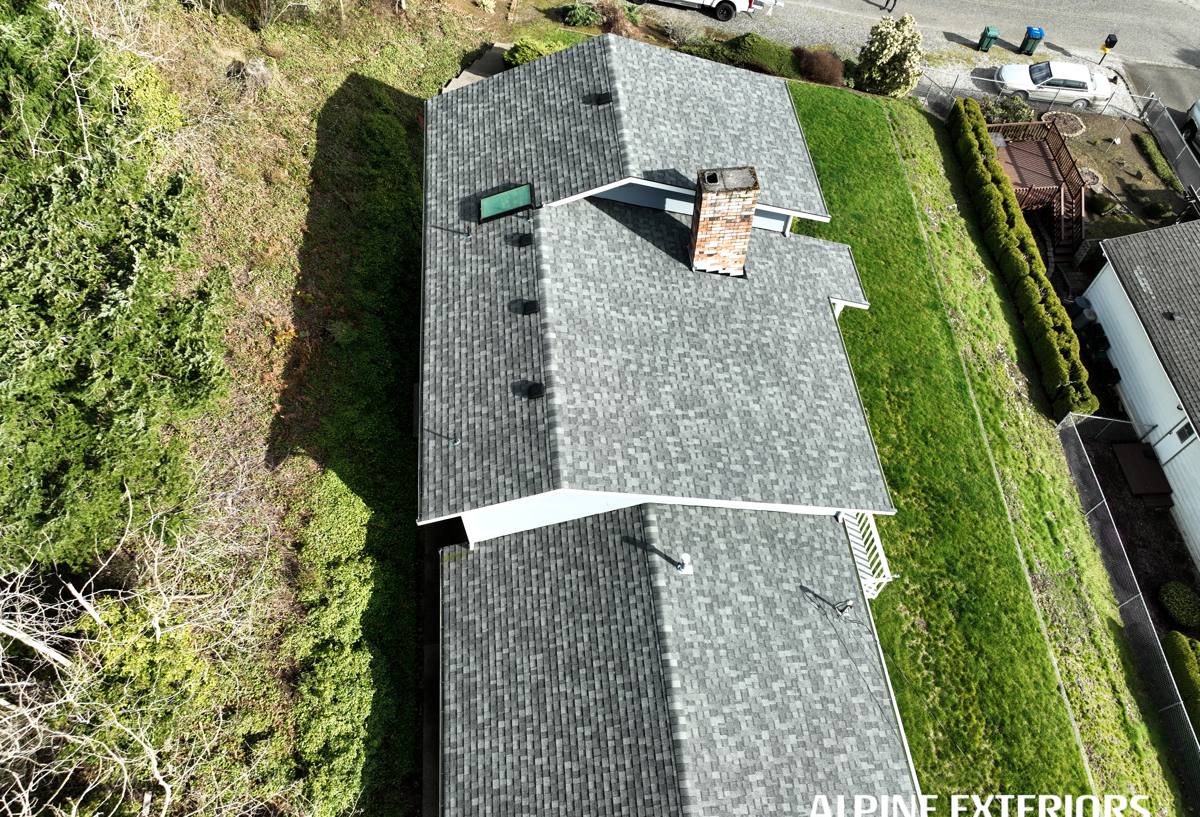
What Salt Air Actually Does to a Roof
Salt air is corrosive to exposed metal, full stop. On a Birch Bay roof that shows up in a few predictable spots:
- Fasteners and nail heads that aren't properly sealed or coated can start rusting years before the shingles around them show any wear.
- Flashing, valleys, and drip edge made from lower-grade or bare metal corrode faster near the water than the same materials would a few miles inland.
- Gutters and downspouts take the same exposure and often show pitting or corrosion before the roof surface itself needs attention.
This is why material choice matters more here than it does on a typical inland job. We spec corrosion-resistant flashing and fasteners for Birch Bay roofs as a standard, not an upgrade, because replacing a roof with hardware that isn't built for salt exposure just means dealing with rust streaks and failed seals within a few years.
Driving Rain and Wind-Driven Water
Birch Bay gets exposed to wind off the water in a way that pushes rain sideways instead of straight down. That matters at every horizontal lap, every valley, and every place where the roof meets a wall, chimney, or skylight. A roofing system that would shed water fine on a calm, sheltered lot can leak here if the underlayment, flashing laps, and sealant details aren't done correctly. Wind-driven rain doesn't need a big gap to get in — it just needs one lap that's facing the wrong way or one flashing piece that's under-lapped instead of over-lapped.
Moss Season Runs Longer on This Coastline
Moss needs shade, moisture, and organic debris to get established, and Birch Bay's tree cover combined with the marine layer gives it all three for a longer stretch of the year than drier parts of the county see. Moss holds moisture against the roof surface, works its way under shingle tabs as it grows, and can lift edges enough to let water track underneath. A roof replacement in this area should account for that from the start — proper ventilation, zinc or copper strips at the ridge where appropriate, and a surface that's easier to keep clear, rather than assuming moss is just a maintenance problem to deal with later.
What a Correct Roof Replacement Looks Like Here
A roof replacement isn't just stripping the old material and nailing down new shingles. In Birch Bay specifically, the details below are what actually determine whether the roof performs for its full service life or starts causing problems in year five.
| Component | Standard Approach | Why It Matters in Birch Bay |
|---|---|---|
| Underlayment | Synthetic, fully sealed at laps | Backup protection against wind-driven rain if the surface material is ever compromised |
| Fasteners | Corrosion-resistant, correct length and placement | Salt air accelerates corrosion on standard fasteners over time |
| Flashing (valleys, walls, chimneys) | Properly lapped metal, sized for the exposure | Primary defense against sideways-driven rain at transitions |
| Ventilation | Balanced intake and exhaust | Reduces trapped moisture that feeds moss and rot in shaded, damp conditions |
| Gutters and drip edge | Corrosion-resistant material, correct pitch | Prevents early rust and keeps water moving off the roof instead of pooling |
Skipping or downgrading any one of these doesn't usually cause an immediate problem. It shows up two, five, or eight years later as a leak, a corroded flashing seam, or a soft spot in the decking — long after the crew that cut the corner is gone.
Signs a Birch Bay Roof Needs Replacement, Not Another Repair
Not every issue means a full replacement. But there's a point where patching stops making financial sense and a full tear-off becomes the honest recommendation. Homeowners in Birch Bay should take these seriously:
- Granule loss heavy enough that shingles look patchy or bare in spots, especially on the south and west-facing slopes that take the most sun and weather exposure.
- Rust staining running down from flashing, valleys, or fasteners — a sign the metal underneath is already corroding.
- Moss coverage that comes back within a season or two of cleaning, which usually points to a ventilation or moisture problem rather than just surface growth.
- Soft or spongy decking felt underfoot, or visible sagging along a roof plane.
- Repeated leaks at the same spot after more than one repair attempt.
- A roof approaching or past the manufacturer's expected service life for its material and this exposure level.
How We Approach a Roof Replacement Project
1. On-Site Assessment
We walk the roof, check the decking condition where accessible, look at ventilation, and note the specific exposure the roof gets — how close to the water, how much tree cover, which slopes take the worst of the wind and rain. This is what drives the material and flashing decisions, not a generic template.
2. A Clear, Written Estimate
You get a written scope of work and a price before anything starts — what's being removed, what decking repair (if any) is anticipated, what materials and underlayment are being used, and what the flashing plan looks like at valleys, walls, and penetrations. No verbal promises that don't make it onto paper.
3. Tear-Off and Decking Inspection
Once the old roof is off, we inspect the decking directly instead of guessing from the surface. Any soft or damaged sheathing gets flagged and repaired before new material goes down — this is the point where hidden moisture damage from a previous roof gets found and fixed, not covered up.
4. Installation to Spec
Underlayment, flashing, fasteners, and ventilation go in to the standard the site actually needs, not the cheapest version that technically passes. This is where the Birch Bay-specific decisions from the assessment get executed.
5. Final Walkthrough
We walk the finished roof with you, cover what was done, and go over anything you should watch for or maintain going forward — including realistic guidance on moss prevention for the site's specific shade and exposure.
Cost Factors for a Birch Bay Roof Replacement
Every roof is different, and giving a number without seeing the site isn't honest. What we can tell you is what tends to move the price:
| Factor | Why It Affects Cost |
|---|---|
| Roof size and pitch | More surface area and steeper pitches take more material and labor time |
| Decking condition | Rotten or soft sheathing found during tear-off needs to be replaced, which adds material and time |
| Number of valleys, penetrations, and transitions | Each one needs flashing work, which is more labor-intensive than open field roofing |
| Material choice | Corrosion-resistant hardware and higher-grade underlayment cost more upfront but reduce early failure risk in this environment |
| Access and site conditions | Steep lots, limited access, or heavy tree cover near the roof can affect setup and safety requirements |
Broadly, a full roof replacement is a significant investment measured in the thousands to tens of thousands of dollars depending on size and scope — but the only way to get an accurate number is a site visit and a written estimate, which is what we provide before any work begins.
Why Hire a Crew That Already Works Birch Bay
A roofing crew that mostly works drier, inland jobs isn't necessarily going to under-spec a Birch Bay roof on purpose — but if they don't work this coastline regularly, they may not default to corrosion-resistant hardware, they may not think about wind direction off the water when planning flashing laps, and they may not account for how long moss season actually runs here. Those aren't dramatic mistakes. They're small decisions that compound over years into leaks, rust, and repeat moss problems.
We're based in Ferndale and work throughout Whatcom County, including Birch Bay and the rest of the coastline, so these conditions aren't a special case for us — they're the baseline we plan around.
If your roof is showing wear, has taken storm damage, or you're just trying to plan ahead before a bigger problem shows up, we'll walk it with you and give you a straight, written estimate — no pressure, no obligation. Use the form below to get started.