 Ferndale Roofing
 Siding Replacement Built for a Point Roberts Property
Point Roberts sits on its own peninsula, bordered by water on three sides, which puts homes there in some of the more demanding exterior conditions in Whatcom County. Salt-laden air moves in off the water more or less constantly, rain arrives sideways as often as it falls straight down, and the shaded, damp stretches of the community stay wet enough to keep moss active for most of the year. Add in a housing stock that includes a lot of part-time and seasonal properties, and you get siding that can fail quietly for months before anyone notices. We replace siding on Point Roberts homes regularly, and this page covers what that exposure actually does to a wall assembly, what a correct replacement involves, and why we install James Hardie fiber cement exclusively on properties out here.
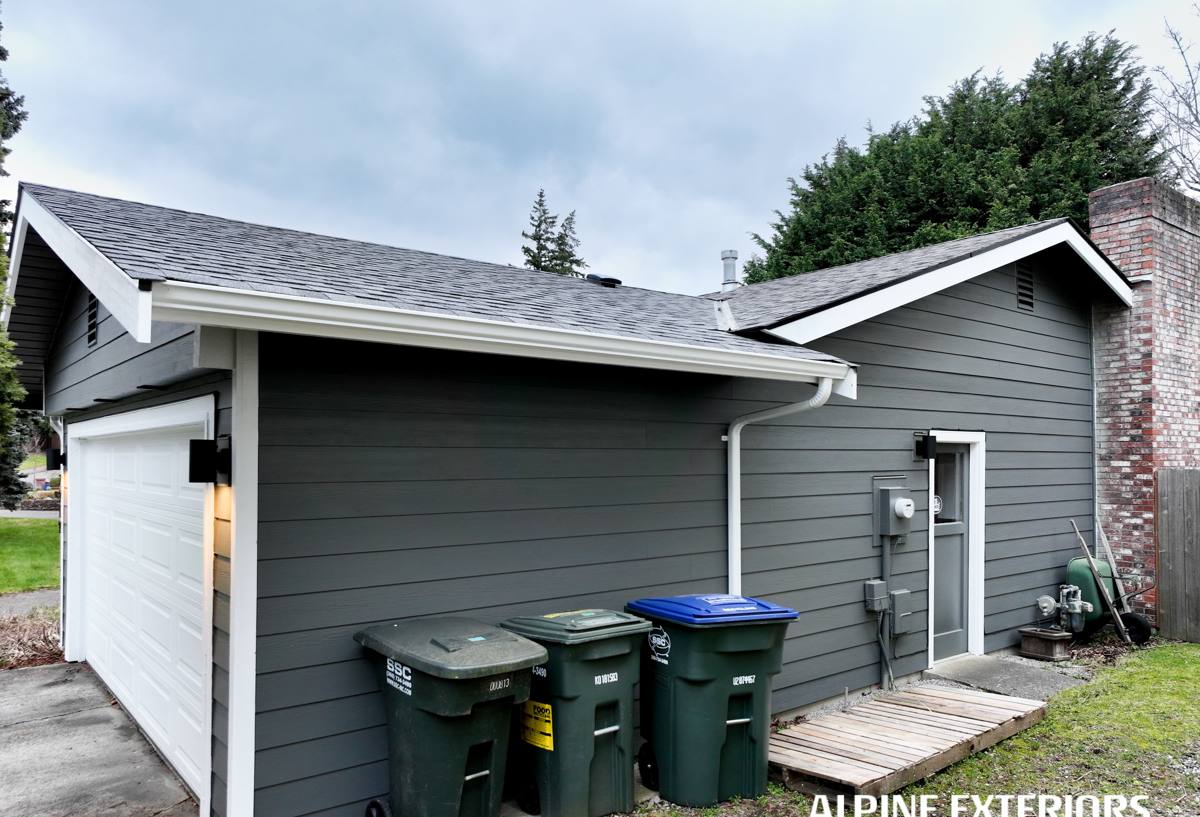
What This Exposure Does to Existing Siding
Salt Air, Nearly Every Day
Being surrounded by water means salt exposure isn't occasional here, it's close to constant. Salt-laden moisture speeds up corrosion in fasteners and flashing and breaks down lower-grade paints and coatings faster than a drier, more inland site would. On older siding, that shows up as chalky or faded finishes, rusting nail heads bleeding through paint, and trim that's failed well ahead of its expected life.
Wind-Driven Rain With Little to Block It
A peninsula with open water on multiple sides doesn't offer much of a windbreak, and wind is what turns rain into a problem that attacks from the side instead of the top. Driving rain gets pushed into lap joints, trim seams, and any spot where flashing isn't doing its job. Siding that would hold up fine on a sheltered inland lot can still fail here because the water is finding a way in sideways, not from above.
A Long Moss and Mildew Season
Consistent moisture and shaded sections of the community add up to a moss and mildew season that runs longer than in the drier parts of the county. It typically shows up first on north-facing and shaded walls, and it's more than a cosmetic issue — sustained organic growth holds moisture directly against the wall, which is exactly the condition that leads to rot behind the siding if it isn't dealt with.
Seasonal Occupancy Lets Damage Go Unnoticed
A meaningful share of Point Roberts properties are part-time or vacation homes, which means nobody's walking the exterior every week the way a full-time owner would. A small leak around a window or a section of siding that's started to soften can go unnoticed for an entire season, sometimes longer, before anyone's there to catch it. By the time it's visible, the damage is often further along than it would be on a home someone checks on daily.
Signs a Property Needs Replacement, Not a Patch
- Moss or dark staining that returns quickly after cleaning, especially on shaded or north-facing walls
- Soft, spongy, or delaminating siding near the base of the wall or around windows and doors
- Rusting fasteners, corroding flashing, or chalky, faded paint across large sections of the exterior
- Multiple areas of cracked, warped, or missing siding rather than one isolated spot
- Visible gaps at seams, corners, or trim joints that weren't there when the home was last painted or serviced
- A musty smell inside along exterior walls, which can point to trapped moisture behind the siding
- A home that's gone one or more seasons without anyone checking the exterior closely
A few of these on their own might mean a targeted repair is enough. Several of them together, especially on a home that's sat unattended for stretches of time, usually mean the wall assembly has been taking on water longer than anyone realized, and a full replacement is the more honest answer than another round of patching.
Why We Install Only James Hardie Fiber Cement Here
We used to install a wider range of siding products. We narrowed to one system after watching, over years of work in this exact kind of coastal exposure, which materials actually held up and which ones quietly pushed maintenance problems back onto the homeowner. For a Point Roberts property, the case for fiber cement over the alternatives is about as strong as it gets in our service area.
- Non-combustible core: Fiber cement doesn't feed a fire the way wood-based siding products can, which matters for both household safety and insurance underwriting.
- Factory-applied ColorPlus finish: The color is baked on in a controlled factory process rather than brushed on in the field, so it resists salt exposure and UV fade far longer than site-applied paint.
- Climate-engineered HZ5 formulation: Hardie's HZ5 line is built for regions with heavy, sustained moisture exposure, which lines up closely with a peninsula property surrounded by water on three sides.
- Dimensional stability: Fiber cement doesn't swell, cup, or warp the way engineered wood siding can after repeated wet-season moisture cycles, which matters more here given how long that wet season runs.
- Strong transferable warranty: Hardie backs its products with a solid warranty structure when the installation follows spec, which gives a homeowner real protection rather than a marketing line.
We don't install LP SmartSide, vinyl siding, Cemplank, Allura, primed spruce, or cedar. Each of those has a place in the broader market. But on a property that sits in near-constant salt air and takes wind-driven rain from multiple directions, we made a professional call that one system we trust fully is worth more than a cheaper option that trades short-term savings for maintenance risk down the road.
What a Correct Siding Replacement Actually Involves
Choosing the right material only gets a Point Roberts home halfway there. The other half is installation detail, and on an exposed property, cutting corners on any of the following shows up faster than it would somewhere calmer:
| Step | What It Involves | Why It Matters Here |
|---|---|---|
| Full tear-off | Removing existing siding down to the sheathing | Reveals hidden moisture and rot that's common under aging siding on exposed, part-time-occupied properties |
| Sheathing and framing check | Inspecting for soft spots, rot, or existing water damage | Long-term trapped moisture can compromise structural sheathing before it's ever visible from outside |
| House wrap and flashing | Installing a water-resistive barrier and properly lapped flashing at every penetration | Wind-driven rain from an unblocked exposure finds any gap in this layer faster than it would on a sheltered lot |
| Fastening pattern | Following manufacturer spec for nailing and joint treatment | Higher wind exposure on an open peninsula calls for tighter attention to fastening than a calmer inland site |
| Trim and joint detailing | Lapping and sealing joints rather than butting them together | Loose joints are the first place driving rain gets pushed into the wall assembly |
None of this is unusual for a proper siding job anywhere, but the margin for error is smaller on a property that takes this much wind and water. A detail that might go unnoticed for years inland can turn into a real problem within a single wet season here.
How the Process Works
- An in-person walk-through of the home to assess existing siding, trim, flashing, and any signs of hidden moisture damage
- An honest recommendation on whether the property needs full replacement, a partial re-side, or targeted repair
- A written estimate that spells out scope, material, and timeline, with no pressure to sign on the spot
- Scheduling that accounts for weather windows and, for seasonal owners, coordination around when the home is occupied or accessible
- Tear-off, sheathing repair as needed, house wrap and flashing installation, then James Hardie siding installed to manufacturer spec
- A final walk-through so you know exactly what was done and why
Cost Factors for a Point Roberts Siding Replacement
Every property is different, but a few factors consistently move the price on a job out here:
| Factor | What It Affects | Why It Matters Here |
|---|---|---|
| Extent of hidden damage | Sheathing and framing repair costs before new siding goes on | Seasonal properties often carry more unnoticed moisture damage by the time it's found |
| Wall exposure and orientation | Fastening spec and flashing detail | Sides facing open water take more wind and driving rain than sheltered elevations |
| Home size and trim complexity | Labor time and material quantity | More corners, windows, and trim details mean more joints that need proper sealing |
| Access and scheduling | Crew and material logistics | Point Roberts' geography adds planning considerations that a typical inland job doesn't have |
Because so much of the real cost depends on what's actually happening behind the existing siding, we walk the property in person before giving a firm number rather than quoting off a generic price sheet.
Why a Crew That Already Works Point Roberts Matters
Point Roberts is its own small peninsula community, geographically separated from the rest of Whatcom County, and that separation is real for a contractor too — it takes deliberate planning to get crews, equipment, and material out here efficiently, and a company that hasn't worked the area before tends to underestimate that. We've done enough jobs in this community to plan around it: scheduling trips efficiently, knowing what a wall assembly out here typically looks like after years of near-constant salt exposure, and understanding that a fair share of the homes we work on are only occupied part of the year. That last point changes how we communicate with owners, since you may not be on-site to answer a quick question mid-project the way a full-time resident would be. A crew with real experience on this peninsula treats those differences as part of the job, not as an inconvenience that gets a rushed, one-size-fits-all approach.
If your Point Roberts home has siding that's showing its age, or you'd just like an honest opinion on whether you're looking at a repair or a full replacement, we're glad to take a look. Reach out using the form below to schedule a free, no-pressure estimate.